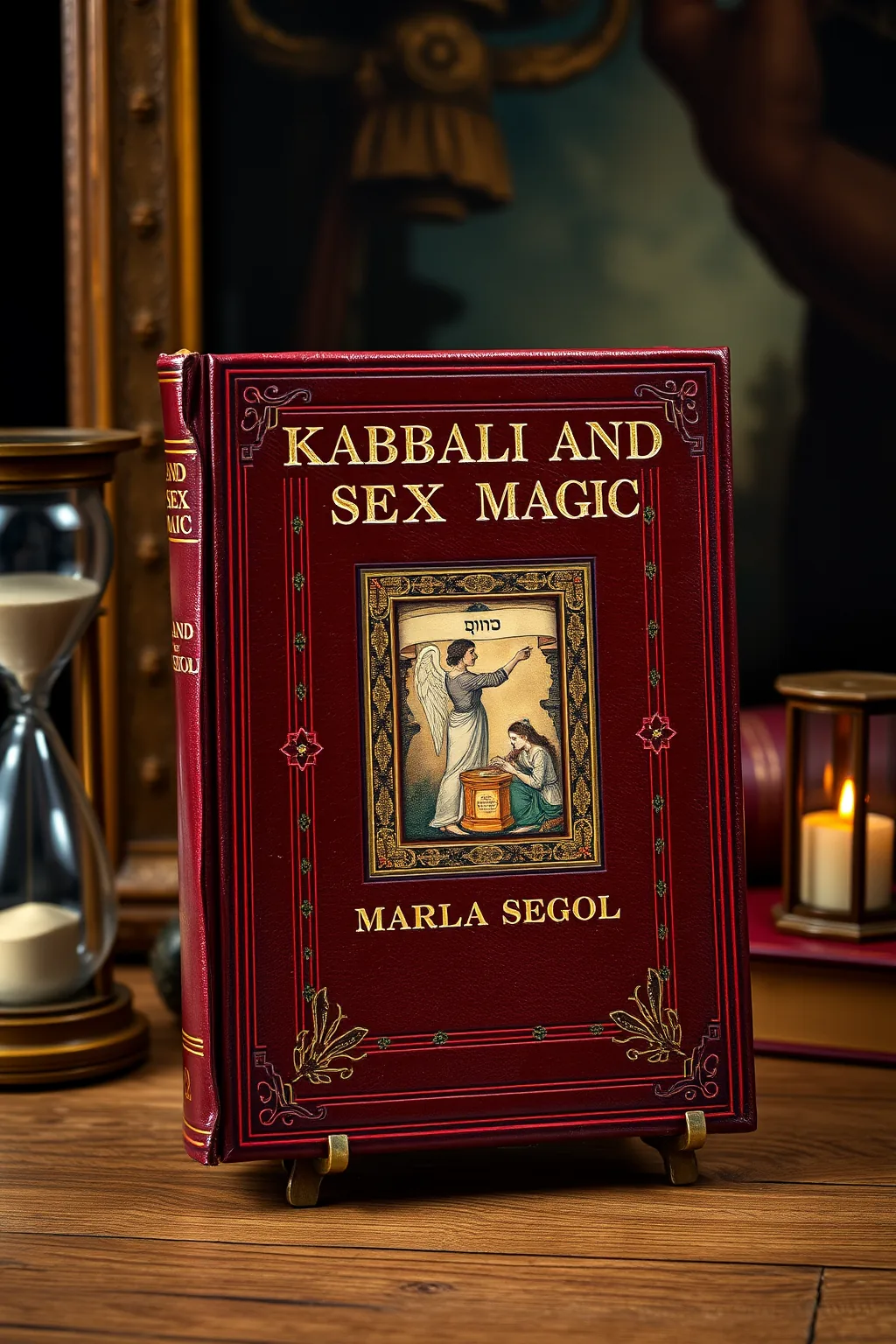
Kabbalah and Sex Magic
 76
76

Kabbalah and Sex Magic
Marla Segol's "Kabbalah and Sex Magic" offers a scholarly yet accessible examination of the esoteric lineage connecting Jewish mysticism with Western magical traditions. Its primary strength lies in its detailed historical tracing, particularly how concepts like the divine union and the microcosm were transmuted from late antique Jewish texts into the practices of Western sex magic. Segol's analysis of the "Hebrew microcosm" as a framework for understanding the divine-human interface is particularly sharp. A minor limitation might be its academic density, which could challenge readers unfamiliar with Kabbalistic terminology or historical contexts. The exploration of how New Age practices echo these older traditions, specifically referencing the amplification of divine energies through ritualized sexual expression, provides a compelling bridge between ancient thought and contemporary movements. Segol's work is a significant contribution to understanding the often-overlooked sexual dimensions within Kabbalistic thought and its subsequent magical interpretations.
📝 Description
76
Marla Segol's 2014 book connects Kabbalistic cosmology with Western sex magic traditions.
Marla Segol's "Kabbalah and Sex Magic" examines the historical links between Jewish mystical cosmology and the development of Western sex magic. The book traces how traditions from late antiquity and the medieval period provided concepts and language for later esoteric practices. These practices focus on the divine-human relationship through embodied experience. Segol analyzes the transformation of the 'Hebrew microcosm,' a symbolic map of the universe within the human body, and its role in these magical systems.
This work is for students of Western esotericism, comparative religion scholars, and advanced practitioners of Kabbalah or ceremonial magic. It suits those wanting a scholarly understanding of traditions that combine mystical theology with ritual engagement of sexual energies. Readers interested in the evolution of Jewish mysticism beyond its traditional religious context will find this book illuminating. Segol's research situates sex magic's development within specific historical periods of Jewish esotericism, beginning with late antique traditions, moving through medieval Kabbalah, and examining its influence on later Western magical orders and New Age practices. This chronological approach shows how Kabbalistic ideas, like divine union and amplifying spiritual states through physical means, were adapted over centuries.
This book situates Kabbalistic thought within the broader currents of Western esotericism, specifically its engagement with ritual and embodied practice. It highlights how concepts originating in Jewish mysticism, such as the divine emanations and the structure of the cosmos as reflected in the human form, were adopted and transformed by later magical traditions. The work demonstrates a lineage from early Jewish mystical speculation to medieval Kabbalah and then to the ceremonial magic and New Age practices that emerged in the West, showing how sexual symbolism and practice became a vehicle for spiritual goals.
💡 Why Read This Book?
• Gain a nuanced understanding of the "Hebrew microcosm" concept and its evolution from late antique Jewish esotericism to medieval Kabbalah, offering a unique perspective on the body as a spiritual map. • Discover the specific ways Jewish myth and ritual informed the foundational cosmology of Western sex magic, moving beyond generalized claims to concrete historical links. • Explore how the divine-human relationship, as conceived in early Kabbalistic texts, was ritually enacted through practices described by Segol, providing direct insight into embodied spirituality.
⭐ Reader Reviews
Honest opinions from readers who have explored this book.
❓ Frequently Asked Questions
What is the primary focus of Marla Segol's "Kabbalah and Sex Magic"?
The book explores the development of the Kabbalistic cosmology that underpins Western sex magic, examining the relationship between the divine and human bodies through Jewish myth and ritual from late antiquity to New Age practices.
Which historical periods does "Kabbalah and Sex Magic" cover?
It covers late antique Jewish esotericism, medieval Kabbalah, and the subsequent development of Western sex magic, including its manifestation in New Age ritual practices.
What is the concept of the "Hebrew microcosm" as discussed in the book?
The "Hebrew microcosm" refers to the Kabbalistic idea of the human body as a symbolic representation of the universe and divine realms, central to understanding the interaction between human and divine bodies in esoteric traditions.
Who is Marla Segol?
Marla Segol is the author of "Kabbalah and Sex Magic," first published in 2021, who researches and writes on esoteric traditions and their historical development.
Is this book suitable for beginners in Kabbalah?
While informative, the book's scholarly approach and focus on specific historical and esoteric developments might be best suited for those with some existing knowledge of Kabbalistic concepts or Western esotericism.
What does the book say about Western sex magic?
It argues that Western sex magic developed from specific Kabbalistic cosmological ideas, tracing how Jewish mystical concepts of divine union and embodied spirituality were adapted into magical practices.
🔮 Key Themes & Symbolism
The Hebrew Microcosm
This theme examines the Kabbalistic concept of the human body as a divine map and vessel, mirroring the macrocosm. Segol meticulously details how this understanding served as a foundational principle for Western sex magic, enabling practitioners to view physical union as a means to connect with celestial forces and achieve spiritual states. The evolution of this concept from its ancient Jewish roots through medieval Kabbalah is a central narrative thread, illustrating the profound connection between the divine and the human form.
Divine-Human Union
The book critically examines the idea of union with the divine, a central tenet in many mystical traditions, and how it was specifically interpreted and ritualized within the context of sex magic. Segol highlights how Jewish concepts of divine presence and creative energy were recontextualized, with sexual acts becoming potent rituals designed to facilitate ecstatic states and a perceived merging of the human and the sacred. This exploration traces the transformation of theological concepts into embodied magical practices.
Ritual and Embodiment
This theme focuses on the practical application of Kabbalistic principles in ritualistic contexts, particularly those involving sexual magic. Segol analyzes how ancient Jewish rituals and mythology provided a symbolic framework that later esoteric practitioners adopted and adapted. The emphasis is on the body not merely as a physical entity but as a locus of divine power and a tool for spiritual transformation, with sexual energy seen as a potent force to be harnessed for magical and mystical ends.
Evolution of Esoteric Traditions
Segol's work charts the lineage and transformation of esoteric ideas across historical periods and cultural boundaries. It showcases how Kabbalistic thought, originating in Jewish mysticism, exerted a significant influence on the development of Western esotericism, particularly the branch concerned with sex magic. The book illustrates the dynamic process of adaptation, reinterpretation, and syncretism that characterizes the history of magical and mystical traditions, from late antiquity to modern movements.
💬 Memorable Quotes
Direct passages from the work, attributed to the author.
“The Kabbalistic cosmology provided a framework for understanding the divine-human relationship through the body.”
— This highlights Segol's core argument: that the mystical insights of Kabbalah, particularly concerning the sacredness and symbolic significance of the human form, directly influenced the theoretical underpinnings of Western sex magic.
“Jewish myth and ritual offered potent symbolic language for esoteric practices.”
— This points to the rich source material Segol draws upon, emphasizing how ancient Jewish narratives and liturgical forms were re-appropriated and transformed into the lexicon of later magical systems focused on embodied experience.
“The Hebrew microcosm models the interaction of human and divine bodies.”
— This captures a key Kabbalistic concept that Segol applies to sex magic, suggesting that the body itself, understood as a divine reflection, becomes the primary site for enacting and understanding the union between the human and the transcendent.
“Late antique Jewish esotericism laid groundwork for later magical developments.”
— This emphasizes the historical depth of Segol's research, indicating that the roots of Western sex magic are not solely medieval or modern but can be traced back to much earlier forms of Jewish mystical and esoteric thought.
“New Age ritual practice continues the legacy of embodied divine connection.”
— This connects the historical trajectory to contemporary spiritual movements, suggesting that modern practices of embodied spirituality, including those involving sexual ritual, owe a conceptual debt to the Kabbalistic and esoteric traditions explored in the book.
🌙 Esoteric Significance
Tradition
This work firmly belongs to the study of Western Esotericism, specifically its Kabbalistic and magical branches. It departs from purely theological interpretations of Kabbalah by focusing on its practical, ritualistic, and cosmological applications in later magical traditions. Segol's approach bridges the gap between academic religious studies and the history of occultism, demonstrating how esoteric interpretations of Jewish mysticism became foundational for practices aimed at achieving divine union through embodied means.
Symbolism
Key symbols explored include the "Hebrew microcosm," representing the human body as a divine map and microcosm of the universe, and the concept of "divine union," symbolizing the ultimate goal of merging with the divine. The book also examines the symbolism of sexual energy itself, viewed not merely as biological but as a potent, sacred force capable of facilitating spiritual transformation and access to higher realms, drawing parallels with creation myths and divine creative power.
Modern Relevance
Contemporary practitioners of Western ceremonial magic, tantric traditions (both Eastern and Western interpretations), and scholars of gender and sexuality in religion find relevance in Segol's work. Thinkers exploring the intersection of embodiment, mysticism, and ritual, as well as those studying the historical reception and adaptation of Kabbalistic ideas in modern occultism and New Age spirituality, draw upon its detailed historical and conceptual analysis.
👥 Who Should Read This Book
• Advanced students of Kabbalah seeking to understand its esoteric applications beyond traditional Jewish practice will find detailed analysis of conceptual evolution. • Scholars of Western Esotericism and comparative religion will gain a crucial link between Jewish mystical traditions and the historical development of sex magic. • Practitioners of ceremonial magic or embodied spiritual disciplines interested in the historical roots of ritualized sexuality and divine union will find a rich source of information.
📜 Historical Context
Marla Segol's "Kabbalah and Sex Magic" emerges from a scholarly landscape increasingly attentive to the historical interplay between Jewish mysticism and Western esotericism. Published in 2021, it engages with ongoing discussions about the transmission and transformation of Kabbalistic ideas beyond their original religious context. The work situates itself within the study of late antique and medieval Jewish esotericism, examining how concepts like the divine union and the microcosm evolved. Critically, it traces these ideas into the development of Western sex magic, a tradition often discussed in relation to figures like Aleister Crowley and the Hermetic Order of the Golden Dawn. While not directly engaging in public debate or facing censorship itself, the book addresses a subject matter that has historically been subject to controversy and reinterpretation within both Jewish and occult communities, offering a nuanced historical perspective that builds upon the work of scholars like Gershom Scholem.
📔 Journal Prompts
The "Hebrew microcosm" as a framework for spiritual practice.
Ritualistic applications of divine union concepts.
The transformation of Jewish myth into Western sex magic.
Embodied connection between the human and divine.
Tracing the influence of Kabbalistic cosmology on later esoteric traditions.
🗂️ Glossary
Kabbalah
A system of Jewish mysticism that explores the nature of God, the creation of the universe, and the relationship between the divine and the human, often employing complex symbolic and allegorical interpretations of religious texts.
Sex Magic
A branch of Western esotericism that utilizes sexual energy, arousal, and orgasm as a means to achieve altered states of consciousness, magical goals, or spiritual union with the divine.
Hebrew Microcosm
In Kabbalistic thought, the concept that the human body is a symbolic representation of the entire universe (macrocosm), containing within it all divine emanations and cosmic forces.
Late Antique Jewish Esotericism
Mystical and speculative traditions within Judaism that flourished roughly from the 2nd to the 7th centuries CE, often dealing with themes of divine ascent, visionary experiences, and the structure of the cosmos.
Divine Union
A mystical concept found in various traditions, referring to the ultimate goal of spiritual practice: the merging or intimate connection of the individual soul or consciousness with the divine essence.
New Age Ritual Practice
Contemporary spiritual practices, often syncretic, that may draw upon various esoteric, mystical, or religious traditions, including Kabbalah, for personal transformation and spiritual exploration.
Embodied Spirituality
Spiritual or mystical practices that emphasize the direct experience and sacredness of the physical body, using it as a primary vehicle for spiritual insight and connection, often involving ritual and sensory experience.