Kabbalah and Literature
 61
61

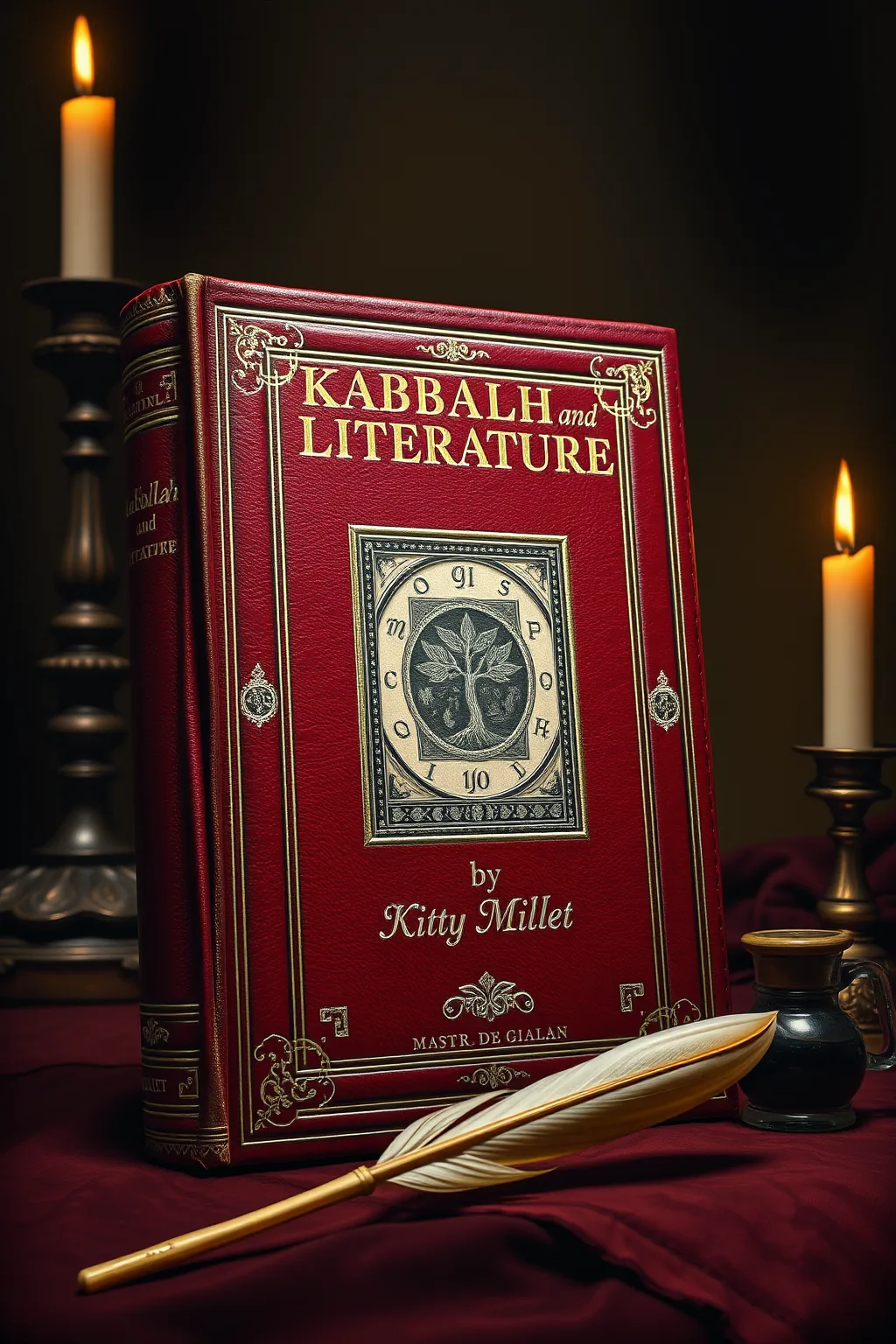
Kabbalah and Literature


Kitty Millet's 'Kabbalah and Literature' is a revelation for those who seek the hidden arteries connecting esoteric wisdom and creative output. Millet navigates the complex intersection of Kabbalistic thought and literary analysis with grace and scholarly rigor, illuminating how the Tree of Life and its attendant mysteries resonate within canonical works. This book is not merely an academic exercise; it is a profound testament to the enduring influence of mystical symbolism on narrative. It offers fresh perspectives for scholars of comparative literature and Jewish mysticism, while providing accessible, yet deep, insights for practitioners eager to see the Kabbalah manifest in the world of letters. An essential read for anyone interested in the esoteric roots of Western storytelling.
📝 Description
61
Kitty Millet's 2019 book, 'Kabbalah and Literature,' examines how Kabbalistic ideas appear in Western texts.
Kitty Millet's 'Kabbalah and Literature' analyzes the presence of Kabbalistic concepts within Western literary works. The book maps how ideas like divine emanation and mystical ascent are embedded in stories, poems, and plays. Millet shows how these hidden currents have influenced narrative and poetic expression over centuries.
The study focuses on specific Kabbalistic doctrines and their manifestations in literature. It aims to reveal the symbolic language and archetypes that connect esoteric thought to human creativity. The goal is to provide a deeper understanding of the spiritual dimensions underlying literary traditions. This work engages with texts through a lens of mystical interpretation.
This work situates itself within the study of Kabbalah's influence on Western culture, particularly its literary expressions. It treats Kabbalah not just as a theological system but as a symbolic grammar that can be detected in creative works. The book assumes a reader's interest in how mystical traditions can inform secular art forms. It connects the esoteric principles of Jewish mysticism to the broader currents of Western thought and artistic creation.
💡 Why Read This Book?
Uncover the secret, mystical language woven into classic literature. 'Kabbalah and Literature' reveals how Kabbalistic symbolism informs narratives, offering a profound new lens for understanding stories and poetry. Ideal for scholars seeking deeper context, spiritual seekers exploring esoteric connections, and practitioners wishing to see mystical principles in action. This book bridges the gap between ancient wisdom and modern artistic expression, enriching your appreciation for both.
⭐ Reader Reviews
Honest opinions from readers who have explored this book.
❓ Frequently Asked Questions
Is prior knowledge of Kabbalah necessary to enjoy this book?
While prior knowledge can enhance the experience, Kitty Millet's accessible prose and clear explanations make 'Kabbalah and Literature' engaging for newcomers. The book thoughtfully introduces core Kabbalistic concepts as they relate to literary analysis.
What literary periods or genres does this book focus on?
The book surveys a broad spectrum of Western literature, drawing connections across various periods and genres, from ancient texts to more contemporary works, demonstrating the pervasive influence of Kabbalistic thought.
How does this book differ from standard literary criticism?
It moves beyond conventional analysis by integrating esoteric and mystical frameworks, revealing hidden layers of meaning and symbolic resonance often overlooked in secular interpretations. It explores the spiritual architecture of literary works.
Can this book be used for personal spiritual growth?
Absolutely. By understanding how Kabbalistic principles are expressed through literature, readers can gain profound insights into their own spiritual journey and the universal patterns of existence.
What is the primary esoteric tradition explored?
The primary focus is on the Kabbalah, particularly the Lurianic and medieval traditions, examining its cosmological, theological, and mystical elements as they manifest in literary works.
🔮 Key Themes & Symbolism
The Tree of Life as Narrative Blueprint
This theme explores how the Sephirotic Tree, the central symbolic map of Kabbalistic cosmology, functions as a hidden architecture within literary narratives. Millet demonstrates how the ten Sefirot and their interconnections mirror the structure, character archetypes, and thematic progression of various literary works. By understanding the divine emanations and their relationships, readers can unlock deeper layers of meaning, tracing the journey of the soul or the unfolding of divine will as depicted in stories. This provides a framework for analyzing the spiritual and psychological dimensions of characters and plotlines, revealing the underlying order and purpose within the chaos of human experience as portrayed in art.
Hidden Meanings and Gematria in Text
This section explores the esoteric practice of Gematria and other methods of textual interpretation within Kabbalah, and how these have historically influenced literary analysis and creation. Millet examines how the numerical and linguistic values of Hebrew letters, and by extension, the patterns found in words and phrases in other languages, can reveal concealed spiritual truths within texts. The book illustrates how authors may have intentionally or intuitively embedded such symbolic codes, inviting discerning readers to decipher these hidden messages and connect with the deeper, mystical consciousness that permeates the written word. It highlights the transformative power of seeing literature as a vehicle for divine revelation.
The Ascent of the Soul in Literary Journeys
Here, the focus shifts to the Kabbalistic concept of spiritual ascent – the journey of the soul towards divine reunion. Millet draws parallels between this mystical path and the archetypal journeys undertaken by characters in literature. Whether it is a quest for knowledge, redemption, or transcendence, many literary narratives echo the Kabbalistic stages of spiritual development. The book analyzes how authors use plot, imagery, and symbolism to represent the challenges, illuminations, and transformations inherent in this ascent, offering readers a profound understanding of the human desire for meaning and connection to the divine through the lens of literary exploration.
💬 Memorable Quotes
Direct passages from the work, attributed to the author.
“The word is a vessel, and Kabbalah its hidden wine.”
— This evocative metaphor suggests that literary works, like vessels, contain profound spiritual truths. Kabbalah, in this context, is the esoteric wisdom that illuminates the true essence and transformative power held within these texts.
“To read is to ascend; to understand Kabbalah in literature is to see the stairs.”
— This highlights the transformative potential of reading, framing it as a spiritual ascent. Understanding the Kabbalistic underpinnings allows one to perceive the structured path towards enlightenment that literature can offer.
“The alphabet is a divine code, the poem its unfolding cipher.”
— This emphasizes the sacred nature of language and its potential for encoding spiritual messages. A poem becomes a complex puzzle, revealing deeper truths through its arrangement and symbolic language.
“In the range of words, the threads of creation are visible.”
— This metaphor suggests that literature, when viewed through an esoteric lens, reveals the fundamental building blocks and divine patterns that constitute reality itself, mirroring the act of cosmic creation.
💡 Key Ideas
Editorial paraphrase of the work's core concepts — not direct quotes.
Every story is a whisper from the Sephirotic garden.
This quote posits that all narratives, consciously or not, are imbued with the archetypal energies and divine patterns described in Kabbalistic cosmology, making literature a reflection of the spiritual realm.
🌙 Esoteric Significance
Tradition
This book primarily engages with the body of Jewish Kabbalah, exploring its cosmological, mystical, and contemplative dimensions. It draws upon key concepts such as the Sefirot, the Ein Sof, the process of divine emanation (Tzimtzum and Shevirat HaKelim), and the spiritual ascent of the soul. Millet demonstrates how these profound mystical ideas are not confined to theological discourse but have permeated and informed secular creative works, offering a path to understanding the divine architecture underlying human expression.
Symbolism
The core symbolism explored revolves around the Tree of Life, the Hebrew alphabet, and archetypal imagery derived from Kabbalistic texts. The Sefirot are presented not just as divine attributes but as stages of consciousness and creative principles that manifest in literary characters and plot structures. The book explores the multi-layered meanings of Hebrew letters and words, as well as the symbolic resonance of divine names and cosmic events as depicted in both sacred and secular literature, revealing a universal language of the soul.
Modern Relevance
In an era increasingly seeking meaning beyond the material, 'Kabbalah and Literature' offers a compelling bridge between ancient mystical wisdom and contemporary creative expression. It provides readers with a framework for understanding the spiritual currents that shape our stories and art, fostering a deeper appreciation for the profound connections between the human psyche and the divine. The book's insights can empower individuals to engage with literature on a more profound, soul-stirring level and to recognize the enduring quest for transcendence embedded within human creativity.
👥 Who Should Read This Book
This clear work is a treasure for a diverse audience. **Beginners** to Kabbalah will find it an accessible and engaging introduction through the familiar medium of literature. **Scholars** of comparative literature, religious studies, and Jewish mysticism will discover a novel and rigorous approach to textual analysis. **Spiritual seekers** will be inspired by the revelation of esoteric wisdom embedded in beloved stories, offering a path to deeper personal understanding. **Practitioners** of mystical arts will find validation and new perspectives on how Kabbalistic principles manifest universally in human culture and creativity, enriching their practice.
📜 Historical Context
The study of Kabbalah, particularly its integration with literary and philosophical thought, flourished during periods of intense intellectual and spiritual inquiry. Medieval Spain saw the genesis of complex Kabbalistic texts like the Zohar, which profoundly influenced subsequent mystical traditions. The Renaissance and its humanist scholars, often dabbling in occult philosophies, occasionally encountered and incorporated Kabbalistic ideas. Later, during the Enlightenment and into the 19th and 20th centuries, a resurgence of interest in mysticism and esoteric traditions, often termed Neoplatonism or Hermeticism, provided fertile ground for examining the symbolic and philosophical connections between Kabbalah and various forms of art, including literature. Kitty Millet's work builds upon this rich legacy, bridging historical scholarship with contemporary literary analysis to illuminate the enduring presence of Kabbalistic thought.
📔 Journal Prompts
Identify a favorite literary character and explore how their journey might mirror the ascent of the soul described in Kabbalistic teachings. What are their 'Sefirotic' stages?
Choose a poem or story and analyze its central themes through the lens of the Tree of Life. Which Sefirot seem most prominent, and how do they interact?
Consider the use of specific symbols or recurring motifs in a piece of literature. How might these relate to Kabbalistic archetypes or divine names?
Reflect on a time you felt a profound connection to a piece of literature. Could this feeling be interpreted as a glimpse of the divine spark or a moment of esoteric recognition?
How does understanding the potential Kabbalistic underpinnings of a literary work change your perception of its author and your own reading experience?
🗂️ Glossary
Sefirot (סְפִירוֹת)
The ten divine emanations or attributes through which God creates and sustains the universe in Kabbalistic cosmology. They form the structure of the Tree of Life, representing stages of divine manifestation and spiritual ascent.
Tree of Life (עץ חיים)
The central symbolic diagram in Kabbalah, depicting the ten Sefirot and their interconnections. It serves as a map of creation, divine consciousness, and the path of spiritual development.
Ein Sof (אין סוף)
The Kabbalistic concept of God as Infinite, Unknowable, and Absolute. It represents the primordial, undifferentiated divine essence that precedes all creation and emanation.
Gematria (גימטריה)
A Kabbalistic method of textual interpretation that assigns numerical values to Hebrew letters and words. It is used to uncover hidden meanings and relationships between concepts.
Tzimtzum (צִמְצוּם)
The Kabbalistic concept of 'contraction' or 'withdrawal,' describing the initial divine act of self-limitation that created space for the existence of the created universe.
This book appears in 1 collection
🔮 Readers Also Liked
Browse all →






From the “Kabbalah” Collection
View all →






More Free Kabbalah & Jewish Mysticism Books
View all →