Journeys out of the body
 81
81

Journeys out of the body
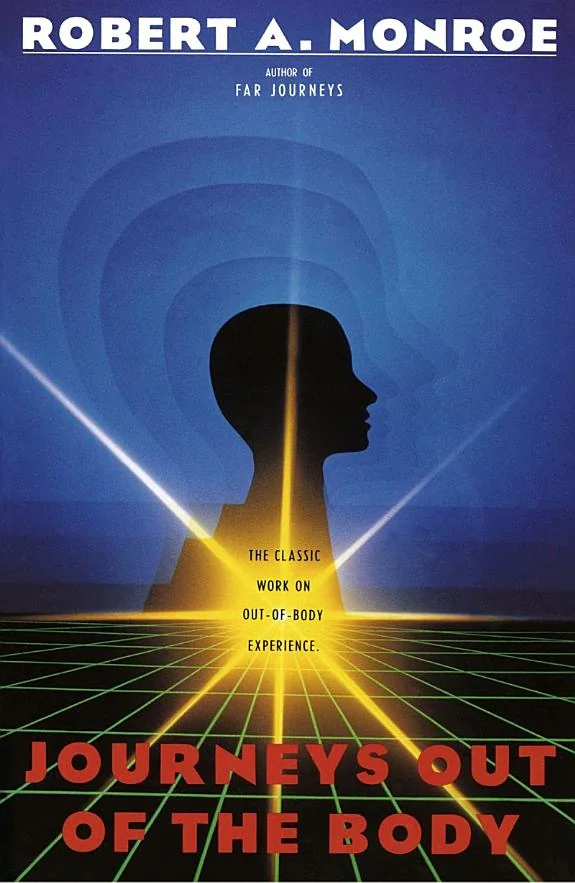
Monroe’s 1971 account of his own out-of-body experiences, "Journeys Out of the Body," remains a foundational text for those interested in consciousness beyond the physical form. The book’s strength lies in its detailed, almost clinical, reporting of phenomena that defy easy categorization. Monroe’s candor about his initial fear and eventual systematic exploration provides a relatable entry point into a subject often shrouded in mysticism or dismissed outright. He meticulously records sensations, visual details, and even the perceived physics of these non-physical excursions. A notable limitation, however, is the inherent subjectivity of the material; while Monroe strives for clarity, the experiences described are deeply personal and difficult to corroborate independently. The passage describing the sensation of "lifting" from his body for the first time, a moment of profound disorientation and wonder, encapsulates the book's unique appeal and its challenge to conventional understanding. It’s a compelling, if unproven, testament to the mind's potential to transcend the physical.
📝 Description
81
Robert Monroe's 1971 book details his early, involuntary out-of-body experiences.
First published in 1971, Robert Monroe's "Journeys Out of the Body" documents his personal encounters with out-of-body experiences (OBEs). The book chronicles the onset of these occurrences, which began spontaneously and increased in frequency. Monroe describes the sensations, perceptions, and environments he encountered during these states, asserting they were distinct realities accessed through altered consciousness, not mere dreams. This work offers a firsthand account of phenomena that touch upon psychology, parapsychology, and subjective awareness.
Individuals interested in consciousness, experiences beyond the physical, and non-ordinary states of awareness will find "Journeys Out of the Body" relevant. It speaks to those curious about lucid dreaming, astral projection, and the wider field of consciousness studies. The book may also interest readers open to anecdotal evidence from personal exploration, as well as those intrigued by the history of consciousness research and early attempts to understand OBEs.
Published in 1971, "Journeys Out of the Body" arrived during a period of increased interest in altered states and Eastern mysticism. Monroe's work aligns with traditions that explore consciousness separate from the physical body, a theme present in concepts like astral projection and shamanic journeys. While contemporary researchers like J.B. Rhine investigated extrasensory perception, Monroe's focus was on personal, systematic documentation of his own dissociative states. His approach contributed to discussions on subjective experience and the potential for awareness beyond conventional physical limits, situated within a growing, though often skeptical, interest in parapsychology.
💡 Why Read This Book?
• Understand the foundational concepts of out-of-body experiences as systematically explored by Robert Monroe, including the 'Silver Cord' and different 'Focus Levels', offering a unique perspective on consciousness beyond the physical body. • Gain insight into the historical context of consciousness research in the early 1970s, situating Monroe's work alongside parallel investigations into parapsychology and altered states of awareness. • Explore firsthand accounts of non-physical exploration, providing a narrative that challenges conventional views of reality and the self, potentially altering your perception of personal consciousness.
⭐ Reader Reviews
Honest opinions from readers who have explored this book.
❓ Frequently Asked Questions
When was Robert A. Monroe's 'Journeys Out of the Body' first published?
Robert A. Monroe's 'Journeys Out of the Body' was first published in 1971, marking a significant early contribution to popular literature on out-of-body experiences.
What are 'Focus Levels' as described in 'Journeys Out of the Body'?
In 'Journeys Out of the Body,' Focus Levels refer to distinct states of consciousness that Monroe identified and explored during his out-of-body excursions, suggesting different vibrational frequencies correspond to different levels of awareness.
Does the book offer scientific proof of out-of-body experiences?
The book presents personal anecdotal evidence and detailed subjective accounts rather than empirical scientific proof. Monroe's work is considered foundational in parapsychology and consciousness studies, but its phenomena remain largely outside mainstream scientific validation.
What is the 'Silver Cord' mentioned in the book?
The 'Silver Cord' is a concept Monroe introduces in 'Journeys Out of the Body' to describe a metaphysical energetic connection believed to link the out-of-body consciousness to the physical body, ensuring a return path.
Who was Robert A. Monroe?
Robert A. Monroe was an American businessman and author, best known for his pioneering work and writings on out-of-body experiences, leading to the establishment of the Monroe Institute.
Is 'Journeys Out of the Body' suitable for beginners interested in OBEs?
Yes, 'Journeys Out of the Body' is often considered an excellent starting point for beginners due to its clear, personal narrative and systematic exploration of OBEs, making the complex subject accessible.
🔮 Key Themes & Symbolism
Consciousness Separation
The core theme is the separation of consciousness from the physical body, termed out-of-body experiences (OBEs). Monroe documents his involuntary and later voluntary separations, detailing the subjective reality perceived during these states. He describes the sensations of dissociation, the perception of his own body from an external viewpoint, and the exploration of environments seemingly unbound by physical laws. This theme challenges the materialist view of consciousness being solely a product of the brain, suggesting a separable, mobile aspect of self.
Levels of Awareness
Monroe posits the existence of distinct 'Focus Levels' corresponding to different states of consciousness. These levels are not merely psychological but represent differing vibrational frequencies or realities accessible through altered states. Moving between these levels allows for different perceptions and interactions. The book suggests that by understanding and manipulating these levels, individuals can gain greater control over their out-of-body experiences and explore a wider spectrum of existence beyond ordinary waking consciousness.
The Energetic Body
Central to Monroe's framework is the concept of an 'energetic body' or 'subtle body' that can exist independently of the physical form. The 'Silver Cord' is presented as a vital energetic link, a safety mechanism ensuring the consciousness can return. This theme explores the idea that humans possess multiple layers of being, with the energetic body being the vehicle for out-of-body travel. The book implies that this energetic aspect is fundamental to our existence, not merely an epiphenomenon.
Mapping Non-Physical Reality
The book is an early attempt to map the territories encountered during OBEs. Monroe describes encountering various entities, landscapes, and phenomena that seem to constitute a distinct non-physical reality. He attempts to categorize these experiences and understand their underlying principles, suggesting a structured, albeit unfamiliar, universe accessible through specific states of consciousness. This exploration contributes to esoteric traditions that speak of other realms or dimensions.
💬 Memorable Quotes
Direct passages from the work, attributed to the author.
“I found myself floating near the ceiling, looking down at my own body lying peacefully in bed.”
— This describes the initial, often involuntary, moment of separation where the individual becomes an observer of their physical form, a key indicator of an out-of-body experience.
“There was a cord, a silvery cord, connecting me to my body. It seemed to be the lifeline.”
— This refers to the 'Silver Cord,' a metaphysical concept representing the energetic tether between the out-of-body consciousness and the physical body, crucial for safe return.
“Each Focus Level seemed to have its own unique laws and properties.”
— This highlights Monroe's theory of 'Focus Levels,' suggesting that different states of consciousness correspond to distinct vibrational realities with their own distinct characteristics and rules.
“The sensation was not one of flying, but of simply *being* elsewhere.”
— This captures the qualitative difference Monroe perceived between physical locomotion and the effortless translocation experienced during out-of-body travel, emphasizing a shift in being rather than movement.
“Fear was my first companion, but curiosity soon took over.”
— This reflects the common emotional arc experienced by those encountering profound, inexplicable phenomena like OBEs – initial apprehension giving way to a drive for understanding and exploration.
🌙 Esoteric Significance
Tradition
Monroe's work, while presented in a secular, almost scientific tone, aligns with ancient traditions concerning the soul's journey and the existence of subtle bodies, particularly within Hermeticism and certain Gnostic and Theosophical streams. It departs from strict adherence to religious dogma, focusing instead on empirical observation of non-physical states. His concept of 'Focus Levels' can be seen as a modern interpretation of different planes of existence or spiritual degrees described in older esoteric texts.
Symbolism
The 'Silver Cord' is a potent symbol, echoing the 'thread of life' found in various mythologies and esoteric systems, representing the vital connection between the spirit and the physical form. The act of 'leaving the body' itself symbolizes liberation from material constraints and the potential for expanded awareness. Monroe's description of non-physical environments can be interpreted as symbolic landscapes representing inner states or collective unconscious territories.
Modern Relevance
Monroe's research and the institute he founded continue to influence contemporary consciousness studies, lucid dreaming communities, and personal development programs focused on exploring non-ordinary states. Thinkers and practitioners in fields like remote viewing, biofield research, and transpersonal psychology often cite Monroe's work as a foundational text for understanding and facilitating out-of-body experiences and related phenomena.
👥 Who Should Read This Book
• Aspiring explorers of consciousness interested in systematic, firsthand accounts of out-of-body experiences, offering a foundational text for understanding subjective phenomena beyond the physical body. • Researchers and students of parapsychology and the history of consciousness studies seeking primary source material from the early 1970s that bridges personal narrative with methodical observation. • Individuals curious about the nature of reality, the self, and the potential for human consciousness to transcend ordinary physical limitations, providing a compelling case study.
📜 Historical Context
Published in 1971, "Journeys Out of the Body" emerged during a period of intense interest in altered states of consciousness, fueled by the counterculture movement and early explorations in parapsychology. The era saw figures like Timothy Leary advocating for psychedelic exploration, and researchers like J.B. Rhine at Duke University investigating ESP. Monroe's work offered a distinct, personal narrative of out-of-body experiences (OBEs), differing from laboratory-bound parapsychological research. While mainstream science often viewed such phenomena with skepticism, Monroe's methodical documentation and the establishment of the Monroe Institute in 1972 provided a structured approach to exploring these states. His work gained traction alongside a broader cultural fascination with Eastern mysticism and non-Western spiritual traditions, positioning it within a zeitgeist receptive to experiences beyond the ordinary.
📔 Journal Prompts
The sensation of the 'Silver Cord' connection to your physical body.
Reading through the different 'Focus Levels' described by Monroe.
Your personal threshold for accepting experiences outside conventional physical reality.
The initial fear accompanying profound altered states.
Mapping the perceived boundaries of your own consciousness.
🗂️ Glossary
Out-of-Body Experience (OBE)
A subjective experience where an individual feels their consciousness has separated from their physical body, allowing them to perceive their surroundings from a vantage point outside their physical form.
Silver Cord
A concept described by Monroe as an energetic, elastic cord connecting the out-of-body consciousness to the physical body, believed to be essential for maintaining life and ensuring a return.
Focus Levels
Monroe's term for distinct states or vibrational frequencies of consciousness that can be accessed, each corresponding to different perceived realities or modes of experience.
Energetic Body
A non-physical body or subtle energy form that is believed to be capable of separating from the physical body during an OBE, acting as the vehicle for consciousness.
Dissociation
The perceived separation of consciousness from the physical body, a key characteristic of out-of-body experiences as detailed in the book.
Locomotion (Non-physical)
The means by which consciousness moves or transitions between locations during an OBE, often described as effortless translocation rather than physical movement.
Subjective Reality
The perceived world and experiences encountered during an OBE, which, while personal, are presented by Monroe as having their own internal consistency and structure.
🔮 Readers Also Liked
Browse all →









More by Robert A. Monroe
All books →




More Free Occult Philosophy Books
View all →