Crystal gazing and clairvoyance

 72
72

Crystal gazing and clairvoyance
Melville's "Crystal Gazing and Clairvoyance" offers a surprisingly grounded perspective on practices often shrouded in mysticism. The strength of the work lies in its methodical approach, treating clairvoyance not as an ethereal gift but as a trainable faculty. Melville’s discussion of the necessary mental discipline, particularly the concept of sustained concentration, is particularly well-articulated, drawing parallels to other disciplines requiring focus. A limitation, however, is the book's occasional reliance on terminology that, while standard for its era, might require a glossary for contemporary readers unfamiliar with 1970s esoteric discourse. The section detailing the preparation of the crystal itself, emphasizing purity and appropriate lighting, provides a concrete, actionable insight that distinguishes it from purely theoretical works. It’s a valuable manual for the earnest investigator of psychic phenomena.
📝 Description
72
John Melville's 1970 book breaks down crystal gazing into systematic instruction and theoretical underpinnings.
Published in 1970, "Crystal Gazing and Clairvoyance" by John Melville examines the practice of scrying and extrasensory perception. Melville moves past anecdotal accounts to provide methodical instruction and theoretical frameworks for these practices. He investigates the psychological conditions that foster clairvoyant experiences and offers guidance on how to achieve them. The book details the tools used in scrying, with a focus on the crystal ball but also including other reflective surfaces, explaining their preparation and application.
This work is for dedicated students of psychic phenomena and esoteric traditions who seek to understand the core principles behind these subjects. It is suitable for readers aiming to cultivate their own clairvoyant abilities or those interested in the historical methods of practitioners. The book also holds relevance for those studying parapsychology and the history of occultism.
Melville's 1970 text appeared during a resurgence of interest in paranormal studies, coinciding with the counterculture's exploration of alternative belief systems. It aligns with early parapsychological research and draws from the legacy of Theosophy. The book offers a more structured approach than some contemporary spiritualist or mystical writings, influenced by figures like J.B. Rhine.
💡 Why Read This Book?
• Understand the practical mechanics of scrying by learning about the specific requirements for preparing a crystal ball and the environment, as detailed in Melville's instructions. • Develop mental discipline for psychic work through Melville's emphasis on sustained concentration, a technique applicable beyond crystal gazing to other forms of meditation and focus. • Gain insight into interpreting symbolic visions by studying Melville's explanations of how the subconscious mind communicates, offering a framework for personal symbolic analysis.
⭐ Reader Reviews
Honest opinions from readers who have explored this book.
❓ Frequently Asked Questions
When was John Melville's 'Crystal Gazing and Clairvoyance' first published?
The seminal work 'Crystal Gazing and Clairvoyance' by John Melville was first published in 1970, marking its entry into the discourse on psychic phenomena during a period of heightened interest in the esoteric.
What is the primary focus of Melville's book?
Melville's book primarily focuses on the systematic instruction and theoretical exploration of crystal gazing and clairvoyance, offering practical guidance for developing these psychic abilities.
Does the book only discuss crystal balls for scrying?
While the crystal ball is a central focus, "Crystal Gazing and Clairvoyance" also touches upon the use of other reflective surfaces for scrying, detailing their preparation and application.
What mental states does Melville emphasize for clairvoyance?
Melville emphasizes the importance of specific psychological states, particularly sustained concentration and visualization, which he posits are crucial for opening oneself to clairvoyant reception.
Is this book suitable for absolute beginners in psychic studies?
Yes, while it offers depth, the book's systematic approach makes it suitable for beginners eager to learn the foundational principles and practical techniques of crystal gazing and clairvoyance.
What role does symbolism play in Melville's view of clairvoyance?
Melville views symbolism as a key language of the subconscious or other intelligences during clairvoyant experiences, detailing how visions often employ symbolic imagery for communication.
🔮 Key Themes & Symbolism
The Science of Scrying
Melville frames crystal gazing not as mere fortune-telling but as a disciplined practice rooted in psychological principles. He meticulously outlines the conditions necessary for successful scrying, including the optimal mental state of the practitioner and the physical environment. This involves cultivating a specific form of deep concentration, akin to meditative states, which allows the subconscious mind to access information beyond ordinary perception. The book clarifies the process, presenting it as a trainable skill rather than an innate, unpredictable gift, thereby making it accessible to dedicated students of esoteric arts.
Visualization and the Inner Eye
Central to Melville's methodology is the concept of the 'inner eye' and the power of visualization. He explains how the practitioner must learn to impress mental images onto the reflective surface of the crystal, not as forcing an outcome, but as creating a receptive field. This involves a delicate balance of intent and passivity. The ability to hold a clear mental picture, coupled with a relaxed, expectant state, is presented as the mechanism by which clairvoyant impressions are received. This theme underscores the internal, psychological nature of the scrying process.
Interpreting Symbolic Language
A significant portion of the book is dedicated to understanding the nature of clairvoyant communication, which Melville posits often occurs through symbolic language. Visions are not always literal but are frequently couched in metaphors and archetypal imagery generated by the subconscious or other non-physical intelligences. He provides guidance on how to approach these symbols, encouraging a non-judgmental observation and intuitive interpretation. This theme highlights the interpretive layer of scrying, where the received images must be translated into meaningful insights.
The Role of the Crystal
Melville examines the specific properties and preparation of the crystal ball itself, treating it as a conduit or focal point for psychic energy. He discusses the ideal characteristics of a scrying crystal, its cleansing, and its proper handling. The crystal serves as a visual anchor, helping to stabilize the practitioner's focus and provide a surface upon which the subtle energies can manifest more readily. The book emphasizes that the crystal is a tool to aid the mind, not a magical object with inherent power on its own.
💬 Memorable Quotes
Direct passages from the work, attributed to the author.
“The crystal is not a source of power, but a mirror to the inner sight.”
— This statement emphasizes that the crystal ball functions as a focal point and amplifier for the practitioner's own psychic faculties. It suggests that the power resides within the individual's mind and perception, with the crystal serving to facilitate and clarify the process of clairvoyance.
“Concentration is the key that unlocks the door to the subconscious.”
— Melville highlights sustained mental focus as the essential prerequisite for accessing deeper levels of consciousness. This concept suggests that by training the mind to remain fixed on a single point or idea, one can bypass superficial thoughts and reach the richer, symbolic language of the subconscious.
“Visions often speak in a language of symbols, not literal pronouncements.”
— This interpretation underscores the symbolic nature of clairvoyant messages. It advises practitioners to look beyond the surface appearance of images received in scrying, recognizing that they often represent deeper truths or concepts through metaphor and allegory.
“The astral light contains impressions of all that is.”
— This concept posits the existence of a universal energetic field or 'astral light' that holds all information. Clairvoyance, in this view, involves attuning oneself to this field to perceive these stored impressions, moving beyond the limitations of physical senses.
💡 Key Ideas
Editorial paraphrase of the work's core concepts — not direct quotes.
Prepare the mind before preparing the crystal.
This quote prioritizes the internal state of the practitioner over external tools. It suggests that mental readiness, emotional balance, and focused intention are more crucial for successful clairvoyance than the physical properties or ritualistic preparation of the scrying medium.
🌙 Esoteric Significance
Tradition
Melville's work aligns with the Western esoteric tradition, particularly its branches focused on psychical research and practical occultism that gained prominence in the late 19th and 20th centuries. It draws implicitly from Hermetic principles concerning the correspondence between the microcosm (human consciousness) and the macrocosm (universal forces). While not overtly Kabbalistic or Gnostic, it shares with these traditions an emphasis on inner knowledge and the development of faculties beyond the mundane senses. The book contributes to the lineage of practical guides aimed at developing latent psychic powers, building upon foundations laid by earlier occultists and psychical researchers.
Symbolism
The primary symbol is, of course, the crystal ball itself, representing a polished, reflective surface that acts as a focal point for the practitioner's consciousness and a screen for psychic impressions. The 'inner eye' is another key symbolic concept, denoting the faculty of clairvoyant perception that resides within the individual's mind, independent of physical vision. The 'astral light' is a more abstract symbol, representing a pervasive energetic medium that holds information and can be accessed through psychic attunement, serving as a reservoir of knowledge and experience.
Modern Relevance
Contemporary practices in mindfulness, meditation, and consciousness studies often echo Melville's emphasis on mental discipline and focused attention. While the specific practice of crystal gazing may not be mainstream, the underlying principles of cultivating inner awareness, exploring the subconscious, and interpreting symbolic imagery remain relevant in modern psychology, dream analysis, and certain therapeutic modalities. Thinkers and practitioners in fields like transpersonal psychology and modern witchcraft often find value in such historical texts for understanding the evolution of consciousness exploration and psychic development techniques.
👥 Who Should Read This Book
• Aspiring practitioners of scrying seeking a systematic, step-by-step guide to developing clairvoyant abilities using a crystal ball. • Students of esoteric history interested in understanding the methodologies and conceptual frameworks of 20th-century psychic research and occult practices. • Individuals curious about the psychological underpinnings of altered states of consciousness and extrasensory perception, looking for practical exercises.
📜 Historical Context
Published in 1970, John Melville's "Crystal Gazing and Clairvoyance" emerged during a period of significant public and academic interest in parapsychology and occultism. The late 1960s and early 1970s saw a surge in explorations of consciousness, influenced by the counterculture movement and a growing dissatisfaction with purely materialistic worldviews. Melville's work contributed to this milieu by providing a structured, almost instructional, approach to psychic phenomena, contrasting with the more purely spiritualist or philosophical texts. It engaged with the legacy of earlier esoteric traditions, such as Theosophy, which had already popularized concepts like astral planes and psychic abilities. Contemporaries like Eileen J. Garrett, a renowned medium, were actively involved in parapsychological research during this era, and Melville's book offered a practical manual for those inspired by such figures, bridging the gap between theoretical interest and personal practice.
📔 Journal Prompts
Crystal preparation: Reflect on the specific conditions Melville recommends for a scrying crystal.
The inner eye: Describe a personal experience where you felt you perceived something beyond ordinary sight.
Symbolic interpretation: Analyze a recurring dream symbol using Melville's approach to subconscious language.
Concentration practice: Detail your efforts to maintain sustained focus as described by Melville.
Astral light impressions: Contemplate what kind of information might be stored in the 'astral light'.
🗂️ Glossary
Scrying
The practice of seeking knowledge or visions by gazing into a reflective surface, typically a crystal ball, water, or polished metal.
Clairvoyance
The purported psychic ability to perceive objects, events, or information beyond the normal range of the senses, often through mental imagery or intuition.
Inner Eye
A metaphorical term for the faculty of psychic perception or intuition within an individual, distinct from physical sight.
Astral Light
In esoteric traditions, a subtle, luminous, energetic medium believed to pervade the universe and contain imprinted impressions of all thoughts, events, and forms.
Visualization
The mental process of forming clear and detailed images or scenes in the mind, used as a technique for focus, manifestation, or accessing psychic impressions.
Concentration
The ability to direct and sustain mental focus on a specific object, thought, or activity, crucial for deep psychic work according to Melville.
Subconscious Mind
The part of the mind below conscious awareness, believed by Melville to be a primary channel for receiving and processing psychic information and symbolic imagery.
🔮 Readers Also Liked
Browse all →








More by John Melville
All books →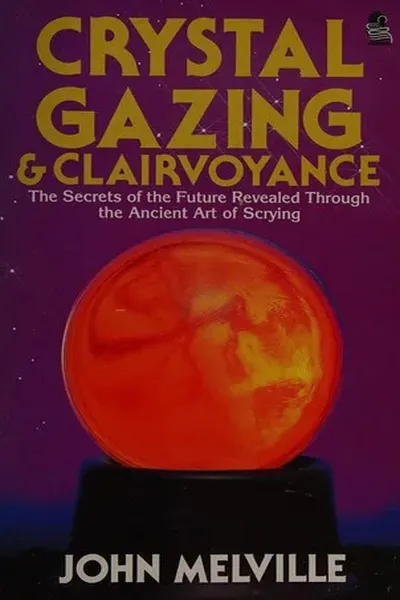
More Free Occult Philosophy Books
View all →