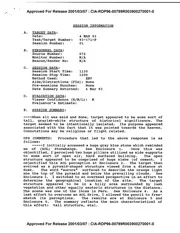
Journeys Out of the Body
 73
73

Journeys Out of the Body
Robert Monroe’s "Journeys Out of the Body" offers a direct account of extraordinary phenomena. His candid recounting of spontaneous out-of-body experiences, particularly his descriptions of navigating unfamiliar environments with a distinct "second body," provides a compelling, if unvarnished, testimony. The strength lies in its sheer, unpretentious reporting; Monroe doesn't posture as a guru, but as a businessman who stumbled into the inexplicable. A notable limitation is the lack of deeper theoretical frameworks, which is understandable given its initial publication in 1971, but leaves the reader yearning for more context or comparative analysis. The passages describing his initial fear and subsequent systematic exploration of these states, such as his early attempts to control his "second body's" movement, are particularly striking. This book serves as a foundational, personal testament to experiences that defy conventional science.
📝 Description
73
Robert Monroe's 1971 book chronicles his personal out-of-body experiences, detailing a reality beyond physical form.
First published in 1971, "Journeys Out of the Body" documents Robert Monroe's firsthand accounts of experiencing states of consciousness separate from his physical body. Monroe, then a Virginia businessman, describes how these spontaneous phenomena began to occur, allowing him to perceive realities beyond his normal waking awareness. The book serves as both a personal memoir and an early record of explorations into altered states of consciousness.
It details the concept of the out-of-body experience (OBE), where consciousness, or a distinct "second body," appears to separate from the physical form. Monroe characterizes this as a real, though non-physical, existence enabling travel to various locations and states of awareness. He distinguishes between "locational" OBEs, involving perceived physical travel, and "non-locational" experiences in abstract or symbolic environments.
Published during a period of heightened interest in parapsychology and consciousness studies in the late 20th century, "Journeys Out of the Body" stood out for its direct, non-academic reporting. Unlike more theoretical or religiously framed discussions of soul or spirit separation, Monroe presented his experiences as a businessman, offering a grounded, empirical account. This work emerged alongside a broader cultural interest in Eastern philosophies and mystical experiences, contributing to a growing dialogue around subjective realities and the potential for consciousness to exist independently of the physical form.
💡 Why Read This Book?
• Gain a firsthand account of spontaneous out-of-body experiences, detailing the initial shock and subsequent exploration of non-physical travel, as described in Monroe's early chapters. • Understand the concept of a "second body" as a vehicle for consciousness, a core element Monroe meticulously outlines, offering a tangible model for subjective experiences. • Explore the potential for consciousness to exist and travel independently of the physical form, a central theme presented through Monroe's 1971 narrative and subsequent research.
⭐ Reader Reviews
Honest opinions from readers who have explored this book.
❓ Frequently Asked Questions
What is the "second body" Robert Monroe describes?
The "second body" is Monroe's term for the non-physical vehicle or consciousness that separates from the physical body during an out-of-body experience. It is perceived as a distinct entity capable of independent movement and perception.
When was "Journeys Out of the Body" first published?
The original publication date for "Journeys Out of the Body" was 1971. The edition referenced here was published on 2014-11-12.
Did Robert Monroe found an institute based on his experiences?
Yes, Robert Monroe founded the Monroe Institute, an organization dedicated to exploring human consciousness and facilitating out-of-body experiences through various programs and technologies.
What kind of experiences does the book detail?
The book details spontaneous and later, to some extent, controlled out-of-body experiences, including astral projection, perception of distant locations, and encounters with non-physical entities.
Is this book a scientific study of OBEs?
While it documents experiences that have become subjects of scientific interest, "Journeys Out of the Body" is primarily a personal memoir and early exploration, rather than a formal scientific study.
What is the significance of the 2014 reissue?
The 2014 reissue makes Monroe's foundational work accessible to a new generation of readers interested in consciousness exploration, spiritual experiences, and the legacy of the Monroe Institute.
🔮 Key Themes & Symbolism
Consciousness Separation
The book centers on the phenomenon of consciousness, or a distinct "second body," separating from the physical form. Monroe details how this separation occurs, the sensations associated with it, and the ability to perceive beyond the confines of the physical body. This theme explores the potential for an independent existence of consciousness, challenging materialist views and opening avenues for understanding subjective reality and non-physical dimensions.
Exploration of Non-Physical Realms
Monroe's accounts vividly describe journeys into what he terms "locational" and "non-locational" environments. These realms are experienced through the "second body" and can range from familiar earthly locations perceived from an external viewpoint to abstract, symbolic, or entirely alien dimensions unbound by physical laws. This theme investigates the nature of these other realities and the consciousness's capacity to navigate them.
Personal Transformation
The author's own life is irrevocably altered by these experiences. Initially unexpected and even frightening, the OBEs lead Monroe to a profound reevaluation of existence, reality, and the self. The book chronicles his journey from a bewildered businessman to an explorer of consciousness, highlighting the personal growth and shift in thinking that such encounters can instigate.
The "Second Body"
An important concept is the "second body," a distinct, non-physical energetic form that serves as the vehicle for consciousness during OBEs. Monroe describes its properties and how it interacts with both the physical and non-physical worlds. This concept provides a framework for understanding the subjective experience of separation and travel, offering a tangible yet esoteric model for the astral or etheric body.
💬 Memorable Quotes
Direct passages from the work, attributed to the author.
“I found myself outside my physical body.”
— This simple, declarative statement expresses the core experience of the book. It signifies the moment the author's perception shifted from the physical to the non-physical, marking the beginning of his extraordinary explorations.
“There was a second body I could use.”
— This highlights the crucial discovery of a functional, non-physical vehicle. It suggests that consciousness is not merely an ephemeral state but can inhabit and operate through a distinct energetic form.
“I was in a place unbound by time or death.”
— This interpretation speaks to the nature of the realities encountered during out-of-body experiences. It suggests these realms operate under different laws, transcending the limitations of physical existence and mortality.
“My physical body was inert, like a discarded shell.”
— This vivid description conveys the profound sense of detachment from the physical form during an OBE. It emphasizes the consciousness's independence and the relative insignificance of the physical body once separation occurs.
“The experience was not a dream, but a different kind of wakefulness.”
— This distinguishes the out-of-body state from ordinary dreaming. It posits that these experiences represent an alternate, perhaps even more heightened, state of conscious awareness and perception.
🌙 Esoteric Significance
Tradition
While not strictly adhering to a single esoteric lineage, Monroe's work draws parallels with concepts found in Theosophy, Rosicrucianism, and certain Hermetic traditions concerning the existence of subtle bodies (like the astral body) and the possibility of consciousness travel beyond the physical. It departs from more structured traditions by focusing on spontaneous, individual experience rather than adherence to a codified system or ritualistic practice.
Symbolism
The "second body" serves as a primary symbol, representing the soul or consciousness capable of independent existence and travel. The concept of "locational" versus "non-locational" journeys symbolizes the spectrum of reality, from perceived physical dimensions to abstract or archetypal realms. The experience of the physical body becoming "inert" symbolizes the detachment of awareness from material constraints.
Modern Relevance
Monroe's work remains highly relevant in contemporary discussions of consciousness studies, transpersonal psychology, and lucid dreaming. His pioneering efforts laid groundwork for practices and technologies aimed at inducing and exploring altered states, influencing modern meditation techniques, biofeedback applications, and virtual reality explorations of consciousness. Thinkers in the field of consciousness research continue to reference his foundational research.
👥 Who Should Read This Book
• Individuals intrigued by firsthand accounts of out-of-body experiences and astral projection, seeking a non-academic, personal narrative. • Explorers of consciousness and alternative states of awareness, interested in understanding subjective realities beyond normal waking perception. • Students of parapsychology and the history of consciousness research, looking for a key work that popularized OBE phenomena in the late 20th century.
📜 Historical Context
Robert Monroe's "Journeys Out of the Body," first published in 1971, emerged during a period of intense public and academic fascination with altered states of consciousness. The counterculture movement had fostered an openness to non-ordinary experiences, while researchers like Stanislav Grof were exploring LSD-assisted psychotherapy and Holotropic Breathwork. Monroe’s work offered a compelling, firsthand account of spontaneous out-of-body experiences (OBEs), distinct from the more esoteric or religiously framed accounts prevalent at the time. While figures like J.B. Rhine had previously conducted parapsychological research at Duke University, Monroe's approach was grounded in personal narrative rather than laboratory rigor. The book’s reception was significant, contributing to a growing popular interest in astral projection and consciousness exploration, and eventually leading to the establishment of the Monroe Institute.
📔 Journal Prompts
Describe the perceived qualities of your "second body" based on Monroe's accounts.
Reflect on the distinction between "locational" and "non-locational" journeys as presented in the book.
Consider the implications of consciousness existing unbound by time or death.
Analyze the initial fear associated with spontaneous OBEs and how it transformed for Monroe.
Compare Monroe's early experiences with contemporary theories of consciousness.
🗂️ Glossary
Out-of-Body Experience (OBE)
A phenomenon where an individual perceives themselves as temporarily separated from their physical body, often with the sensation of floating or traveling independently.
Second Body
Robert Monroe's term for the non-physical energetic vehicle or consciousness that separates from the physical body during an OBE, enabling perception and movement.
Locational OBE
An out-of-body experience where the consciousness perceives itself traveling to and observing specific, recognizable physical locations.
Non-locational OBE
An out-of-body experience where consciousness travels to abstract, symbolic, or non-physical realms not tied to specific geographic locations.
Consciousness
The state or quality of awareness, or of being aware of an external object or something within oneself. In this context, the entity capable of experiencing OBEs.
Astral Projection
A general term for the experience of the spirit or consciousness leaving the physical body to travel in the astral plane or other non-physical realms.
Wakefulness
The state of being awake and aware, contrasted with sleep or unconsciousness; in this book, it's used to differentiate OBEs from ordinary dreams.
This book appears in 1 collection
🔮 Readers Also Liked
Browse all →







From the “Out-of-Body Experience” Collection
View all →









More Free Occult Philosophy Books
View all →