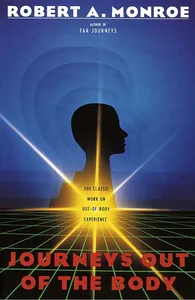
Journeys out of the body

 81
81

Journeys out of the body
Robert A. Monroe’s "Journeys Out of the Body" is less a polished narrative and more a raw, earnest report from the frontier of subjective experience. Monroe doesn't shy away from the bizarre or the profound, detailing his initial, uncontrolled separations from his physical form with a disarming directness. His meticulous cataloging of "Focus Levels" and the associated phenomena provides a structured framework for understanding these states, a significant contribution to the literature on out-of-body experiences. However, the book sometimes struggles under the weight of its own empirical ambition; the later sections, while attempting to formalize the research, can feel a bit dry compared to the visceral accounts of his early explorations. A particularly striking element is his description of the "Silver Cord," which, despite its speculative nature, serves as a potent metaphor for the energetic connection between different states of being. It remains a foundational text for anyone seeking to understand the practical mechanics of non-physical exploration.
📝 Description
81
Robert A. Monroe first wrote about his out-of-body experiences in 1971.
In "Journeys Out of the Body," Robert A. Monroe recounts his personal experiences with altered states of consciousness, specifically what he termed out-of-body experiences (OBEs). He details how these separations from his physical body initially occurred involuntarily. Monroe then describes his systematic efforts to understand, control, and direct these phenomena, moving from passive observation to active participation.
This work is for anyone interested in the limits of human consciousness, parapsychology, or consciousness studies. Readers curious about spontaneous OBEs, or those seeking methods to induce them, will find Monroe's accounts particularly relevant. It also speaks to researchers and practitioners examining the mind-body connection and the idea that consciousness might exist apart from the physical brain.
Monroe's book emerged in the early 1970s, a time when interest in parapsychology and non-traditional spiritual experiences was gaining traction. It offered a personal, experiential perspective on consciousness detached from the physical body, aligning with a broader cultural shift towards exploring subjective realities outside established religious doctrines. While figures like J.B. Rhine had previously studied psychic phenomena, Monroe's direct, first-person narrative brought these concepts to a wider audience, contributing to discussions on spirituality and the nature of awareness beyond the material world.
💡 Why Read This Book?
• You will learn about the systematic approach to inducing and controlling out-of-body experiences, as detailed in Monroe's development of the "Focus Levels" technique, offering a practical methodology distinct from purely theoretical accounts. • You will gain an understanding of the "Silver Cord" concept, a specific energetic metaphor Monroe uses to explain the connection between the physical body and the consciousness during OBEs, providing a unique conceptual tool. • You will encounter firsthand accounts of experiences that shaped the founding of the Monroe Institute, offering a direct glimpse into the genesis of a significant organization dedicated to consciousness research since its inception.
⭐ Reader Reviews
Honest opinions from readers who have explored this book.
❓ Frequently Asked Questions
What is the primary focus of Robert A. Monroe's "Journeys Out of the Body"?
The book primarily details Robert A. Monroe's personal experiences and research into out-of-body experiences (OBEs), exploring how consciousness can separate from the physical body and navigate non-physical realities.
When was "Journeys Out of the Body" first published?
Robert A. Monroe's "Journeys Out of the Body" was first published in 1988, becoming a significant work in the field of consciousness studies.
What are "Focus Levels" as described by Monroe?
"Focus Levels" are distinct states of consciousness that Monroe identified and developed methods to achieve, each offering unique potentials for exploration and understanding during out-of-body experiences.
Does the book offer practical techniques for inducing OBEs?
Yes, while detailing his personal journey, Monroe also outlines the principles and techniques he developed, particularly related to "Focus Levels," which are intended to help individuals achieve and control their own out-of-body experiences.
What is the significance of the "Silver Cord" in Monroe's work?
The "Silver Cord" is a concept Monroe introduces to describe the energetic tether believed to connect the physical body to the consciousness when it is separated during an OBE, ensuring a safe return.
Is Robert A. Monroe's work related to any specific spiritual or esoteric tradition?
While Monroe's work is experiential and not strictly tied to one tradition, it has found resonance with various esoteric, metaphysical, and consciousness-focused communities interested in exploring non-physical realities.
🔮 Key Themes & Symbolism
Consciousness Beyond the Body
The central theme is the assertion and exploration of consciousness as an entity separable from the physical form. Monroe provides detailed, personal accounts of his experiences where his awareness seemed to leave his body, travel, and interact with non-physical environments. He posits that consciousness is not merely a product of brain activity but a fundamental aspect of existence that can operate independently. This exploration challenges conventional materialistic views of the mind and opens up possibilities for understanding subjective reality from a new perspective.
The Explorer Program and OBE Research
Monroe details his involvement and eventual founding of the Monroe Institute, particularly its "Explorer Program." This program aimed to systematically research and teach individuals how to induce and manage out-of-body experiences. The emphasis was on developing reliable methods, moving beyond random or spontaneous occurrences to a more controlled and understood practice. This highlights a commitment to empirical investigation of subjective phenomena, seeking to map the terrain of non-physical reality and consciousness.
Focus Levels and Consciousness States
A key contribution is the conceptualization of "Focus Levels." Monroe describes different states of consciousness that can be accessed, each with distinct characteristics and potentials for experience. These levels are not merely passive states but active environments that can be explored using specific mental techniques. Understanding and navigating these Focus Levels becomes crucial for conscious travel and interaction within the non-physical realms, offering a framework for subjective exploration.
The Nature of Reality
The book implicitly and explicitly questions the nature of reality itself. By presenting compelling evidence of experiences that transcend the limitations of the physical world, Monroe suggests that our everyday perception is only a fraction of what is truly accessible. The explorations into different dimensions and states of being imply a multi-layered reality, where consciousness plays an active role in shaping or perceiving these varied planes of existence.
💬 Memorable Quotes
Direct passages from the work, attributed to the author.
“My initial separations were involuntary and frightening.”
— This statement underscores the raw, uncontrolled nature of Monroe's earliest out-of-body experiences, emphasizing the personal challenge and fear he initially faced before developing his systematic approach.
“The Silver Cord connects us to our physical form.”
— This refers to Monroe's concept of an energetic tether that sustains the link between the consciousness and the physical body during an out-of-body state, ensuring a connection for return.
“Focus Levels offer distinct environments for consciousness.”
— This highlights Monroe's system of categorizing different states of non-physical experience, suggesting that each 'Focus Level' presents unique characteristics and opportunities for exploration.
“Consciousness can exist and function independently of the physical brain.”
— This core tenet of Monroe's work challenges materialistic assumptions, proposing that the mind or consciousness is not solely a product of biological processes but can have an independent existence.
“We learned to direct our journeys.”
— This phrase signifies the transition from involuntary, uncontrolled experiences to a state of mastery and intentional exploration of non-physical realms, a central goal of Monroe's research.
🌙 Esoteric Significance
Tradition
Monroe's work bridges experiential exploration with a quasi-scientific methodology, aligning it broadly with modern esoteric thought that seeks empirical validation for subjective phenomena. While not strictly adhering to any single lineage like Hermeticism or Theosophy, his explorations into consciousness separation and non-physical realms echo themes found in astral projection traditions and certain mystical philosophies that posit the existence of subtle bodies and planes of existence beyond the physical.
Symbolism
The "Silver Cord" is a central symbolic motif, representing the vital energetic link between the physical body and the astral or out-of-body consciousness, ensuring coherence and safe return. "Focus Levels" function as symbolic maps of consciousness, delineating different states or dimensions that can be accessed, akin to layered cosmologies in various esoteric systems that describe ascending or descending planes of reality.
Modern Relevance
Monroe's work continues to be highly relevant in contemporary discussions surrounding consciousness, meditation, and lucid dreaming. His methodologies, particularly the audio-guidance programs developed by the Monroe Institute, are utilized by countless individuals seeking to explore altered states. Thinkers and practitioners in fields ranging from transpersonal psychology to neurofeedback and biohacking often reference Monroe's pioneering efforts in mapping and achieving voluntary control over non-physical states of awareness.
👥 Who Should Read This Book
• Individuals interested in the practical aspects of out-of-body experiences, seeking to understand potential methods for inducing and navigating non-physical states beyond theoretical speculation. • Researchers and students of consciousness studies, parapsychology, and the mind-body problem, looking for foundational firsthand accounts and early research frameworks. • Skeptics and open-minded individuals curious about subjective experiences that challenge conventional understandings of reality and the nature of awareness.
📜 Historical Context
Published in 1988, "Journeys Out of the Body" emerged during a late 20th-century period where interest in consciousness, parapsychology, and alternative states of awareness experienced a resurgence, partly fueled by the counterculture of previous decades. Robert A. Monroe's work followed in the footsteps of earlier parapsychologists like J.B. Rhine, who had sought to scientifically study phenomena such as telepathy and precognition. However, Monroe's approach was distinct in its deeply personal, experiential focus and its development of practical techniques for inducing out-of-body experiences (OBEs). The book gained traction amidst a broader cultural shift questioning purely materialistic explanations of reality, offering a compelling narrative of subjective exploration. While not directly engaging with specific academic debates at the time, Monroe's research and the subsequent founding of the Monroe Institute in 1974 provided a unique, non-academic platform for studying consciousness beyond the physical body, influencing a generation of independent researchers and experiencers.
📔 Journal Prompts
Your initial involuntary separation experiences: Compare Monroe's fear to your own potential responses.
The concept of the Silver Cord: How does this metaphor shape your understanding of connection?
Monroe's development of Focus Levels: What parallels exist in your own attempts to alter consciousness?
Navigating non-physical environments: What ethical considerations arise from such exploration?
The role of the Monroe Institute: Reflect on the value of structured research into subjective phenomena.
🗂️ Glossary
Out-of-Body Experience (OBE)
A subjective experience wherein an individual feels their consciousness has temporarily separated from their physical body and can perceive the world from a location outside their physical form.
Focus Levels
Distinct states of consciousness identified by Robert A. Monroe, achieved through specific techniques, each offering different perceptual and interactive potentials for the explorer.
Silver Cord
A hypothesized energetic connection, described by Monroe, that links the out-of-body consciousness to the physical body, ensuring its integrity and facilitating a return.
Explorer Program
A research and training program developed by Robert A. Monroe and his institute to systematically study and teach individuals how to achieve and control out-of-body experiences.
Non-physical reality
Any dimension, state, or field of existence that is not governed by the laws of physical matter and energy as understood in conventional science, accessible through altered states of consciousness.
Consciousness
The state or quality of awareness, or of being aware of an external object or something within oneself; in Monroe's context, it is viewed as a fundamental entity capable of independent operation.
Involuntary Separation
An out-of-body experience that occurs spontaneously without conscious intent or effort on the part of the individual.
🔮 Readers Also Liked
Browse all →









More by Robert A. Monroe
All books →




More Free Occult Philosophy Books
View all →