Hinduism
 84
84

Hinduism
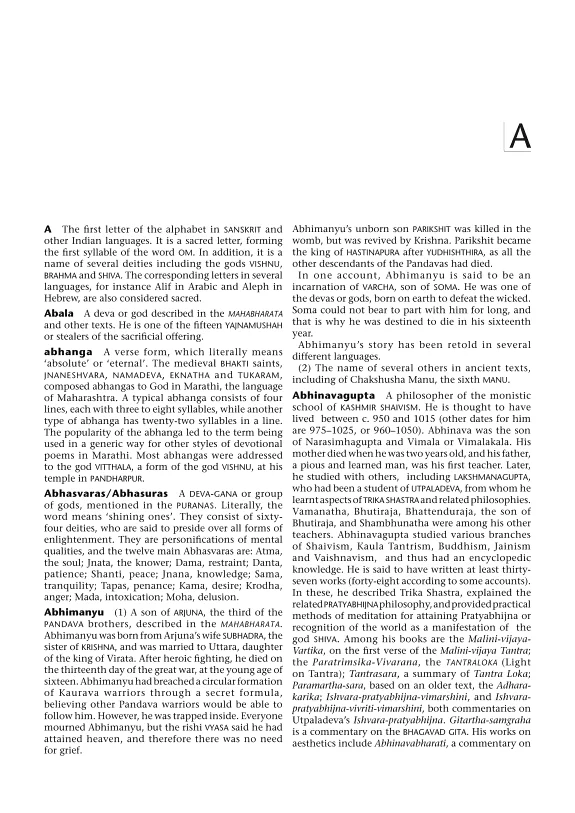
Roshen Dalal's "Hinduism: An Alphabetical Guide" presents a formidable attempt to map the sprawling landscape of Indic religious thought. Its primary strength lies in its encyclopedic scope and the clarity it brings to complex topics through its structured, alphabetical approach. I found the entries on specific philosophical schools, such as the Advaita Vedanta, particularly illuminating, offering precise definitions that cut through common misconceptions. However, the sheer volume of information, while a strength, can also be a limitation; the concise nature of alphabetical entries sometimes leaves one yearning for deeper exploration of the interconnections between concepts. A passage detailing the concept of 'Moksha' (liberation) effectively captures the book's utility, providing a succinct yet informative explanation. Dalal's work is an indispensable reference for serious students, though perhaps less suited for those seeking a narrative-driven introduction.
This guide is an essential lexicon for understanding the multifaceted nature of Hinduism.
📝 Description
84
Roshen Dalal's Hinduism, published in 2010, is an alphabetical guide to a vast religious tradition.
Roshen Dalal's Hinduism functions as an alphabetical reference to the complex religious traditions of India. First released in 2010, the book details a wide range of concepts, deities, practices, and philosophical schools within the Hindu faith. It goes beyond mere listing, adding historical context and critical analysis to show the development of Hindu thought and practice. The work connects these elements to Indian culture and the foundational Vedas.
This book is useful for anyone wanting a structured overview of Hinduism. It suits academic researchers, students of religion, and general readers. Its alphabetical arrangement helps clarify specific terms, deities like Shiva or Vishnu, or ideas such as Karma and Dharma. Dalal's work traces the religion's history from the Vedic period, acknowledging its growth and adaptation over millennia. It presents Hinduism as an organically developing tradition with regional differences, rather than a single, unified doctrine.
While Hinduism is a broad tradition, Dalal's guide touches upon philosophical schools and concepts that resonate with esoteric inquiry. The detailed explanations of Karma, Dharma, and various deities offer entry points for understanding the cyclical nature of existence and the divine forces at play, concepts central to many esoteric paths. The book’s historical tracing from the Vedic period also highlights ancient roots often explored in esoteric studies, providing a structured entry into a tradition that has informed diverse spiritual practices and philosophies.
💡 Why Read This Book?
• Gain clarity on the philosophical underpinnings of Hindu traditions by exploring detailed definitions of concepts like 'Brahman' and 'Atman', as presented in the alphabetical entries. • Understand the historical evolution of Hindu practices by examining the origins and significance of festivals such as the Kumbh Mela, contextualized within the book's historical sections. • Demystify the diverse pantheon and iconography of Hinduism through precise explanations of deities like Durga and Ganesha, offering a structured way to appreciate their roles.
⭐ Reader Reviews
Honest opinions from readers who have explored this book.
❓ Frequently Asked Questions
What are the primary sources of Hindu philosophy discussed in Roshen Dalal's book?
The book emphasizes the Vedas as the foundational scriptures of Hinduism. It explores how later texts and philosophical schools, such as the Upanishads and Puranas, developed and interpreted these early Vedic traditions.
How does Roshen Dalal's guide explain the concept of Karma?
Dalal's guide defines Karma as the principle of cause and effect, where actions (karma) in this life influence future consequences and rebirths. It clarifies its role in the cycle of Samsara.
What are some key festivals covered in the 'Hinduism' book?
The book details numerous festivals, including major celebrations like Diwali (the festival of lights) and Holi (the festival of colors), explaining their mythological significance and ritualistic practices.
Does the book discuss different schools of Hindu philosophy?
Yes, Roshen Dalal's work systematically addresses various philosophical schools, such as Advaita Vedanta, Vishishtadvaita, and Dvaita, providing lucid definitions and historical context for each.
What is the significance of sacred animals in Hinduism according to this book?
The book explores the reverence for certain animals, like the cow (Gau Mata) and the elephant-headed Ganesha, explaining their symbolic meanings and their integral role in Hindu worship and mythology.
Is Roshen Dalal's 'Hinduism' suitable for beginners?
Absolutely. Its alphabetical structure and clear definitions make it an ideal starting point for beginners, providing accessible explanations of complex theological and philosophical concepts.
🔮 Key Themes & Symbolism
The Vedas and Upanishads
The work anchors Hinduism in its most ancient textual traditions, the Vedas, and their philosophical extensions, the Upanishads. It illuminates how these foundational texts, originating millennia ago, established core concepts like Brahman (ultimate reality) and Atman (the self), which continue to shape Hindu thought and practice. Dalal's guide offers precise definitions of key Sanskrit terms and philosophical arguments found within these seminal works, providing a crucial entry point for understanding the intellectual lineage of the faith.
Deities and Iconography
A significant portion of the book is dedicated to the rich pantheon of Hindu deities, from the Trimurti (Brahma, Vishnu, Shiva) to goddesses like Devi and figures such as Krishna and Rama. Dalal elucidates their respective myths, attributes, and roles in worship. The guide explains the symbolic meaning behind their varied iconography—the multiple arms, distinctive colors, and associated vehicles—offering insights into the cosmological and psychological dimensions these divine forms represent within the Hindu worldview.
Philosophy and Liberation
The book systematically breaks down the major philosophical schools (darshanas) of Hinduism, including Samkhya, Yoga, Nyaya, Vaisheshika, Mimamsa, and Vedanta. It meticulously defines concepts central to these systems, such as Karma, Dharma, Samsara, and Moksha (liberation). Dalal clarifies the different paths to spiritual freedom proposed by these schools, exploring the intricate metaphysical frameworks that aim to explain existence and offer a release from the cycle of birth and death.
Rituals and Festivals
Dalal's guide provides detailed explanations of the myriad rituals and festivals that punctuate the Hindu calendar. From daily puja (worship) to major annual celebrations like Navaratri, Holi, and Diwali, the book outlines their procedures, mythological origins, and cultural significance. It examines the symbolic importance of offerings, mantras, and temple practices, illustrating how these actions connect the devotee to the divine and uphold cosmic order.
💬 Memorable Quotes
Direct passages from the work, attributed to the author.
“Hinduism is an amalgam of diverse beliefs and schools, originating in the Vedas and rooted in Indian culture.”
— This foundational statement highlights the organic, non-dogmatic nature of Hinduism, emphasizing its ancient textual roots and deep connection to the cultural fabric of India, setting the stage for its vast complexity.
“Hinduism: An Alphabetical Guide illuminates complex philosophical concepts through lucid definitions.”
— This points to the book's primary methodological strength: its ability to render intricate philosophical ideas accessible through clear, concise definitions, making abstract concepts understandable for a broad audience.
“It examines various aspects of Hinduism, covering festivals and rituals, gods and goddesses, philosophers, memorials, aesthetics, and sacred plants and animals.”
— This phrase signals the book's intention to provide a broad survey, touching upon the diverse elements that constitute the Hindu tradition, from the divine to the natural world and cultural expressions.
“The author also explores central ideas that underpin the religion's worldview.”
— This suggests the book goes beyond mere description to analyze the core philosophical tenets and conceptual frameworks that form the basis of the Hindu understanding of reality.
💡 Key Ideas
Editorial paraphrase of the work's core concepts — not direct quotes.
The author examines various aspects of Hinduism, covering festivals and rituals, gods and goddesses, philosophers, memorials, aesthetics, and sacred plants and animals.
This passage underscores the comprehensive scope of the work, indicating that it offers a holistic view of the religion, encompassing both its theoretical dimensions and its lived, practical manifestations across culture and nature.
🌙 Esoteric Significance
Tradition
While Hinduism itself is a vast reservoir from which many esoteric traditions draw, Dalal's guide primarily functions as a scholarly compendium rather than an initiation text. However, its detailed exploration of concepts like Yoga, Vedanta, and the various darshanas provides the foundational knowledge base for practitioners and students of Western esoteric systems (like Theosophy or certain Hermetic traditions) that have incorporated Hindu philosophy. It serves as a reference for understanding the source material often alluded to or adapted in these lineages.
Symbolism
The book looks at numerous symbols central to Hindu cosmology and practice. For instance, the 'Om' (Aum) symbol is explained as representing the primordial sound and the entirety of existence, a concept explored in various meditative and mystical traditions. The concept of the 'Chakra' system, though more elaborated in Tantric traditions, is often referenced in discussions of the human energy body, providing a framework for understanding inner spiritual anatomy that speaks to other esoteric paths.
Modern Relevance
Contemporary thinkers and practitioners in fields ranging from comparative religion and philosophy to mindfulness and comparative mythology frequently reference Hindu concepts. Dalal's work provides a reliable, accessible source for understanding terms and ideas that permeate modern spiritual discourse, including the principles of Karma and reincarnation, the practice of Yoga beyond its physical asanas, and the philosophical underpinnings of concepts like non-duality (Advaita). It informs contemporary explorations of consciousness and ethics rooted in ancient Indic wisdom.
👥 Who Should Read This Book
["• Students of Comparative Religion: Gain a structured understanding of Hinduism's diverse tenets, historical development, and philosophical schools essential for academic study.", '• Spiritual Seekers exploring Eastern Traditions: Clarify complex concepts like Karma, Dharma, and Samsara, and explain the Hindu pantheon for personal insight.', '• Researchers of Mythology and Symbolism: Access precise definitions and contexts for Hindu deities, sacred symbols, and ritual practices for comparative analysis.']
📜 Historical Context
Roshen Dalal's "Hinduism: An Alphabetical Guide," first published in 2010, emerged during a period of increased global interest in Eastern religions and philosophies, coupled with sophisticated academic approaches to their study. The work situates itself within a long lineage of scholarship on Hinduism, building upon foundational texts like the Vedas and Upanishads, which date back millennia. Unlike the monolithic Abrahamic faiths, Hinduism's decentralized origins and evolution over centuries present unique challenges for scholarly synthesis. Dalal's alphabetical format offers a contemporary solution, providing clarity amidst this vastness. While not directly engaging in polemics with specific competing schools of thought like Buddhism or Jainism within its entries, the book implicitly acknowledges their historical co-existence and divergence from Vedic traditions. The publication year signifies a modern academic perspective, informed by decades of Indological research and critical analysis, moving beyond earlier Orientalist interpretations. The work stands as a proof of the ongoing academic endeavor to make the complexities of Indic traditions accessible.
📔 Journal Prompts
The concept of Dharma: How does its complex meaning influence individual and societal ethics?
Vedic origins: Reflect on the enduring influence of the Vedas on contemporary Hindu practices.
Deities' iconography: Analyze the symbolic representation of a specific deity (e.g., Vishnu's blue skin, Shiva's trident).
Philosophical schools: Compare and contrast the approaches of Vedanta and Samkhya to the nature of reality.
Festivals and Rituals: Consider the communal and spiritual significance of a festival like Diwali.
🗂️ Glossary
Vedas
The oldest scriptures of Hinduism, considered divine revelations (Shruti). They comprise hymns, rituals, and philosophical discussions that form the foundation of Hindu thought.
Upanishads
Later Vedic texts focusing on philosophical inquiry into the nature of reality (Brahman) and the self (Atman), forming the basis of Vedanta philosophy.
Brahman
The ultimate, unchanging reality or cosmic spirit in Hinduism. It is the source and sustainer of all existence, often described as formless and infinite.
Atman
The individual soul or self, believed to be identical with Brahman in Advaita Vedanta. It is the eternal essence within each living being.
Karma
The law of cause and effect; actions performed in this life (or past lives) determine future consequences and influence rebirth.
Samsara
The cycle of birth, death, and rebirth, driven by karma and ignorance. Liberation (Moksha) from Samsara is a primary goal in Hinduism.
Moksha
Liberation or release from the cycle of Samsara. Different schools propose various paths (margas) to achieve this ultimate spiritual goal.
This book appears in 1 collection
🔮 Readers Also Liked
Browse all →







From the “Hinduism” Collection
View all →







More Free Sacred Texts & Gnosticism Books
View all →