Is Acupuncture Right for You?
 73
73

Is Acupuncture Right for You?
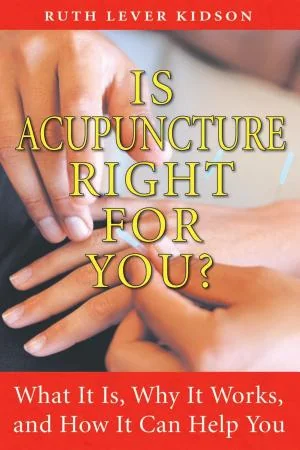
Ruth Lever Kidson’s *Is Acupuncture Right for You?* offers a pragmatic introduction to a practice often shrouded in mystery for Western audiences. The author commendably demystifies the core concepts of qi and meridians, presenting them not as arcane pronouncements but as functional elements within a comprehensive healing system. Kidson’s explanation of diagnostic methods, particularly the examination of pulse and tongue, provides a concrete glimpse into the practitioner’s assessment process, a strength of the work. However, the book's conciseness, while an asset for accessibility, sometimes leaves the reader wanting a deeper exploration of specific conditions and their treatment protocols. The original publication date of 2008 means some contemporary developments in acupuncture research or practice might not be reflected. Despite this limitation, the book serves as a solid, unpretentious guide for those contemplating their first acupuncture session.
📝 Description
73
Ruth Lever Kidson's 1988 book explains acupuncture to Western readers.
This text offers a clear introduction to acupuncture, a medical practice with origins in ancient China. It distinguishes the core principles of this therapy from Western medical viewpoints. The author aims to make the process understandable for those considering it, detailing its methods and theoretical basis. It serves as a good starting point for anyone interested in alternative healing.
Individuals experiencing persistent pain or looking for alternatives to medication will find this book especially useful. It is written for people who are thinking about trying acupuncture but are unsure about its effectiveness or if it suits their particular health issues. The book is written for a general audience, avoiding complex medical terms so that many people can understand it. Those interested in whole-body health and older systems of healing will also find value within its pages.
Acupuncture is rooted in traditional Chinese medicine, a system that views health as the balance of vital energy, or 'qi.' This practice, with a history spanning millennia, uses fine needles inserted at specific body points to influence qi flow and restore well-being. Its integration into Western awareness increased notably in the late 20th century, placing books like this one at the forefront of introducing these concepts to a new audience.
💡 Why Read This Book?
• Understand the foundational principles of qi and meridians as explained by Ruth Lever Kidson, providing a clear framework for how acupuncture is believed to work. • Gain insight into the diagnostic methods used in traditional Chinese medicine, such as pulse and tongue diagnosis, as described in the book's sections on assessment. • Evaluate acupuncture's suitability for chronic pain management by learning about its historical context as an alternative therapy to Western medicine.
⭐ Reader Reviews
Honest opinions from readers who have explored this book.
❓ Frequently Asked Questions
When was *Is Acupuncture Right for You?* first published?
The book *Is Acupuncture Right for You?* by Ruth Lever Kidson was first published on August 13, 2008. This date is important for understanding the context of the information presented.
What is the primary benefit of acupuncture discussed in the book?
The book highlights acupuncture's effectiveness in treating chronic pain, presenting it as a viable alternative to conventional Western medicine approaches for managing persistent discomfort.
Does the book explain how acupuncture diagnosis works?
Yes, Ruth Lever Kidson's work details the diagnostic methods employed in acupuncture, including an explanation of how practitioners assess a patient's condition.
Is this book suitable for someone completely new to acupuncture?
Absolutely. The book is designed as a concise introduction, explaining core concepts and treatment options in an accessible manner for beginners.
What is 'qi' as explained in the context of acupuncture?
In the book, 'qi' (or chi) is described as the vital energy that flows through the body. Imbalances in qi are believed to be a cause of illness and pain in traditional Chinese medicine.
What are meridians in acupuncture?
Meridians are pathways described in the book through which qi is understood to travel within the body. Acupuncture points are located along these meridians.
🔮 Key Themes & Symbolism
Energetic Balance and Qi
The core of the book revolves around the concept of 'qi', or vital energy, central to traditional Chinese medicine. It explains how acupuncture aims to correct imbalances and blockages in the flow of qi through specific points on the body. This energetic perspective offers a distinct alternative to purely physiological explanations of health and disease found in Western medicine. The work elaborates on how maintaining this balance is crucial for overall well-being and the alleviation of various ailments, particularly chronic pain.
Holistic Diagnosis
Ruth Lever Kidson outlines diagnostic methods that diverge significantly from Western medical practices. Instead of relying solely on laboratory tests or imaging, acupuncture diagnosis often involves detailed observation of the patient, including examination of the tongue and palpation of the pulse. These methods provide insights into the state of the body's internal energy and organ systems, reflecting a holistic approach where the mind, body, and spirit are interconnected.
Acupuncture as Alternative Therapy
The book positions acupuncture as a recognized alternative to conventional Western medicine, particularly for managing chronic pain. It explores how this ancient practice can offer relief without the side effects sometimes associated with pharmaceutical interventions. The narrative emphasizes acupuncture's long history and its established role in healthcare systems outside of the West, advocating for its consideration by individuals seeking diverse treatment options.
Acupoint Stimulation
Central to the practice discussed is the stimulation of specific acupoints located along the body's meridians. The text explains that these points are not randomly chosen but correspond to particular energetic pathways. By inserting fine needles into these precise locations, practitioners aim to influence the flow of qi, thereby addressing the root causes of discomfort and restoring health. The selection of points is guided by the diagnostic findings.
💬 Memorable Quotes
Direct passages from the work, attributed to the author.
“Acupuncture is one of the oldest known healing therapies.”
— This foundational statement immediately grounds the reader in the historical significance and longevity of the practice, setting the stage for its ancient wisdom context.
“Particularly effective for treating chronic pain.”
— This highlights a key practical application and benefit of acupuncture, directly addressing a common ailment and positioning the therapy as a potential solution.
“Explains diagnosis and treatment options.”
— This signifies the book's practical utility, promising to explain the clinical aspects of acupuncture for the reader's understanding and informed decision-making.
“Recognized as an alternative to Western medicine.”
— This frames acupuncture within a broader healthcare landscape, acknowledging its distinct approach and its role as a complementary or alternative choice.
“The body's health as a balance of vital energy, or 'qi'.”
— This interpretation captures the essence of traditional Chinese medicine's philosophy as presented in the book, explaining the fundamental concept driving the practice.
🌙 Esoteric Significance
Tradition
Acupuncture belongs to the lineage of Traditional Chinese Medicine, a system deeply intertwined with Taoist philosophy and ancient cosmological views. Its esoteric dimension lies in the concept of 'qi' (vital energy) and its flow through meridians, mirroring concepts found in other esoteric traditions that describe subtle energy bodies and pathways. While not strictly Hermetic or Kabbalistic, TCM shares with these traditions a focus on balance, interconnectedness, and the manipulation of unseen forces for healing and well-being.
Symbolism
The primary symbols in acupuncture are the meridians and acupoints. Meridians represent the energetic pathways akin to rivers or channels within the body's landscape, guiding the flow of qi. Acupoints are specific locations along these meridians, often visualized as gates or nodes where energy can be accessed and influenced. The needles themselves symbolize precise intervention, a tool for directed energetic manipulation, much like a wand or stylus in other esoteric practices used to channel or redirect energy.
Modern Relevance
Contemporary thinkers and practitioners in fields like integrative medicine, functional medicine, and even energy psychology draw upon the principles of qi and meridian theory. Modern acupuncture research continues to explore its neurological and physiological effects, bridging ancient concepts with scientific investigation. Schools of thought focused on holistic wellness, body-mind connection, and non-pharmacological pain management frequently incorporate or reference acupuncture's foundational ideas, demonstrating its enduring influence beyond its traditional origins.
👥 Who Should Read This Book
• Individuals suffering from chronic pain seeking non-pharmacological interventions will find practical guidance on whether acupuncture aligns with their needs. • Beginners curious about alternative medicine and ancient healing systems can gain a foundational understanding of acupuncture's principles and history. • Patients considering acupuncture but unsure about the diagnostic process will benefit from the book's clear explanation of how practitioners assess conditions.
📜 Historical Context
Published in 2008, Ruth Lever Kidson's work arrived at a time when interest in complementary and alternative medicine (CAM) was growing significantly in the West. Acupuncture, with its roots in Traditional Chinese Medicine (TCM), had been gaining traction since the normalization of US-China relations in the 1970s, notably following James Reston's reporting on its use as anesthesia in 1971. By 2008, numerous acupuncture clinics existed globally, and research into its efficacy, particularly for pain management, was expanding, though often debated within the scientific community. Kidson's book entered a discourse already populated by established TCM practitioners and Western medical professionals, some of whom remained skeptical of practices not aligned with the biomedical model. It offered a clear, accessible primer amidst a complex field, contrasting with more academic or deeply philosophical texts on TCM.
📔 Journal Prompts
The concept of qi and its balance.
The role of meridians in energetic flow.
Acupuncture's diagnostic methods versus Western approaches.
Personal suitability for alternative pain management therapies.
The historical context of ancient healing systems like TCM.
🗂️ Glossary
Acupuncture
A traditional Chinese medicine technique involving the insertion of fine needles into specific points on the body to treat various health conditions.
Qi (or Chi)
The vital energy or life force believed in Traditional Chinese Medicine to flow through the body and maintain health. Imbalances are thought to cause illness.
Meridians
Specific pathways within the body along which qi is believed to flow, according to Traditional Chinese Medicine. Acupuncture points are located on these meridians.
Acupoints
Specific locations on the body, typically found along meridians, that are stimulated in acupuncture to influence the flow of qi and treat health issues.
Chronic Pain
Pain that persists for a long duration, typically defined as lasting longer than three to six months, and is a primary condition addressed by acupuncture.
Traditional Chinese Medicine (TCM)
A comprehensive system of healthcare originating in China, encompassing practices like acupuncture, herbal medicine, and dietary therapy, focused on balancing the body's energy.
Western Medicine
The system of medicine practiced predominantly in Europe and North America, based on scientific research, diagnosis, and treatment of disease using drugs, surgery, or radiation.
This book appears in 1 collection
🔮 Readers Also Liked
Browse all →







From the “Acupuncture” Collection
View all →








More Free Occult Philosophy Books
View all →