Sacred Geometry
 73
73

Sacred Geometry
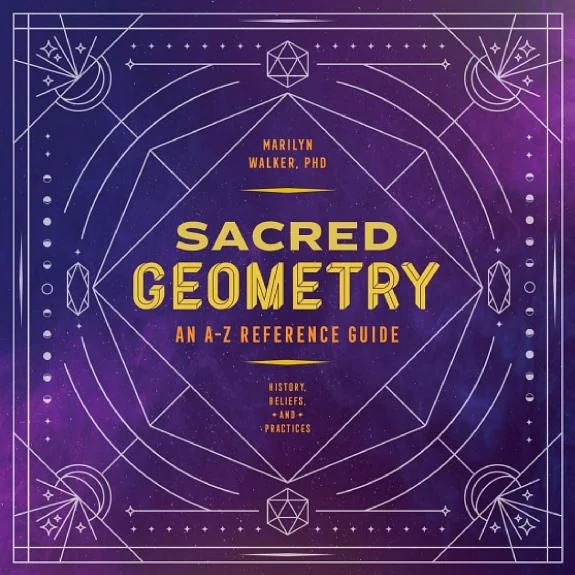
Marilyn Walker’s *Sacred Geometry* offers a welcome, if sometimes overly enthusiastic, compilation of geometric principles as they relate to natural phenomena and esoteric thought. The strength of the book lies in its thoroughness, providing an A-to-Z resource as promised, connecting concepts from ancient Babylonian number systems to modern crystallography. Walker’s ability to link these seemingly disparate fields is commendable, presenting a coherent narrative that science and spirituality are not in opposition but deeply intertwined. However, the text occasionally falters in its analysis, sometimes presenting interpretations as fact without sufficient critical distance, particularly when discussing esoteric lineages. A passage detailing the construction of the Vesica Piscis, while accurate in its geometric description, could benefit from more nuanced discussion regarding its varied symbolic interpretations across cultures and epochs, rather than presenting a singular, definitive meaning. Despite this, *Sacred Geometry* serves as a valuable, accessible overview for those seeking to understand the mathematical underpinnings of the cosmos and their spiritual implications.
📝 Description
73
Marilyn Walker's 2020 book, Sacred Geometry, examines cosmic mathematical principles.
Published in 2020, Sacred Geometry by Marilyn Walker details the mathematical principles and geometric patterns that appear to structure the universe. The book traces the history of geometric thought from ancient Egypt and Greece through to modern science. Walker shows how these forms are evident in nature, such as in seashells and crystal formations. The work seeks to connect empirical observation with spiritual understanding.
This book is suitable for a wide audience, including those interested in the links between mathematics, art, philosophy, and mysticism. Newcomers to esoteric thought will find a clear entry point to core ideas. Experienced practitioners and academics may find value in the historical research and the way Walker combines different philosophical perspectives. The book offers insights for anyone contemplating the underlying order of existence.
Sacred geometry has a long history, appearing in ancient traditions from Egypt to India. Thinkers like Pythagoras and Plato saw geometric shapes as fundamental to reality. This interest continued through the Renaissance, influencing art and architecture. Walker's book joins a recent revival of these ideas, driven by scientific findings and a turn towards non-traditional spiritual paths. It addresses the ongoing discussion about universal patterns that connect the physical and the metaphysical.
💡 Why Read This Book?
• Gain a foundational understanding of geometric principles like the Golden Ratio, crucial for appreciating its manifestation in nature and art, as detailed in the chapter on numerical relationships. • Discover the historical connections between geometry, philosophy, and mysticism, tracing ideas from Pythagoras to Renaissance thinkers, providing context for this ancient discipline. • Explore the symbolic meanings of forms such as the Platonic solids and the Flower of Life, learning how these shapes are perceived as sacred across diverse spiritual traditions.
⭐ Reader Reviews
Honest opinions from readers who have explored this book.
❓ Frequently Asked Questions
What is the historical significance of the Golden Ratio discussed in Sacred Geometry?
The Golden Ratio (Phi) is presented in *Sacred Geometry* as a fundamental constant appearing in natural forms and art. Its historical significance spans from ancient Greek mathematics, notably associated with Euclid's work, to its perceived presence in Renaissance art and architecture, suggesting a universal aesthetic principle.
Does Sacred Geometry by Marilyn Walker cover the Platonic solids?
Yes, *Sacred Geometry* thoroughly covers the Platonic solids. It explains these five unique three-dimensional shapes (tetrahedron, cube, octahedron, dodecahedron, icosahedron) and their significance in ancient Greek philosophy, particularly Plato's theories on the elements, and their role in understanding the structure of the universe.
What role does the Flower of Life symbol play in the book?
The Flower of Life symbol is explored in *Sacred Geometry* as a powerful ancient symbol representing creation and interconnectedness. The book discusses its geometric construction from overlapping circles and its appearance across various cultures and spiritual traditions, suggesting it holds profound cosmic meaning.
When was Sacred Geometry by Marilyn Walker first published?
Marilyn Walker's *Sacred Geometry* was first published on November 10, 2020. This relatively recent publication date makes it a contemporary resource for understanding these ancient concepts within modern contexts.
Can Sacred Geometry be used as a resource for meditation or personal practice?
The book suggests that understanding and contemplating geometric forms can be a meditative practice. By examining the inherent order and beauty of these patterns, readers may find a pathway to inner stillness and a deeper connection to the universal order discussed in the text.
What scientific disciplines does Sacred Geometry connect with?
*Sacred Geometry* connects with disciplines such as mathematics, physics, biology, and crystallography. It illustrates how geometric principles are observable in natural phenomena, from the patterns of plant growth to the structure of crystals, linking empirical observation with metaphysical interpretation.
🔮 Key Themes & Symbolism
Geometric Universality
The core theme is that specific geometric forms are not arbitrary but represent fundamental building blocks of reality. Walker illustrates how these patterns, such as the Golden Ratio and the Platonic solids, appear consistently in both the natural world – from cellular structures to galactic formations – and in human creations like art and architecture. This universality suggests an underlying cosmic intelligence or order that can be apprehended through the study of geometry, bridging the empirical and the spiritual.
Number as Divine Language
This theme explores the Pythagorean and Neoplatonic concept that numbers and their geometric manifestations are a form of divine language. The book studies the symbolic significance of numbers and ratios, presenting them as keys to understanding creation. Concepts like the significance of Pi and Phi are examined not just mathematically but as expressions of cosmic principles that govern existence and consciousness, linking numerical harmony to spiritual truth.
Nature's Blueprint
Walker emphasizes that nature itself is a grand repository of sacred geometry. Through detailed examples, the book demonstrates how mathematical ratios and geometric shapes are inherent in biological growth patterns, crystal formations, and even the arrangement of celestial bodies. This perspective frames the natural world as a living evidence of divine design, accessible through the observation and study of its underlying geometric structure.
Ancient Wisdom and Modern Science
A significant theme is the synthesis of ancient esoteric knowledge with contemporary scientific understanding. The book posits that many ancient cultures possessed clear insights into the workings of the universe, encoded in their geometric traditions. Walker seeks to show that modern science, in its exploration of fractals and universal constants, is beginning to rediscover and validate these ancient geometrical truths, proposing a unified view of reality.
💬 Memorable Quotes
Direct passages from the work, attributed to the author.
“The circle, the square, and the triangle form the basis of much of the geometry we see.”
— This highlights the foundational nature of these simple shapes. Their ubiquity in both natural and man-made forms suggests they are fundamental building blocks of perception and reality, carrying significant symbolic weight.
“Plato saw the Platonic solids as the very structure of the universe.”
— This references Plato's philosophical assertion that these five regular polyhedra are the essential forms composing the physical world, linking geometry directly to metaphysical cosmology and the elemental structure of existence.
“The Golden Ratio appears in the proportions of the human body.”
— This observation points to the principle of universal proportion, suggesting that the same mathematical harmony found in nature and the cosmos is also present within our own physical form, implying an intrinsic connection between humanity and the universal order.
“Sacred geometry provides a framework for understanding creation.”
— This captures the book's central thesis: that by studying geometric patterns and relationships, one can gain insight into the processes and principles by which the universe came into being and is sustained.
“Ancient cultures encoded their understanding of the cosmos in geometric forms.”
— This suggests that geometric symbols and constructions were not merely decorative but served as a sophisticated language for transmitting complex cosmological and spiritual knowledge across generations.
🌙 Esoteric Significance
Tradition
This work sits within the Western Esoteric tradition, particularly drawing from Hermeticism, Pythagoreanism, and Neoplatonism. It aligns with the Hermetic principle 'As Above, So Below,' positing that the geometric order observed in the macrocosm (universe) is mirrored in the microcosm (humanity and nature). It departs from strictly Kabbalistic or Gnostic traditions by focusing more universally on geometric forms rather than specific symbolic alphabets or mythologies, though it acknowledges their presence.
Symbolism
Key symbols explored include the circle, representing unity and the divine; the square, signifying the material world and stability; and the triangle, embodying trinity and manifestation. The Platonic solids are central, representing the fundamental building blocks of the cosmos according to Plato. The Flower of Life symbol is also discussed as a potent motif of creation and interconnectedness, encapsulating universal patterns within a single, complex design.
Modern Relevance
Contemporary thinkers and practitioners in fields like consciousness studies, integral spirituality, and sacred arts draw upon the principles outlined in works like this. Architects and designers seeking to imbue spaces with specific energetic qualities, as well as meditation practitioners exploring geometric visualizations, find value in its detailed exposition of universal forms and their perceived spiritual attributes.
👥 Who Should Read This Book
• Students of esoteric philosophy: Individuals exploring Hermeticism, Pythagoreanism, or Neoplatonism will find a clear introduction to geometric principles central to these schools of thought. • Artists and designers: Creatives seeking to understand the mathematical basis of aesthetic harmony and the symbolic resonance of form will gain valuable insights into proportion and composition. • Seekers of universal patterns: Anyone curious about the interconnectedness of science, nature, and spirituality will find a comprehensive overview of how geometric order manifests across diverse domains.
📜 Historical Context
Marilyn Walker's *Sacred Geometry*, published in 2020, arrives at a time of renewed interest in esoteric traditions and the underlying order of the universe. This resurgence has been influenced by figures like Rudolf Steiner and the broader Theosophical movement of the late 19th and early 20th centuries, which sought to reconcile science, religion, and philosophy through symbolic understanding. Walker's work engages with this lineage, while also drawing from earlier traditions rooted in Pythagoreanism and Neoplatonism, which viewed geometry as fundamental to reality. Unlike purely academic mathematical texts, Walker's approach integrates metaphysical and spiritual interpretations, positioning it within the contemporary esoteric publishing landscape. This book implicitly addresses a desire for meaning that often arises during periods of rapid technological change and societal flux, offering ancient patterns as anchors of stability and understanding, a contrast to the more materialist philosophies that dominated earlier scientific thought.
📔 Journal Prompts
The concept of the Vesica Piscis and its role in creation.
The geometric structure of crystals as a reflection of cosmic order.
Pythagoras's view on the music of the spheres and its geometric underpinnings.
The symbolic meaning of the dodecahedron in relation to the universe.
How the Golden Ratio's presence in nature might influence aesthetic perception.
🗂️ Glossary
Platonic Solids
The five unique, regular, convex polyhedra (tetrahedron, cube, octahedron, dodecahedron, icosahedron) whose faces are congruent equilateral polygons and whose vertices are all identical. Associated with Plato's theory of elements.
Golden Ratio (Phi)
An irrational number, approximately 1.618, found when a line is divided into two parts such that the longer part divided by the smaller part is also equal to the whole length divided by the longer part. Believed to be aesthetically pleasing and prevalent in nature.
Vesica Piscis
A shape formed by the intersection of two circles of the same radius, intersecting at their centers. It is a fundamental symbol in sacred geometry, representing creation, duality, and the union of opposites.
Flower of Life
A complex geometric pattern composed of multiple evenly-spaced, overlapping circles arranged in a flower-like pattern. It is considered by some to contain fundamental elements of space and time, and to be a blueprint of creation.
Sacred Geometry
The study and contemplation of geometric shapes and patterns that are considered to have divine or spiritual significance, believed to be fundamental to the structure of the universe and its creation.
Hermeticism
A philosophical and religious tradition based on the teachings attributed to Hermes Trismegistus. It emphasizes principles like 'As Above, So Below' and the interconnectedness of all things.
Pythagoreanism
A school of thought founded by Pythagoras, emphasizing the importance of numbers, mathematics, and geometry in understanding the cosmos and the soul's journey.
This book appears in 1 collection
🔮 Readers Also Liked
Browse all →








From the “Sacred Geometry” Collection
View all →







More Free Occult Philosophy Books
View all →