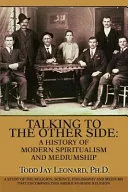
Talking to the Other Side
 76
76

Talking to the Other Side
Todd Jay Leonard's "Talking to the Other Side" offers a necessary, if sometimes dry, examination of modern Spiritualism. Rather than sensationalizing spirit communication, Leonard anchors his inquiry in rigorous ethnographic fieldwork, a commendable approach. He meticulously details the practices and beliefs surrounding mediums, particularly their role as conduits. A particularly strong aspect is the book's grounding in the historical emergence of Spiritualism, linking its 1848 origins to subsequent developments. However, the work occasionally suffers from an overabundance of descriptive data, which can overshadow the more compelling human and spiritual dimensions of the movement. The sheer volume of collected information, while thorough, sometimes feels like an inventory rather than an integrated narrative. Despite this, the book provides a solid, fact-based overview of a complex phenomenon, making its findings accessible to those seeking a scholarly perspective. Leonard's contribution lies in its detailed presentation of a uniquely American religious tradition.
📝 Description
76
Todd Jay Leonard's 2004 book examines modern American Spiritualism through ethnographic research.
Talking to the Other Side offers an ethnographic study of modern Spiritualism in America, beginning with its origins in 1848. Leonard focuses on the role of mediums, individuals who claim to connect with entities beyond the physical world. The research is based on extensive fieldwork, aiming to present a factual overview of this religious and philosophical movement.
This book is for those interested in the sociology of religion, the history of esoteric movements, and the practice of mediumship. It will appeal to scholars of American religious history, individuals curious about Spiritualism's development, and anyone seeking to understand how communication with spirits is perceived and culturally integrated. The work is suited for readers who appreciate detailed examinations of belief systems outside the mainstream.
Leonard traces Spiritualism's path from the mid-19th century, a time receptive to new religious ideas influenced by transcendentalism and fascination with the unseen. The movement grew quickly, becoming a notable religious, scientific, and philosophical force in American life. The book places Spiritualism within this wider context of spiritual inquiry and societal shifts.
This work sits within the tradition of studying mediumship and spiritual communication, a practice with roots stretching back through various occult and spiritualist movements. It examines a specific, documented period in American history where beliefs in spirit communication gained widespread social and religious traction. By detailing the practices and perceptions of mediums, the book engages with a lineage of thought that has sought to understand or facilitate connections with non-physical realities, placing modern Spiritualism within a broader history of such pursuits.
💡 Why Read This Book?
• Gain insight into the specific practices and beliefs of modern Spiritualism, a purely American-made religious movement founded in 1848, understanding the ethnography of mediums. • Explore the historical arc of Spiritualism, examining its development from its origins to its contemporary manifestations and its place in American religious history. • Comprehend the core concepts of spirit communication and mediumship as presented through rigorous, on-site investigation and data collection, moving beyond anecdotal accounts.
⭐ Reader Reviews
Honest opinions from readers who have explored this book.
❓ Frequently Asked Questions
What is the primary focus of Todd Jay Leonard's "Talking to the Other Side"?
The book's primary focus is an ethnographic investigation of modern Spiritualism in America. It examines the role and practices of mediums who claim to communicate with spirit entities, tracing the movement's history from its 1848 origins.
How did the author conduct research for "Talking to the Other Side"?
The author conducted extensive on-site investigations over three years, collecting a significant amount of data and research. This ethnographic approach grounds the book in real-world observations of the Spiritualist movement.
When was "Talking to the Other Side" first published?
The book "Talking to the Other Side" by Todd Jay Leonard was first published in 2005.
What is Spiritualism as described in the book?
Spiritualism, as explored in the book, is presented as a religion, science, and philosophy that emerged in America in 1848. Its central tenet involves communication with entities on the spirit plane.
Who are the 'mediums' discussed in the text?
Mediums are identified as individuals central to the Spiritualist movement who are believed to possess the ability to communicate with spirit entities no longer present on the earth plane.
What kind of data does the book utilize?
The book utilizes data and research collected through three years of on-site investigation into the modern Spiritualist movement in America. This includes observations and information gathered directly from practitioners.
🔮 Key Themes & Symbolism
The Role of Mediums
Central to "Talking to the Other Side" is the detailed examination of mediums within the Spiritualist movement. The work explores their claimed abilities to bridge the gap between the physical and spiritual realms. It investigates the methods they employ, the information they purport to receive, and their significance as figures within their communities. This section offers an ethnographic perspective on how these individuals function as conduits and interpreters of messages from the 'other side'.
Historical Development of Spiritualism
The book traces the lineage of modern Spiritualism from its genesis in 1848, positioning it as a distinctly American religious and philosophical phenomenon. It outlines the movement's evolution through periods of growth and decline, highlighting key milestones and shifts in its doctrines and practices. This historical overview provides essential context for understanding the contemporary range of Spiritualism as depicted in the book.
Spirit Communication as Practice
"Talking to the Other Side" looks at the practical aspects of communicating with spirit entities. It examines the rituals, beliefs, and societal structures that support these practices within the Spiritualist movement. The work aims to present an objective account of how individuals engage with the concept of an afterlife and the possibility of ongoing dialogue with those who have transitioned from the earthly plane.
Ethnographic Methodology
The foundation of this book rests on extensive, on-site ethnographic research. Todd Jay Leonard spent three years immersed in the Spiritualist community, gathering data and observing practices firsthand. This methodological approach seeks to provide an authentic and detailed portrayal of the movement, moving beyond theoretical discussions to explore the lived realities of its adherents and practitioners.
💬 Memorable Quotes
Direct passages from the work, attributed to the author.
“Mediums are the central figures in the modern Spiritualist movement.”
— This statement underscores the key role individuals claiming mediumistic abilities hold within Spiritualism. They are not merely participants but are positioned as the primary facilitators of the movement's core tenet: communication with the spirit world.
“Spiritualism has experienced significant highs and lows since its birth in 1848.”
— This observation highlights the dynamic and often volatile history of the Spiritualist movement. It suggests a trajectory marked by periods of intense popularity and influence, interspersed with times of decline or controversy.
“The investigation is based on three years of on-site research.”
— This emphasizes the empirical foundation of the book's findings. The author's commitment to direct observation and data collection over an extended period lends credibility to the ethnographic account of Spiritualism.
“The movement is described as a religion, science, and philosophy.”
— This tripartite description expresses the many-sided nature of Spiritualism as presented in the work. It indicates that the movement encompasses spiritual belief, empirical inquiry, and a coherent worldview.
“Communication with spirit entities no longer on the earth plane is central.”
— This succinctly defines the core activity and belief of Spiritualism. The focus is on the interaction with non-corporeal beings, implying an afterlife and the possibility of continued connection.
🌙 Esoteric Significance
Tradition
While Spiritualism emerged as a distinct, largely American phenomenon in 1848, its roots can be traced to older traditions of mediumship, channeling, and communication with spirits found in various folk religions and esoteric practices globally. It shares common ground with séance traditions and spiritualist circles prevalent in Europe during the 19th century. However, its explicit formulation as a religion, science, and philosophy set it apart, seeking a more formalized structure than many preceding or concurrent esoteric expressions.
Symbolism
Key symbolic elements within Spiritualism often revolve around the concept of light, representing spirit presence or enlightenment, and the idea of communication itself as a symbol of enduring connection beyond death. The image of the 'veil' between worlds is also a potent motif, with mediums acting as those who can perceive or lift this veil. The very act of 'talking to the other side' symbolizes the triumph of spirit over material limitation and the continuity of consciousness.
Modern Relevance
Contemporary interest in mediumship, psychic phenomena, and near-death experiences often carries the foundational principles established by the Spiritualist movement. Thinkers and practitioners in fields like parapsychology, consciousness studies, and even certain New Age spiritualities can find historical precedent and conceptual frameworks within the investigations and assertions of 19th and 20th-century Spiritualists. The movement's focus on empirical (albeit unconventional) evidence for the afterlife continues to inform discussions today.
👥 Who Should Read This Book
• Students of American religious history seeking to understand the origins and development of unique indigenous spiritual movements. • Researchers in parapsychology and consciousness studies interested in historical accounts of mediumship and spirit communication. • Individuals curious about the ethnographic study of belief systems and the social dynamics of religious communities.
📜 Historical Context
The genesis of modern Spiritualism in 1848 placed it squarely within a fertile period of American religious innovation, influenced by Transcendentalism and a widespread fascination with the unseen. This era saw numerous new religious movements emerge, challenging established doctrines. Spiritualism rapidly gained adherents, particularly in the mid-to-late 19th century, establishing itself as a significant force. It competed for attention with other esoteric and spiritual movements of the time, such as Theosophy, which would gain prominence later. The movement's claims regarding communication with the dead often drew both fervent support and sharp criticism from scientific and religious establishments. Its purely American origins distinguished it from older European mystical traditions, marking it as a unique development in the nation's spiritual landscape.
📔 Journal Prompts
The role of mediums as central figures in the Spiritualist movement.
Spiritualism's historical trajectory from 1848 through its periods of high and low influence.
The ethnographic data collected regarding communication with spirit entities.
The definition of Spiritualism as a religion, science, and philosophy.
Personal reflections on the concept of communication with the 'other side'.
🗂️ Glossary
Spiritualism
A religious, philosophical, and scientific movement that originated in America in 1848, centered on the belief that spirits of the dead can communicate with the living.
Medium
An individual believed to possess the ability to communicate with spirit entities or receive information from non-physical realms, acting as an intermediary.
Spirit Entities
Beings believed to exist on a plane of existence separate from the physical world, often understood as the souls of deceased individuals.
Earth Plane
Refers to the physical world or the field of mortal existence, in contrast to the spirit plane or afterlife.
Ethnographic Investigation
A research method involving the in-depth study of a particular social group or culture through direct observation and participation over an extended period.
On-site Research
Data collection and observation conducted directly within the environment or community being studied, as opposed to through secondary sources.
Movement (Religious)
A social or religious group with ideas and objectives that differ from those of the established authorities, often seeking to create change or establish a new order.