Inferno
 84
84

Inferno
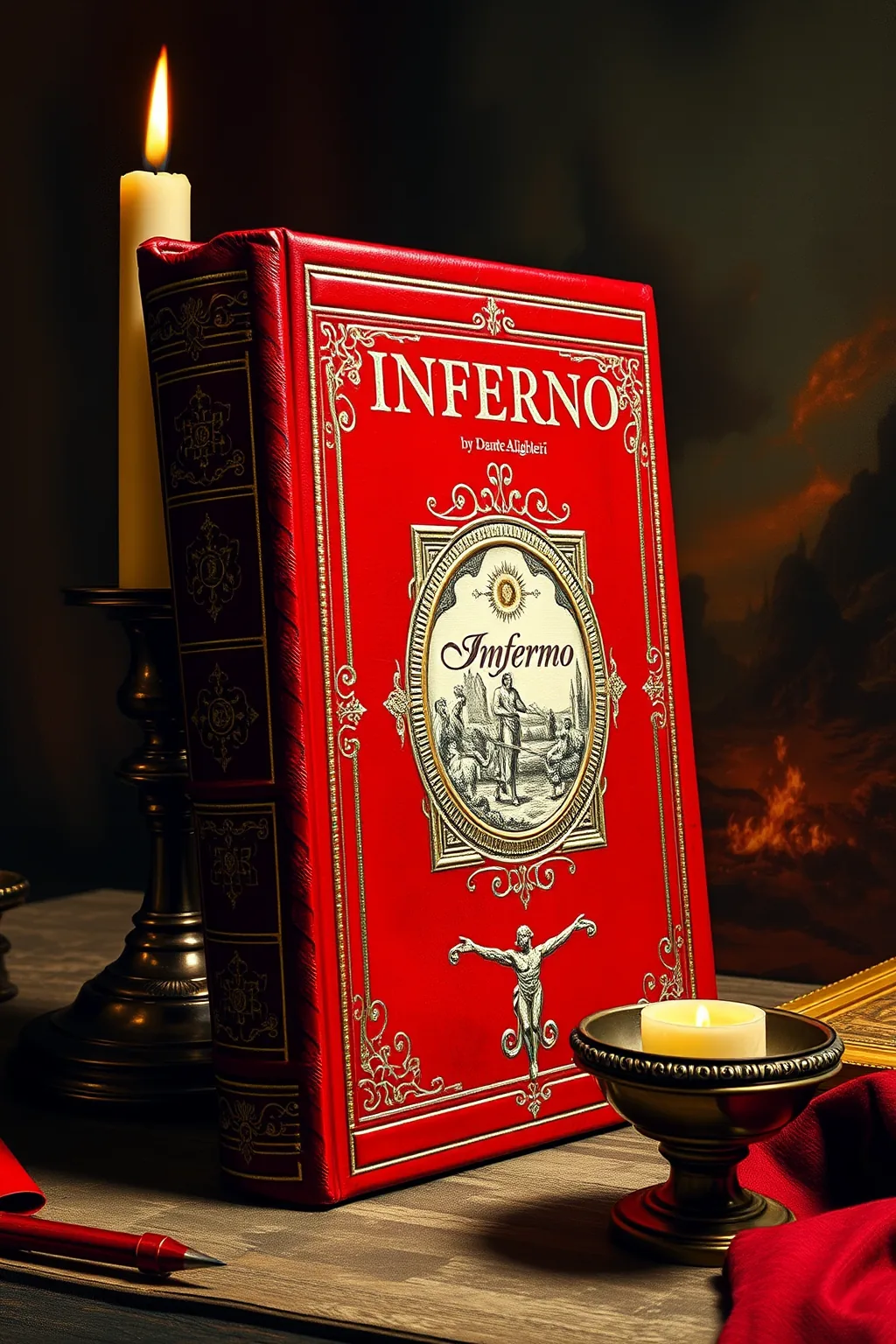
Dante Alighieri's *Inferno* remains a potent, often brutal, depiction of damnation. Its enduring power lies not just in its theological framework but in its visceral imagery and intricate allegorical structure. The poem's strength is its unflinching portrayal of sin's consequences, vividly realized through the concept of *contrapasso*, where punishments are poetic justice made manifest. The descent through the nine circles, each more agonizing than the last, is a masterclass in escalating dread. However, for a modern reader, the sheer length and the dense theological and political allusions can present a significant barrier. A passage like the description of Ulysses' punishment in Canto XXVI, while a powerful commentary on forbidden knowledge, requires considerable annotation to fully grasp its context. Despite its challenges, *Inferno* offers a foundational vision of the afterlife that has shaped Western consciousness for centuries. It is an essential, if demanding, exploration of the human condition's darkest aspects.
📝 Description
84
Dante Alighieri wrote the *Inferno* in the early 14th century, detailing a descent through Hell's nine circles.
The first part of Dante Alighieri's *The Divine Comedy*, the *Inferno* describes an allegorical journey through Hell. Guided by the Roman poet Virgil, Dante encounters souls suffering eternal punishment for their sins. The poem presents a hierarchical structure of Hell, with punishments often reflecting the nature of the sins themselves, a concept known as *contrapasso*. Beyond its theological framework, the work examines medieval Italian understandings of justice, sin, and divine retribution.
This epic poem emerged from Dante's experiences as an exile from Florence. It integrates classical mythology with Christian doctrine, shaped by the scholastic philosophy of the time, including the ideas of Thomas Aquinas. The *Inferno* played a significant role in establishing the Tuscan dialect as the basis for modern Italian and set a standard for allegorical poetry. Its influence extended to later writers like Petrarch and Boccaccio.
As a sacred text within Gnosticism and Western esotericism, Dante's *Inferno* functions as a map of the soul's potential descent and the consequences of spiritual error. Its structured depiction of Hell and the precise nature of damnation reflect a Gnostic concern with the material world as a fallen state and the soul's journey towards or away from the divine. The allegorical framework, particularly the concept of *contrapasso*, can be interpreted as a symbolic representation of spiritual laws and the inherent correspondence between action and consequence in a divinely ordered cosmos.
💡 Why Read This Book?
• Gain an understanding of *contrapasso*, the principle of poetic justice in divine punishment, as illustrated by the specific torments Dante describes for sinners in Hell. • Explore the allegorical significance of Virgil as a guide, representing reason and classical wisdom, contrasting with Beatrice's later role as divine grace in *Purgatorio*. • Witness the foundational depiction of Hell in Western literature, influencing concepts of sin and retribution that have persisted since its 14th-century composition.
⭐ Reader Reviews
Honest opinions from readers who have explored this book.
❓ Frequently Asked Questions
When was Dante Alighieri's Inferno first published?
While *Inferno* was written in the early 14th century (circa 1308-1320), its first known publication date is much later, often cited around 1767 as part of a collected edition.
Who guides Dante through Hell in the Inferno?
Dante is guided through the nine circles of Hell by the Roman poet Virgil, author of the *Aeneid*, who represents human reason and classical philosophy.
What is the concept of 'contrapasso' in Dante's Inferno?
*Contrapasso* is the principle where the punishment of a sinner in Hell directly reflects or is the inverse of the sin they committed during life.
What language was Inferno originally written in?
Dante Alighieri wrote *Inferno* in the Tuscan dialect of Italian, a choice that significantly contributed to the standardization of the modern Italian language.
How many circles are in Hell according to Dante's Inferno?
Dante's *Inferno* describes nine distinct circles of Hell, each designated for increasingly severe sins, descending from Limbo to the frozen core where Satan resides.
Is Inferno part of a larger work?
Yes, *Inferno* is the first of three parts of Dante Alighieri's epic poem, *The Divine Comedy*, followed by *Purgatorio* and *Paradiso*.
🔮 Key Themes & Symbolism
Divine Justice and Contrapasso
The *Inferno* meticulously outlines a system of divine justice where punishments are not arbitrary but directly correlate to the sins committed, a principle known as *contrapasso*. This concept dictates that the suffering inflicted in each of the nine circles of Hell is a direct, often ironic, reflection of earthly transgressions. For example, the lustful are tossed by an endless storm, mirroring their unchecked passions. This theme explores the nature of sin and its ultimate consequences, presenting a structured, albeit terrifying, vision of cosmic order and retribution as understood in the medieval period.
The Allegory of the Journey
Dante's descent through Hell, guided by Virgil, serves as a profound allegory for the soul's potential path toward salvation. The journey begins with the recognition and condemnation of sin, moving from lesser offenses to the most heinous. Each encounter and circle represents a stage in understanding the depth of human depravity and the separation from divine grace. This allegorical framework suggests that confronting and comprehending evil is a necessary precursor to spiritual purification and eventual ascent towards God, as detailed in the subsequent parts of *The Divine Comedy*.
Sin, Free Will, and Consequence
Central to the *Inferno* is the exploration of human sin, stemming from the misuse of free will. Dante categorizes sins based on the Aristotelian and Christian ethics of his time, with the severity escalating as one descends. The poem emphasizes that individuals are ultimately responsible for their choices and the eternal fate they choose through their actions. The depiction of eternal damnation underscores the gravity of moral decisions and the belief that unrepented sin leads to an irreversible state of separation from the divine.
Classical and Christian Synthesis
The *Inferno* uniquely synthesizes classical mythology and philosophy with Christian theology. Virgil, a pagan poet, acts as Dante's guide, representing the limits of human reason and the wisdom of the ancient world. Throughout the journey, Dante encounters figures from Greek and Roman mythology, integrating them into his Christian cosmology. This fusion reflects the intellectual environment of the Middle Ages, where classical learning was reinterpreted and incorporated into a Christian worldview, creating a complex symbolic landscape.
💬 Memorable Quotes
Direct passages from the work, attributed to the author.
“Abandon all hope, ye who enter here.”
— This inscription above the gates of Hell starkly announces the eternal and irreversible nature of damnation, signifying a complete severance from divine mercy and any possibility of redemption.
“Through me you pass into the city of woe; through me you pass into eternal pain; through me among the people lost for aye.”
— Spoken by the Gate of Hell itself, this foreboding declaration emphasizes the finality and absolute despair awaiting those condemned to eternal punishment, setting a tone of dread.
“No greater grief than to remember happy times in misery.”
— This poignant observation, often attributed to Dante reflecting on the state of the damned, highlights the psychological torment of remembering past joys in the midst of unending suffering.
💡 Key Ideas
Editorial paraphrase of the work's core concepts — not direct quotes.
The greater the sin, the greater the suffering.
This paraphrase expresses the principle of *contrapasso*, illustrating how the punishments in Hell are precisely calibrated to the gravity and nature of the sins committed by the souls.
He who believes not in me, nor in my word, shall have no end of his suffering.
This paraphrased concept reflects the theological underpinnings of Hell as a consequence of rejecting divine truth, emphasizing eternal damnation as the penalty for disbelief and disobedience.
🌙 Esoteric Significance
Tradition
While not strictly an esoteric text in the Gnostic or Hermetic sense, *Inferno* deeply engages with symbolic theology and spiritual cosmology, aligning it with broader currents of Western esotericism. Its structured descent into the underworld and allegorical mapping of sin and punishment can be seen as a precursor to later occult explorations of spiritual realms and the human psyche. The poem's allegorical nature invites multiple layers of interpretation beyond its literal theological meaning, a hallmark of esoteric traditions.
Symbolism
The nine circles of Hell are potent symbols, representing a hierarchical descent into spiritual darkness, with each circle embodying a specific category of sin. Virgil, the guide, symbolizes human reason and classical wisdom, essential for reading through the complexities of sin but ultimately limited in achieving salvation. The infernal beasts and punishments themselves, such as the frozen lake Cocytus where traitors are encased, serve as powerful allegorical representations of the soul's spiritual state when alienated from divine love.
Modern Relevance
Contemporary esoteric practitioners and thinkers often reference *Inferno* for its archetypal depiction of the underworld and the journey of confronting one's shadow self. Psychologists and Jungian analysts find parallels with the collective unconscious and the process of individuation. Its structured cosmology continues to inspire artists, writers, and spiritual seekers exploring themes of justice, consequence, and the nature of evil in both personal and societal contexts.
👥 Who Should Read This Book
• Students of medieval literature and history: To understand the cultural, religious, and political context of 14th-century Italy and the foundational text of Italian literature. • Seekers of symbolic and allegorical works: To engage with a profound allegorical journey that maps sin, consequence, and the path toward spiritual understanding. • Those interested in the history of Western esotericism: To explore a key text that, while theological, employs symbolic language and cosmology influencing later esoteric thought.
📜 Historical Context
Dante Alighieri's *Inferno*, written in the early 14th century (circa 1308-1320), emerged from the turbulent political and intellectual climate of Florence. As an exile, Dante infused the poem with personal grievances and a profound critique of contemporary society and the Church. The work masterfully synthesizes scholastic philosophy, particularly the ideas of Thomas Aquinas, with classical mythology and Christian doctrine. It reflects the medieval worldview, where the afterlife was a tangible consequence of earthly actions. The poem's reception was immense; its use of the vernacular Tuscan dialect elevated it to a national literary standard, influencing subsequent Italian literature profoundly. Contemporaries like Petrarch and Boccaccio deeply engaged with Dante's work, cementing its status. The poem's structured cosmology and vivid imagery of Hell established a powerful archetype that has permeated Western culture, despite its theological and political complexities for its time.
📔 Journal Prompts
The inscription 'Abandon all hope, ye who enter here' and its implications for the nature of eternal punishment.
Virgil's role as guide: How does reason work through the field of sin?
The concept of *contrapasso* as a form of divine justice.
Reflect on the symbolism of the specific punishments Dante describes for the unchaste.
The journey's allegorical meaning for the soul's path toward spiritual awareness.
🗂️ Glossary
Contrapasso
The principle in Dante's *Inferno* where the punishment of a sinner is directly related to, or the inverse of, the sin they committed during their lifetime.
Virgil
The ancient Roman poet, author of the *Aeneid*, who serves as Dante's guide through Hell and Purgatory, representing human reason and classical wisdom.
Limbo
The first circle of Hell, inhabited by virtuous pagans and unbaptized infants who are punished not with physical torment but with the eternal sorrow of lacking the vision of God.
The Vestibule of Hell
The area outside the main infernal city, reserved for souls who were neither actively good nor evil, but lived lives of indecision and neutrality, eternally stung by wasps and flies.
The Divine Comedy
The epic three-part poem by Dante Alighieri, consisting of *Inferno*, *Purgatorio*, and *Paradiso*, chronicling Dante's allegorical journey through the afterlife.
Tuscan Dialect
The regional Italian dialect spoken in Tuscany, which Dante used for *The Divine Comedy*, significantly contributing to its establishment as the literary standard for modern Italian.
Usury
The practice of lending money at exorbitant interest rates. In *Inferno*, usurers are punished in the seventh circle for their greed, which Dante viewed as a violation of natural law and divine order.
🔮 Readers Also Liked
Browse all →









More by Dante Alighieri
All books →



More Free Divination & Tarot Books
View all →