Feng shui

 65
65

Feng shui



Isolde Whitaker, Sacred Texts Editor: Sarah Rossbach's "Feng Shui" is an indispensable guide for those drawn to the esoteric dimensions of spatial harmony. Rossbach navigates the intricate labyrinth of Feng Shui with clarity and an intuitive grasp of its mystical underpinnings. She illuminates the profound connection between our surroundings and our inner state, revealing how ancient geomantic principles can be harnessed for personal growth and energetic alignment. This book transcends superficial decor advice, offering a practitioner's insight into the subtle manipulation of Qi for tangible and spiritual benefits. Essential reading for seekers of balance and practitioners aiming to deepen their understanding of this powerful, ancient art.
📝 Description
65
Sarah Rossbach's 1989 book explains how Feng Shui principles shape environments and personal well-being.
Sarah Rossbach's 1989 book explains the principles of Feng Shui, an ancient Chinese art concerned with the arrangement of space. The text moves beyond superficial decoration to examine how the flow of Qi, or life force energy, influences our homes and workplaces. Rossbach deciphers the symbolic meanings in how objects, colors, and natural elements are placed. She shows how these placements can align personal lives with a larger cosmic order.
The book aims to connect readers with the energetic qualities of their surroundings. It suggests that conscious environmental design can turn ordinary spaces into places that support well-being and prosperity. Rossbach invites readers to see the underlying structure of their reality and to shape their environments to reflect their aspirations. The goal is to unlock potential and encourage personal growth through an understanding of these unseen forces.
Feng Shui is part of a broader tradition of Chinese metaphysics that seeks to understand and manipulate the subtle energies of the universe. It is linked to Taoist philosophy, which emphasizes living in harmony with the natural order, or Tao. Traditional Chinese Medicine also shares a conceptual basis, focusing on the circulation of vital energy within the body. Rossbach's work places Feng Shui within this lineage of thought, presenting it not as mere interior design but as a method for aligning human life with fundamental energetic principles.
💡 Why Read This Book?
Unlock the hidden energies of your living space and transform your life. This book offers a mystical understanding of Feng Shui, revealing how to harmonize your environment with cosmic forces for enhanced well-being, prosperity, and spiritual growth. Ideal for seekers of esoteric knowledge, practitioners of ancient arts, and anyone yearning to create a sanctuary of profound balance.
⭐ Reader Reviews
Honest opinions from readers who have explored this book.
❓ Frequently Asked Questions
What is the core philosophy of Feng Shui?
The core philosophy of Feng Shui is the harmonious integration of human beings with their environment, guided by the principles of Qi (life force energy) flow. It teaches that by arranging spaces in accordance with natural patterns, one can attract positive energy and promote well-being.
How does Feng Shui differ from interior design?
While interior design focuses on aesthetics and functionality, Feng Shui delves into the energetic qualities of a space. It's about optimizing the flow of Qi to support specific intentions, such as health, wealth, and relationships, going beyond mere visual appeal.
Can Feng Shui principles be applied to any dwelling?
Absolutely. Feng Shui's principles are universal and can be adapted to any type of dwelling, from a small apartment to a sprawling estate. The focus is on understanding and optimizing the unique energetic blueprint of your specific space.
What are the 'Five Elements' in Feng Shui?
The Five Elements—Wood, Fire, Earth, Metal, and Water—represent fundamental energies and their cyclical interactions. Understanding their relationships is crucial for balancing the energies within a space and promoting harmony.
Is Feng Shui a religious practice?
Feng Shui is not a religion but a metaphysical system rooted in Taoist philosophy and ancient Chinese cosmology. It's a practical art and science focused on creating energetic balance and harmony in one's environment.
🔮 Key Themes & Symbolism
The Sacred Geometry of Space
This book reveals how the arrangement of physical elements within a dwelling is not arbitrary but forms a sacred geometry that influences energetic flow. It explores the profound symbolism of lines, forms, and spatial relationships, illustrating how these unseen structures interact with the vital Qi. Readers will discover how to perceive their surroundings not just as static objects but as dynamic energetic fields, and how to consciously sculpt these fields to invite auspicious energies and foster a deeper connection to the cosmic dance of existence.
Qi: The Breath of the Universe
At its heart, Feng Shui is the art of managing Qi, the invisible life force that animates all things. Sarah Rossbach guides readers to understand Qi not as a mere concept but as a tangible, flowing energy that can be directed and enhanced. This section illuminates how blocked or stagnant Qi can lead to disharmony, while a vibrant, flowing Qi cultivates health, prosperity, and spiritual vitality. The book offers practical techniques for identifying and influencing Qi, empowering readers to become conscious conductors of this vital universal breath within their own homes.
Symbolism and the Art of Manifestation
Feng Shui is rich with ancient symbolism, where each object, color, and placement carries profound meaning. Rossbach deciphers these esoteric symbols, showing how they act as keys to unlocking specific energetic potentials within a space. From the auspicious symbolism of the Dragon to the grounding influence of Earth tones, readers learn how to intentionally use these symbolic languages to manifest their desires. This theme explores the power of conscious intention and how the careful selection and placement of symbolic elements can transform intention into tangible reality.
💬 Memorable Quotes
Direct passages from the work, attributed to the author.
“Energy flows where the eye goes, and where the mind focuses.”
— This emphasizes the power of attention and perception in shaping energetic flow. It suggests that by consciously directing our gaze and thoughts, we can influence the Qi in our surroundings, making intentional adjustments for desired outcomes.
“A cluttered space is a cluttered mind, and a cluttered life.”
— This simple yet profound statement links physical order with mental and energetic clarity. It underscores that external disarray can impede the free flow of Qi, leading to stagnation and a sense of being overwhelmed.
“Harmony with nature is harmony within yourself.”
— This aphorism expresses the fundamental principle of Feng Shui: aligning one's environment with natural laws fosters internal balance and well-being, suggesting that our external world is a reflection and amplifier of our internal state.
💡 Key Ideas
Editorial paraphrase of the work's core concepts — not direct quotes.
The universe is a mirror of the soul, and our homes are the outer reflections of our inner selves.
This quote highlights the profound interconnectedness between our internal state and external environment, suggesting that our living spaces are not separate from us but are extensions of our consciousness and energetic being.
The wisdom of the ancients lies not in the past, but in its enduring relevance to the present.
This quote speaks to the timeless nature of ancient wisdom traditions like Feng Shui, suggesting that their core principles offer practical and profound guidance for navigating contemporary life and challenges.
🌙 Esoteric Significance
Tradition
Feng Shui is deeply rooted in Taoist philosophy, the I Ching (Book of Changes), and ancient Chinese cosmological principles. It is a sophisticated system of geomancy that views the Earth as a living entity imbued with Qi. Its esoteric significance lies in its ability to act as a bridge between the material and spiritual realms, offering practical methods to align human dwellings with cosmic patterns and natural energetic flows, thereby enhancing spiritual growth and worldly prosperity.
Symbolism
Key symbols in Feng Shui are rich with esoteric meaning. The Bagua, an octagonal map, represents the nine life aspirations and their corresponding areas within a space. The Five Elements (Wood, Fire, Earth, Metal, Water) are fundamental forces whose interactions govern energetic balance. Colors, shapes, and natural objects are imbued with specific energetic qualities and symbolic associations, acting as conduits for channeling and transforming Qi. Understanding these symbols allows practitioners to decode the energetic language of their environment.
Modern Relevance
In our increasingly fast-paced and often disconnected world, Feng Shui's emphasis on creating harmonious, balanced environments is more relevant than ever. It offers a tangible framework for reducing stress, enhancing focus, and fostering a sense of groundedness. Beyond personal well-being, its principles encourage a mindful relationship with our surroundings, promoting sustainability and an awareness of our interconnectedness with nature. Feng Shui provides ancient wisdom applicable to modern living, empowering individuals to cultivate sanctuaries that support their physical, mental, and spiritual health.
👥 Who Should Read This Book
This informative text is essential for anyone drawn to the subtle energies that shape our lives. **Beginners** will find a clear, comprehensive introduction to the foundational principles and practical applications of Feng Shui. **Practitioners** seeking to deepen their understanding and refine their skills will discover advanced insights and nuanced techniques. **Scholars** of esoteric traditions and cultural history will appreciate the historical context and philosophical depth. **Seekers** of personal transformation, harmony, and a more intentional living space will find this book an invaluable guide to creating environments that nurture their highest aspirations.
📜 Historical Context
Sarah Rossbach's "Feng Shui" emerged during a period of burgeoning interest in Eastern philosophies and esoteric practices in the West, particularly in the late 20th century. As global interconnectivity increased, Westerners began to explore ancient traditions that offered alternative perspectives on well-being and spiritual development. Feng Shui, with its roots in ancient Chinese geomancy and Taoist principles, provided a tangible, practical system for individuals to engage with these concepts. Rossbach's work was instrumental in popularizing and explaining Feng Shui for a Western audience, presenting its complex theories in an accessible yet profound manner. It contributed to a broader cultural shift towards holistic living, environmental consciousness, and the recognition of the subtle energies that influence human experience.
📔 Journal Prompts
Reflect on the primary energetic flow in your main living space. Where is Qi strong, and where does it feel stagnant?
Identify one area in your home that feels energetically 'off.' What specific elements or arrangements might be contributing to this feeling?
Consider the symbolism of the Five Elements in your current environment. How are Wood, Fire, Earth, Metal, and Water represented, and are they in balance?
If you were to apply one Feng Shui principle to enhance prosperity in your home, which would it be and why?
How does the external environment surrounding your dwelling (e.g., nature, neighboring buildings) seem to influence the energy within your home?
🗂️ Glossary
Qi (Chi)
The fundamental life force or vital energy that flows through all things. In Feng Shui, the harmonious movement of Qi is paramount for well-being and prosperity.
Bagua
An octagonal map used in Feng Shui to divide a space into nine areas, each corresponding to a specific life aspiration such as wealth, health, or relationships.
Five Elements
The fundamental energies of Wood, Fire, Earth, Metal, and Water, which interact in cyclical patterns of creation and destruction, influencing the balance of Qi in a space.
Geomancy
The art of divination by geographical features or the interpretation of the environment, of which Feng Shui is a sophisticated form.
Sha Qi
Negative or 'killing' energy, often caused by sharp angles, clutter, or discordant environmental features. Feng Shui aims to mitigate or transform Sha Qi.
This book appears in 3 collections
🔮 Readers Also Liked
Browse all →








More by Sarah Rossbach
All books →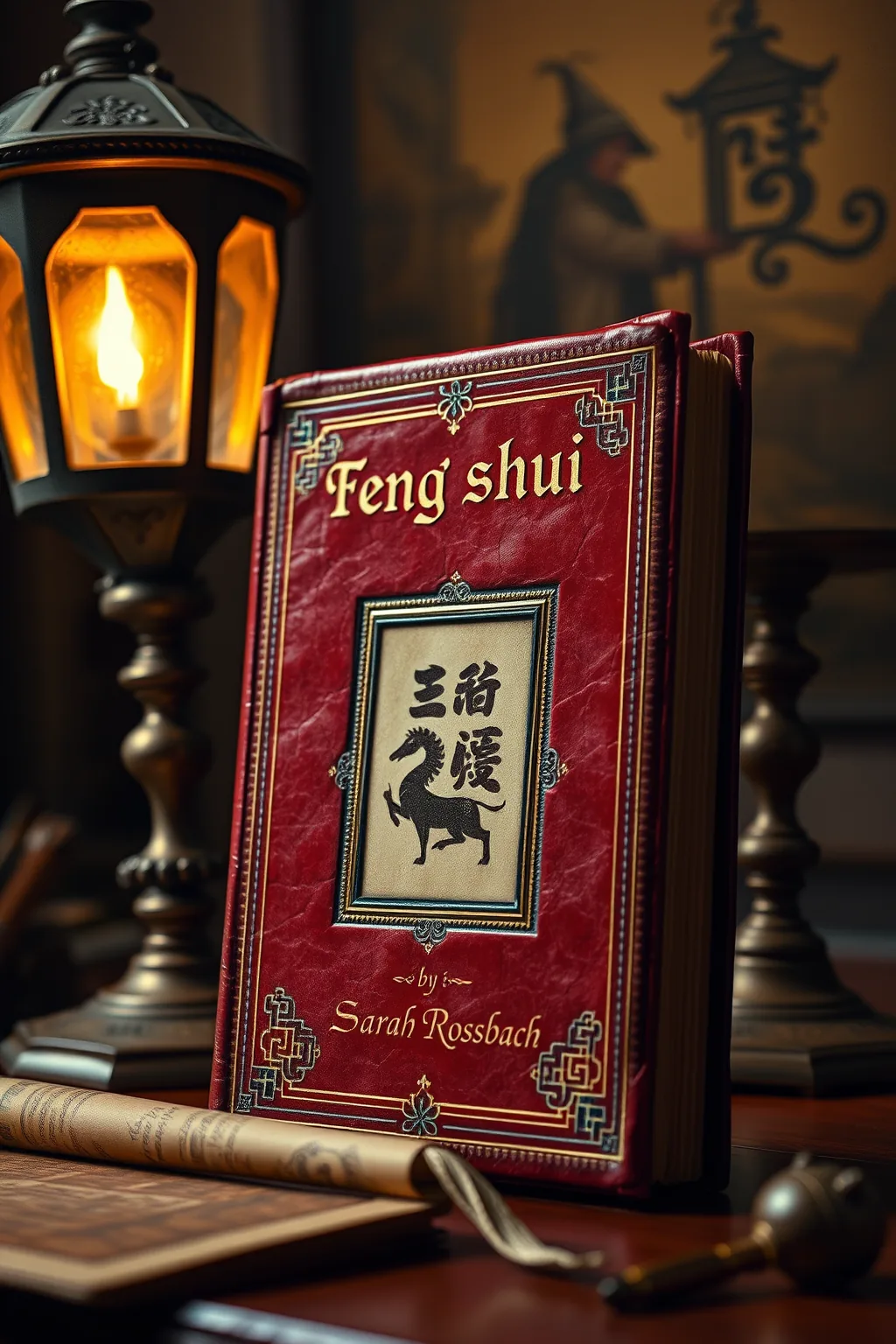
From the “Geomancy” Collection
View all →






More Free Divination & Tarot Books
View all →