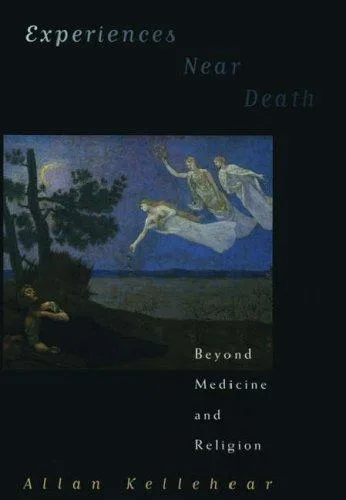
Experiences Near Death
 74
74

Experiences Near Death
Allan Kellehear's 'Experiences Near Death' offers a sober, methodical examination of a phenomenon that has long occupied the fringes of scientific and spiritual inquiry. Rather than sensationalizing, Kellehear grounds the narrative in a careful compilation of accounts, highlighting the consistent patterns that emerge across diverse testimonies. A particular strength lies in his balanced approach, acknowledging the physiological explanations while giving due weight to the profound subjective impact. The section discussing the 'life review' concept is especially compelling, presenting it not as a supernatural event but as a potent psychological mechanism for integration and understanding. However, the work occasionally feels more like a catalog than a narrative, sometimes lacking the evocative prose that might fully convey the emotional weight of the experiences described. The book’s value is in its systematic presentation, but it could benefit from more speculative, interpretive passages to fully capture the mystery. It serves as a solid foundation for further contemplation.
📝 Description
74
Allan Kellehear's 2001 book collects first-hand accounts of near-death experiences.
Experiences Near Death compiles firsthand accounts and scholarly analysis of phenomena reported by individuals who have undergone near-death experiences (NDEs). The work gathers varied testimonies, examining commonalities and differences in these encounters. It moves beyond simple anecdotes to examine the psychological, physiological, and spiritual dimensions of NDEs. The book intends to offer a broad overview for those wanting to understand consciousness at the edges of life and death.
This volume is for individuals seriously interested in the intersection of consciousness studies, psychology, and comparative spirituality. It appeals to researchers, therapists who study altered states, and those curious about NDEs. It also suits students of metaphysics and existential philosophy who seek empirical and experiential data. Readers should approach the subjective accounts with an open mind and engage with the analytical framework presented.
Published in 2001, this book emerges from a period of increased dialogue surrounding altered states of consciousness and the nature of reality. It follows earlier work, like that of Elisabeth Kübler-Ross, which brought end-of-life experiences into wider discussion. Kellehear's research contributes to a growing body of work that seeks to categorize and understand subjective reports from the threshold of death, bridging medical, psychological, and spiritual perspectives beyond purely materialistic views.
💡 Why Read This Book?
• Gain a structured understanding of the core components of near-death experiences, such as the out-of-body sensation and the life review, as detailed in Kellehear's compilation of accounts from the early 2000s. • Explore the psychological and spiritual transformations reported by NDE survivors, providing concrete examples of how these experiences alter perspectives on life and death. • Understand the historical development of NDE studies, placing Kellehear's work within the context of late 20th-century research pioneered by figures like Elisabeth Kübler-Ross.
⭐ Reader Reviews
Honest opinions from readers who have explored this book.
❓ Frequently Asked Questions
What are the most common elements reported in near-death experiences according to Allan Kellehear?
Kellehear's work highlights several recurring elements in near-death experiences (NDEs). These commonly include out-of-body sensations, encountering a bright light, meeting deceased loved ones or spiritual entities, and undergoing a life review. The book, first published in 2001, details these commonalities across numerous testimonies.
Does 'Experiences Near Death' offer scientific explanations for NDEs?
Yes, Allan Kellehear's book explores potential physiological and psychological explanations for near-death experiences, alongside the subjective and spiritual interpretations. It aims for a balanced view, acknowledging scientific perspectives while examining the profound personal impact on individuals.
How does Kellehear's book relate to the work of Elisabeth Kübler-Ross?
Kellehear's research builds upon the foundation laid by pioneers like Elisabeth Kübler-Ross, whose work in the latter half of the 20th century brought discussions of death and dying, including end-of-life experiences, into mainstream discourse. 'Experiences Near Death' continues this exploration from the early 2000s.
What is the 'life review' concept as presented in 'Experiences Near Death'?
The 'life review' is a frequently reported aspect of NDEs where individuals perceive their entire life replayed before them. Kellehear examines this not just as a supernatural event but as a significant psychological process of integration and understanding, often leading to profound personal change.
Who is the intended audience for Allan Kellehear's 'Experiences Near Death'?
The book is intended for serious students of consciousness, psychology, comparative spirituality, and metaphysics. It appeals to researchers, therapists, and anyone curious about the nature of consciousness at the threshold of death, particularly those open to exploring subjective accounts within an analytical framework.
When was 'Experiences Near Death' first published?
'Experiences Near Death' by Allan Kellehear was first published in 2001. This places its research and analysis within the context of late 20th and early 21st-century scholarship on near-death phenomena.
🔮 Key Themes & Symbolism
The Threshold Phenomenon
This work meticulously details the transitional phases individuals report as they approach death. Kellehear categorizes these 'threshold phenomena,' moving beyond mere anecdotal evidence to identify recurring patterns. These include out-of-body perceptions, the sensation of moving through a tunnel, and encounters with a luminous presence. The book explores how these subjective experiences, often disorienting yet profoundly meaningful, challenge conventional understandings of consciousness and its relationship to the physical body, particularly as described in accounts from the early 2000s.
The Life Review as Integration
A central theme is the 'life review,' a vivid, often emotionally charged recapitulation of one's entire existence. Kellehear presents this not as a divine judgment but as a powerful psychological mechanism for self-assessment and integration. Individuals report experiencing their lives from the perspective of others, fostering deep empathy and understanding. This concept, prominent in NDE literature since the late 20th century, is examined for its potential to facilitate profound personal transformation and a reordering of life's priorities upon return.
Post-NDE Transformation
The book consistently highlights the lasting impact of near-death experiences on individuals. Survivors frequently report a diminished fear of death, an increased sense of purpose, a greater appreciation for life, and a shift towards more altruistic or spiritual values. Kellehear documents how these profound encounters can fundamentally alter an individual's worldview and behavior, leading to significant personal growth and a re-evaluation of societal norms, as evidenced in studies from the early 2000s.
Consciousness Beyond the Brain
A core implication of the collected experiences is the exploration of consciousness as potentially existing independently of the physical brain. The detailed accounts of out-of-body experiences and perceived spiritual realms challenge materialistic paradigms. Kellehear presents these narratives as compelling evidence that warrants serious consideration, pushing the boundaries of current scientific and philosophical thought on the nature of mind and its persistence, a topic of renewed interest in the early 21st century.
💬 Memorable Quotes
Direct passages from the work, attributed to the author.
“The accounts often describe a sense of peace and well-being that transcends earthly emotions.”
— This highlights a common thread in near-death experiences: a profound emotional state of calm and joy that is difficult to articulate within ordinary human experience, suggesting a different order of reality or consciousness.
“Individuals frequently report seeing their entire life reviewed in an instant.”
— This refers to the 'life review' phenomenon, where a person's entire existence is perceived as unfolding rapidly, often with a focus on the impact of their actions on others, serving as a powerful moment of self-reflection.
“The encounter with a luminous presence is a recurring motif across diverse cultural backgrounds.”
— This points to the common experience of meeting a benevolent, radiant entity, often perceived as divine or a guide, which appears consistently in testimonies regardless of the individual's religious or cultural upbringing.
“Many returnees speak of a diminished fear of death following their experience.”
— This signifies a fundamental shift in perspective after a near-death event, where the perceived transition to another state reduces anxiety about mortality, leading to a more engaged and appreciative approach to life.
“The experience of leaving the physical body is often accompanied by a sense of clarity and expanded awareness.”
— This describes the out-of-body experience, where individuals report observing their physical form from a detached perspective, often feeling more lucid and aware than usual, suggesting consciousness is not solely confined to the physical form.
🌙 Esoteric Significance
Tradition
While not explicitly tied to a single esoteric lineage, 'Experiences Near Death' speaks to traditions that explore consciousness beyond the physical form, such as Hermeticism and certain branches of Western esotericism that contemplate the soul's journey. It aligns with Gnostic inquiries into the nature of true knowledge and the soul's potential to perceive realities beyond the material. The work serves as a modern compendium of experiential data that can inform esoteric philosophies concerning the afterlife, reincarnation, and the ultimate nature of existence, bridging empirical observation with metaphysical speculation.
Symbolism
The book frequently encounters potent esoteric symbols within NDE accounts. The 'brilliant light' often represents divine presence, ultimate truth, or pure consciousness, a concept found in many mystical traditions. The 'tunnel' symbolizes the passage from the material realm to a spiritual one, a liminal space akin to the Egyptian Book of the Dead's descriptions of the underworld journey. Encounters with 'spiritual beings' or deceased loved ones reflect archetypal figures and the perennial human longing for connection and guidance beyond the veil of mortality.
Modern Relevance
Kellehear's work remains highly relevant today, particularly for contemporary thinkers in transpersonal psychology, consciousness studies, and integrative spirituality. It provides a foundational text for understanding NDEs, influencing modern discussions on end-of-life care, palliative medicine, and the philosophy of mind. Researchers and practitioners in fields like psychedelic-assisted therapy, which explores altered states of consciousness, often draw upon the well-documented patterns of NDEs presented in works like this to contextualize subjective experiences and their transformative potential.
👥 Who Should Read This Book
• Students of consciousness studies and parapsychology seeking a comprehensive overview of near-death phenomena, with detailed case studies and historical context. • Healthcare professionals, particularly those in palliative care or hospice, interested in understanding the profound subjective experiences of patients nearing the end of life. • Philosophers and theologians exploring existential questions about life, death, the nature of consciousness, and the possibility of an afterlife, looking for empirical and experiential data.
📜 Historical Context
The study of near-death experiences (NDEs) gained significant momentum in the late 20th century, a period marked by a growing interest in consciousness studies and alternative perspectives on life and death. Allan Kellehear's 'Experiences Near Death,' first published in 2001, emerged within this intellectual climate, building upon earlier work by figures like Dr. Elisabeth Kübler-Ross, whose 1969 book 'On Death and Dying' profoundly influenced public and academic discourse. This era saw a notable shift from purely materialistic explanations towards an acknowledgment of the profound subjective realities reported by individuals. While medical and psychological explanations, such as those related to brain function under duress, were prevalent, Kellehear's research contributed to a more nuanced conversation. It engaged with a burgeoning field that included researchers like Raymond Moody and Bruce Greyson, who were systematically cataloging and analyzing NDE accounts. The reception of NDE research was varied, often met with skepticism from some scientific quarters, yet it found fertile ground among those exploring spiritual, metaphysical, and transpersonal psychology, making Kellehear's work relevant to ongoing debates.
📔 Journal Prompts
The sensation of peace reported in NDEs: explore its potential contrast with everyday anxieties.
Reflect on the concept of a life review and its implications for personal accountability.
Analyze the recurring symbol of the bright light and its possible interpretations.
Consider the transformative effects of NDEs and how such shifts might be cultivated consciously.
Examine the challenges of integrating an out-of-body experience into one's worldview.
🗂️ Glossary
Near-Death Experience (NDE)
A profound personal experience associated with being close to death, often involving altered states of consciousness, vivid imagery, and emotional and spiritual revelations.
Out-of-Body Experience (OBE)
A sensation of floating or levitating outside of one's physical body, often accompanied by the ability to perceive one's physical surroundings from a detached viewpoint.
Life Review
A common NDE phenomenon where an individual perceives a rapid, comprehensive review of their life events, often accompanied by an understanding of the consequences of their actions.
Transcendental Consciousness
A state of awareness that is perceived to extend beyond ordinary waking consciousness, often characterized by feelings of profound peace, unity, and spiritual insight.
Point of No Return
A concept in NDE narratives where individuals perceive a boundary or decision point beyond which returning to the physical body is no longer possible.
Luminous Presence
A frequently reported encounter with a being of intense light, often perceived as benevolent, loving, and wise, during an NDE.
Spiritual Transformation
The lasting psychological and spiritual changes that often occur in individuals after experiencing an NDE, leading to altered values, beliefs, and a changed perspective on life and death.
🔮 Readers Also Liked
Browse all →








More by Allan Kellehear
All books →
More Free Occult Philosophy Books
View all →