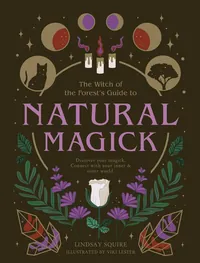
The wise woman's tale

 76
76

The wise woman's tale
Phillipa Bowers' The Wise Woman's Tale offers a welcome counterpoint to overly academic or rigidly structured esoteric texts. The strength of the book lies in its evocative prose and its focus on lived, experiential wisdom rather than abstract theory. The passages detailing the woman's connection to the lunar cycles, for instance, feel particularly grounded and authentic. However, the collection occasionally suffers from a lack of clear narrative through-line, leaving the reader to piece together connections themselves. While this can be a meditative practice, it sometimes borders on being too diffuse. The recurring motif of the "hearth fire" as a locus of domestic magic is a potent image that could have been more fully explored across the different tales. Ultimately, Bowers presents a compelling, if sometimes elusive, portrait of ancestral feminine power.
📝 Description
76
Phillipa Bowers' 2008 book collects narratives about figures known as "wise women."
The Wise Woman's Tale is not a single story but a collection of accounts and reflections. Phillipa Bowers gathered these narratives, first published in 2008, to illuminate the wisdom attributed to women often called "wise women." The book examines themes of nature, intuition, and the natural rhythms of life and death. It speaks to a tradition of female healers, seers, and spiritual guides whose knowledge has been passed down through generations. The text functions as a mosaic, piecing together diverse experiences and insights rather than following a linear plot. It appeals to readers interested in folklore, women's spirituality, and older European traditions.
The book is suited for those who appreciate contemplative works focusing on ancestral knowledge and the feminine archetype. It particularly resonates with those interested in how these concepts connect with natural cycles and folk magic. Bowers' collection emerges from a renewed interest in earth-centered spirituality and goddess traditions that became more prominent in the late 20th century. The "wise woman" figure, central to the text, represents a keeper of ancient knowledge, often existing outside mainstream society. This figure embodies a strong connection to the earth's cycles and an intuitive grasp of existence's mysteries.
This work connects to a lineage of oral and written traditions concerning female spiritual practitioners and healers. It emerged during a late 20th century resurgence of interest in earth-centered spirituality and goddess traditions. Bowers' approach can be seen alongside scholarship that examines matriarchal societies and the reclamation of feminine divine imagery. The book highlights the 'wise woman' as a figure holding ancient knowledge, deeply attuned to natural rhythms and intuition, often outside conventional structures.
💡 Why Read This Book?
• Gain an understanding of the "wise woman" archetype as a conduit for ancestral knowledge, as presented through Bowers' narrative approach, offering a different perspective than purely theoretical works. • Explore the symbolism of natural cycles, specifically the lunar phases and their connection to feminine intuition, a core element within the text's framework. • Discover the concept of hearth magic and its significance as a sacred space for domestic wisdom, a recurring motif detailed in specific anecdotes within the book.
⭐ Reader Reviews
Honest opinions from readers who have explored this book.
❓ Frequently Asked Questions
When was The Wise Woman's Tale first published?
The Wise Woman's Tale was first published in 2008. This places it within a period of renewed interest in ancestral traditions and feminine spirituality.
What is the primary focus of The Wise Woman's Tale?
The book focuses on narratives and reflections centered around the archetype of the "wise woman," exploring themes of nature, intuition, and cyclical wisdom.
Does the book offer practical advice or is it more reflective?
It leans more towards reflective and narrative exploration of wisdom rather than a practical how-to guide, though it touches upon practices like herbalism and divination.
Who is Phillipa Bowers?
Phillipa Bowers is the author of The Wise Woman's Tale, first published in 2008. Information about her other works or background is less prominent.
What historical traditions does the book draw upon?
The book draws upon folklore, women's spirituality, and pre-Christian European traditions, particularly those associated with ancestral knowledge and earth-centered practices.
Is this book suitable for beginners in esoteric studies?
Yes, it can be suitable for beginners interested in folklore and archetypal studies, offering an accessible entry point into themes of feminine wisdom and natural cycles.
🔮 Key Themes & Symbolism
The Archetypal Wise Woman
The core of the book revolves around the archetype of the "wise woman," a figure embodying deep, often intuitive, knowledge passed down through generations. These narratives portray her not as a mere character, but as a vessel of ancestral memory, connected to the earth's cycles and the subtle energies of life. This figure represents a form of wisdom that operates outside formal institutions, rooted instead in direct experience and communion with the natural world, a concept explored throughout the text's various vignettes.
Nature's Rhythms and Cycles
Central to the wise woman's understanding is her attunement to the natural world, particularly its cyclical patterns. The book emphasizes the importance of lunar phases, seasonal shifts, and the rhythms of birth, death, and rebirth as fundamental sources of wisdom. This perspective suggests that true understanding comes from observing and aligning with these organic processes, rather than imposing external structures. The text uses these cycles as a framework for understanding human experience and spiritual growth.
Intuition and Embodied Knowledge
The narratives in The Wise Woman's Tale highlight the power of intuition and embodied knowledge, often contrasting it with purely intellectual or logical understanding. The wise woman's insights arise from a deep inner knowing, a connection to her body and the subtle currents of existence. This theme underscores the value of instinct, feeling, and lived experience as valid pathways to truth and understanding, a perspective often sidelined in modern discourse.
The Hearth as Sacred Space
Within the domestic sphere, the hearth often emerges as a focal point of sacred activity and wisdom. The book suggests that the home, particularly the area around the fire, can be a place where the wise woman cultivates and shares her knowledge, tending to both physical and spiritual needs. This elevates the mundane to the mystical, indicating that profound wisdom and ritual can be found within the everyday acts of tending to a home and family.
💬 Memorable Quotes
Direct passages from the work, attributed to the author.
“The moon, a silent witness, charted her knowing.”
— This phrase expresses the deep connection between the wise woman and natural celestial cycles. It suggests that her understanding is not learned from books but is intrinsically linked to the rhythms of the cosmos, particularly the moon, which has long been associated with feminine power and intuition.
“Her hands remembered the earth's oldest secrets.”
— This interpretation emphasizes embodied knowledge and ancestral memory. It implies that the wise woman's skills and wisdom are not just intellectual but are deeply ingrained in her physical being, passed down through generations like an inherited language spoken by the hands.
“The hearth fire held more than warmth; it held stories.”
— This highlights the symbolic importance of the hearth, transforming it from a mere source of heat into a repository of tradition and memory. It suggests that domestic spaces and rituals can be imbued with profound spiritual significance and ancestral narratives.
“To listen to the wind was to hear the world breathe.”
— This emphasizes a profound attunement to nature, portraying the wise woman as someone who perceives the subtle life force and interconnectedness of all things. Listening to the wind is a metaphor for understanding the fundamental pulse of existence.
“Her path was not drawn on maps, but felt in the soil.”
— This contrasts conventional, external guidance with intuitive, internalized direction. It signifies a way of life guided by instinct, experience, and a deep connection to the land, rather than by societal norms or rigid plans.
🌙 Esoteric Significance
Tradition
This work aligns with modern interpretations of animism and earth-centered spirituality, drawing loosely from pre-Christian European folk traditions and what is often termed "Goddess spirituality." It departs from more formalized esoteric lineages like Hermeticism or Kabbalah by emphasizing intuitive, anecdotal wisdom rooted in the natural world rather than structured philosophical systems or complex symbolic languages. Its tradition is one of reclamation and intuitive understanding of the sacred in the mundane.
Symbolism
The primary symbols are the "wise woman" herself, representing embodied ancestral knowledge and intuitive power, and the "hearth fire," symbolizing domestic sacredness, community, and the tending of life. The natural world, particularly the moon and seasonal cycles, functions as a symbolic language for understanding life's transitions and the interconnectedness of all beings, acting as a constant, unfolding text.
Modern Relevance
Contemporary practitioners of ecofeminism, nature-based spiritualities, and those exploring ancestral healing often draw inspiration from the archetype presented in The Wise Woman's Tale. Its emphasis on intuition, embodied knowledge, and finding the sacred in everyday life appeals to modern seekers looking for grounded, personal spiritual paths outside of established religious dogma. It informs practices focused on herbalism, folk magic, and the revitalization of feminine spiritual leadership.
👥 Who Should Read This Book
• Individuals interested in folklore and the archetype of the "wise woman," seeking narratives that explore ancestral knowledge and feminine wisdom beyond academic or theoretical frameworks. • Practitioners of earth-centered spiritualities and neopaganism who wish to deepen their understanding of nature's cycles and intuitive ways of knowing, as presented through evocative storytelling. • Readers exploring themes of ecofeminism and the reclamation of indigenous or folk traditions, looking for contemplative texts that highlight the sacredness of the domestic and the natural world.
📜 Historical Context
The Wise Woman's Tale, published in 2008, arrived during a period where interest in indigenous knowledge systems, ecofeminism, and neopagan spiritualities was flourishing. It reflects a broader cultural movement seeking alternatives to patriarchal religious structures and a reconnection with nature-based traditions. This era saw continued engagement with the works of figures like Marija Gimbutas, whose theories on ancient European matriarchal cultures influenced many exploring goddess traditions. The book can be seen as part of a lineage that includes earlier works on folklore and witchcraft, but it distinguishes itself by focusing on narrative and personal reflection rather than prescriptive ritual. While not facing overt censorship, such works often existed on the fringes of mainstream academia, finding their audience in counter-cultural and spiritual communities. Authors like Starhawk were also active, exploring similar themes of immanent divinity and earth-based spirituality, creating a fertile ground for Bowers' exploration.
📔 Journal Prompts
The moon's influence on intuitive knowing, as charted in the text.
Reflections on the "hearth fire" as a locus of personal or ancestral stories.
The embodied secrets remembered by the hands: what ancient knowledge do your hands hold?
Connecting with the world's breath through listening to natural elements.
The felt path: mapping personal journeys not by external markers, but by inner resonance.
🗂️ Glossary
Wise Woman
An archetype representing a woman embodying deep, intuitive, and ancestral knowledge, often associated with healing, nature, and spiritual insight, operating outside conventional societal structures.
Hearth Fire
Symbolically represents the sacred center of the home, a place of warmth, nourishment, community, and the preservation of domestic wisdom and ancestral stories.
Embodied Knowledge
Wisdom and understanding that is deeply integrated into the physical body and lived experience, accessed through intuition, instinct, and sensory perception rather than solely intellectual means.
Nature's Cycles
The recurring patterns observed in the natural world, such as lunar phases, seasonal changes, and the processes of birth, growth, decay, and renewal, seen as fundamental sources of wisdom.
Ancestral Memory
The concept that knowledge, wisdom, and experiences of past generations are held within individuals or lineages, accessible through intuition, dreams, or connection to heritage.
Intuition
The ability to understand something immediately, without the need for conscious reasoning; a direct perception or inner knowing often associated with feminine wisdom.
Folk Traditions
The customs, beliefs, and practices passed down through generations within a community, often orally, encompassing folklore, healing arts, and spiritual observances.
🔮 Readers Also Liked
Browse all →









More Free Occult Philosophy Books
View all →