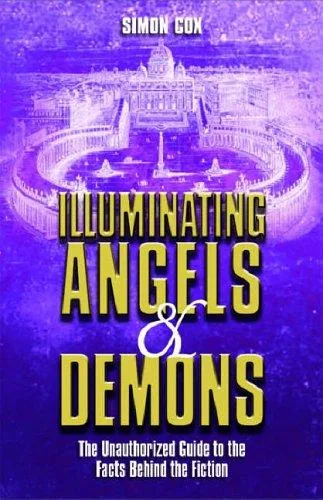
Illuminating Angels and Demons
 73
73

Illuminating Angels and Demons
Simon Cox’s *Illuminating Angels and Demons* attempts a comprehensive overview of celestial and infernal archetypes, a subject ripe for detailed exploration. The book’s strength lies in its ambitious scope, drawing connections between disparate religious and occult systems. Cox’s treatment of the Gnostic Archons, for instance, provides a useful, if brief, entry point into that complex cosmology. However, the work occasionally suffers from a lack of deep engagement with primary sources, sometimes presenting synthesized information without sufficient critical distance. A particularly illuminating section discusses the symbolism of the serpent in both angelic and demonic contexts, suggesting a more fluid understanding of these forces than commonly accepted. While valuable for its breadth, a more rigorous academic approach could have elevated its impact.
📝 Description
73
Simon Cox's 2004 book examines angels and demons beyond simple good vs. evil narratives.
Published in 2004, Simon Cox's Illuminating Angels and Demons moves past superficial portrayals of angelic and demonic figures. The book investigates their complex archetypes and symbolic meanings as found in various esoteric traditions. Cox structures his analysis to map out different historical interpretations and appearances of these entities. He considers them not only as external beings but as significant internal symbols within the human psyche. The work aims to demystify these figures by understanding their roles in spiritual development through a comparative lens. It is a valuable resource for those interested in comparative mythology, religious studies, and the psychological aspects of spiritual beliefs.
Individuals familiar with occult symbolism or esoteric philosophy will find this book particularly useful for deepening their grasp of archetypal figures. It also speaks to students of Jungian psychology or anyone exploring the concept of the shadow self, offering relevant material for such inquiries. The book emerged during a period of increased interest in esoteric topics, contributing to discussions that merged mythological figures with psychological theory.
Cox's work is situated within the early 2000s trend of integrating esoteric and occult subjects into broader academic and popular discourse. This period saw a renewed focus on ancient religions and their symbolic systems. The book contributes to a conversation that connected mythological figures with psychological theory, drawing on precedents like Carl Jung's work on archetypes. Increased accessibility to diverse spiritual texts online also facilitated cross-cultural comparisons, which Cox utilizes in his analysis of angelic and demonic concepts.
💡 Why Read This Book?
• Understand the dualistic forces of angels and demons not just as external entities but as profound psychological symbols, as detailed in the book's exploration of archetypes. • Gain insight into how different spiritual traditions, such as Gnosticism with its Archons, conceptualize these powerful beings, offering a comparative perspective beyond common Western notions. • Discover the interconnectedness of seemingly opposing forces, as illustrated by the serpent symbolism discussed, which suggests a more nuanced view of spiritual dynamics.
⭐ Reader Reviews
Honest opinions from readers who have explored this book.
❓ Frequently Asked Questions
What specific traditions does 'Illuminating Angels and Demons' draw upon?
The book synthesizes information from various esoteric and religious traditions, including Gnosticism (mentioning Archons), Kabbalah (Qliphoth), and comparative mythology. It examines angelology and demonology across these diverse frameworks.
Is Simon Cox's book suitable for beginners in esoteric studies?
While it covers a broad range of topics, some familiarity with occult symbolism or comparative religion would enhance the reader's experience. It offers a structured analysis for those ready to move beyond introductory material.
When was 'Illuminating Angels and Demons' first published?
Simon Cox's work, *Illuminating Angels and Demons*, was first published in 2004, placing it within a period of growing interest in esoteric and mythological studies.
Does the book present angels and demons as literal beings?
The book explores them as potent archetypes and symbolic representations, delving into their psychological and spiritual implications rather than solely focusing on literal interpretations.
What is the main argument regarding the symbolism of angels and demons?
Cox suggests that these figures represent fundamental dualities within the human psyche and spiritual landscape, with their interpretations varying significantly across different historical and cultural contexts.
What makes this book different from other works on angels and demons?
Its comparative approach, linking figures from Gnosticism and Kabbalah to broader mythological patterns, offers a more synthesized and psychologically oriented perspective than many purely theological or historical accounts.
🔮 Key Themes & Symbolism
Dualistic Archetypes
The work examines the archetypal representations of angels and demons not as simple good versus evil binaries, but as complex forces embodying fundamental dualities. It explores how these opposing concepts manifest in human psychology and spiritual understanding. The book investigates the Gnostic view of Archons as restrictive forces and the Kabbalistic Qliphoth as shells of negativity, demonstrating how different traditions conceptualize these powerful, often terrifying, yet essential, components of existence. The emphasis is on their symbolic role in spiritual development and the attainment of wholeness.
Comparative Mythology
Cox synthesizes cross-cultural and historical perspectives on angelic and demonic figures, revealing common threads and unique divergences. By comparing angelology and demonology across traditions like Gnosticism and Kabbalah, the book highlights how humanity has historically grappled with the concepts of divine guidance and adversarial influences. This comparative lens aims to clarify these figures, showing them as products of specific cultural and philosophical contexts while also pointing to universal human concerns about order, chaos, and transcendence.
Symbolic Interpretation
A central theme is the interpretation of angels and demons as potent symbols rather than purely literal beings. The book advocates for understanding these figures through the lens of psychology and esoteric philosophy, viewing them as representations of internal states, psychological challenges, and spiritual potentials. The symbolism of the serpent, appearing in both angelic and demonic contexts, is used to illustrate this nuanced approach, suggesting fluidity and interconnectedness where simple opposition is often assumed.
Spiritual Development
The work frames the engagement with angelic and demonic symbolism as crucial for personal and spiritual growth. By confronting and understanding these archetypes, individuals can better integrate their own shadow aspects and understand the forces that may hinder or aid their spiritual journey. The book suggests that acknowledging and working with these symbolic forces, as conceptualized in systems like the Kabbalah, is a necessary step towards achieving a more complete understanding of the self and the cosmos.
💬 Memorable Quotes
Direct passages from the work, attributed to the author.
“The Archons, in Gnostic thought, represent cosmic gatekeepers and limiting principles.”
— This highlights the book's exploration of non-Christian esoteric traditions, framing figures like Archons not as simple demons but as complex symbolic entities within specific cosmological frameworks.
“Qliphoth are often understood as the darker, unbalanced aspects of the Kabbalistic Tree of Life.”
— This interpretation points to the book's engagement with Kabbalistic concepts, presenting the Qliphoth as essential, albeit challenging, elements within a larger spiritual structure.
“The serpent appears in both sacred and profane contexts, signifying transformation and hidden knowledge.”
— This emphasizes the book's theme of nuanced symbolism, suggesting that entities or symbols often perceived as purely negative can hold complex, even positive, meanings within esoteric traditions.
“Archetypes like angels and demons can be seen as projections of our inner psychic landscape.”
— This interpretation aligns the book with psychological perspectives, particularly Jungian, suggesting that these powerful figures represent internal psychological dynamics rather than solely external entities.
💡 Key Ideas
Editorial paraphrase of the work's core concepts — not direct quotes.
Understanding these dualistic forces is key to reading through the complexities of the spiritual path.
This paraphrased concept underscores the practical application of the book's teachings, positioning the study of angels and demons as integral to one's personal journey of spiritual growth and self-awareness.
🌙 Esoteric Significance
Tradition
This work fits within the broad umbrella of Western Esotericism, particularly drawing from Hermetic, Gnostic, and Kabbalistic streams. It attempts to bridge these traditions by examining their shared and divergent views on dualistic spiritual forces. Cox’s approach often leans towards a psychological interpretation, echoing the work of Carl Jung, which has become a significant thread within modern esoteric thought. It departs from purely theological accounts by focusing on symbolic and archetypal dimensions applicable to personal spiritual development.
Symbolism
Key symbols explored include the serpent, which Cox posits as a complex figure appearing in both angelic and demonic contexts, signifying transformation and hidden wisdom. The concept of Archons from Gnosticism represents restrictive, material-world forces, while the Kabbalistic Qliphoth symbolize the unbalanced or negative aspects of creation's structure. These symbols are presented not as inherently good or evil, but as representations of fundamental cosmic and psychological dynamics that practitioners can engage with.
Modern Relevance
Contemporary practitioners of Jungian psychology, comparative mythology enthusiasts, and modern occultists often draw upon Cox’s synthesized approach to archetypes. His work is relevant to those exploring shadow work, the integration of polarities, and the symbolic language of spiritual traditions. The book's emphasis on understanding these figures as psychological and symbolic forces continues to resonate with modern seekers who look to esoteric literature for tools of self-discovery and spiritual maturation.
👥 Who Should Read This Book
• Students of comparative mythology and religious studies seeking to understand the archetypal representations of spiritual dualities across diverse cultures and belief systems. • Practitioners of Western Esotericism, particularly those interested in Gnosticism (Archons) and Kabbalah (Qliphoth), who wish to deepen their understanding of symbolic forces. • Individuals exploring Jungian psychology and shadow work, looking for esoteric frameworks that illuminate the psychological significance of angelic and demonic figures.
📜 Historical Context
Published in 2004, *Informative Angels and Demons* emerged during a period of significant resurgence in esoteric and occult studies. The early 21st century saw a growing interest in comparative religion and mythology, often viewed through a psychological lens, influenced by thinkers like Carl Jung. Cox's work contributed to this discourse by attempting to synthesize angelology and demonology from disparate traditions, including Gnosticism and Kabbalah. This era was also characterized by increased accessibility to ancient texts and a burgeoning online community dedicated to occultism. Contemporary authors like Richard Smoley were also exploring similar themes of hidden knowledge and esoteric traditions. While not facing overt censorship, such works often navigated a delicate space between academic inquiry and popular occultism, with reception varying among scholars and practitioners.
📔 Journal Prompts
The symbolic role of the serpent as presented in the book.
Your personal interpretation of the Gnostic Archons.
How the concept of Qliphoth relates to your understanding of spiritual balance.
Reflections on the dualistic nature of archetypal forces.
The psychological projection of angelic and demonic figures.
🗂️ Glossary
Archons
In Gnostic cosmology, these are often described as malevolent or ignorant rulers of the material world, acting as intermediaries or gatekeepers that prevent souls from ascending to the higher realms.
Qliphoth
In Kabbalah, the 'husks' or 'shells' representing the unbalanced or negative aspects of the emanations from the Tree of Life, often associated with forces of chaos or spiritual imbalance.
Archetype
A universal, inherited pattern of thought or imagery derived from the collective unconscious, according to Jungian psychology, which manifests in myths, symbols, and dreams.
Angelology
The study of angels, their nature, hierarchy, and roles within religious and esoteric traditions. It examines beliefs about celestial beings and their interactions with the material world.
Demonology
The study of demons, their origins, hierarchies, and purported influence. It explores the beliefs surrounding malevolent spiritual entities across various cultures and religions.
Gnosticism
A diverse set of religious beliefs and systems that originated in the early Christian era, emphasizing spiritual knowledge (gnosis) for salvation and often positing a dualistic worldview.
Kabbalah
A system of Jewish mysticism and esoteric interpretation that explores the relationship between the divine and the created universe, often represented through the Tree of Life.
🔮 Readers Also Liked
Browse all →









More by Simon Cox, Simon Cox
All books →
More Free Occult Philosophy Books
View all →