Tao Te Ching
 72
72

Tao Te Ching
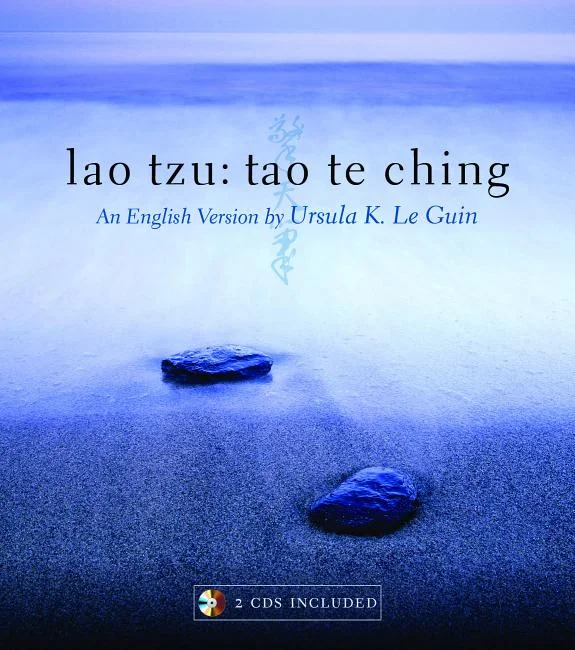
Ursula K. Le Guin’s translation of the Tao Te Ching is less an academic exercise and more an act of empathetic interpretation. Her background as a speculative fiction author, adept at exploring human nature and societal structures, brings a unique clarity to Laozi’s ancient verses. The accompanying audio, with Le Guin’s own reading, adds a layer of intimacy, allowing the reader to hear the text’s rhythm and intention directly from the translator. One notable strength is Le Guin’s ability to render abstract concepts like *wu wei* into accessible language without sacrificing their depth. However, the translation occasionally leans into Le Guin’s own philosophical inclinations, which, while insightful, might diverge from more traditional interpretations. The passage discussing the sage who governs by "emptying minds, filling bellies" offers a potent, if unsettling, critique of conventional power structures that remains remarkably relevant. The book's enduring appeal lies in its quiet insistence on a different way of being. Le Guin’s rendition, particularly with the audio component, makes this ancient wisdom feel immediate and personal.
📝 Description
72
Laozi's Tao Te Ching, traditionally dated to the 6th century BCE, presents a worldview centered on the ineffable Tao.
The Tao Te Ching, attributed to the sage Laozi, is a foundational text of Taoism. Composed of eighty-one short chapters, it articulates a philosophy centered on the Tao, the underlying principle of the universe. The text advocates for living in harmony with this natural order, stressing simplicity, spontaneity, and the practice of wu wei, or non-action. This edition features a translation by Ursula K. Le Guin and accompanying audio readings by Le Guin and Todd Barton.
Le Guin's translation aims for an accessible engagement with the text. It is suitable for those interested in Eastern philosophy, comparative religion, and contemplative practices. Scholars of ancient Chinese thought may find this translation a useful addition, while practitioners of various spiritual paths might discover guidance for a more balanced life. The audio recordings provide an alternative way to experience the text's rhythm and meaning, particularly for auditory learners.
Emerging from China's Spring and Autumn period (771–476 BCE), a time of political fragmentation, Taoism offered a philosophical counterpoint to Confucianism's emphasis on social structure. The Tao Te Ching proposes a return to naturalness and a critique of rigid societal conventions, suggesting governance and personal conduct should align with the spontaneous flow of the universe. This perspective aligns with esoteric traditions that seek understanding through direct experience of underlying principles rather than through prescribed dogma.
💡 Why Read This Book?
• Gain a practical understanding of *wu wei* (effortless action) through Le Guin’s accessible prose, enabling you to approach daily tasks with greater ease and effectiveness. • Explore the concept of the Tao as the underlying unity of existence, as articulated in the text's eighty-one chapters, fostering a deeper connection to natural principles. • Experience Laozi’s critique of conventional wisdom and governance, as presented in Le Guin’s translation, offering a fresh perspective on leadership and societal organization.
⭐ Reader Reviews
Honest opinions from readers who have explored this book.
❓ Frequently Asked Questions
When was the Tao Te Ching likely written?
While precise dating is debated, the Tao Te Ching is traditionally attributed to Laozi and is generally placed in the 6th century BCE, during China's Spring and Autumn period.
What is the central philosophy of the Tao Te Ching?
The central philosophy revolves around the Tao, the ineffable natural order of the universe, and the practice of *wu wei*, or effortless action, living in accordance with this natural flow.
Who is Ursula K. Le Guin and why is her translation significant?
Ursula K. Le Guin was a renowned author of speculative fiction. Her translation is significant for its literary quality and Le Guin's insightful, accessible rendering of complex philosophical concepts.
What does 'wu wei' mean in the context of the Tao Te Ching?
'Wu wei' translates to 'non-action' or 'effortless action.' It signifies acting in harmony with the natural course of events, without forcing or striving, akin to water flowing around obstacles.
Are there audio recordings available for this translation?
Yes, this edition is accompanied by CDs featuring Ursula K. Le Guin reading her translation, often with musical accompaniment by Todd Barton.
How does the Tao Te Ching relate to Taoism?
The Tao Te Ching is considered a foundational scripture of Taoism, outlining its core philosophical principles and offering guidance for living a life aligned with the Tao.
🔮 Key Themes & Symbolism
The Nature of the Tao
The Tao Te Ching posits the Tao as the fundamental, ineffable principle underlying all reality. It is the source from which the 'ten thousand things' emerge and to which they return. Described as formless, nameless, and eternal, the Tao cannot be grasped through intellect or language alone. Its essence is best understood through observation of the natural world and a cultivation of inner stillness. This concept challenges Western dualistic thinking, presenting a monistic view where all phenomena are interconnected expressions of a single, ultimate reality.
Wu Wei: Effortless Action
Wu wei, often translated as 'non-action' or 'effortless action,' is a central to Taoist practice. It does not advocate for passivity but for acting in accordance with the natural flow of the Tao, without struggle, force, or artificiality. This principle encourages spontaneity, adaptability, and a recognition of the power inherent in yielding. By observing how nature operates – water flowing, plants growing – one can learn to engage with life's challenges and opportunities with a sense of ease and efficacy, achieving results through minimal resistance.
Simplicity and Naturalness
A recurring theme is the value of simplicity, spontaneity, and a return to a natural state, often contrasted with the artificiality and complexity of human society and its conventions. The text suggests that societal constructs, rigid moral codes, and the pursuit of knowledge or ambition can obscure the Tao and lead to disharmony. Embracing simplicity involves shedding unnecessary desires, reducing intellectualization, and cultivating a state of beginner's mind, allowing one to perceive reality more directly and live more authentically.
The Relativity of Opposites
The Tao Te Ching frequently explores the interdependence and relativity of apparent opposites. Concepts like good and evil, beauty and ugliness, strength and weakness are presented not as absolute states but as complementary aspects of a greater whole. Understanding this relativity encourages a non-judgmental perspective and a recognition that the pursuit of one extreme often leads to its opposite. This insight fosters balance and a deeper appreciation for the dynamic interplay of forces that constitute existence.
💬 Memorable Quotes
Direct passages from the work, attributed to the author.
“The Tao that can be told is not the eternal Tao.”
— This opening line immediately establishes the ineffable nature of the Tao. It suggests that any attempt to define or articulate the ultimate reality through language or concepts is inherently limited and cannot capture its true, unchanging essence.
“To know others is intelligence; to know oneself is wisdom.”
— This highlights a core Taoist principle: self-awareness is superior to external knowledge. True wisdom lies not in understanding the external world, but in understanding one's own inner nature and place within the Tao.
“The sage manages without acting, teaches without speaking.”
— This expresses the concept of wu wei. The ideal leader or wise person achieves results through subtle influence and by allowing things to unfold naturally, rather than through overt control or forceful instruction.
“Nature does not hurry, yet everything is accomplished.”
— This serves as a metaphor for wu wei and the efficiency of the Tao. It contrasts the frantic pace of human endeavors with the steady, unforced progress of the natural world, suggesting a more effective way to achieve goals.
“When people see some things as beautiful, other things become ugly.”
— This illustrates the principle of the relativity of opposites. The creation of value judgments and distinctions (like beauty) inherently creates their opposites, demonstrating how our perceptions shape our reality.
🌙 Esoteric Significance
Tradition
While not strictly fitting into Western esoteric lineages like Hermeticism or Kabbalah, the Tao Te Ching holds immense significance within Eastern spiritual traditions and has profoundly influenced global esoteric thought. Its emphasis on an underlying, ineffable cosmic principle (the Tao) speaks to Gnostic concepts of the Pleroma or the Neoplatonic One. The practice of *wu wei* shares parallels with contemplative disciplines across traditions that seek alignment with divine or natural law through surrender and inner stillness.
Symbolism
Key symbols include water, often depicted as soft yet powerful, capable of wearing away stone, symbolizing the yielding strength of *wu wei*. Emptiness (or void) is another crucial motif, representing the potentiality from which all forms arise and the receptive state necessary for understanding the Tao. The uncarved block (*pu*) symbolizes a state of natural, unadulterated simplicity, free from artifice and conceptual overlay, representing the ideal state of being aligned with the Tao.
Modern Relevance
Contemporary esoteric practitioners and thinkers across various disciplines draw heavily on the Tao Te Ching. Its principles inform mindfulness practices, non-violent communication, and ecological philosophies. Modern interpretations often bridge Taoist concepts with psychological theories of self-actualization and somatic practices, seeking to integrate its wisdom into daily life for personal well-being and a more harmonious relationship with the environment.
👥 Who Should Read This Book
• Students of Eastern philosophy and comparative religion seeking to understand the foundational texts of Taoism and their influence. • Practitioners of contemplative or mindfulness disciplines looking for guidance on achieving inner balance and effortless action (*wu wei*). • Writers and artists interested in exploring themes of naturalness, simplicity, and the creative power of emptiness, as articulated by Laozi.
📜 Historical Context
The Tao Te Ching emerged from the intellectual ferment of China's Spring and Autumn period (771–476 BCE), a time marked by the fragmentation of the Zhou dynasty and the rise of philosophical schools like Confucianism and Mohism. While Confucianism championed social order, ritual, and ethical governance through hierarchical structures, Taoism, as exemplified by the Tao Te Ching, offered a radical alternative. It critiqued societal conventions, advocating for a return to naturalness, simplicity, and a decentralized form of leadership based on *wu wei* (effortless action). The text’s philosophical stance implicitly challenged the prevailing emphasis on active governance and moral instruction promoted by figures like Confucius. Its ideas likely circulated orally for centuries, influencing Daoist practices and later syncretic movements, though its compilation into a cohesive text is typically dated much later, perhaps around the 4th century BCE.
📔 Journal Prompts
The Tao’s unnamable nature and its implications for self-definition.
Reflecting on instances where *wu wei* could have replaced forceful action.
The concept of the 'uncarved block' and its relevance to modern identity.
Comparing the Tao's ceaseless flow with human notions of time and progress.
Exploring the relativity of opposites in personal experiences and judgments.
🗂️ Glossary
Tao (Dao)
The fundamental, ineffable principle of the universe in Taoism. It is the source, pattern, and substance of everything that exists, often translated as 'the Way.'
Wu Wei
Literally 'non-action' or 'effortless action.' It refers to acting in accordance with the natural flow of the Tao, without striving, force, or artificiality.
Laozi (Lao Tzu)
The semi-legendary sage traditionally credited with writing the Tao Te Ching. His name means 'Old Master.'
De (Te)
Often translated as 'virtue,' 'power,' or 'integrity.' It refers to the inherent quality or power that beings possess when they are aligned with the Tao.
Pu
The 'uncarved block.' It symbolizes the state of natural simplicity, original potentiality, and absence of artificial distinctions or desires.
Ten Thousand Things
A common Taoist expression referring to the multiplicity of all phenomena and beings in the universe, all of which arise from and return to the Tao.
Spring and Autumn period
An era in Chinese history (c. 771–476 BCE) characterized by political fragmentation and intellectual flourishing, during which foundational Chinese philosophies emerged.
This book appears in 1 collection
🔮 Readers Also Liked
Browse all →








From the “Taoism” Collection
View all →






More Free Occult Philosophy Books
View all →