The Cat who Came in Off the Roof
 79
79

The Cat who Came in Off the Roof
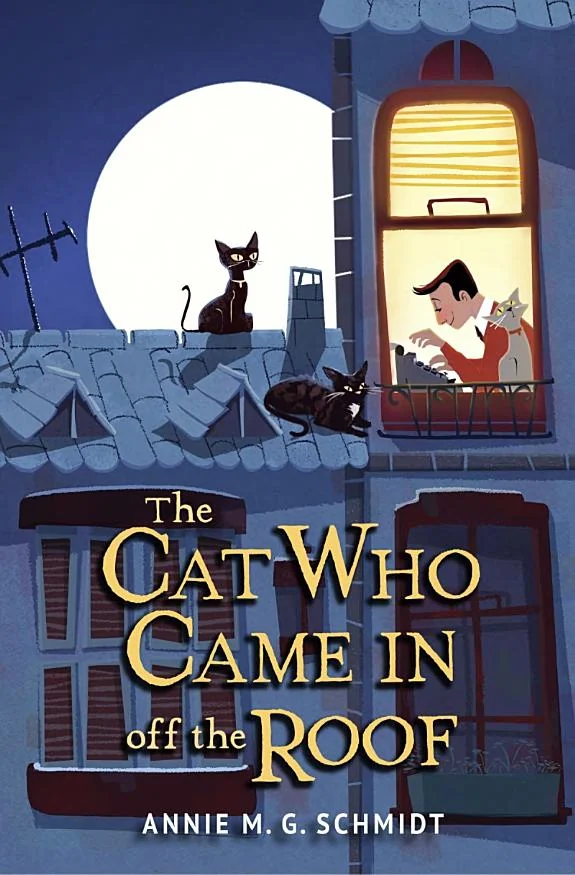
Annie M. G. Schmidt's "The Cat Who Came in Off the Roof," as translated by David Colmer, presents a charmingly peculiar encounter between a young girl and an articulate feline. The premise itself—a talking cat offering commentary on human affairs from its perch on a rooftop—is the book's immediate draw, promising a whimsical deviation from the mundane. Schmidt's prose, even in translation, retains a sprightly, direct quality, making the fantastical elements feel grounded in a child's perspective. The dynamic between Tibbel and the cat is the story's strongest asset, offering moments of genuine, if understated, humor and insight. However, the plot progression can feel somewhat episodic, lacking a strong overarching conflict that might fully propel the narrative forward for older or more seasoned young readers. The book's charm lies more in its character interactions and atmosphere than in a tightly constructed plot. It offers a gentle exploration of curiosity and the unexpected. A delightful, if slight, diversion.
📝 Description
79
Annie M. G. Schmidt's 1960 novel, 'The Cat Who Came in Off the Roof,' introduces a talking feline companion.
First published in Dutch in 1960, Annie M. G. Schmidt's "The Cat Who Came in Off the Roof" tells the story of Tibbel, a young girl living in a tall house. Her life changes when a mysterious, talking cat appears. This children's novel, translated into English by David Colmer and published by Pushkin Children's Books in 2014, appeals to young readers aged 7-10.
The book features quirky characters and lighthearted mysteries, encouraging a sense of wonder. Schmidt, a celebrated Dutch author known for her unconventional protagonists and playful style, wrote this story during a period when children's literature began embracing more imaginative themes. The narrative centers on the companionship between Tibbel and the cat, exploring curiosity and the acceptance of the extraordinary. It subtly challenges expectations by depicting a world where animals converse and hidden adventures exist.
Annie M. G. Schmidt's work often features a playful subversion of the ordinary. In "The Cat Who Came in Off the Roof," the talking cat acts as a catalyst for Tibbel's engagement with a world beyond the mundane. This aligns with traditions that find the magical or spiritual within everyday life, suggesting that extraordinary encounters are possible for those open to them. The narrative implicitly questions strict rationalism, positing that communication and connection can transcend species and conventional understanding, hinting at a broader, unseen reality.
💡 Why Read This Book?
• You will learn to observe the unexpected wisdom found in animal companionship, as seen in the interactions between Tibbel and the talking cat from the 1960 original publication. • You will feel the charm of a narrative that gently questions everyday reality, a hallmark of Annie M. G. Schmidt's writing style established throughout her extensive career. • You will gain an appreciation for how translated literature can preserve unique cultural voices, as demonstrated by David Colmer's 2014 rendition of this Dutch classic.
⭐ Reader Reviews
Honest opinions from readers who have explored this book.
❓ Frequently Asked Questions
When was "The Cat Who Came in Off the Roof" originally published in Dutch?
The original Dutch version of "The Cat Who Came in Off the Roof," titled "De kat kwam uit de boom," was first published in 1960, making it a mid-20th-century classic of Dutch children's literature.
Who is the author of "The Cat Who Came in Off the Roof"?
The author is Annie M. G. Schmidt, a highly acclaimed Dutch writer celebrated for her imaginative and often humorous children's books, earning her the title 'Queen of Dutch Children's Literature'.
What is the English translation of the book and who translated it?
The English translation was published in 2014 by Pushkin Children's Books, and it was translated by David Colmer, an award-winning translator known for bringing Dutch literature to an English-speaking audience.
What is the main premise of the story?
The story follows a young girl named Tibbel who encounters a talking cat that has come in off the roof, leading to a series of whimsical and slightly mysterious adventures.
What are the main themes explored in the book?
The book explores themes of curiosity, the acceptance of the extraordinary, unusual friendships, and the subtle magic found in everyday life, all presented through a child's perspective.
Is this book suitable for very young children?
While generally aimed at early readers (around ages 7-10), its imaginative themes and gentle pace make it enjoyable for shared reading sessions with younger children as well.
🔮 Key Themes & Symbolism
The Unconventional Companion
The central relationship between Tibbel and the talking cat defies typical human-animal dynamics. This feline isn't just a pet; it's an observer and commentator, offering a unique perspective from its vantage point on the roof. This unconventional bond highlights how companionship can arise from unexpected sources and how communication transcends conventional boundaries. The cat's presence introduces an element of the extraordinary into Tibbel's ordinary life, encouraging a broader understanding of friendship and connection beyond the human realm.
Curiosity and the Extraordinary
Tibbel's encounter with the talking cat sparks a sense of wonder and curiosity about the world. The narrative encourages readers to look beyond the mundane and embrace the possibility of magic existing just beneath the surface of everyday reality. The cat’s unusual abilities serve as a catalyst for Tibbel to question, explore, and engage with her surroundings in new ways. This theme underscores the importance of maintaining an open mind and a receptive spirit to the unusual, suggesting that extraordinary experiences often begin with simple observation.
Challenging Norms
Annie M. G. Schmidt's work often subtly subverted expectations, and "The Cat Who Came in Off the Roof" is no exception. The talking cat itself is a direct challenge to what is considered normal or possible. The story implicitly encourages readers, particularly young ones, to question societal norms and to accept differences. The narrative suggests that the world is far more interesting and varied than what is immediately apparent, valuing individuality and the unexpected over conformity.
The Rooftop Perspective
The cat’s literal position on the roof offers a unique vantage point, symbolizing a detached yet observant outlook. This perspective allows the cat to comment on the human world below with a certain wisdom or amusement. The rooftop can be interpreted as a liminal space, between the domestic interior and the wider world, a place from which to gain a broader understanding. This motif encourages readers to consider different viewpoints and to appreciate the insights that can come from stepping back and observing.
💬 Memorable Quotes
Direct passages from the work, attributed to the author.
“The cat sat on the roof and watched the world go by.”
— This simple image captures the cat's role as an observer. It suggests a contemplative existence, distinct from the hustle of human activity, hinting at a different kind of wisdom found in quiet observation.
“Tibbel wondered how the cat knew so many things.”
— This reflects the child's natural curiosity and acceptance of the extraordinary. It highlights the mystery surrounding the talking cat and the potential for knowledge to come from unexpected, non-human sources.
“The cat spoke with a voice like rustling leaves.”
— This descriptive phrase lends an ethereal and natural quality to the cat's voice, differentiating it from human speech and enhancing its magical or otherworldly nature within the narrative.
“It's not always easy to understand people, even when they talk.”
— This observation, likely made by the cat, points to the complexities of communication and understanding, even among humans. It suggests that non-human perspectives can sometimes offer clarity on human interactions.
“The roof was the best place for thinking.”
— This emphasizes the symbolic significance of the rooftop as a place of contemplation and perhaps detachment from immediate concerns, ideal for introspection and gaining perspective.
🌙 Esoteric Significance
Tradition
While "The Cat Who Came in Off the Roof" is primarily a children's story, its themes can be loosely aligned with certain streams of animism and nature mysticism, where animals are seen as possessing spiritual significance or consciousness beyond the human. It shares a lineage with folklore traditions where animals act as guides or messengers. The cat's elevated perspective from the rooftop echoes motifs found in shamanic journeys or Gnostic ideas of higher perception, offering insights from a non-ordinary viewpoint.
Symbolism
The talking cat itself serves as a potent symbol, representing intuition, the subconscious, or a connection to the natural world that humans often overlook. Its ability to speak and reason transcends the typical animalistic role, suggesting a guardian spirit or an archetype of hidden wisdom. The rooftop acts as a liminal space, a threshold between the mundane world below and a area of greater awareness or possibility, from which the cat imparts its observations.
Modern Relevance
Contemporary interest in animal communication, interspecies relationships, and eco-consciousness finds echoes in Schmidt's portrayal of the cat. Thinkers and practitioners in ecopsychology and animistic philosophies might draw parallels to the idea of non-human intelligence and the importance of listening to the natural world. The book's gentle subversion of anthropocentrism speaks to modern calls for a more balanced relationship between humanity and other species.
👥 Who Should Read This Book
• Young readers aged 7-10 seeking imaginative stories with talking animals and lighthearted mysteries. They will enjoy the whimsical interactions between Tibbel and the extraordinary cat. • Parents and educators looking for engaging, character-driven narratives that encourage curiosity and a sense of wonder without overly complex plots. • Fans of classic children's literature and translated works who appreciate unique voices in storytelling, like those of Annie M. G. Schmidt, and are interested in mid-20th-century European children's fiction.
📜 Historical Context
Annie M. G. Schmidt's "The Cat Who Came in Off the Roof" (original Dutch title: "De kat kwam uit de boom") emerged in 1960, a period of significant cultural shifts in the Netherlands and beyond. Children's literature was moving away from didacticism towards more imaginative and playful narratives. Schmidt herself was a key figure, often challenging conventional storytelling with her combination of humor, absurdity, and empathy. In the broader literary field of the time, authors like Roald Dahl in the UK were also beginning to explore darker, more unconventional themes in children's books, though Schmidt’s approach was generally lighter and more focused on whimsy. The mid-20th century saw a growing interest in psychoanalytic interpretations of children's literature, but Schmidt’s work largely bypassed overt psychological analysis, focusing instead on character and narrative invention. The success of her works, including this one, marked a departure from the more traditional, morally instructive tales that had previously dominated the genre.
📔 Journal Prompts
Tibbel's initial encounter with the talking cat.
The cat's perspective from the rooftop.
Unusual forms of communication observed in the story.
Moments of unexpected wisdom shared by the cat.
The significance of the cat's arrival in Tibbel's life.
🗂️ Glossary
Tibbel
The young girl protagonist who lives in a tall house and befriends the talking cat. Her character embodies curiosity and openness to the unusual.
Talking Cat
A central, anthropomorphic character whose ability to speak and offer commentary provides a unique narrative perspective and introduces magical elements.
Rooftop
The primary location from which the cat observes and interacts, symbolizing a vantage point of detachment, contemplation, and a connection to the wider world.
De kat kwam uit de boom
The original Dutch title of the book, translating to 'The Cat Came Out of the Tree,' highlighting a slightly different initial image from the English title.
Pushkin Children's Books
The publisher of the 2014 English translation, known for bringing international children's literature to the UK market.
David Colmer
The translator of this English edition, recognized for his award-winning work in translating Dutch literature into English.
Whimsy
A quality of being playful, fanciful, and imaginative, characteristic of Schmidt's writing style and the overall tone of the book.
This book appears in 1 collection
🔮 Readers Also Liked
Browse all →








From the “Shapeshifting” Collection
View all →






More Free Occult Philosophy Books
View all →