I Ching =
 61
61

I Ching =



Evander Ashcroft, Alchemy & Hermeticism Editor: Blofeld's "I Ching" stands as a beacon of esoteric scholarship, illuminating the profound metaphysical depths of this ancient oracle. Unlike purely academic renditions, Blofeld's translation is imbued with a palpable sense of spiritual reverence, capturing the mystical essence of the text. He masterfully deciphers the layered symbolism, revealing the I Ching not just as a divinatory tool, but as a profound philosophical system reflecting universal principles of change and cosmic order. This edition is an indispensable resource for anyone seeking to move beyond superficial interpretations and engage with the I Ching as a living source of hidden knowledge. Its clarity and spiritual depth make it ideal for serious practitioners and students of the occult.
📝 Description
61
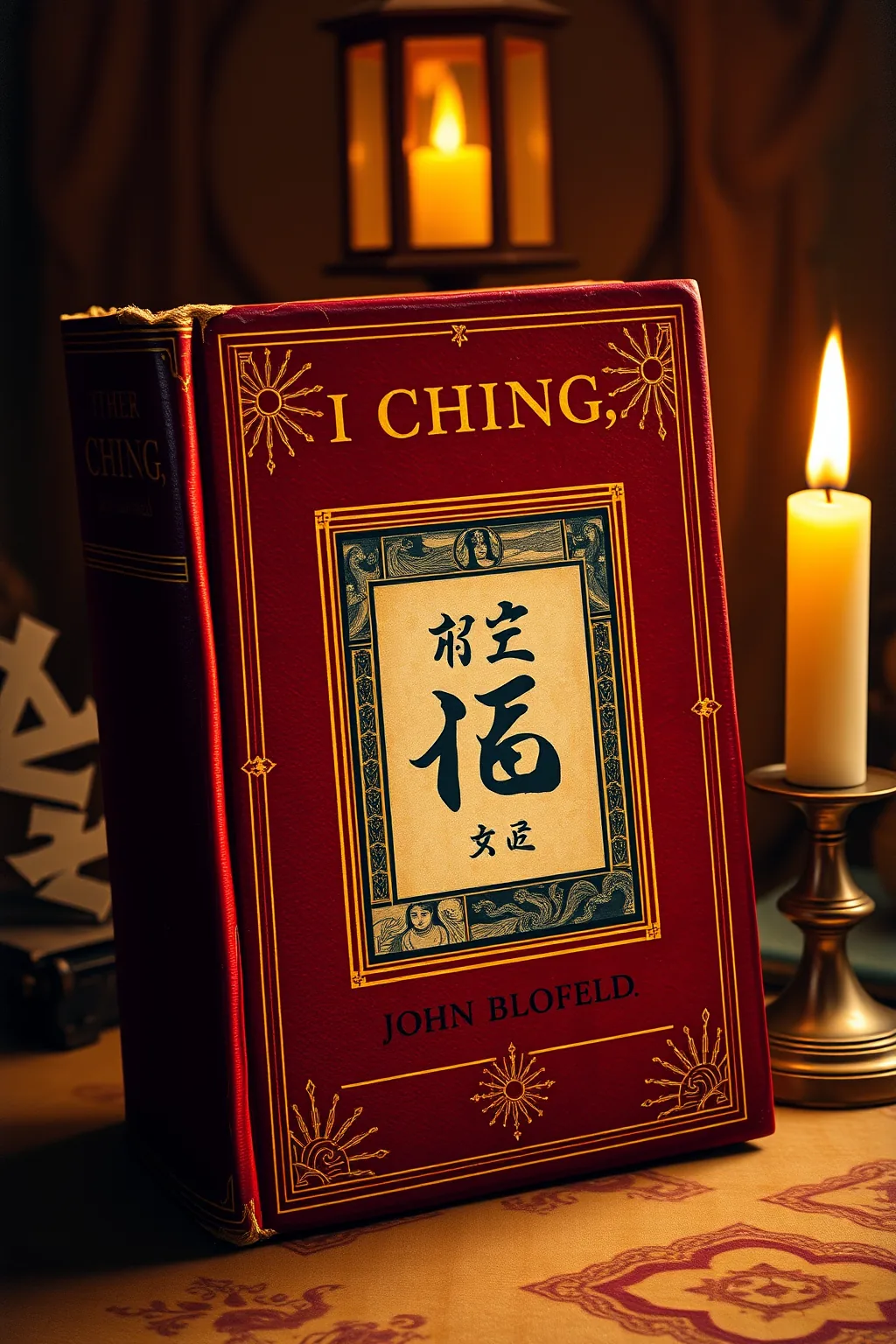
John Blofeld's 1965 I Ching translation is an alchemical distillation of centuries of esoteric thought.
John Blofeld's 1965 English translation of the I Ching, the Chinese Book of Changes, presents more than a literal rendering of the text. It is an interpretation that seeks to reveal the underlying esoteric principles and cosmic patterns. Blofeld, known for his studies of Taoism and Buddhism, guides readers through the meanings of the 64 hexagrams and their changing lines.
He explains the interplay of Yin and Yang as fundamental forces influencing destiny. The book aims to offer insights for self-discovery and a better understanding of the universe. Each symbol and line is presented as holding philosophical and spiritual depth, meant to serve as a guide for life's challenges. This edition is intended for those seriously interested in the text's deeper meanings, including contemplative scholars and practitioners.
This work is situated within the tradition of Western engagement with Chinese esoteric philosophy, particularly Taoism. Blofeld's approach emphasizes the I Ching not just as a divinatory tool but as a system reflecting universal principles. It connects the text to broader concepts of cosmic order and human interaction with these forces, drawing parallels with mystical traditions. The translation aims to make these subtle, often hidden, connections accessible to Western readers seeking a deeper understanding of ancient Chinese thought.
💡 Why Read This Book?
This edition of the I Ching offers an unparalleled entry into the esoteric heart of Chinese wisdom. It transcends simple divination, providing profound insights into cosmic principles and personal transformation. Ideal for seekers of hidden knowledge, scholars of ancient philosophy, and practitioners aiming to deepen their connection with universal energies, this book is a key to unlocking profound self-understanding and navigating life's ever-changing currents with wisdom.
⭐ Reader Reviews
Honest opinions from readers who have explored this book.
❓ Frequently Asked Questions
What is the I Ching?
The I Ching, or Book of Changes, is an ancient Chinese divination text and philosophical classic, revered for its profound insights into the patterns of change in the universe and human life. It uses a system of hexagrams to offer guidance and understanding.
Who was John Blofeld?
John Blofeld was a renowned British scholar and translator of Eastern spiritual traditions, particularly Taoism and Buddhism. He was known for his deep understanding of esoteric lore and his ability to convey complex mystical concepts with clarity and sensitivity.
How is this edition different from others?
Blofeld's edition is distinguished by its emphasis on the mystical and philosophical dimensions of the I Ching, moving beyond mere fortune-telling to explore its role as a guide to spiritual development and understanding the Taoist worldview.
Is prior knowledge of Chinese philosophy needed?
While prior knowledge can enhance the experience, Blofeld's clear prose and insightful interpretations make the I Ching accessible to newcomers interested in esoteric wisdom and philosophical exploration.
Can the I Ching be used for practical guidance?
Absolutely. The I Ching is traditionally used as an oracle to gain perspective on current situations, understand underlying forces, and make more informed decisions, guiding individuals through life's challenges and opportunities.
🔮 Key Themes & Symbolism
The Eternal Dance of Change
This theme explores the I Ching's core principle: the ceaseless flux of existence. It explores how the sixty-four hexagrams represent archetypal states of being and transformation, illustrating the dynamic interplay of Yin and Yang. The text emphasizes that understanding and harmonizing with these natural cycles is key to navigating life's challenges and opportunities, fostering resilience and inner peace. It's a philosophical exploration of impermanence as the only constant, urging acceptance and adaptability.
Symbolic Language of the Cosmos
This section unravels the rich, multi-layered symbolism embedded within the I Ching's lines and trigrams. Each component is presented not just as a visual element but as a potent signifier of cosmic forces, human relationships, and psychological states. Blofeld guides the reader to interpret these symbols as a universal language, revealing hidden connections between the microcosm of the individual and the macrocosm of the universe. It highlights how the I Ching acts as a mirror, reflecting the archetypal patterns that shape our reality.
The Path of the Sage
This theme focuses on the ethical and spiritual dimensions of the I Ching, portraying it as a guide for the cultivation of wisdom and virtue. It explores how consulting the oracle can lead to self-awareness, helping individuals to align their actions with the natural order (Tao). The text emphasizes the development of inner strength, foresight, and a balanced perspective, encouraging a life lived in accordance with principles of harmony, sincerity, and timely action. It’s about becoming a wise navigator of one's own destiny.
💬 Memorable Quotes
Direct passages from the work, attributed to the author.
“Change is the only constant; to resist it is to invite suffering.”
— This emphasizes the fundamental Taoist principle of impermanence, suggesting that true wisdom lies in accepting and flowing with life's transformations rather than fighting against them.
“The sage understands the subtle signs.”
— This points to the I Ching's ability to unveil hidden meanings and subtle influences, encouraging the reader to develop intuition and perceptive awareness beyond the obvious.
“Harmony is found in balance.”
— This captures the I Ching's teaching on the importance of equilibrium between opposing forces, such as Yin and Yang, for achieving stability and well-being.
“Wisdom is the judicious application of knowledge.”
— This underscores that true understanding derived from the I Ching is not passive but requires thoughtful and appropriate action in the world.
💡 Key Ideas
Editorial paraphrase of the work's core concepts — not direct quotes.
The Book of Changes is a mirror of the universe.
This quote highlights the I Ching's function as a reflective tool, capable of revealing the underlying patterns and cosmic forces that govern all existence, both external and internal.
🌙 Esoteric Significance
Tradition
The I Ching is a core part of Taoist philosophy and a vital text within Chinese esoteric traditions. It embodies principles of natural law, cosmic harmony, and the dynamic interplay of opposing forces (Yin and Yang). Its practice is deeply rooted in the Taoist pursuit of living in accordance with the Tao, the fundamental principle of the universe. It also shares resonances with broader Neidan (internal alchemy) practices, offering symbolic maps for spiritual transformation and the refinement of one's vital energies.
Symbolism
The core symbolism of the I Ching lies in its sixty-four hexagrams, each composed of six lines representing either Yin (broken) or Yang (solid). These hexagrams are formed from eight fundamental trigrams, which themselves symbolize elemental forces and archetypal concepts (Heaven, Earth, Thunder, Water, Mountain, Wind, Fire, Lake). The transformations between hexagrams represent the ceaseless flow of change, mirroring the cycles of nature and human experience. The symbolism is intended to offer intuitive insights into the nature of reality and guide one's actions.
Modern Relevance
In the modern era, the I Ching continues to offer profound relevance as a tool for introspection, decision-making, and spiritual growth. Its emphasis on adaptability, understanding natural cycles, and finding balance resonates deeply in a world often characterized by rapid change and uncertainty. For practitioners of various esoteric disciplines, it serves as a powerful oracle for divination and a source of wisdom for navigating personal and collective challenges, fostering a deeper connection to universal principles and a more mindful approach to life.
👥 Who Should Read This Book
This edition of the I Ching is a treasure for a diverse audience. **Beginners** seeking an accessible yet profound introduction to ancient Chinese wisdom will find Blofeld's clear explanations invaluable. **Scholars** of philosophy, religion, and Eastern studies will appreciate the depth and nuanced interpretation of this foundational text. **Spiritual seekers** yearning for guidance on their path, tools for self-discovery, and a deeper connection to universal principles will find it immensely enriching. **Practitioners** of divination, meditation, and esoteric arts will discover a potent oracle and a source of profound symbolic insight to deepen their practice.
📜 Historical Context
The I Ching, or Book of Changes, has roots stretching back to ancient China, likely originating from divination practices during the Western Zhou Dynasty (c. 1046–771 BCE). Its philosophical interpretations, notably by Confucius and his disciples, solidified its status as a classic text by the Han Dynasty (206 BCE–220 CE). During this period, it became deeply intertwined with cosmology, ethics, and governance, influencing statecraft and personal cultivation. John Blofeld, writing in the mid-20th century, emerged during a time of renewed global interest in Eastern philosophies and esoteric traditions. His work on the I Ching, published in an era of spiritual exploration and cross-cultural exchange, provided Western readers with an accessible yet profound doorway into this ancient system, bridging the gap between traditional Chinese thought and modern seekers of metaphysical truth.
📔 Journal Prompts
Reflect on a recent situation where change felt overwhelming. How might the principles of the I Ching have offered a different perspective?
Consider a hexagram that has appeared frequently in your readings. What message do you feel it is trying to convey about your current life path?
Explore the concept of 'timeliness' as presented in the I Ching. How does understanding the opportune moment influence your decision-making?
Meditate on the symbolism of one of the eight trigrams. How does its associated element or concept manifest in your personal life?
How can the I Ching's emphasis on balance and harmony be applied to resolve a current conflict or internal discord?
🗂️ Glossary
Hexagram
A symbol composed of six lines, either solid (Yang) or broken (Yin), representing a specific state or situation within the I Ching's system of divination and philosophy.
Trigram
A symbol composed of three lines, forming the building blocks of the hexagrams. There are eight trigrams, each representing fundamental forces and archetypes.
Yin
The feminine, passive, dark, receptive principle in Taoist philosophy, often represented by a broken line in the I Ching.
Yang
The masculine, active, light, creative principle in Taoist philosophy, often represented by a solid line in the I Ching.
Tao
The fundamental, ineffable principle underlying all reality in Taoism; the natural order of the universe, the 'Way'.
This book appears in 1 collection
🔮 Readers Also Liked
Browse all →








From the “Divination” Collection
View all →









More Free Divination & Tarot Books
View all →