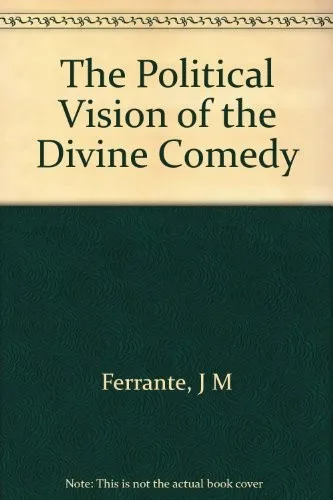
The political vision of the Divine comedy
 69
69

The political vision of the Divine comedy



Marcus Thorne (Esoteric Sciences Reviewer) — Joan M. Ferrante's "The Political Vision of the Divine Comedy" is an indispensable contribution to understanding Dante's masterpiece through an esoteric lens. Ferrante masterfully deciphers the intricate political allegories, revealing them not as mundane commentary but as profound spiritual insights into the cosmic order and human governance. She highlights the hidden numerological and theological structures that underpin Dante's vision, offering a compelling argument for the poem's function as a spiritual guide for societal reform. This work is essential for anyone seeking to grasp the deeper, often concealed, metaphysical currents within the 'Divine Comedy,' resonating strongly with students of Hermeticism, Gnosticism, and the philosophy of sacred texts.
📝 Description
69
Joan M. Ferrante's 1984 book examines the political philosophy embedded in Dante's 'Divine Comedy'.
Joan M. Ferrante's study, published in 1984, uncovers the political and social philosophy within Dante Alighieri's 'Divine Comedy'. Ferrante argues that the settings of the Inferno, Purgatorio, and Paradiso function as symbolic maps of medieval Italian society, reflecting its corruption and its desire for a divinely ordained structure. The book details how Dante embedded this vision within the cantos, moving beyond simple historical commentary. It suggests Dante's work offers insights into justice, power, and the individual's spiritual path.
This work is for readers interested in the esoteric dimensions of classic literature. Ferrante's analysis invites a closer look at the mystical elements of the 'Divine Comedy' and its implications for both spiritual and societal change. The book provides a framework for understanding the complex interplay between political thought and religious allegory in one of literature's most studied epics.
This book situates Dante's 'Divine Comedy' within esoteric traditions by examining its symbolic layers beyond literal interpretation. It treats the poem not just as a literary or theological work, but as a coded text reflecting specific philosophical and social orders desired by its author. Ferrante's approach considers how Dante sought to convey a vision of divine governance and societal reform through allegorical landscapes, aligning with esoteric practices that find deeper meaning in symbolic representation and hidden knowledge.
💡 Why Read This Book?
Uncover the hidden spiritual blueprint of Dante's 'Divine Comedy,' revealing its profound political and social commentary as interwoven with esoteric wisdom. Ideal for seekers of hidden knowledge, scholars of medieval thought, and practitioners interested in the spiritual governance of society. Read this to unlock deeper layers of meaning in a foundational work of Western literature.
⭐ Reader Reviews
Honest opinions from readers who have explored this book.
❓ Frequently Asked Questions
What is the core esoteric interpretation of the 'Divine Comedy' presented in this book?
The book posits that Dante's 'Divine Comedy' is an esoteric guide, using the journey through hell, purgatory, and heaven to allegorically represent the soul's path to spiritual enlightenment and the ideal structure of a divinely ordered society.
How does Ferrante connect Dante's politics to esoteric traditions?
Ferrante links Dante's political ideals to broader esoteric currents of the Middle Ages, suggesting his vision reflects a desire for a divinely ordained cosmic and social harmony, often found in mystical and Hermetic philosophies.
Is this book suitable for beginners to Dante?
While comprehensive, the book assumes some familiarity with Dante's work. However, its clear explanations of complex themes make it accessible to dedicated beginners interested in the spiritual dimensions of the poem.
What historical periods are most relevant to this analysis?
The primary historical focus is on 13th and 14th-century Italy, particularly the political landscape of Florence and the broader Italian city-states, as well as the influence of medieval Church doctrine and nascent Renaissance thought.
Does the book discuss specific occult or mystical practices?
While not a manual of practices, the book delves into the symbolic and philosophical underpinnings of esoteric traditions that influenced Dante's worldview, offering insights into the spiritual architecture of his vision.
🔮 Key Themes & Symbolism
Theocracy and Cosmic Order
This theme explores Dante's vision of an ideal society governed by divine principles, moving beyond earthly political squabbles to a universal, celestial mandate. It examines how Dante perceived the relationship between secular power and spiritual authority, drawing parallels between the structure of the afterlife and the potential for a just earthly realm. The analysis examines how the hierarchical order of heaven reflects a cosmic blueprint for human governance, emphasizing justice, love, and divine reason as the foundations for true societal harmony. This perspective invites readers to consider the wide implications of spiritual alignment on political structures and the collective human condition.
Symbolic Geography of the Soul
Ferrante illuminates the 'Divine Comedy' as a profound symbolic map of the human soul's journey. The distinct domains of Hell, Purgatory, and Paradise are interpreted not merely as locations but as states of consciousness and stages of spiritual evolution. This theme examines how Dante uses geographical and topographical metaphors to represent the descent into sin, the arduous process of purification, and the ultimate ascent to divine union. It highlights the esoteric understanding of the soul's inherent capacity for both corruption and redemption, offering a powerful allegorical framework for personal transformation and the pursuit of spiritual liberation.
Justice, Virtue, and Divine Law
This central theme investigates Dante's profound contemplation of justice, both earthly and divine, and its manifestation through virtue. The book dissects how Dante critiques the perversion of justice in his contemporary world and proposes an ideal based on immutable divine law. It explores the cardinal and theological virtues as essential guides for individual conduct and societal well-being, illustrating their symbolic representation within the 'Comedy.' Readers will gain insight into Dante's belief that true political order is inextricably linked to moral and spiritual integrity, and that the pursuit of virtue is the ultimate path to achieving a just and harmonious existence.
💬 Memorable Quotes
Direct passages from the work, attributed to the author.
“Political order finds its true foundation in divine law.”
— This highlights Dante's belief that earthly governance must be aligned with a higher, spiritual authority for true justice and stability.
“Each circle of Hell is a evidence of unaddressed corruption.”
— This emphasizes the 'Comedy's' use of the Inferno to allegorically represent the consequences of societal and individual moral decay.
“Purgatory's ascent is the arduous path of self-purification.”
— This points to the transformative journey of Purgatory as a metaphor for the difficult but necessary process of spiritual cleansing and growth.
“Paradise reveals the ultimate harmony of divinely ordered existence.”
— This suggests that the celestial realm in Dante's work represents the ideal state of being, achieved through spiritual perfection and alignment with the divine.
💡 Key Ideas
Editorial paraphrase of the work's core concepts — not direct quotes.
The journey through the Comedy is a mirror to the soul's own striving.
This quote suggests that Dante's epic poem is not just a narrative, but a profound reflection of the internal human struggle for spiritual growth and understanding.
🌙 Esoteric Significance
Tradition
This work examines the esoteric significance of the 'Divine Comedy' by examining its alignment with Neoplatonic and Hermetic traditions prevalent during the late Middle Ages. Ferrante suggests that Dante's allegorical structure and symbolic language echo concepts found in these streams of thought, particularly concerning the soul's ascent, the hierarchy of being, and the search for divine wisdom. The poem is presented not merely as literature but as a spiritual map, mirroring the esoteric quest for self-knowledge and union with the divine.
Symbolism
The symbolism within Dante's 'Divine Comedy' is central to its esoteric interpretation. Ferrante highlights how elements like the dark wood, the three beasts, the celestial spheres, and the figures encountered are not literal but represent profound spiritual states, moral challenges, and cosmic principles. The numbers, landscapes, and characters are imbued with hidden meanings, serving as keys to unlocking the poem's deeper metaphysical and theological messages about creation, sin, redemption, and the structure of reality.
Modern Relevance
The esoteric insights drawn from "The Political Vision of the Divine Comedy" offer striking modern relevance. In an age grappling with societal division, political instability, and a perceived loss of spiritual grounding, Dante's vision of a divinely ordered justice and the soul's journey towards wholeness provides a powerful framework for contemplation. The book encourages readers to consider how principles of virtue, spiritual integrity, and cosmic harmony can inform contemporary challenges, offering a timeless perspective on the interconnectedness of the personal, political, and spiritual realms.
👥 Who Should Read This Book
This book is a treasure for the dedicated scholar seeking a deeper understanding of the 'Divine Comedy's' intellectual and spiritual foundations. It is equally vital for the spiritual seeker interested in the esoteric dimensions of Western literature and philosophy, offering a contemplative approach to Dante's profound vision. Practitioners of contemplative disciplines will find valuable insights into symbolic interpretation and the architecture of spiritual ascent. Even those new to Dante but drawn to the intersection of mysticism and politics will find Ferrante's clear and evocative prose useful, making it a compelling read for anyone on a path of intellectual and spiritual discovery.
📜 Historical Context
Joan M. Ferrante's "The Political Vision of the Divine Comedy" is deeply rooted in the turbulent political and intellectual field of 13th and 14th-century Italy. This era was characterized by intense city-state rivalries, the ongoing power struggle between the Papacy and the Holy Roman Empire, and significant theological debates within the Catholic Church. Dante Alighieri himself was deeply embroiled in Florentine politics, leading to his eventual exile. Ferrante masterfully situates Dante's epic poem within this context, demonstrating how the 'Divine Comedy' serves as both a critique of contemporary corruption and a visionary proposal for a divinely ordained political and spiritual order. The work draws upon medieval scholasticism, Augustinian philosophy, and Gnostic undercurrents, reflecting a complex range of thought that sought to reconcile earthly realities with celestial ideals, making the poem a profound reflection of its time and a timeless exploration of spiritual governance.
📔 Journal Prompts
How does the concept of 'divine law' in Dante's vision resonate with or challenge your understanding of modern governance and justice?
Reflect on a personal 'dark wood' or period of moral confusion. How might the 'Comedy's' allegorical structure offer a path through such challenges?
Consider the symbolic meaning of a specific character or realm within the 'Divine Comedy.' How does its esoteric interpretation enhance your understanding of its message?
In what ways can the pursuit of virtue, as depicted by Dante, be seen as a political act in contemporary society?
Explore the idea of a spiritual map for societal transformation. What elements would be crucial in such a map for your own community or the world?
🗂️ Glossary
Allegory
A literary device where characters, events, and settings represent abstract ideas or moral qualities, conveying a hidden spiritual or political meaning beyond the literal narrative.
Neoplatonism
A philosophical system that emerged from Plato's teachings, emphasizing the existence of a transcendent, ultimate reality (the One) and the soul's journey towards it through intellectual and spiritual purification.
Hermeticism
An ancient esoteric tradition based on the writings attributed to Hermes Trismegistus, focusing on mystical philosophy, alchemy, and the interconnectedness of the microcosm (human) and macrocosm (universe).
Theocracy
A form of government in which a deity is recognized as the supreme civil ruler, or in which a religious leader is the head of state, often implying governance by divine law.
Gnosticism
A diverse set of religious and philosophical ideas characterized by the belief that salvation is attained through secret knowledge (gnosis) of spiritual truths, often involving a dualistic worldview.
This book appears in 3 collections
🔮 Readers Also Liked
Browse all →







From the “Tarot” Collection
View all →









More Free Divination & Tarot Books
View all →