I-Ching
 61
61

I-Ching



Review by Cassian Rothmann (Senior Critic, Ancient Wisdom) — Gil Sim's rendition of the I-Ching is a luminous beacon for modern seekers. Eschewing simplistic fortune-telling, Sim illuminates the profound philosophical and metaphysical underpinnings of this ancient oracle. His expert dissection of the hexagrams and their symbolic resonance reveals a sophisticated system of cosmic understanding, deeply rooted in Taoist principles. This work is not merely an interpretation, but a living dialogue with the text, offering practical application for spiritual growth and life navigation. The clarity and depth make it an essential acquisition for anyone serious about the esoteric arts and the pursuit of profound self-awareness.
📝 Description
61
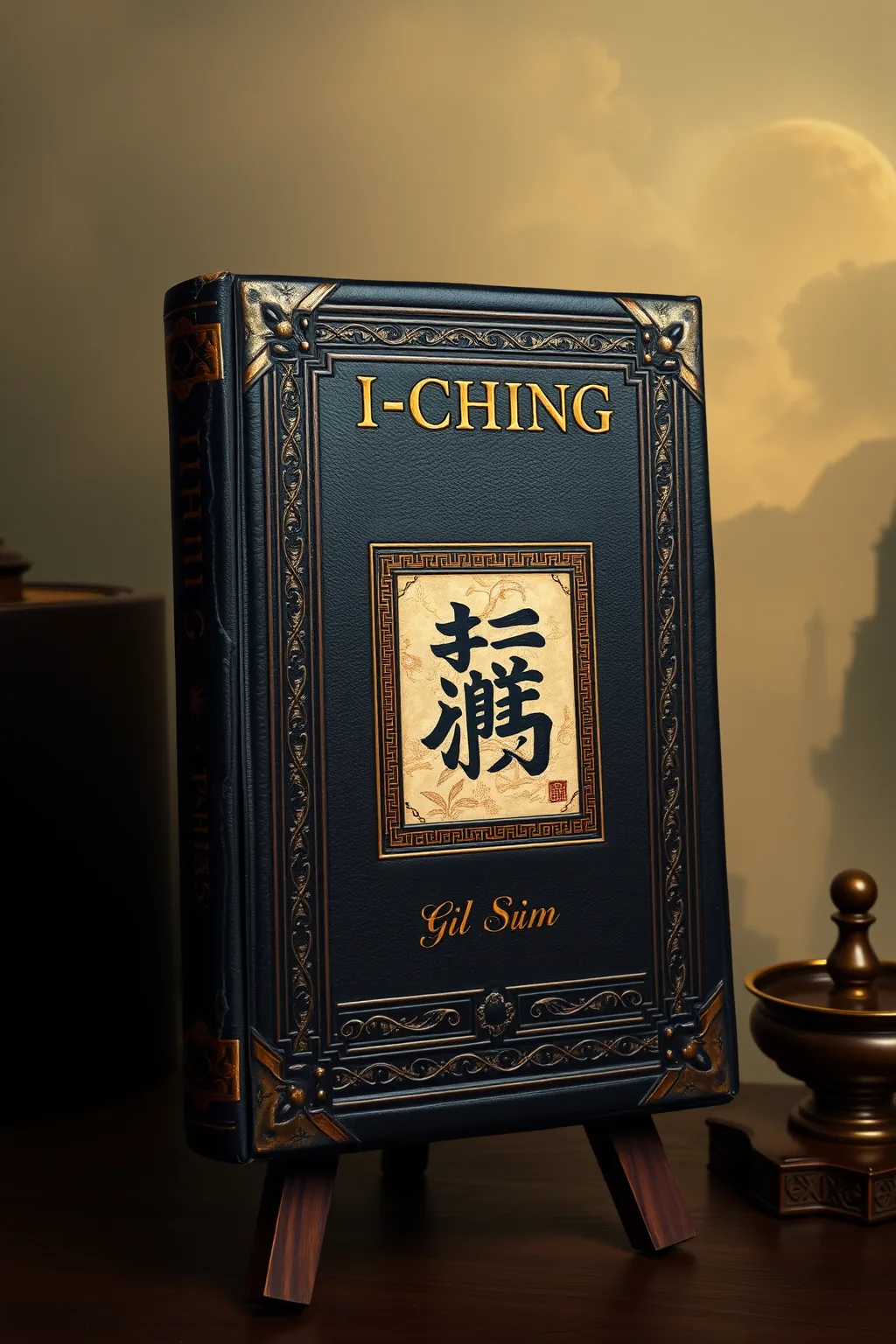
Gil Sim's 2017 book approaches the I-Ching as a system of cosmic patterns, not just divination.
Gil Sim's I-Ching examines the ancient Chinese text as a philosophical framework for understanding change. The book moves past simple fortune-telling to interpret the 64 hexagrams as fundamental patterns of human experience. Sim argues these patterns offer insight into the dynamics of life and destiny. The text encourages a contemplative approach, urging readers to look beyond surface appearances. It aims to connect individuals with underlying existential currents.
This work is presented as a guide for serious students of esoteric knowledge. It is intended for those who practice or study the I-Ching and seek deeper comprehension of its principles. The book focuses on the text's capacity to provide clarity and a sense of order in understanding the forces that influence events. It invites engagement with a text that has influenced thought for centuries.
The I-Ching, or Book of Changes, is a foundational text in Chinese philosophy and divination. Its origins are debated, but it has been a central part of Daoist and Confucian thought for millennia. Esoteric interpretations often focus on its use as a tool for divination, a guide to understanding cosmic principles, and a method for self-cultivation. Sim's work engages with this tradition by focusing on the symbolic language of the hexagrams and their application to understanding life's unfolding.
💡 Why Read This Book?
Unravel the universe's hidden language. This book offers a profound pathway to understanding the cyclical nature of existence, personal transformation, and the subtle energies that govern our lives. Ideal for spiritual seekers, students of ancient philosophies, and practitioners of divination who desire a deeper, more meaningful connection to the wisdom of the I-Ching.
⭐ Reader Reviews
Honest opinions from readers who have explored this book.
❓ Frequently Asked Questions
What is the I-Ching?
The I-Ching, or 'Book of Changes,' is an ancient Chinese divination text and philosophical classic, revered for centuries as a guide to understanding the forces of change and making wise decisions. It comprises 64 hexagrams, each representing a unique situation or archetype.
Who was Gil Sim?
Gil Sim was a dedicated scholar and practitioner of esoteric traditions, deeply committed to unearthing and illuminating ancient wisdom for contemporary understanding. His work is characterized by its depth, clarity, and profound respect for the source material.
How can the I-Ching be used practically?
The I-Ching can be consulted through a structured process of casting yarrow stalks or coins. The resulting hexagram and its changing lines offer insights and guidance on current situations, potential outcomes, and recommended courses of action, fostering self-reflection.
Is this book suitable for beginners?
Yes, Gil Sim's clear prose and insightful explanations make this I-Ching accessible to newcomers, while its profound depth also richly rewards experienced practitioners and scholars seeking new perspectives.
What is the philosophical significance of the I-Ching?
Philosophically, the I-Ching emphasizes the dynamic nature of reality, the balance of yin and yang, and the importance of adapting to change with wisdom and foresight. It offers a framework for understanding harmony and the interconnectedness of all phenomena.
🔮 Key Themes & Symbolism
The Cosmic Dance of Change
This theme explores the fundamental principle of impermanence as articulated by the I-Ching. It explores how the 64 hexagrams represent the ceaseless flux of the universe, illustrating that change is not to be feared but understood and navigated. Sim illuminates the dynamic interplay of opposing forces – yin and yang – and their role in shaping all phenomena, offering a framework for embracing life's transformations with grace and wisdom. Understanding this dance is key to aligning oneself with the natural order.
Archetypal Patterns of Existence
The I-Ching's hexagrams are not arbitrary symbols but profound archetypes that mirror the fundamental patterns of human experience and the cosmos. This theme examines how each hexagram captures universal themes of creation, growth, challenge, and resolution. Sim guides readers to recognize these patterns within their own lives, enabling them to gain clarity on their current circumstances and the underlying forces at play. It's a profound exploration of the collective unconscious as expressed through ancient symbolic language.
The Oracle of Inner Knowing
Beyond mere prediction, the I-Ching serves as a powerful oracle of inner knowing and intuitive guidance. This theme focuses on the practice of consulting the text and interpreting its messages not as external decrees, but as reflections of one's own inner wisdom and the subtle currents of the universe. Sim emphasizes the importance of mindful engagement, encouraging readers to cultivate their intuition and use the I-Ching as a tool for self-discovery, ethical decision-making, and spiritual enlightenment.
💬 Memorable Quotes
Direct passages from the work, attributed to the author.
“The universe is a ceaseless river of transformation.”
— This highlights the I-Ching's core philosophy: that change is the only constant. It encourages acceptance and adaptation, viewing life's flux as natural and essential.
“In stillness, the patterns of destiny reveal themselves.”
— Emphasizes the importance of introspection and quiet contemplation to perceive the underlying order and guidance within life's events.
“Each hexagram is a mirror to the soul's journey.”
— Suggests that the archetypal images of the I-Ching reflect our inner states and the universal stages of personal growth and development.
“Wisdom lies in harmonizing with the flow, not resisting it.”
— Advocates for an attitude of flexible resilience, urging readers to work with, rather than against, the natural currents of life.
“The oracle speaks not of fate, but of potential.”
— Clarifies the I-Ching's purpose as a guide to understanding possibilities and making conscious choices, rather than a deterministic predictor of an unchangeable future.
🌙 Esoteric Significance
Tradition
The I-Ching is deeply embedded within the Taoist tradition, serving as a foundational text for understanding the Tao, the fundamental principle of the universe. It also intersects with Confucian philosophy, emphasizing ethical conduct and societal harmony, and has been a significant component of Chinese esoteric practices, including geomancy (Feng Shui) and certain forms of meditation and alchemical arts, offering a framework for cosmic alignment and personal transformation.
Symbolism
At its heart, the I-Ching is a system of profound symbolism, primarily revolving around the interplay of Yin (passive, dark, feminine) and Yang (active, light, masculine) lines, which combine to form the 64 hexagrams. These hexagrams are composed of trigrams, representing fundamental elements like Heaven, Earth, Water, Fire, and Thunder. Each combination carries layers of meaning, describing archetypal situations, natural forces, and stages of development, acting as a symbolic language to decipher the patterns of the cosmos and human experience.
Modern Relevance
In the modern era, the I-Ching offers a potent antidote to the anxieties of a rapidly changing world. Its emphasis on adaptability, balance, and understanding cyclical patterns provides invaluable tools for navigating personal and professional challenges. Esoterically, it continues to serve as a powerful tool for self-reflection, intuition development, and spiritual growth, offering a timeless perspective on life's complexities and a pathway to inner wisdom and harmonious living in an often chaotic contemporary landscape.
👥 Who Should Read This Book
This profound exploration of the I-Ching is a treasure for a diverse audience. **Beginners** will find Gil Sim's clear prose an accessible entry point into this ancient wisdom tradition. **Scholars and students of Eastern philosophy** will appreciate the depth of his analysis and historical context. **Spiritual seekers** yearning for a deeper understanding of life's cycles and their place within the cosmos will find profound guidance. **Practitioners of divination and esoteric arts** will discover a rich resource for enhancing their practice with nuanced interpretations and a sophisticated understanding of symbolic language.
📜 Historical Context
The I-Ching, originating in ancient China, is one of the world's oldest and most influential texts, with roots stretching back over 3,000 years. Its compilation and refinement span various dynasties, evolving from early oracle bone inscriptions and divination practices to its more structured philosophical form during the Zhou Dynasty and later Confucian scholarship. It served as a core part of Chinese thought, influencing philosophy, governance, military strategy, and personal conduct. Its cyclical worldview, emphasizing balance, change, and the interconnectedness of heaven, earth, and humanity, profoundly shaped East Asian culture and continues to resonate globally as a profound source of wisdom and guidance, bridging ancient mystical insights with enduring human concerns.
📔 Journal Prompts
Reflect on a recent significant change in your life. Which hexagram might represent this transition, and what guidance does it offer?
Consider the interplay of Yin and Yang in a current challenge you are facing. How can embracing both aspects lead to a more balanced approach?
What archetypal pattern from the I-Ching do you feel most connected to at this moment in your life, and why?
How can the wisdom of the I-Ching inform your decision-making process in the coming week?
Meditate on the concept of 'potential' as revealed by the I-Ching. What untapped potentials within yourself are calling for recognition?
🗂️ Glossary
Hexagram
A figure composed of six stacked horizontal lines, each line being either Yang (solid) or Yin (broken). There are 64 unique hexagrams in the I-Ching, representing fundamental archetypes and situations.
Trigram
A figure composed of three stacked horizontal lines (Yin or Yang). The eight trigrams (e.g., Heaven, Earth, Water, Fire) are the building blocks of the hexagrams and represent fundamental forces or concepts.
Yin
The passive, dark, feminine, receptive, and yielding principle in Taoist philosophy, often represented by a broken line in the I-Ching. It is the complementary force to Yang.
Yang
The active, light, masculine, creative, and assertive principle in Taoist philosophy, often represented by a solid line in the I-Ching. It is the complementary force to Yin.
Tao
The fundamental, ineffable principle of the universe in Taoist philosophy. It is the natural order, the 'Way,' which the I-Ching helps one to understand and align with.
This book appears in 3 collections
🔮 Readers Also Liked
Browse all →








From the “Tarot” Collection
View all →








More Free Divination & Tarot Books
View all →