Medieval Herbals

 74
74

Medieval Herbals
Minta Collins' *Medieval Herbals* offers a scholarly yet accessible entry into a fascinating aspect of historical knowledge. The text shines in its meticulous detail, reconstructing the worldview that informed early botanical texts. A particular strength is the clear explanation of how astrological principles were applied to plant identification and use, a concept often bewildering to modern readers. However, the work occasionally feels dense, with its academic tone sometimes overshadowing the inherent wonder of the subject. For instance, the section detailing the symbolic meanings attributed to plants in monastic gardens, while informative, could benefit from more evocative prose. Despite this, Collins provides a crucial window into a pre-modern understanding of the natural world, demonstrating how plants were not merely resources but active participants in a divinely ordered cosmos. It serves as an important corrective to viewing medieval thought as solely superstitious.
📝 Description
74
Minta Collins' Medieval Herbals shows how plants informed medieval life and thought.
This book examines the role of herbals in medieval society, detailing how they functioned as vital sources for medical, practical, and spiritual knowledge. Before formal botanical classification systems existed, plants were understood through a rich tapestry of humoral theory, astrological connections, and inherited folk wisdom. These understandings often connected back to classical texts, such as Dioscorides' *De Materia Medica*. The work details specific concepts like plant signatures, where a plant's physical characteristics were believed to reveal its medicinal purpose. It also discusses how the theory of the four humors shaped perceptions of healing properties and how Christian theology intertwined with natural philosophy to interpret the divine in the natural world.
Collins' study illuminates a period where the study of plants was deeply integrated with broader intellectual and spiritual frameworks. Readers will gain insight into the pre-modern worldview, where empirical observation blended with symbolic interpretation. The book reconstructs the logic and beliefs that underpinned the use of plants for health and well-being, offering a window into a past way of understanding the relationship between humans and the botanical environment.
Medieval herbals were more than just practical guides to plants; they were conduits for a worldview steeped in symbolic and occult correspondences. This book situates those texts within an esoteric tradition that saw the natural world as a reflection of divine order and hidden forces. The integration of astrology, the doctrine of signatures, and humoral theory demonstrates a holistic approach to healing and knowledge that sought connections between the microcosm of the human body and the macrocosm of the universe. It reveals how these beliefs shaped not only medicine but also a broader understanding of God's creation.
💡 Why Read This Book?
• Learn about the doctrine of signatures, where the physical form of a plant (like a walnut resembling a brain) was believed to reveal its medicinal purpose for that organ. • Understand the medieval humoral theory and its application to botany, explaining how plants were categorized by their perceived influence on the body's balance of hot, cold, wet, and dry. • Discover the integration of Christian cosmology and plant lore, revealing how botanical knowledge was seen as a reflection of divine order and creation.
⭐ Reader Reviews
Honest opinions from readers who have explored this book.
❓ Frequently Asked Questions
What is the primary focus of Minta Collins' *Medieval Herbals*?
The book focuses on the content, context, and worldview of herbals produced in the medieval period, exploring their medicinal, symbolic, and spiritual uses of plants.
When was *Medieval Herbals* first published?
Minta Collins' *Medieval Herbals* was first published in the year 2000, offering a modern scholarly perspective on historical botanical texts.
What historical concepts are explored in relation to plants?
The book explores concepts such as humoral theory, astrological correspondences, the doctrine of signatures, and the theological interpretations of botanical properties prevalent in the Middle Ages.
Who would benefit most from reading *Medieval Herbals*?
Students and scholars of medieval history, the history of science, botany, and esoteric traditions will find this book particularly valuable.
Does the book discuss specific medieval herbalists or texts?
Yes, the work often references and analyzes key medieval herbals and the intellectual currents that shaped their creation and content.
What is the 'doctrine of signatures' as explained in the book?
It's a historical belief that a plant's physical characteristics (shape, color, habitat) indicated its medicinal use, for example, lungwort for lung ailments.
🔮 Key Themes & Symbolism
Humoral Theory and Plant Properties
This theme examines how medieval physicians and scholars classified plants based on the four humors (blood, phlegm, yellow bile, black bile) and their perceived qualities of hot, cold, wet, and dry. The work details how these theories dictated a plant's suitability for treating specific imbalances within the body. For example, a 'hot and dry' herb might be prescribed for a 'cold and wet' condition, reflecting a holistic, albeit ancient, approach to health rooted in Aristotelian physics and Galenic medicine.
The Doctrine of Signatures
Collins explores the fascinating concept of plant signatures, a belief system where a plant's appearance was seen as a divine hint to its medicinal purpose. The book provides numerous examples, such as the walnut's convoluted shape suggesting its use for brain ailments or the liver-shaped leaf of a hepatica plant indicating its efficacy for liver complaints. This theme highlights the medieval tendency to find divine order and hidden meanings within the natural world.
Astrology and Botanical Medicine
The work examines the intricate connection between celestial bodies and earthly flora. It explains how plants were often associated with specific planets, zodiac signs, and hours of the day, influencing when they should be gathered, prepared, and administered. This astrological framework provided a cosmic context for herbal remedies, linking the microcosm of the human body to the macrocosm of the universe.
Christian Symbolism in Flora
Beyond their medicinal and astrological roles, plants in medieval herbals were frequently imbued with Christian symbolism. Collins discusses how certain plants were associated with biblical figures, saints, or events, reflecting a worldview where nature was a book of God. This theme illustrates how the understanding of plants was deeply intertwined with religious doctrine and spiritual contemplation during the period.
💬 Memorable Quotes
Direct passages from the work, attributed to the author.
“The appearance of a plant was often seen as a divine indicator of its use.”
— This concisely captures the essence of the doctrine of signatures, a central concept in medieval herbalism where physical characteristics were believed to reveal a plant's medicinal properties.
“Humoral theory dictated a plant's place within the pharmacopeia.”
— This highlights the foundational role of Galenic humoral theory in medieval medicine, explaining how the perceived balance of hot, cold, wet, and dry qualities in both plants and patients guided therapeutic choices.
“Celestial influences were woven into the very fabric of botanical knowledge.”
— This points to the pervasive integration of astrology into medieval understanding of the natural world, emphasizing that plant properties were often seen as being governed by planetary and zodiacal forces.
“Nature was read as a text revealing God's plan.”
— This captures the theological perspective common in the Middle Ages, where the study of the natural world, including plants, was considered a means of understanding divine providence and creation.
“Monastic gardens served as both pharmacies and places of spiritual reflection.”
— This interpretation underscores the dual function of monastic botanical spaces, serving practical medicinal needs while also fostering contemplation on the divine through cultivated nature.
🌙 Esoteric Significance
Tradition
This work engages with the Western esoteric tradition, particularly its historical roots in Hermeticism and Neoplatonism, which emphasized finding correspondences between the macrocosm (universe) and the microcosm (human being). Medieval herbals represent a crucial bridge where these philosophical ideas merged with folk medicine, Christian theology, and classical learning, forming a unique esoteric understanding of the plant kingdom as a divinely ordered system.
Symbolism
Key symbols include the doctrine of signatures, where a plant's form mirrored its function (e.g., walnuts for the brain), and astrological associations, linking plants to planets and zodiacal energies. Furthermore, many plants carried specific Christian symbolism, such as the lily representing purity or the vine symbolizing Christ, integrating spiritual meaning directly into botanical identification and use.
Modern Relevance
Contemporary practices in traditional herbalism, ecological spirituality, and even certain branches of modern Western esotericism (like some forms of ceremonial magic or nature-based spirituality) draw inspiration from the holistic worldview presented in medieval herbals. Thinkers exploring bioregionalism and deep ecology also find resonance in this historical perspective on human-plant interconnectedness, seeking to understand our relationship with the natural world beyond purely utilitarian or scientific reductionism.
👥 Who Should Read This Book
• Students of Medieval History: Those seeking to understand the intellectual and cultural range of the Middle Ages, particularly how science, religion, and daily life intertwined. • Early Modern Science Enthusiasts: Readers interested in the transition from medieval to early modern scientific thought, observing how botanical knowledge evolved. • Practitioners of Traditional Herbalism: Individuals looking to understand the historical foundations and philosophical underpinnings of plant-based healing practices.
📜 Historical Context
Published in 2000, Minta Collins' *Medieval Herbals* revisits a period when botanical knowledge was deeply embedded in a complex cosmological framework. The Middle Ages (roughly 5th to 15th centuries) saw herbals evolve from classical compilations like Dioscorides' *De Materia Medica* into richly illustrated manuscripts reflecting Christian theology, humoral theory, and astrological medicine. Unlike the emerging empirical approaches of the Renaissance, medieval herbalists often sought divine signatures and symbolic meanings in plants. Key figures like Hildegard of Bingen (1098-1179) produced influential works that blended natural observation with spiritual insight. While the printing press began disseminating these texts more widely from the 15th century onwards, the underlying worldview persisted. By 2000, Collins' work engaged with a burgeoning academic interest in the history of science and medicine, providing a scholarly analysis that countered earlier dismissals of medieval knowledge as mere superstition, positioning it instead as a coherent system of thought.
📔 Journal Prompts
The concept of plant signatures and its relation to physical form.
Humoral theory's influence on perceived plant energetics.
Astrological correspondences assigned to specific herbs.
Christian symbolism found within botanical descriptions.
The perceived role of plants in maintaining cosmic balance.
🗂️ Glossary
Humoral Theory
An ancient medical theory, prominent in the Middle Ages, positing that the body is composed of four basic fluids (blood, phlegm, yellow bile, black bile), whose balance determines health and disease. Plants were categorized by their perceived hot, cold, wet, or dry qualities to counteract imbalances.
Doctrine of Signatures
A historical belief system suggesting that the physical appearance of a plant (its shape, color, habitat) indicated its medicinal uses, often by resembling the body part it could heal or the ailment it could treat.
Astrological Botany
The practice of associating plants with celestial bodies (planets, stars, zodiac signs), influencing their medicinal preparation, harvesting times, and perceived powers based on cosmic influences.
Microcosm and Macrocosm
A philosophical concept, central to Hermeticism, viewing the human being (microcosm) as a reflection or miniature of the universe (macrocosm), implying interconnectedness and parallel structures.
De Materia Medica
A foundational pharmacopoeia written in Greek by Pedanius Dioscorides in the 1st century AD, cataloging hundreds of medicinal plants and their uses. It was a primary source for medieval herbalists.
Medieval Manuscript
Handwritten books produced in the Middle Ages. Many herbals from this era survive as illuminated manuscripts, featuring intricate illustrations of plants alongside textual descriptions.
Galenic Medicine
The medical system developed by the Greek physician Galen of Pergamon (2nd century AD), heavily influencing Western medicine for over a millennium. It was based on the theory of the four humors and their qualities.
🔮 Readers Also Liked
Browse all →









More by Minta Collins
All books →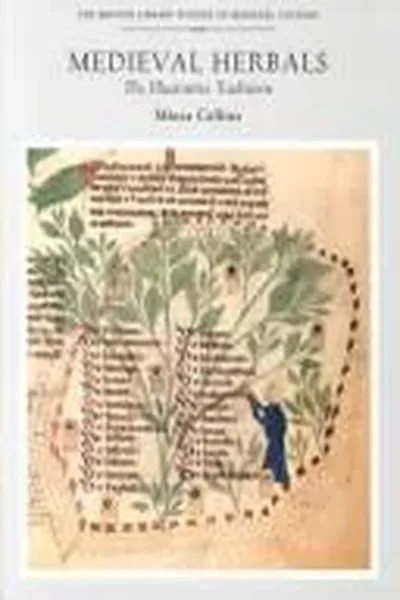
More Free Occult Philosophy Books
View all →