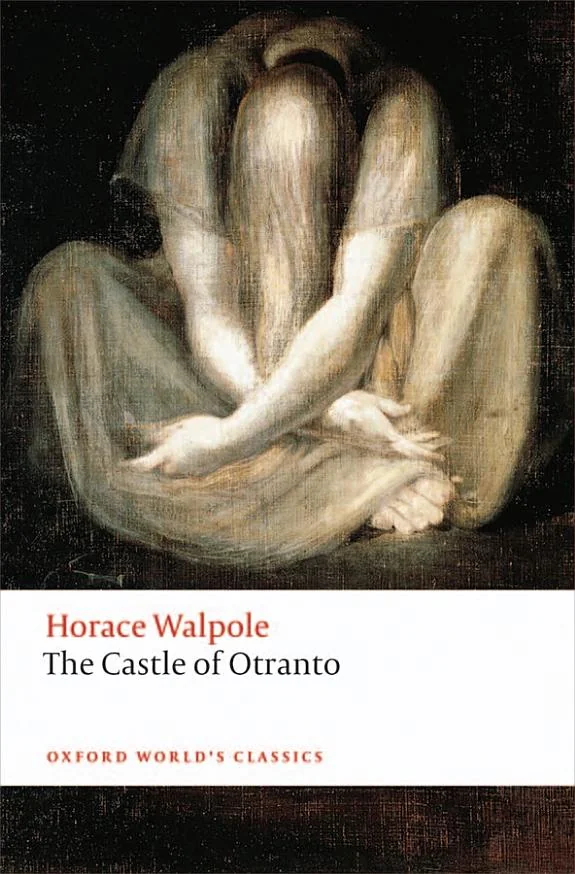
The Castle of Otranto
 83
83

The Castle of Otranto
Walpole's *The Castle of Otranto* remains a pivotal text for its sheer novelty, introducing a potent blend of medieval romance and supernatural dread that birthed the Gothic genre. Its strength lies in its pioneering atmosphere; the palpable sense of ancient curse and spectral intrusion within the castle walls is undeniable, even by modern standards. The famous giant helmet descending upon Conrad, described with startling, visceral impact, exemplifies the novel’s capacity for generating unease. However, the plot, particularly in its latter half, can feel somewhat contrived, with character motivations occasionally subservient to the machinery of the supernatural. Despite this, the work’s impact is such that it justifies its canonical status. It is an essential, albeit sometimes quaint, exploration of how the past haunts the present.
📝 Description
83
Horace Walpole published The Castle of Otranto in 1764, initiating the Gothic fiction genre.
The Castle of Otranto, first published in 1764, is widely considered the first Gothic novel. Horace Walpole set the story within the imposing walls of its titular castle, creating a dark and atmospheric tale. The narrative features supernatural events and familial curses that disrupt the characters' lives. Walpole framed the work as a translation of an ancient manuscript, a device that added a layer of historical authenticity and mystery.
This foundational text appeals to readers interested in the origins of literary genres, especially the Gothic. Students of literature exploring the development of horror, mystery, and romance tropes will find it relevant. Enthusiasts of historical fiction and those who appreciate early examples of the form will appreciate its language and setting. Readers seeking to understand the roots of psychological suspense and the uncanny in narrative will also find value here.
Emerging during a period of renewed interest in the medieval past and the sublime, Walpole consciously evoked ancient terror and grandeur. Its publication in 1764 predated the full Romantic movement but shared its fascination with emotion and the supernatural. The initial framing of the work as a discovered medieval manuscript fueled its mystique, a clever ruse that resonated with contemporary tastes for the ancient and mysterious. Writers like Ann Radcliffe would later build upon its spectral foundations.
💡 Why Read This Book?
• Understand the genesis of Gothic literature by examining the specific supernatural phenomena and atmospheric setting of Otranto Castle, as first detailed in 1764. • Analyze the early literary use of familial curses and ancestral guilt, concepts central to the plot involving Manfred and his lineage. • Appreciate the literary device of the translated manuscript, a framing technique employed to lend historical weight to the supernatural events described.
⭐ Reader Reviews
Honest opinions from readers who have explored this book.
❓ Frequently Asked Questions
When was Horace Walpole's The Castle of Otranto first published?
The Castle of Otranto was first published anonymously in 1764, with Walpole later acknowledging authorship in a second edition.
What literary genre did The Castle of Otranto originate?
Horace Walpole's novel is credited with originating the Gothic fiction genre, establishing many of its core conventions.
What is the significance of the giant spectral figure in The Castle of Otranto?
The spectral figure of Alfonso the Good is a key supernatural element that drives the plot, representing the ancient curse and historical weight pressing upon the characters.
What narrative device does Walpole use to present his story?
Walpole presents the story as a translation of an old Italian manuscript, a common trope in early Gothic literature to create an illusion of authenticity.
How did The Castle of Otranto influence later literature?
It laid the groundwork for subsequent Gothic novels by authors like Ann Radcliffe and Mary Shelley, popularizing themes of terror, mystery, and the supernatural.
What is the role of the castle in the novel?
The Castle of Otranto is more than just a setting; it's a brooding, symbolic presence representing decay, hidden secrets, and the inescapable past that ensnares the characters.
🔮 Key Themes & Symbolism
Ancestral Curses and Fate
The narrative is driven by the supposed curse placed upon Manfred's family, originating from the death of Alfonso the Good. This theme explores the inescapable nature of fate and the burden of past actions on subsequent generations. Characters find themselves trapped by prophecies and inherited transgressions, suggesting that the past holds a powerful, often destructive, sway over the present. The spectral manifestations serve as constant reminders of this inherited doom.
The Supernatural and the Uncanny
Walpole masterfully integrates supernatural elements, from a giant spectral figure to a disembodied helmet and a talking portrait. These occurrences are not merely decorative but function as plot catalysts and psychological disturbances. The uncanny effect arises from the intrusion of the unnatural into the seemingly rational world of the castle, blurring the lines between reality and nightmare and evoking a primal sense of dread.
The Castle as a Character
Otranto itself transcends its role as a mere setting. The ancient, decaying structure is imbued with a sinister presence, its subterranean passages, hidden chambers, and crumbling architecture mirroring the dark secrets and psychological turmoil of its inhabitants. The castle becomes a symbol of entrapment, a physical manifestation of the oppressive weight of history and the characters' inability to escape their inherited destinies.
Tyranny and Legitimacy
Manfred's desperate attempts to retain power, even through morally reprehensible means like marrying Isabella against her will, highlight themes of tyranny and the struggle for legitimacy. His actions are fueled by fear and ambition, driven by the perceived threat to his lineage posed by the curse. The narrative questions the nature of rightful rule and the consequences of usurping power through violence and deceit.
💬 Memorable Quotes
Direct passages from the work, attributed to the author.
“A storm had long afflicted the Alps, and the torrents of rain, with the impetuous force of the winds, had rendered the Alps impassable.”
— This opening description establishes the foreboding atmosphere and the powerful, uncontrollable forces of nature that mirror the chaotic events unfolding within the castle.
“The castle and the personages therein were suddenly shocked by a noise as loud as the bursting of a cannon.”
— This refers to the dramatic descent of the giant helmet, a key supernatural event that signals the intrusion of the uncanny and the disruption of ordinary life.
“The spectators, struck with terror, were unable to avoid the dreadful blow, and the best part of the helmet, which was large enough to cover an ox, was instantly crushed.”
— This vivid detail emphasizes the immense and destructive power of the supernatural, highlighting the helplessness of mortals against ancient forces.
“The moment Manfred saw Theodore, he started, and, believing he saw his grandfather...”
— This illustrates Manfred's psychological distress and his susceptibility to visions, suggesting how guilt and fear can distort perception and conjure spectral likenesses.
💡 Key Ideas
Editorial paraphrase of the work's core concepts — not direct quotes.
It was a phantom, and it was the real Theodore.
This line captures the confusion between the spectral and the corporeal, a hallmark of Gothic literature where supernatural apparitions can interact with or be mistaken for living characters.
🌙 Esoteric Significance
Tradition
While not explicitly aligned with a singular esoteric tradition, *The Castle of Otranto* draws heavily on archetypal themes found in Hermeticism and Gnosticism concerning fate, hidden knowledge, and the corrupting influence of earthly power. The idea of a lineage bound by an ancient pact or curse appeals to concepts of karmic debt and the cyclical nature of existence often explored in occult philosophies. Its embrace of the supernatural and the uncanny aligns with broader esoteric interests in the unseen world.
Symbolism
The giant spectral figure of Alfonso the Good symbolizes the weight of history and the inescapable past that haunts the present inhabitants of the castle. The disembodied helmet represents the fragmented remnants of past power and the tangible manifestation of ancestral claims. The castle itself functions as a symbol of a decaying psyche or a corrupt lineage, its hidden passages and dark chambers reflecting the secrets and psychological entrapment of its characters.
Modern Relevance
Contemporary practitioners of Gothic studies and literary theorists continue to analyze *The Castle of Otranto* for its foundational role in horror and suspense narratives. Its exploration of psychological terror, the uncanny, and the oppressive nature of inherited trauma remains relevant in modern discussions of mental health and existential dread. The novel’s atmospheric intensity and thematic concerns continue to inspire filmmakers, game designers, and authors working within the dark fantasy and horror genres.
👥 Who Should Read This Book
• Students of literary history seeking to identify the origins of the Gothic genre and understand its foundational tropes. • Enthusiasts of historical fiction interested in early examples of atmospheric storytelling and medievalist themes. • Readers drawn to tales of supernatural occurrences and psychological suspense, appreciating works that explore the darker aspects of human experience and the uncanny.
📜 Historical Context
Published in 1764, *The Castle of Otranto* by Horace Walpole is considered the first Gothic novel. It emerged from Walpole's fascination with medievalism, fueled by his Strawberry Hill Gothic Revival architectural project. The era was marked by an aesthetic appreciation for ruins, the sublime, and a burgeoning interest in the irrational and emotional, distinct from the prevailing Enlightenment rationalism. Walpole's novel, initially presented as a translation of a 10th-century Italian manuscript, played into a literary trend of discovering and publishing ancient texts. Its success inspired a wave of Gothic imitations, notably by Ann Radcliffe, who would refine the genre’s conventions in the late 18th century, solidifying its place in literary history.
📔 Journal Prompts
The spectral presence of Alfonso the Good and its impact on Manfred's actions.
The oppressive symbolism of the castle’s architecture and its relation to familial decay.
The conflict between Manfred’s perceived destiny and his attempts to avert it.
The uncanny nature of the giant helmet and its immediate consequences.
Thematic parallels between the curse on Manfred’s lineage and concepts of inherited guilt.
🗂️ Glossary
Gothic Fiction
A literary genre characterized by elements of horror, death, and romance, as well as the presence of supernatural or arcane phenomena, often set in a dark, mysterious, and decaying environment like a castle.
The Sublime
An aesthetic quality characterized by greatness, vastness, or power that inspires awe and terror, often associated with nature's overwhelming force or the supernatural.
Medievalism
An interest in the Middle Ages, particularly evident in art, architecture, and literature, often romanticizing or idealizing aspects of the period.
The Uncanny
A feeling of unease or disturbance caused by something that is strangely familiar yet alien or out of place, often involving the return of the repressed or the intrusion of the supernatural.
Spectral Figure
An apparition or ghost, a supernatural manifestation that appears in *The Castle of Otranto* to influence events and characters.
Familial Curse
A curse passed down through generations of a family, often linked to past transgressions or pacts, dictating a negative fate for descendants.
Protagonist
The main character of a story. In *The Castle of Otranto*, Manfred acts as the central figure whose actions drive much of the plot, though his role is complex and morally ambiguous.
🔮 Readers Also Liked
Browse all →









More by Horace Walpole
All books →


More Free Occult Philosophy Books
View all →