Egregore
 76
76

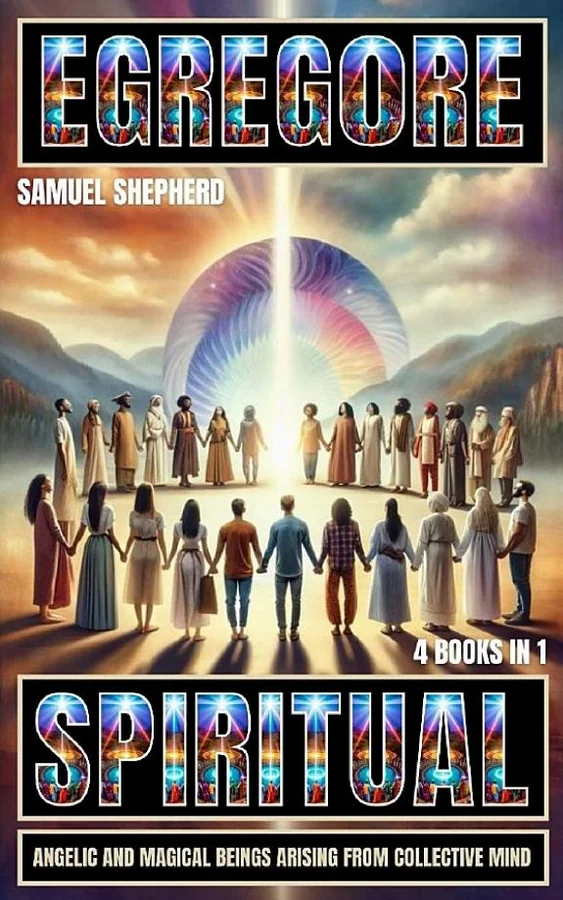
Egregore
Samuel Shepherd's *Egregore* tackles a fascinating, often misunderstood, aspect of esoteric theory. The strength of this work lies in its methodical breakdown of how collective intention can manifest into potent psychic forces. Shepherd avoids sensationalism, presenting the concept with a clear, almost scientific detachment that lends it credence within occult discourse. A particularly compelling section details the 'generation' process, which offers practical insights into the mechanics of group magic. However, the work occasionally suffers from a lack of specific, verifiable historical examples beyond the general 19th-century occult revival; more concrete case studies would have bolstered its argumentative force. The text's primary limitation is its dense, academic prose, which may prove challenging for absolute beginners. Despite this, *Egregore* provides a valuable framework for understanding the tangible power of shared belief, offering a sober analysis of an otherwise nebulous topic.
📝 Description
76
Samuel Shepherd's "Egregore" examines psychic constructs born from collective thought.
This four-book collection, "Egregore" by Samuel Shepherd, investigates egregores: distinct entities or forces arising from concentrated group thought, belief, and intention. Shepherd presents these as emergent phenomena from the collective psyche, not as traditional deities. The work details how sustained focus and shared belief can give an egregore a form of independent existence. This agency allows it to influence both its creators and the external world, positioning egregores as significant forces within occult and spiritual practices. The book is suited for practitioners of ceremonial magic, students of consciousness, and those interested in collective belief systems. It offers insights for individuals seeking to apply focused intention for personal or group manifestation. Scholars of comparative religion and mythology may find value in its examination of phenomena that bridge psychology, spirituality, and the supernatural. The work also speaks to those investigating the origins of religious fervor and the power of shared mythologies, offering a distinct perspective on these subjects.
The concept of entities emerging from collective thought has a history within various esoteric traditions. While the term 'egregore' became prominent in 19th-century occultism, notably through figures like Éliphas Lévi and the Hermetic Order of the Golden Dawn, similar ideas appear in older Gnostic and Hermetic texts. Shepherd situates the development of egregoric theory within the occult revivals of the late 19th and early 20th centuries. This period saw significant interest in psychic phenomena, astral projection, and the formation of magical orders, fostering attempts to understand and systematize occult concepts.
💡 Why Read This Book?
• Understand the practical creation and mechanics of 'egregores' as described in chapter 3, moving beyond abstract belief to tangible psychic constructs. • Explore the historical lineage of egregoric thought, particularly its connections to 19th-century occultism and figures like Éliphas Lévi, providing context absent in general spiritual texts. • Gain insights into the energetic dynamics of group consciousness, learning how collective intention, as detailed in the 'interaction' sections, can shape reality.
⭐ Reader Reviews
Honest opinions from readers who have explored this book.
❓ Frequently Asked Questions
What is the primary difference between an egregore and a spirit?
An egregore is fundamentally a psychic construct born from collective human thought and intention, whereas traditional spirits are often considered independent entities with their own origin and consciousness outside of human creation.
Can an egregore be harmful?
Yes, the work explores how egregores can develop unintended or negative characteristics based on the collective mindset that created them, potentially influencing their creators negatively.
When was the concept of egregores first popularized?
The term 'egregore' gained significant traction in occult circles during the 19th century, notably through the writings of Éliphas Lévi and later occult orders.
How are egregores 'created' according to the book?
They are created through sustained, focused collective intention, ritual, shared symbolism, and the consistent emotional and mental energy invested by a group over time.
Does this book offer practical exercises for working with egregores?
While the focus is on conceptual understanding, the detailed exploration of the 'generation' and 'interaction' processes provides a theoretical foundation for practical application in magical or group work.
Is 'Egregore' a single book or a collection?
The title refers to a four-book bundle, offering a comprehensive exploration of the subject matter from various angles within the esoteric tradition.
🔮 Key Themes & Symbolism
The Genesis of Collective Mind Entities
This theme examines the foundational process by which sustained group consciousness coalesces into a tangible, albeit psychic, entity. It details the role of shared belief, ritualistic action, and focused intention as the primary 'building blocks' for an egregore. The work posits that the intensity and duration of collective focus are directly proportional to the egregore's vitality and influence, moving beyond mere psychological projection to a form of emergent reality within the astral or psychic planes.
The Nature and Agency of Egregores
Here, the focus shifts to the inherent characteristics and operational capacities of these conceptual beings. The text differentiates between egregores formed from positive, constructive intent versus those arising from negative or chaotic mental states. It explores how an egregore, once established, can develop a form of semi-autonomy, influencing its creators' thoughts, emotions, and actions, and potentially interacting with other psychic phenomena or individuals.
Practical Interaction and Dissolution
This theme addresses the active engagement with egregores. It covers methods for consciously directing an egregore's energy towards specific goals, a practice central to advanced magical operations. Conversely, it also outlines techniques for consciously dismantling or neutralizing an egregore, particularly those that have become detrimental or are no longer serving their intended purpose. Understanding this dynamic is presented as crucial for maintaining psychic hygiene and control.
Historical and Comparative Context
This section places the concept of egregores within the broader range of esoteric and religious thought. It traces potential antecedents in ancient mythologies and philosophical systems, while critically examining its development within 19th-century occultism. The work contrasts the egregoric model with other explanations for collective phenomena, such as archetypes or traditional spirit interactions, highlighting its unique position in understanding psychic manifestations.
💬 Memorable Quotes
Direct passages from the work, attributed to the author.
“Collective thought, sustained and unified, possesses the power to precipitate psychic forms.”
— This highlights the core tenet that shared mental energy isn't just abstract; it can actively create distinct, influential entities within the non-physical realms.
“An egregore is born of the many, yet it can exert its own will upon the one.”
— This points to the emergent autonomy of egregores, suggesting they can transcend their creators' initial intentions and develop their own influence or directive force.
“The symbol is the anchor for the astral form.”
— This emphasizes the critical role of symbolic representation in grounding and stabilizing an egregore, providing a focal point for collective energy and identification.
“To dissolve an egregore requires a collective severance of psychic investment.”
— This suggests that the deconstruction of an egregore is as much a collective act as its creation, involving a conscious withdrawal of the mental and emotional energy that sustains it.
“Angelics and demons can be viewed as archetypal egregores, amplified by millennia of belief.”
— This provocative interpretation links the concept of egregores to traditional religious figures, suggesting that even seemingly divine or infernal beings might have roots in collective human consciousness.
🌙 Esoteric Significance
Tradition
The work fits within the Western Esoteric Tradition, particularly Hermeticism and ceremonial magic. It extends concepts of thought-forms and elemental creation found in earlier magical literature, presenting a more structured theory of emergent psychic entities. It departs from purely Gnostic or Kabbalistic frameworks by focusing on the *process* of collective generation rather than solely on divine emanations or symbolic correspondences.
Symbolism
Key symbols include the 'anchor,' representing the stabilizing element for an egregore's psychic form, often a sigil or icon. The 'stream' or 'current' symbolizes the flow of collective energy that animates and sustains the entity. The 'matrix' refers to the psychic or astral space where the egregore resides and operates.
Modern Relevance
Contemporary practitioners of chaos magic and animists often draw upon egregoric theory to understand and manipulate collective belief systems, group dynamics, and the creation of independent magical constructs. Modern psychology's exploration of groupthink and memetics also finds conceptual parallels within Shepherd's framework.
👥 Who Should Read This Book
• Students of ceremonial magic seeking to understand the energetic dynamics of group workings and the creation of focused intent. • Researchers of consciousness and collective psychology interested in how shared beliefs can manifest tangible effects beyond individual minds. • Occult practitioners interested in the historical development of thought-form theory and its application in modern esoteric practices.
📜 Historical Context
Published at the dawn of the 20th century, *Egregore* emerged during a fervent period of occult revival in Europe. This era, particularly the late 19th century, saw intense interest in psychic research, spiritualism, and the systematization of magical practices, heavily influenced by figures like Helena Blavatsky and the Theosophical Society. Shepherd's work engaged with the burgeoning understanding of collective psychology and its potential manifestation in occult phenomena, a concept explored concurrently by various esoteric orders like the Hermetic Order of the Golden Dawn. Unlike purely spiritualistic accounts focused on communication with the dead, *Egregore* proposed a more mechanistic view of psychic creation. While specific contemporary reviews are scarce, the broader intellectual currents of the time, including early psychoanalytic theories and widespread interest in the power of belief, provided fertile ground for such concepts. The work implicitly challenged more orthodox religious views by offering a framework for understanding supernatural-seeming phenomena through group mental dynamics.
📔 Journal Prompts
The process of egregore generation: identifying collective intentions in my community.
Reflecting on the 'anchor' symbol used to stabilize psychic forms.
Analyzing the potential agency of a specific egregore described in the text.
The ethical considerations of creating or interacting with egregores.
Personal experiences with powerful group dynamics mirroring egregoric principles.
🗂️ Glossary
Egregore
A psychic entity or thought-form created and sustained by the collective belief, intention, and emotional energy of a group of individuals.
Generation
The process by which an egregore is consciously or unconsciously created through sustained group focus, ritual, and invested mental energy.
Astral Form
The non-physical manifestation or energetic structure of an egregore, existing on psychic or astral planes.
Psychic Investment
The conscious or unconscious channeling of mental and emotional energy into the creation, maintenance, or direction of an egregore.
Anchor
A symbol, sigil, or focal point used to stabilize and provide a concrete reference for an egregore's astral form.
Dissolution
The process of deactivating or dismantling an egregore, typically by withdrawing the collective psychic energy that sustains it.
Vestige
The lingering energetic imprint or influence of a powerful egregore after its active creation or operation has ceased.
This book appears in 1 collection
🔮 Readers Also Liked
Browse all →








From the “Mystery Schools” Collection
View all →





More Free Occult Philosophy Books
View all →