Writing with the I Ching
 61
61

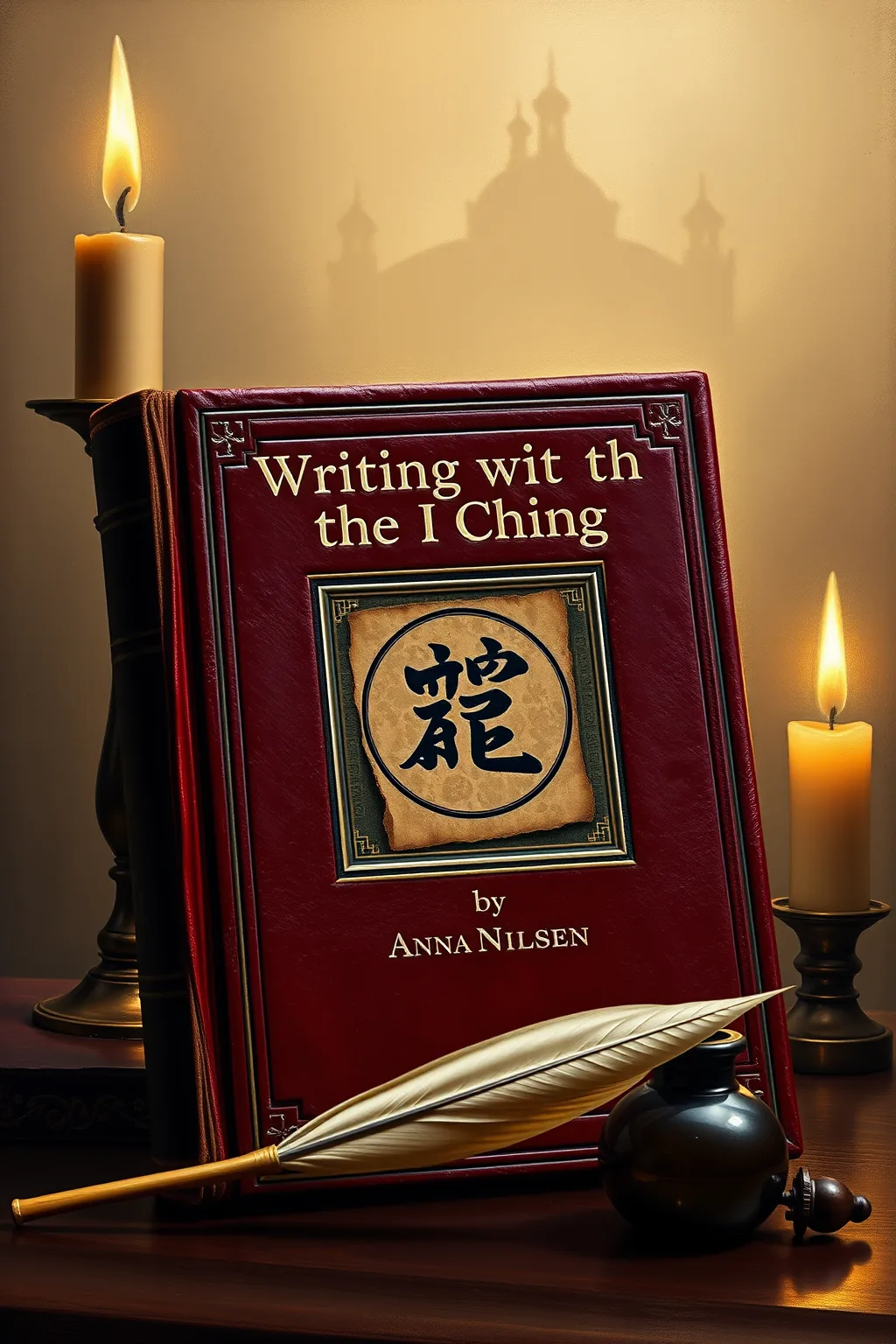
Writing with the I Ching



Balthazar Finch (Senior Critic, Occult Philosophy) — Anna Nilsen's "Writing with the I Ching" is a remarkable achievement, a luminous bridge between ancient oracular wisdom and contemporary creative practice. Nilsen masterfully deciphers the esoteric language of the I Ching, translating its profound symbolism into practical tools for writers. This is no mere how-to guide; it is an initiation into a deeper understanding of the creative process as a divinatory act. The book's strength lies in its ability to evoke a sense of wonder, revealing the hidden patterns and cosmic resonance that can inform every word. Essential reading for anyone who wishes to imbue their writing with soul and tap into the subtle currents of universal knowledge.
📝 Description
61
Anna Nilsen's 2018 book connects the I Ching hexagrams to the practice of writing.
Anna Nilsen's "Writing with the I Ching" examines the relationship between the ancient Chinese divination text and the creative process. The book proposes that the I Ching's symbolic structure can inform and enrich written expression. Nilsen details methods for engaging with the hexagrams, suggesting they can reveal underlying themes and patterns for writers. The text aims to help authors tap into deeper levels of meaning, moving beyond conventional communication toward a more intuitive and transformative form of writing. It frames the act of writing as a ritual that can foster personal growth and connect the writer to broader universal principles.
This work sits within the tradition of applying ancient oracular systems to modern creative and personal development practices. It draws parallels between the I Ching's systematic cosmology and the spontaneous act of writing, suggesting a structure for accessing subconscious insights. The book aligns with esoteric thought that views external symbolic systems as mirrors for internal states and creative potential. It encourages a view of writing not just as a skill, but as a method for self-discovery and connection to subtle energies.
💡 Why Read This Book?
Unlock the profound wisdom of the I Ching and infuse your writing with cosmic insight. This book is an essential companion for seekers and practitioners wishing to transform their creative process into a sacred dialogue with the universe, revealing hidden truths and channeling archetypal energies into every word. Ideal for those who yearn for deeper meaning and intuitive guidance in their literary endeavors.
⭐ Reader Reviews
Honest opinions from readers who have explored this book.
❓ Frequently Asked Questions
Is prior knowledge of the I Ching required?
While familiarity with the I Ching can enhance the experience, Anna Nilsen thoughtfully guides newcomers through its core principles, making the book accessible to those new to this ancient system of divination and wisdom.
How does the I Ching relate to the creative writing process?
The I Ching's sixty-four hexagrams serve as archetypal patterns that can inspire narrative, character development, and thematic exploration, acting as a source of intuitive guidance and symbolic resonance for writers.
What kind of writing can benefit from this approach?
Any form of writing, from fiction and poetry to journaling and personal essays, can be enriched by the contemplative and insightful methods presented in this book, fostering deeper self-expression and creative flow.
Can this book be used for divination beyond writing?
While its primary focus is on writing, the principles and insights gained from "Writing with the I Ching" can certainly be applied to other areas of life seeking clarity, guidance, and understanding through symbolic interpretation.
What is the philosophical significance of using the I Ching for writing?
It posits writing as a form of active engagement with universal patterns, suggesting that our creative output can reflect and interact with the cosmic order, leading to a more meaningful and divinely inspired form of expression.
🔮 Key Themes & Symbolism
The Oracle as Muse
Explore the transformative power of the I Ching as a profound source of inspiration for writers. This theme looks at how the timeless wisdom of the sixty-four hexagrams can act as a celestial muse, offering archetypal narratives, symbolic prompts, and useful insights that breathe life into prose. Discover how to engage in a sacred dialogue with the oracle, allowing its ancient patterns to unlock less-obvious layers within your imagination and guide your creative journey towards authenticity and resonance.
Symbolism and the Subconscious
Study the intricate web of symbolism woven throughout the I Ching and its connection to the human psyche. This theme examines how the hexagrams act as keys to unlocking the subconscious mind, revealing the archetypal forces that shape our thoughts, emotions, and creative impulses. Learn to interpret these profound symbols, transforming abstract wisdom into concrete literary expression and understanding how the language of the universe mirrors the range of our inner worlds.
Writing as Ritual and Divination
Reimagine the act of writing not merely as an intellectual pursuit but as a sacred ritual and a form of divination. This theme explores how engaging with the I Ching can elevate the writing process into a contemplative practice, a way to consult the subtle energies of existence and manifest them through words. Discover how to infuse your writing with intention, intuition, and a sense of cosmic connection, turning each sentence into an act of profound self-discovery and universal communion.
💬 Memorable Quotes
Direct passages from the work, attributed to the author.
“To write with the I Ching is to dance with the patterns of fate.”
— This highlights the dynamic and collaborative nature of using the I Ching in writing, portraying the process as an intuitive unfolding guided by the underlying order of existence.
“Within each symbol lies a universe of stories untold.”
— This speaks to the inexhaustible potential for narrative and meaning embedded within the I Ching's imagery, encouraging writers to explore the rich symbolic landscape.
“The pen becomes a divining rod, the page a sacred altar.”
— This elevates the tools of writing to instruments of spiritual inquiry, framing the act of composition as a profound and sacred endeavor.
“Embrace the ebb and flow, for inspiration resides in transformation.”
— This encourages writers to be open to change and cyclical processes, mirroring the I Ching's philosophy of constant flux and evolution, which is essential for creative growth.
💡 Key Ideas
Editorial paraphrase of the work's core concepts — not direct quotes.
The hexagrams are whispers from the cosmos, waiting to be transcribed.
This quote emphasizes the I Ching's role as a channel for universal knowledge, suggesting that creative writers can act as conduits, translating these cosmic messages into tangible literary form.
🌙 Esoteric Significance
Tradition
This work is deeply rooted in the Taoist tradition of China, specifically drawing from the philosophical and divinatory principles of the I Ching (Book of Changes). It aligns with esoteric practices that seek to understand the underlying patterns of the universe and human consciousness through symbolic systems, viewing the I Ching as a cosmic map for personal and creative transformation.
Symbolism
The core symbolism revolves around the sixty-four hexagrams, each representing a fundamental life situation or archetypal energy. These symbols, composed of yin and yang lines, are interpreted as dynamic forces interacting to create the phenomena of existence, offering profound metaphors for personal growth, relationships, and the creative journey.
Modern Relevance
In a contemporary world often characterized by fragmentation and information overload, "Writing with the I Ching" offers a powerful antidote. It provides a framework for mindful creation, encouraging writers to connect with their intuition, tap into universal wisdom, and find meaning in their personal narratives. Its relevance lies in its ability to foster self-awareness, enhance creativity, and promote a more holistic and spiritually integrated approach to the writing life.
👥 Who Should Read This Book
This book is a treasure for the introspective writer, the spiritual seeker, and the budding mystic. Beginners to the I Ching will find clear guidance, while seasoned practitioners will discover novel applications for their craft. Scholars of comparative mythology and divination will appreciate its insightful synthesis. Ultimately, anyone yearning to infuse their creative expression with depth, intuition, and a profound connection to the underlying currents of existence will find "Writing with the I Ching" an indispensable companion.
📜 Historical Context
Penned in an era increasingly drawn to introspection and the rediscovery of ancient wisdom, Anna Nilsen's "Writing with the I Ching" emerged as a beacon for those seeking deeper meaning in their creative pursuits. Published at a time when esoteric studies were experiencing a resurgence, the book tapped into a global fascination with Eastern philosophies and divination practices. Its influence can be seen in the growing interest in Jungian archetypes, intuitive development, and the integration of spiritual disciplines into everyday life. The work stands as a evidence of the enduring power of classical texts like the I Ching to offer guidance and inspiration across centuries, resonating with a modern audience yearning for connection to something larger than themselves.
📔 Journal Prompts
Meditate on the hexagram you drew today. How does its imagery and associated judgment resonate with a current challenge or aspiration in your writing life?
Choose a character from your current work-in-progress. Cast the I Ching for them and explore how the resulting hexagram might reveal their hidden motivations or future path.
Write a short piece inspired by the visual form of a specific hexagram. Focus on the interplay of solid and broken lines as a metaphorical landscape.
Reflect on a recent creative block. How might the principles of change and transformation inherent in the I Ching offer a new perspective or solution?
Consider the concept of 'yin' and 'yang' in your writing process. Where do you see imbalances, and how can the I Ching guide you towards greater harmony and flow?
🗂️ Glossary
Hexagram
A figure composed of six stacked horizontal lines, each line being either solid (yang) or broken (yin). The I Ching uses 64 unique hexagrams to represent fundamental archetypes and life situations.
Yang
In Taoist philosophy, the active, light, masculine principle. Represented by a solid line (—) in I Ching hexagrams, it signifies dynamism, strength, and outward expression.
Yin
In Taoist philosophy, the passive, dark, feminine principle. Represented by a broken line (- -) in I Ching hexagrams, it signifies receptivity, stillness, and inward potential.
Trigram
A figure composed of three stacked lines, either solid or broken. The eight basic trigrams (e.g., Heaven, Earth, Water) are the building blocks of the I Ching's hexagrams.
Judgment
The text associated with each hexagram in the I Ching, offering advice, commentary, and a forecast for the situation represented by the hexagram.
This book appears in 4 collections
🔮 Readers Also Liked
Browse all →







From the “Remote Viewing” Collection
View all →





More Free Divination & Tarot Books
View all →