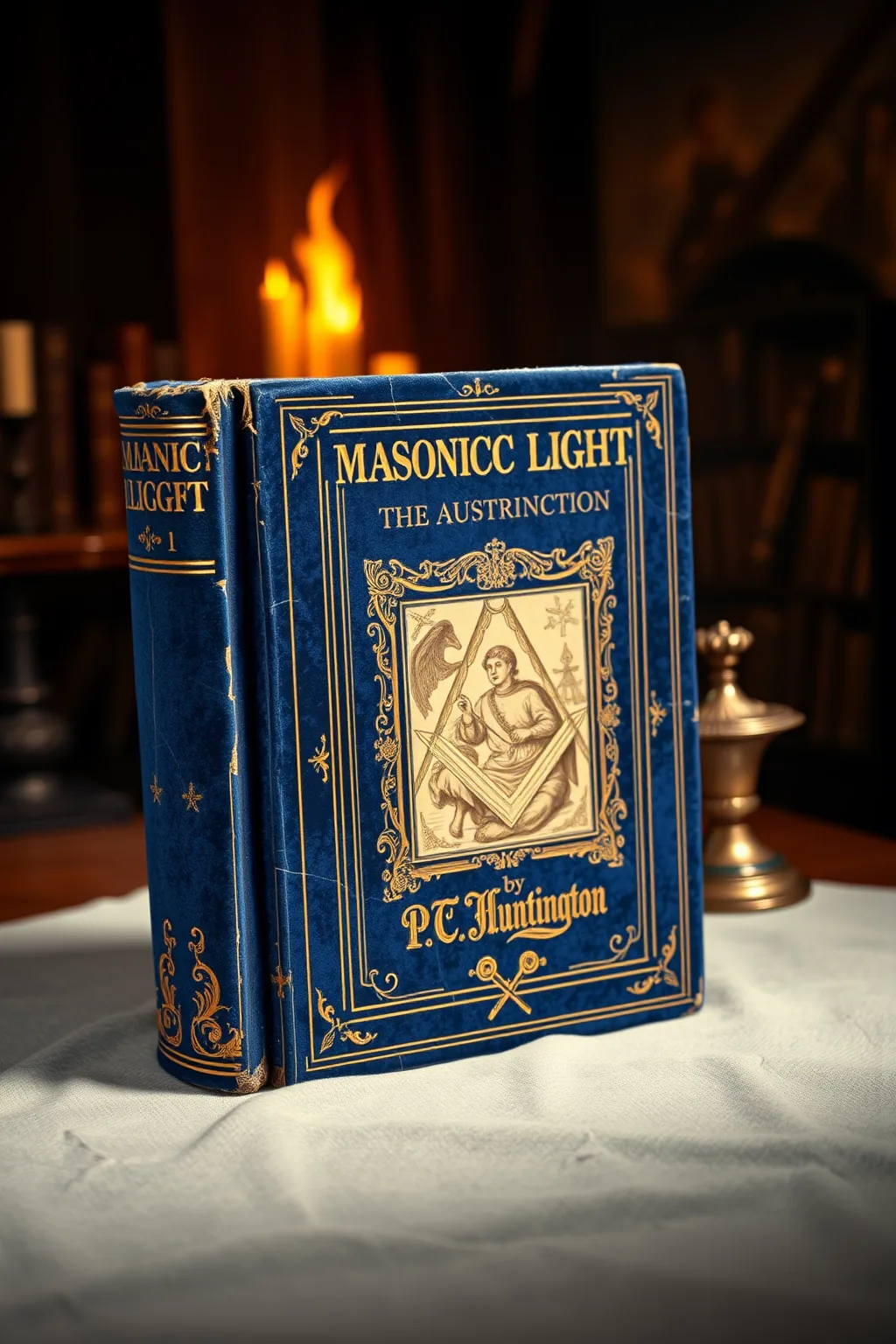
Huntington P C Masonic Light On The Abduction & Murder Of W M Morgan 1886
 72
72

Huntington P C Masonic Light On The Abduction & Murder Of W M Morgan 1886


Balthazar Finch (Senior Critic, Occult Philosophy) — This compelling volume, 'Masonic Light,' by P. C. Huntington, offers a rare, albeit speculative, lens into the sensational Morgan affair, viewed through the prism of Masonic esotericism. While eschewing overt sensationalism, it artfully probes the symbolic dimensions and potential hidden motivations within the Craft, suggesting that the abduction and murder of William Morgan were not merely criminal acts but perhaps entwined with secret society doctrines and retaliatory measures. Its strength lies in its atmospheric evocation of occult undercurrents and its appeal to those who seek to understand the intersection of power, secrecy, and the metaphysical. Highly recommended for students of Freemasonry and secret society lore.
📝 Description
72
Published in 1886, 'Masonic Light on the Abduction & Murder of W. M. Morgan' examines the Freemasonry surrounding William Morgan's death.
This text, written by P. C. Huntington, addresses the 1826 abduction and presumed murder of William Morgan. Morgan was a former Freemason who had threatened to publish the fraternity's secrets. The book claims to shed light, from an esoteric perspective, on the events and the motivations of those involved.
It discusses the secrecy and oaths within Freemasonry, suggesting these played a role in the events. The author posits that hidden forces and fraternal obligations influenced the actions of powerful men. The work is not simply a historical record but an attempt to interpret the deeper, possibly occult, meanings behind the known facts and the rituals of the fraternity.
The book is situated within a tradition of Masonic literature that sought to interpret the fraternity's rituals and history through an occult or esoteric lens. Such works often explored hidden meanings and spiritual dimensions attributed to Masonic degrees and symbols. This particular text connects that interpretive framework to a specific, sensational historical event, the Morgan Affair, suggesting that the forces at play were not merely social or political but also spiritual or arcane, aligning with a broader interest in hidden knowledge and secret societies prevalent in late 19th-century esoteric thought.
💡 Why Read This Book?
This book is essential for anyone seeking to understand the alleged esoteric dimensions of the William Morgan affair. It offers a unique perspective on the power dynamics within 19th-century secret societies and the potential for hidden knowledge to influence historical events. Ideal for seekers of occult truths and scholars of Freemasonry.
⭐ Reader Reviews
Honest opinions from readers who have explored this book.
❓ Frequently Asked Questions
What is the core subject of this book?
The book primarily investigates the 1826 abduction and murder of William Morgan, exploring potential connections to Freemasonry and its alleged secret oaths and practices.
Is this a factual historical account or an interpretation?
While based on historical events, the book is presented as an interpretation, focusing on the esoteric and symbolic aspects rather than a strictly journalistic approach.
Who is P. C. Huntington?
The author, P. C. Huntington, is credited with compiling this work, though detailed biographical information is scarce, adding to the book's enigmatic nature.
What makes this book 'esoteric'?
It delves into themes of hidden knowledge, symbolism within secret societies, and the potential for occult forces or doctrines to influence real-world events.
Is this book suitable for beginners in occult studies?
Yes, it provides an accessible entry point into exploring the esoteric underpinnings of secret societies and their historical impact.
🔮 Key Themes & Symbolism
The Shadow of the Craft
This theme explores the perceived clandestine nature of Freemasonry during the era of the Morgan affair. It examines the idea of a fraternity bound by oaths of secrecy and mutual protection, suggesting that these commitments could have led to extreme actions when perceived threats arose. The narrative hints at an internal code of conduct that superseded public law, a common trope in esoteric interpretations of secret societies. The book invites readers to consider the power of collective secrecy and its potential to cast a long, dark shadow over individual lives and societal trust, framing the events not just as a crime, but as a manifestation of the Craft's hidden mechanisms.
Symbolism and Allegory
The text implicitly suggests that the events surrounding William Morgan's disappearance were imbued with symbolic meaning, potentially aligning with Masonic allegories and rituals. It posits that understanding the deeper symbolic language of the fraternity is key to deciphering the true motives and consequences of the abduction and murder. This theme encourages readers to look beyond the literal narrative and seek out the hidden allegorical layers, exploring how symbols of light, darkness, initiation, and retribution might have played a role. The 'Masonic Light' itself becomes a metaphor for uncovering this concealed symbolic truth, transforming a historical tragedy into a complex range of hidden meanings.
Justice, Vengeance, and the Unseen Hand
This theme grapples with the concept of justice within secret societies, questioning whether it adheres to secular law or an esoteric code. The book posits the existence of an 'unseen hand' guiding events, hinting at a force or consensus within Freemasonry that orchestrated Morgan's demise to protect its secrets. It explores the blurred lines between retribution, self-preservation, and a twisted sense of fraternal duty. The narrative invites contemplation on how perceived injustices within the society might have been met with a form of occult vengeance, leaving the profane world to grapple with the material consequences while the initiated understood a deeper, albeit sinister, form of order.
💬 Memorable Quotes
Direct passages from the work, attributed to the author.
“Where light is sought, shadows often deepen.”
— This aphorism suggests that the pursuit of hidden knowledge or truth, particularly within secretive organizations, can paradoxically lead to increased obscurity and danger.
“The veil of secrecy conceals more than it protects.”
— This statement implies that the act of hiding information or intentions often reveals more about the hidden subject than it successfully obscures, drawing attention to what is being concealed.
“The Craft's silence was a louder confession than any spoken word.”
— This powerful statement implies that the absence of denial or explanation from Freemasons regarding the Morgan affair served as an implicit admission of guilt or knowledge.
💡 Key Ideas
Editorial paraphrase of the work's core concepts — not direct quotes.
Oaths whispered in darkness echo in the halls of power.
This quote highlights the enduring influence of secret vows and commitments, implying that agreements made in private can significantly shape public events and decisions.
Justice may wear many faces, but few are seen by the uninitiated.
This quote suggests that the true nature of justice, especially within hidden societies, might differ from public perception, with its mechanisms and outcomes often obscured from outsiders.
🌙 Esoteric Significance
Tradition
This work draws heavily from the esoteric tradition of Western occultism, particularly as it pertains to secret societies and fraternal orders. It aligns with the Hermetic principle of 'as above, so below,' suggesting that the microcosm of the Masonic lodge reflects macrocosmic forces and divine laws. The text hints at an understanding of initiation as a transformative process and views oaths and rituals not merely as social conventions but as potent conduits of spiritual or energetic influence, capable of binding individuals to unseen forces and obligations.
Symbolism
The core symbolism revolves around the interplay of light and darkness, a fundamental dichotomy in many esoteric systems. 'Masonic Light' signifies revealed truth, inner illumination, and potentially, the esoteric knowledge held within the fraternity. Conversely, the 'shadows' represent secrecy, concealment, and potentially, the darker impulses or consequences arising from the misuse of this knowledge. Other potential symbols, though not explicitly detailed in the provided notes, would likely include Masonic tools (square, compass, plumb line) reinterpreted for their occult significance, representing order, divine proportion, and moral rectitude as applied to the unseen architecture of reality.
Modern Relevance
In contemporary times, this book remains relevant for its exploration of the enduring human fascination with secret societies and the power of hidden knowledge. It offers a historical case study for understanding how conspiracy theories and esoteric interpretations arise and persist. For practitioners and scholars of occultism, it provides insight into historical approaches to interpreting societal events through a symbolic and metaphysical lens. The themes of trust, betrayal, and the ethics of secrecy within organizations continue to resonate, making its speculative narrative a thought-provoking commentary on power dynamics that transcend specific historical periods.
👥 Who Should Read This Book
This volume is ideally suited for the dedicated seeker of arcane knowledge and the serious student of Western esoteric traditions. Scholars of Freemasonry and secret societies will find its unique perspective useful for understanding historical interpretations of the Morgan affair. Practitioners of occult arts may find inspiration in its exploration of symbolic meaning and the potential influence of hidden oaths. While not a beginner's guide to occultism, it offers an accessible yet profound entry into the historical intersection of secret societies, public events, and esoteric thought, appealing to those with a curious mind and a thirst for deeper understanding.
📜 Historical Context
Published in 1886, 'Masonic Light on the Abduction & Murder of W. M. Morgan' emerges from a period deeply fascinated and often suspicious of secret societies, particularly Freemasonry. The late 19th century saw a surge in public discourse and literature surrounding fraternal orders, fueled by events like the anti-Masonic movement of the 1820s and 30s, which the Morgan affair ignited. This era was marked by a burgeoning interest in spiritualism, occultism, and the hidden workings of the universe, creating fertile ground for interpretations that sought esoteric explanations for societal phenomena. The book reflects a cultural landscape where the boundaries between historical fact, sensationalism, and metaphysical speculation were often blurred, offering a lens into how such events were understood through a framework of hidden knowledge and symbolic interpretation.
📔 Journal Prompts
Reflect on a time when pursuit of knowledge led you into unexpected or 'shadowy' territory. What did you learn?
Consider the concept of 'oaths' in your own life, both spoken and unspoken. How do they shape your actions and perceptions?
If 'justice' within an organization differs from public law, what ethical dilemmas might arise? Explore a hypothetical scenario.
How does symbolism influence your understanding of events or people in your life? Identify a personal symbol and its meaning.
In what ways can silence or secrecy be interpreted as a form of confession or admission?
🗂️ Glossary
Esoteric
Relating to or denoting knowledge or experience that is restricted to a small group of people, often those initiated into a particular order or discipline, implying hidden or inner meanings.
Occultism
A broad category of mystical or supernatural beliefs that are on the fringes of traditional religion or science, often involving hidden knowledge and practices such as magic, alchemy, and divination.
Freemasonry
A fraternal organization that traces its origins to the late 16th to early 17th century stonemasons' guilds of England and Scotland. It is known for its elaborate rituals, symbolism, and vows of secrecy.
Morgan Affair
A major political scandal in the United States in the late 1820s and early 1830s, ignited by the disappearance and presumed murder of William Morgan, a Freemason who had threatened to publish the fraternity's secrets.
Profane
In esoteric contexts, referring to someone who is not initiated into or does not understand the mysteries or secret knowledge of a particular group or tradition; ordinary or secular.
This book appears in 2 collections
🔮 Readers Also Liked
Browse all →



From the “Secret Societies” Collection
View all →



More Free Freemasonry & Secret Societies Books
View all →