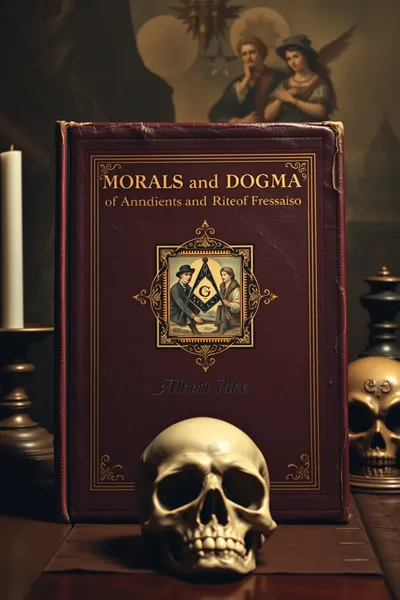
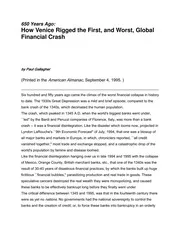
Morals and Dogma of the Ancient and Accepted Scottish Rite of Freemasonry
 71
71

Morals and Dogma of the Ancient and Accepted Scottish Rite of Freemasonry
Albert Pike's Morals and Dogma, a compilation of lectures from 1871, attempts to provide a grand philosophical narrative for the Scottish Rite degrees. Its ambition is undeniable, presenting a sweeping survey of comparative religion, history, and philosophy from ancient Egypt and Persia to Gnosticism and medieval chivalry. The strength lies in its sheer breadth and the intricate connections Pike draws, aiming to imbue the Masonic path with profound symbolic meaning. However, Pike's prose can be dense and his interpretations, while historically influential, are often idiosyncratic and rooted in his specific 19th-century understanding of esoteric traditions. A notable limitation is the occasional conflation of historical fact with symbolic allegory, demanding critical discernment from the reader. The discussion on the degree of Knight Kadosh, for instance, links Templar history to a complex moral and political struggle, which, while illustrative, requires careful contextualization. Ultimately, it serves as a monumental, if sometimes challenging, exposition of one man's vision for Masonic philosophy.
📝 Description
71
Morals and Dogma, first published in 1871, contains thirty-two essays for Masonic degrees.
This work compiles thirty-two essays, each connected to a degree in the Ancient and Accepted Scottish Rite of Freemasonry, excluding the 33rd. These pieces function as detailed lectures, intended to establish a symbolic and philosophical basis for the rite's rituals and teachings. The book draws on a wide array of sources, including ancient religions, Gnosticism, and Neoplatonism, to explain the Scottish Rite's symbolic and philosophical foundations.
Albert Pike compiled Morals and Dogma in 1871 during a period of heightened interest in esoteric thought. It systematically examines the development of moral and philosophical concepts through different cultures and eras. The text connects Masonic degrees to ancient mystery schools, religious systems, and philosophical schools. Its ideas cover the nature of divinity, the human state, the quest for understanding, and the symbolic depiction of spiritual advancement. While written for Scottish Rite Masons, its broad scope appeals to students of Western esotericism, comparative religion, and Masonic history.
Published in 1871, Morals and Dogma appeared when Hermeticism, Kabbalah, and Rosicrucianism saw renewed attention. Albert Pike synthesized these influences and others, such as Gnosticism and Neoplatonism, to create a philosophical framework for the Scottish Rite. The book reflects a late 19th-century trend of codifying esoteric knowledge, linking Masonic symbolism to older traditions and mystery schools.
💡 Why Read This Book?
• Gain an understanding of the philosophical underpinnings of the Ancient and Accepted Scottish Rite degrees, as explained through Albert Pike's extensive comparative religion and philosophy lectures. • Explore Pike's synthesis of diverse historical and esoteric traditions, including Gnosticism and ancient mystery schools, to grasp his unique interpretation of Masonic symbolism. • Analyze the intricate allegorical connections Pike draws between historical events, such as the Knights Templar narrative, and the moral and spiritual lessons of the Masonic degrees.
⭐ Reader Reviews
Honest opinions from readers who have explored this book.
❓ Frequently Asked Questions
When was Morals and Dogma first published?
Morals and Dogma of the Ancient and Accepted Scottish Rite of Freemasonry was first published in 1871. It was compiled by Albert Pike, who served as the Sovereign Grand Commander of the Southern Jurisdiction of the Scottish Rite.
What is the primary purpose of Morals and Dogma?
The book's primary purpose is to provide a philosophical and symbolic rationale for the degrees of the Ancient and Accepted Scottish Rite of Freemasonry, explaining their allegorical meanings through lectures on religion, history, and philosophy.
Is Morals and Dogma still relevant for Freemasons today?
Yes, it remains a significant text for understanding the philosophical tradition of the Scottish Rite, particularly in the Southern Jurisdiction, though modern interpretations may vary.
Does Morals and Dogma discuss specific Masonic rituals?
While it doesn't detail the operational mechanics of rituals, it elaborates on the moral and philosophical lessons intended to be conveyed by the symbolic actions and allegories within each degree.
What kind of philosophical ideas are explored in Morals and Dogma?
The book delves into a wide range of philosophical concepts, including the nature of God, the human soul, morality, justice, and the pursuit of enlightenment, drawing from Neoplatonism, Gnosticism, and other traditions.
Is Morals and Dogma available for free online?
As a work published in 1871, Morals and Dogma is in the public domain and widely available for free online through various Masonic archives and digital libraries.
🔮 Key Themes & Symbolism
Comparative Religious Evolution
Pike meticulously traces the development of religious thought from ancient civilizations like Egypt and Persia, through Zoroastrianism, Judaism, Christianity, and Islam, viewing them as expressions of universal spiritual truths. He highlights recurring symbols and moral precepts, suggesting a common source or divine inspiration underlying diverse faiths, all presented as foundational to understanding Masonic degrees.
Philosophical Allegory in Degrees
Each of the 32 essays serves as an allegorical exposition for a corresponding Scottish Rite degree. Pike interprets Masonic rituals and symbols not as literal historical events but as profound philosophical lessons concerning human nature, morality, justice, and the path to spiritual enlightenment, often referencing Neoplatonic and Gnostic concepts.
The Quest for Illumination
A central theme is the individual's journey toward 'illumination' or 'enlightenment,' mirroring the progression through Masonic degrees. This involves purifying the soul, overcoming ignorance and vice, and attaining a higher understanding of truth and the divine. The book frames Freemasonry as a structured system designed to facilitate this personal transformation.
Moral and Ethical Development
Morals and Dogma places significant emphasis on the cultivation of virtue and the adherence to a high moral code. Pike explores the nature of good and evil, the importance of justice, temperance, prudence, and fortitude, and how these ethical principles are symbolized and taught through the symbolic language of the Masonic degrees.
💬 Memorable Quotes
Direct passages from the work, attributed to the author.
“The Blue Degrees are but the outer court of the temple. Part of the initiation is within the first veil, and part within the second.”
— This statement frames the initial Masonic degrees as introductory stages, implying that deeper, more complex spiritual and philosophical truths are revealed in the higher degrees of the Scottish Rite, akin to progressing through different chambers of a sacred temple.
“Masonry is the successor of the Mysteries.”
— Pike directly links the origins and teachings of Freemasonry to the ancient mystery schools of antiquity, such as those found in Egypt, Greece, and Rome, suggesting that Masonry preserves and transmits their ancient wisdom and initiatory traditions.
“The word 'temple' is used to signify the human body.”
— This interpretation highlights a key symbolic correspondence within Masonry, where the physical body is viewed as a sacred edifice or 'temple' housing the divine spark or soul, emphasizing the importance of maintaining its purity and integrity.
“The Old Testament is the book of the Law; the New Testament is the book of the Law, the Book of Grace and Mercy.”
— This reflects Pike's comparative religious approach, presenting foundational texts of Judaism and Christianity not as contradictory but as complementary stages in divine revelation, a perspective that informs his understanding of Masonic symbolism.
“The attainment of truth is the ultimate aim of philosophy.”
— This captures a core philosophical tenet of the work, aligning the pursuit of Masonic knowledge with the broader philosophical endeavor to uncover fundamental truths about existence, divinity, and the human condition.
🌙 Esoteric Significance
Tradition
Morals and Dogma is deeply rooted in the Western Esoteric Tradition, particularly drawing from Hermeticism, Kabbalah, Gnosticism, and Neoplatonism. Pike positions the Scottish Rite as a modern continuation of ancient mystery schools, aiming to transmit esoteric knowledge and initiatory wisdom. It departs from purely Christian interpretations by embracing a broader, more universalist perspective on divine revelation found across multiple religious traditions.
Symbolism
Key symbols explored include the Blazing Star, representing divine providence and the human soul's aspiration; the Twin Pillars (Boaz and Jachin), symbolizing duality, balance, and the entrance to higher knowledge; and the number 3, signifying divine perfection, creation, and the trinity found in various spiritual systems. These symbols are presented as keys to unlocking deeper philosophical and moral truths within the Masonic degrees.
Modern Relevance
Contemporary esoteric practitioners and scholars of Western esotericism continue to engage with Morals and Dogma. Its comprehensive approach to comparative religion and philosophy influences modern Masonic study groups and individual researchers exploring the symbolic language of Western mystery traditions. Thinkers in Hermeticism and Kabbalistic studies often reference Pike's interpretations, even while critically examining his synthesis.
👥 Who Should Read This Book
• Members of the Ancient and Accepted Scottish Rite seeking to understand the philosophical and symbolic rationale behind their degrees. • Students of Western Esotericism interested in 19th-century Masonic philosophy and its synthesis of diverse religious and occult traditions. • Researchers of comparative religion and mythology who wish to examine a historical attempt to find universal truths across global faiths.
📜 Historical Context
Published in 1871, Albert Pike's Morals and Dogma emerged during a fervent period of occult revival and philosophical inquiry in the Western world. The late 19th century was marked by renewed interest in Hermeticism, Kabbalah, and comparative mythology, fueled by scholars and esotericists alike. Thinkers like Helena Blavatsky were developing their Theosophical system, and interest in ancient mystery traditions was widespread. Pike's work sought to provide a comprehensive intellectual and spiritual framework for the Scottish Rite of Freemasonry, consolidating its teachings by drawing heavily on a vast array of sources, including Gnosticism, Neoplatonism, and Eastern religions. It represented an ambitious attempt to synthesize diverse philosophical and religious streams into a coherent esoteric system, positioning the Rite as a successor to ancient wisdom traditions. The book's detailed exploration of symbolism and allegory was a significant contribution to Masonic literature, though its interpretations were sometimes debated by contemporaries who favored more historical or literal readings.
📔 Journal Prompts
The concept of the 'temple' as the human body, explored in the degree lectures, invites reflection on personal integrity.
Pike's comparison of Masonic degrees to ancient mystery schools prompts an inquiry into continuity of initiatory practices.
The recurring symbolism of the Blazing Star suggests a need to examine personal aspirations towards divine knowledge.
Reflecting on the philosophical journey through the thirty-two degrees, consider parallels with personal spiritual development.
Albert Pike's use of Gnostic ideas in explaining Masonic tenets requires an assessment of their influence on your own understanding.
🗂️ Glossary
Scottish Rite
A branch of Freemasonry that offers a series of degrees beyond the initial three of the basic Craft lodge, focusing on philosophical and allegorical teachings.
Ancient Mysteries
Initiatory religious rites practiced in the ancient Mediterranean world, characterized by secret teachings, symbolic ceremonies, and the promise of spiritual enlightenment or a better afterlife.
Gnosticism
A diverse set of religious and philosophical movements in the early Christian era that emphasized spiritual knowledge (gnosis) as the key to salvation, often viewing the material world as flawed or created by a lesser deity.
Neoplatonism
A school of philosophy founded by Plotinus in the 3rd century CE, heavily influenced by Plato, which sought to explain the relationship between a transcendent God and the material world through a hierarchy of being.
Allegory
The symbolic representation of abstract ideas or principles through characters, figures, or events in narrative, dramatic, or pictorial form, used extensively in Morals and Dogma to interpret Masonic degrees.
Comparative Religion
The academic study of the similarities and differences between world religions, a method Albert Pike employs extensively to find universal truths within different faith traditions.
Initiation
A ritual or ceremony marking a person's entry into a new stage, role, or level of membership within a society or organization, often involving symbolic acts and the imparting of secret knowledge.