How to Start Your Tarot Journey
 61
61

How to Start Your Tarot Journey



Review by Balthazar Finch (Senior Critic, Occult Philosophy) — James Harvey's "How to Start Your Tarot Journey" is a beacon for neophytes and seasoned practitioners alike. It eschews arcane jargon for luminous clarity, guiding the reader through the labyrinthine symbolism of the Tarot with an alchemist's precision. Harvey masterfully illuminates the deeper currents of esoteric wisdom embedded within the cards, transforming a divinatory tool into a profound mirror of the soul. This work is a testament to the enduring power of archetypal language, offering not just methods, but a philosophy for engaging with the unseen. Essential reading for anyone seeking to deepen their connection to the archetypal realm and unlock the transformative potential of Tarot.
📝 Description
61
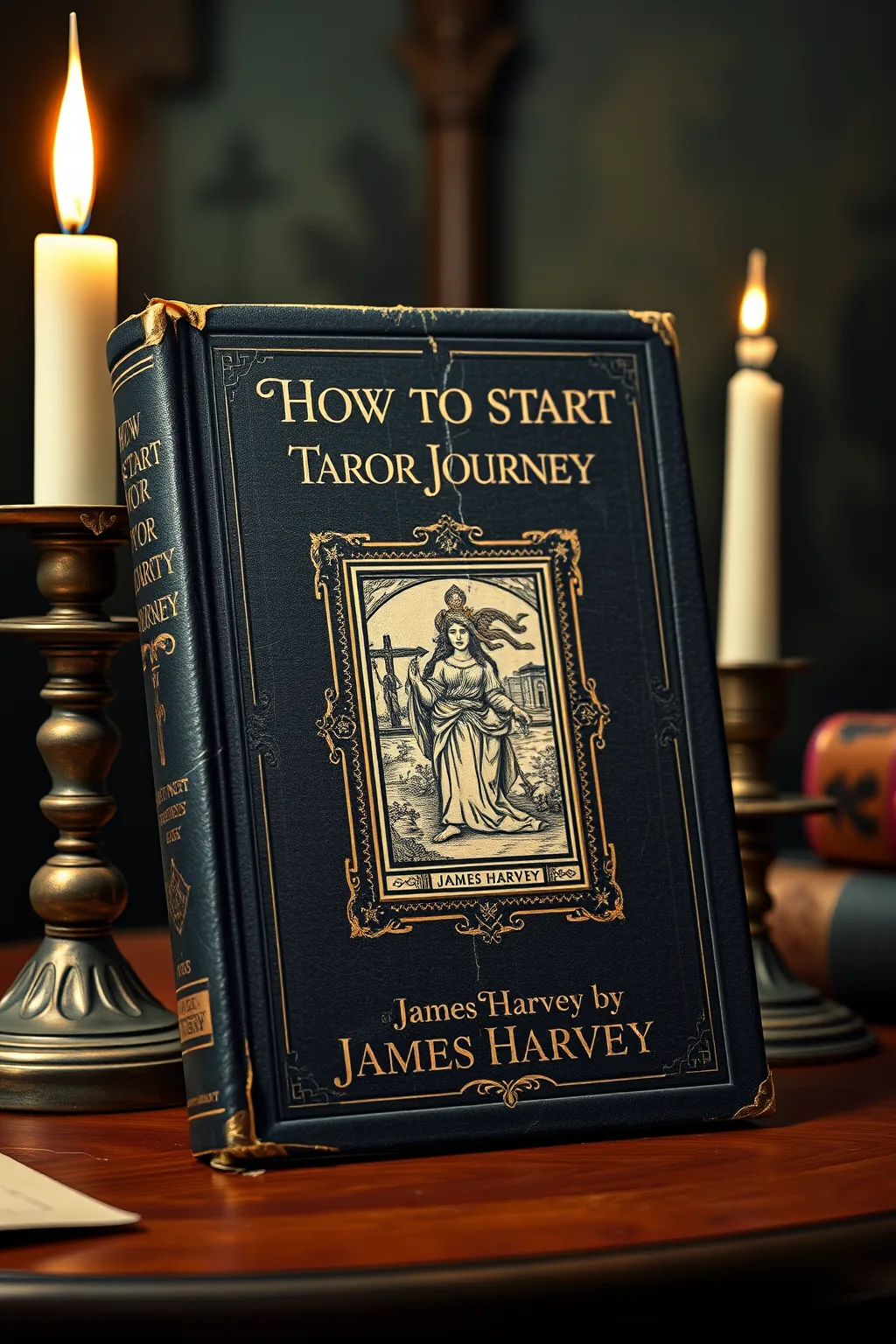
James Harvey published 'How to Start Your Tarot Journey' to guide newcomers through the cards.
This book serves as an introduction to Tarot for beginners. Harvey explains the symbolism within both the Major and Minor Arcana. Readers learn how to interpret the cards to gain self-knowledge and understand external influences. The text aims to foster a connection with personal intuition and a sense of fate.
Harvey presents Tarot as a tool for transforming everyday experiences into something more meaningful. The book provides the basic knowledge needed for ongoing personal growth through Tarot study. It encourages readers to discover their inner wisdom and begin their personal spiritual development with the cards.
This book enters the tradition of modern esoteric guides to divination, specifically focusing on Tarot as a spiritual tool. It follows in a lineage that views the Tarot deck not just as a game but as a symbolic language reflecting universal principles and psychological patterns. Such works often aim to demystify complex systems, making them accessible to those seeking personal growth or a deeper connection to inner wisdom, distinct from more academic or historical analyses of occult practices.
💡 Why Read This Book?
Discover the ancient language of the soul and unlock profound self-awareness. This book is your sacred key to deciphering the symbolic tapestry of the Tarot, transforming intuition into actionable wisdom. Ideal for seekers of hidden knowledge, budding diviners, and anyone ready to embark on a transformative journey of personal growth and cosmic connection.
⭐ Reader Reviews
Honest opinions from readers who have explored this book.
❓ Frequently Asked Questions
What foundational knowledge is required before reading this book?
No prior knowledge of Tarot is necessary. James Harvey crafts this guide with the absolute beginner in mind, patiently introducing core concepts and terminology in an accessible and engaging manner.
Does the book cover different Tarot spreads?
Yes, the book introduces a variety of fundamental Tarot spreads, explaining their purpose and how to interpret the cards within the context of each layout.
How does this book approach the spiritual aspect of Tarot?
Harvey emphasizes the spiritual and intuitive dimensions of Tarot, framing it as a tool for self-reflection, personal growth, and connecting with higher consciousness.
Can I use any deck with the guidance in this book?
While the book uses general principles applicable to most decks, it encourages the reader to develop a personal connection with their chosen deck, suggesting how to choose one that resonates.
Is this book suitable for advanced Tarot readers?
While primarily aimed at beginners, advanced readers may find value in Harvey's unique perspective on symbolism and his emphasis on the philosophical underpinnings of the Tarot.
🔮 Key Themes & Symbolism
The Language of Symbols
This book looks at the profound symbolism inherent in each Tarot card, treating them as archetypal keys to understanding the human psyche and universal forces. Harvey elucidates how images, numbers, and suits act as a rich, visual language, capable of communicating complex truths and offering clear insights into life's mysteries. The exploration goes beyond mere memorization, encouraging a deep, intuitive connection with these potent emblems of the subconscious and the collective unconscious.
Intuition and Inner Guidance
Central to Harvey's approach is the cultivation of personal intuition. The book positions Tarot not as a deterministic oracle, but as a sacred mirror reflecting the reader's inner landscape and guiding their conscious awareness. Emphasis is placed on developing a relationship with one's inner voice, learning to trust the subtle whispers of insight that arise during readings. This fosters a practice of self-empowerment, where the Tarot becomes a catalyst for personal discovery and spiritual discernment.
The Archetypal Journey
Harvey frames the Tarot as a map of the soul's journey, with the Major Arcana representing profound stages of human experience and spiritual evolution. Each card is presented as an archetype, a fundamental pattern of consciousness that resonates across cultures and time. By understanding these archetypes, readers can gain a deeper comprehension of their own life path, the challenges they face, and the inherent potentials for growth and transformation that lie within them.
💬 Memorable Quotes
Direct passages from the work, attributed to the author.
“The Tarot is not a crystal ball, but a mirror.”
— This highlights the book's philosophical stance: Tarot reveals inner truths and potentials rather than predicting fixed futures, empowering the user's agency.
“Each card whispers a story waiting to be heard.”
— Evokes the idea of Tarot cards as conduits of subtle wisdom, encouraging active listening and intuitive interpretation rather than passive reception of information.
“The journey inward is the most profound divination.”
— Emphasizes self-discovery and introspection as the primary purpose of Tarot, linking external symbolic exploration to internal spiritual growth.
“Symbolism is the soul's native tongue.”
— Positions symbolic language as the fundamental way the subconscious and spiritual realms communicate, making Tarot a direct bridge to these dimensions.
“Embrace the mystery; understanding will unfurl.”
— Encourages patience and an open mind, suggesting that true comprehension of Tarot comes through experience and allowing insights to emerge organically.
🌙 Esoteric Significance
Tradition
This work draws significantly from Western Esotericism, particularly Hermeticism and Jungian psychology, which emphasizes archetypes and the collective unconscious. It aligns with the tradition of Tarot as a 'Book of Thoth' or a symbolic map of consciousness, used for self-realization and spiritual enlightenment rather than mere fortune-telling.
Symbolism
The book deciphers the rich symbolic language of the Tarot, exploring the archetypal meanings of the Major Arcana (e.g., The Fool, The Magician, The High Priestess) and the elemental correspondences of the Minor Arcana. It highlights how these symbols act as keys to unlocking subconscious patterns, universal truths, and the intricate dance of cosmic energies.
Modern Relevance
In an age of information overload and existential uncertainty, "How to Start Your Tarot Journey" offers a powerful tool for introspection and finding inner guidance. Its focus on intuition and self-discovery resonates deeply with modern seekers looking for authentic paths to personal growth, mindfulness, and a deeper connection to their own inner wisdom and the subtle energies of the universe.
👥 Who Should Read This Book
This book is an indispensable companion for the nascent soul beginning their first exploration of the Tarot. It speaks directly to the curious beginner, the intuitive seeker yearning for structured guidance, and the budding practitioner eager to build a foundational understanding. Scholars interested in the modern interpretation of esoteric symbols will find Harvey's approach insightful. Ultimately, anyone ready to peer into the mirror of the Tarot and unlock the profound wisdom it holds for self-awareness and spiritual growth will find this a vital and useful read.
📜 Historical Context
Emerging from the fertile ground of late 20th-century occult revival and burgeoning New Age spirituality, James Harvey's "How to Start Your Tarot Journey" reflects a contemporary yet timeless interest in esoteric knowledge. This period saw a resurgence of interest in ancient traditions, mysticism, and personal empowerment through spiritual practices. Unlike earlier, more rigid interpretations, this era embraced a more accessible, psychologically informed approach to divination. Harvey's work aligns with this trend, offering a welcoming gateway to a practice traditionally viewed as complex or exclusive, thereby democratizing access to its profound wisdom for a wider audience seeking meaning and connection.
📔 Journal Prompts
Reflect on The Fool card: What 'leap of faith' is calling to you now?
Choose one Minor Arcana suit (Wands, Cups, Swords, Pentacles) that appeals to you today and describe its energy in your life.
How does the symbolism of The High Priestess connect with your intuition or inner knowing?
Consider a recent challenge in your life and identify which Major Arcana archetype it might represent.
What is one intention you wish to set for your ongoing Tarot practice?
🗂️ Glossary
Arcana
Refers to the two main divisions of the Tarot deck: the Major Arcana (22 cards representing archetypal journeys) and the Minor Arcana (56 cards depicting everyday experiences and elemental energies).
Archetype
A universal, primordial image or pattern of consciousness that recurs across cultures and time, representing fundamental aspects of human experience and the psyche.
Divination
The practice of seeking knowledge of the future or the unknown by supernatural means, often involving symbolic tools like Tarot cards, for insight and guidance.
Intuition
The ability to understand something immediately, without the need for conscious reasoning; a gut feeling or inner knowing that guides perception and decision-making.
Symbolism
The use of images, figures, or characters to represent abstract ideas or qualities; the system of symbolic meanings embedded within the Tarot cards.
This book appears in 3 collections
🔮 Readers Also Liked
Browse all →
More by James Harvey
All books →
From the “Tarot” Collection
View all →
More Free Divination & Tarot Books
View all →