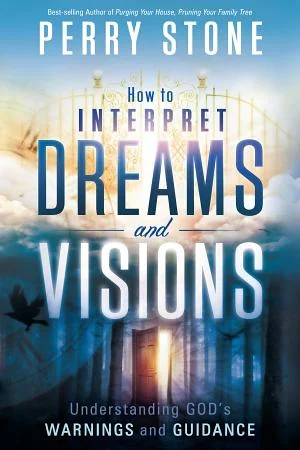
How to Interpret Dreams and Visions
 77
77

How to Interpret Dreams and Visions
Perry F. Stone's "How to Interpret Dreams and Visions" approaches dream interpretation with a clarity that cuts through much of the genre's usual ambiguity. His directness in addressing reader questions, a characteristic evident since its 2011 publication, is a significant strength. The work is particularly effective in its emphasis on practical application, moving beyond abstract theory to offer tangible methods for deciphering personal dream narratives. A notable concept is Stone's categorization of different dream types, providing a useful framework for analysis. However, the book occasionally leans heavily on specific theological interpretations without always engaging with broader cross-cultural or psychological perspectives on dreaming, which might limit its appeal to a purely secular or academic audience. While it offers valuable tools for personal insight, its singular focus can feel restrictive at times. Overall, Stone provides a grounded, accessible manual for those seeking to understand their dreams.
📝 Description
77
Perry F. Stone's 2011 book offers a practical guide to understanding dream symbolism.
This book presents methods for interpreting dreams and visions, aiming to clarify the symbolic language of nocturnal experiences. Stone focuses on providing readers with actionable advice to decipher the meanings behind their personal dreams and perceived visions. The work is for individuals who experience vivid dreams or believe they receive symbolic messages through visions. It suits those seeking a structured approach to dream analysis, especially those interested in the spiritual or prophetic aspects of their inner life. Readers will find clear explanations and techniques they can apply to their own dream recall.
The book posits that dreams and visions are not random but carry meaningful messages, often from a higher source or the subconscious. Stone stresses the importance of understanding symbols, identifying patterns, and considering the dream's context to unlock its message. He offers frameworks for categorizing dream types and interpreting their significance, encouraging readers to cultivate their own interpretive abilities through practice and spiritual discernment.
Published in 2011, "How to Interpret Dreams and Visions" appeared during a time of sustained interest in spirituality and personal development. The field of dream interpretation already included influences from Jungian psychology, New Age thought, and various religious traditions. Stone's work contributes a biblically informed perspective on dream symbolism, differentiating it from purely psychological or New Age frameworks.
💡 Why Read This Book?
• Gain a structured method for deciphering dream symbolism, learning to identify recurring motifs and their potential meanings as outlined in Stone's practical frameworks. • Understand the author's specific categorization of dream types, allowing you to differentiate between prophetic, symbolic, and subconscious messages based on concepts presented in the 2011 edition. • Develop personal interpretive skills by engaging with the book's actionable advice, empowering you to unlock the messages within your own dreams and visions.
⭐ Reader Reviews
Honest opinions from readers who have explored this book.
❓ Frequently Asked Questions
What is the primary focus of Perry F. Stone's "How to Interpret Dreams and Visions"?
The book's primary focus is to provide readers with practical tools and insights for understanding the symbolic meaning of their dreams and visions, aiming to demystify subconscious communication.
When was "How to Interpret Dreams and Visions" first published?
Perry F. Stone's "How to Interpret Dreams and Visions" was first published in 2011, reflecting contemporary interests in spiritual and personal development.
Does the book offer specific techniques for dream interpretation?
Yes, the book offers specific techniques, including recognizing symbolic patterns, categorizing dream types, and discerning the context of a dream to unlock its intended message.
Who is the intended audience for this book?
The intended audience includes individuals who experience vivid dreams or visions and are seeking a systematic, often biblically-informed, approach to understanding their spiritual or subconscious significance.
Can this book help with understanding prophetic dreams?
The book specifically addresses the interpretation of visions and dreams that may carry prophetic or spiritual messages, providing guidance for discerning their meaning.
What distinguishes Stone's approach to dream interpretation?
Stone's approach is distinguished by its practical, step-by-step methodology and often integrates a perspective informed by religious texts, differentiating it from purely psychological or secular interpretations.
🔮 Key Themes & Symbolism
Symbolic Language of Dreams
The work posits that dreams and visions are not random but communicate through a rich symbolic language. Stone guides readers to identify recurring symbols, archetypes, and metaphors within their dreams. He emphasizes that understanding these symbols requires discernment and a connection to spiritual or subconscious awareness. The book provides examples of common symbols and their potential meanings, encouraging a personal exploration of their significance within the individual's life context.
Discerning Visionary Experiences
A core theme is the distinction and interpretation of visions, which are presented as potentially distinct from ordinary dreams, often carrying more direct or urgent messages. Stone offers methods for discerning the source and nature of these experiences, whether they originate from the subconscious, divine inspiration, or other spiritual influences. The text aims to equip readers with the ability to evaluate the authenticity and meaning of visionary encounters.
Practical Interpretation Frameworks
Beyond theory, the book offers concrete frameworks for interpretation. This includes categorizing different types of dreams (e.g., symbolic, prophetic, warning) and providing step-by-step approaches to unlock their messages. Stone encourages diligent journaling and reflection as essential practices for developing one's interpretive abilities, making the process accessible and actionable for everyday application.
Spiritual and Subconscious Communication
The book explores dreams and visions as channels for communication, bridging the gap between the spiritual realm, the subconscious mind, and the conscious self. It suggests that these inner experiences can offer guidance, warnings, or insights relevant to waking life. The emphasis is on recognizing this communication as a vital aspect of personal spiritual growth and self-understanding.
💬 Memorable Quotes
Direct passages from the work, attributed to the author.
“Every person will have a dream at one point or another. Some will even have visions.”
— This foundational statement establishes the universality of dream experiences and the existence of visionary phenomena, setting the stage for the book's exploration of their meaning and significance.
“Stone answers readers questions regarding the symbolism of dreams and what they mean.”
— This highlights the book's practical, problem-solving approach, directly addressing common inquiries about dream interpretation and offering concrete explanations for symbolic content.
💡 Key Ideas
Editorial paraphrase of the work's core concepts — not direct quotes.
Interpretation requires understanding symbols and context.
This paraphrased concept underscores the book's core methodology: that effective dream analysis hinges on recognizing symbolic language and considering the personal or situational context of the dream.
Dreams can offer guidance and insight.
This paraphrased concept points to the utilitarian view of dreams presented in the book, suggesting they serve a purpose beyond mere mental processing, potentially providing direction for one's life.
Discern the source and nature of visions.
This paraphrased concept emphasizes the critical aspect of evaluating visionary experiences, encouraging readers to question their origin and intent to ensure accurate understanding.
🌙 Esoteric Significance
Tradition
While not strictly adhering to a single named esoteric lineage like Hermeticism or Kabbalah, Stone's work taps into a broader tradition of spiritual discernment and prophetic interpretation that has roots in Abrahamic faiths. It intersects with Gnostic traditions in its focus on hidden knowledge revealed through inner experience, and with Theosophical concepts concerning spiritual communication. The book departs from purely mystical traditions by emphasizing a more direct, practical, and often biblically literal interpretation of divine or subconscious messages.
Symbolism
Key symbols often explored in this tradition include water (representing emotions, the subconscious, or spiritual cleansing), animals (often embodying specific traits or spiritual forces), and numbers (carrying numerological or divine significance). Stone's approach typically interprets these symbols within a framework that seeks direct meaning, such as water signifying emotional states or divine intervention, and animals representing spiritual warnings or strengths.
Modern Relevance
Contemporary thinkers and practitioners in areas such as charismatic Christianity, dream journaling communities, and certain branches of New Age spirituality continue to engage with methods similar to those presented by Stone. His work speaks to individuals seeking to integrate spiritual insights into their daily lives and understand perceived divine guidance, finding echoes in modern spiritual counseling and personal development circles focused on intuitive development.
👥 Who Should Read This Book
• Individuals interested in understanding the spiritual or prophetic dimensions of their dreams, particularly those with a background or interest in biblically-informed interpretations. • Seekers of practical guidance on dream analysis who desire a structured, step-by-step method for deciphering symbolic messages from their subconscious or a higher power. • Readers exploring comparative spirituality who wish to examine how dream interpretation is approached within specific religious or esoteric frameworks outside of purely psychological models.
📜 Historical Context
Published in 2011, "How to Interpret Dreams and Visions" arrived during a period of sustained interest in personal spirituality and self-help, where books on esoteric subjects, including dream interpretation, found a significant audience. This era saw a convergence of New Age philosophies, psychological exploration of the subconscious, and traditional religious interpretations. Perry F. Stone's work distinguishes itself by often grounding its approach in a biblically informed perspective, offering a contrast to purely Jungian or New Age interpretations prevalent at the time. For instance, while Carl Jung was exploring archetypes in the collective unconscious, Stone focuses on discerning messages that might be divinely inspired or prophetically significant, aligning more with certain evangelical Christian views on spiritual gifts. The reception of such works typically caters to a readership seeking practical guidance within a specific spiritual framework, rather than academic discourse.
📔 Journal Prompts
The symbolism of the recurring dream animal.
Discern the source of your most vivid vision.
Analyze the emotional context of a recent prophetic dream.
Identify patterns in your dream journal entries.
Reflect on the potential guidance offered by a warning dream.
🗂️ Glossary
Vision
An experience of seeing something not physically present, often interpreted as a divine message, spiritual insight, or profound subconscious manifestation.
Symbolism
The use of symbols to represent ideas and qualities, especially in dreams and visions, where objects or images carry deeper meanings beyond their literal form.
Discernment
The ability to judge well, particularly in distinguishing the true nature, origin, or significance of dreams and visions, often involving spiritual or intuitive insight.
Prophetic Dream
A dream that is believed to foretell future events or convey divine messages about what is to come.
Subconscious Mind
The part of the mind of which one is not fully aware but which influences one's actions and feelings; often seen as a source of symbolic imagery in dreams.
Archetype
A universal, inherited pattern of thought or imagery derived from the collective unconscious, often appearing in dreams and myths (concept explored in related fields).
Dream Journal
A record kept by an individual of their dreams, used to track patterns, symbols, and potential meanings over time for interpretation.
This book appears in 1 collection
🔮 Readers Also Liked
Browse all →









From the “Dream Interpretation” Collection
View all →








More Free Occult Philosophy Books
View all →