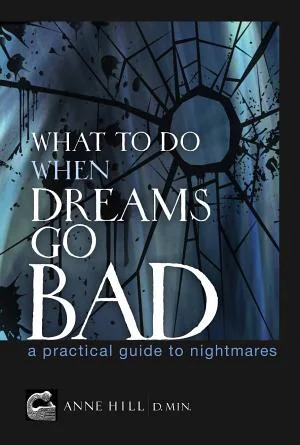
What to Do When Dreams Go Bad
 80
80

What to Do When Dreams Go Bad
Anne Hill’s "What to Do When Dreams Go Bad" approaches the often-unpleasant landscape of nightmares with a practical, almost alchemical, mindset. Unlike many popular dream guides that offer simplistic symbol-for-meaning translations, Hill insists on viewing disturbing dreams as complex communications, potentially from deeper layers of the self or even external subtle influences. Her strength lies in providing actionable techniques, particularly her methods for lucid dream induction specifically aimed at confronting and understanding dream antagonists. A limitation, however, is that the book's esoteric leanings, while a significant part of its appeal, are occasionally presented without deep grounding, making some interpretations feel more like assertions than explorations. One particularly useful section discusses the concept of the 'Shadow Self' as it appears in dream figures, offering a framework to reframe fear into self-awareness. The book serves as a valuable, albeit sometimes challenging, manual for those willing to engage directly with their darker dream imagery.
📝 Description
80
Anne Hill's 2009 book helps readers engage with disturbing dreams.
Published in 2009, "What to Do When Dreams Go Bad" offers a structured method for understanding and working with unsettling dream experiences. Anne Hill suggests that these dreams are not simply random mental events but carry meaningful messages, potentially from the unconscious or other subtle realities. The book presents practical techniques and theoretical underpinnings for interpreting the symbolism within nightmares and disturbing dreamscapes. Its goal is to help readers transform fear associated with these dreams into insight and personal growth. It goes beyond basic dream interpretation guides to examine the energetic and archetypal qualities of these nocturnal experiences.
This work is for people who frequently experience negative dreams or find them particularly impactful, and who want to address them constructively. It is suitable for those interested in Jungian psychology, esoteric traditions, or anyone seeking greater self-awareness through dream analysis. A certain level of introspection and a readiness to confront difficult inner material are beneficial for the reader. The book is especially useful for individuals involved in magic, ritual, or meditation who view dreams as a vital component of their spiritual or personal development.
Published in 2009, "What to Do When Dreams Go Bad" appeared during a time of growing interest in depth psychology and practical occultism. The early 21st century saw an online surge in dream interpretation communities, frequently merging academic psychology with esoteric lore. Hill's book contributes to this dialogue by synthesizing the psychological importance of dreams, as discussed by figures like Carl Jung, with their potential meaning within broader esoteric frameworks. These frameworks draw from ancient dream traditions and more recent occult revivals.
💡 Why Read This Book?
• Gain specific techniques for dream recall and lucid dreaming, directly applicable to confronting nightmares, a core focus of Hill's 2009 publication. • Understand the concept of 'Dream Alchemy' as presented by Hill, learning to transmute disturbing dream content into personal insight, a method distinct from generic dream analysis. • Explore the 'Shadow Self' within the context of dream figures, providing a concrete lens through which to reframe anxieties encountered in sleep, as detailed in the book's core chapters.
⭐ Reader Reviews
Honest opinions from readers who have explored this book.
❓ Frequently Asked Questions
What is the primary goal of Anne Hill's "What to Do When Dreams Go Bad"?
The primary goal is to equip readers with practical techniques to understand and constructively engage with disturbing dreams, transforming them from sources of fear into opportunities for psychological and spiritual growth.
When was "What to Do When Dreams Go Bad" first published?
The book was first published on February 5, 2009, reflecting a contemporary approach to dream interpretation within esoteric studies.
Does the book offer simple interpretations for common dream symbols?
No, it moves beyond simple symbol dictionaries, focusing instead on the energetic and archetypal dimensions of dreams and providing methods for personal interpretation.
What is 'Dream Alchemy' as discussed in the book?
Dream Alchemy, as presented by Hill, is the process of viewing disturbing dream content as raw material that can be transformed into valuable psychological insight and spiritual understanding.
Who would benefit most from reading "What to Do When Dreams Go Bad"?
Individuals experiencing frequent disturbing dreams, practitioners of esoteric traditions, those interested in Jungian psychology, and anyone seeking deeper self-understanding through dream work would benefit.
What is the 'Shadow Self' in relation to the book's themes?
The 'Shadow Self' refers to the unconscious aspects of the personality that the conscious ego does not identify in itself. The book explores how these aspects manifest in disturbing dream figures.
🔮 Key Themes & Symbolism
Confronting the Shadow
Hill posits that disturbing dreams are often manifestations of the 'Shadow Self,' the disowned aspects of our personality. The book offers methods not just to identify these shadow figures—be they monsters, antagonists, or unsettling scenarios—but to engage with them constructively. This engagement is framed as a crucial step in psychological integration, turning internal conflict into a source of power and self-knowledge. Rather than suppressing or fearing these dream elements, Hill advocates for a direct, alchemical approach to understanding their origins and messages.
Dream Alchemy Techniques
A central theme is 'Dream Alchemy,' the transformative process applied to dream material. This involves techniques for lucid dreaming, where the dreamer can consciously interact with the dream environment and its inhabitants. Hill outlines practical steps for recalling dreams, interpreting their symbolic language, and using them as a catalyst for personal evolution. The aim is to transmute the potentially negative energy of bad dreams into valuable insights, fostering resilience and a deeper connection with one's inner world.
Archetypal Dream Figures
The work explores the presence of archetypal figures within unsettling dreams. These are not merely personal projections but represent universal patterns of human experience. Hill guides readers to recognize common archetypes, such as the trickster, the saboteur, or the lost child, that may appear in disturbing dream narratives. Understanding these figures within an archetypal framework, drawing on concepts influenced by depth psychology, allows for a richer interpretation of dream content and its relevance to waking life.
The Unconscious as Messenger
Hill emphasizes the view of the unconscious mind as a proactive communicator, particularly through dreams. Disturbing dreams are seen as urgent messages that cannot be ignored. The book provides a methodology for decoding these messages, suggesting that they often point to areas of life requiring attention, healing, or transformation. This perspective encourages a respectful and investigative stance towards one's dream life, viewing even the most frightening visions as potentially beneficial guidance.
💬 Memorable Quotes
Direct passages from the work, attributed to the author.
“The shadow figure in your dream is not your enemy, but a lost part of yourself seeking integration.”
— This interpretation reframes the typical fear associated with dream antagonists, suggesting they represent unacknowledged aspects of the self that require understanding and acceptance.
“Lucidity transforms the passive dreamer into an active alchemist.”
— This emphasizes the power of conscious awareness within the dream state, positioning lucid dreaming as a key tool for transforming negative dream experiences into personal growth.
“Your dreams are a mirror reflecting the work your soul needs to do.”
— This suggests that dreams serve a divinely or psychologically ordained purpose, pointing directly to areas of the self that require attention for spiritual or psychological development.
“The energy of fear in a dream can be harnessed and redirected.”
— This speaks to the practical application of Hill's 'Dream Alchemy,' suggesting that the intense emotions experienced in nightmares are not merely to be endured but can be consciously worked with and transformed.
💡 Key Ideas
Editorial paraphrase of the work's core concepts — not direct quotes.
Nightmares are not random assaults but complex communications.
This quote highlights Hill's central thesis: that disturbing dreams possess meaning and purpose, serving as vital messages from the psyche rather than chaotic disturbances.
🌙 Esoteric Significance
Tradition
Hill's work draws significantly from Western Esotericism, particularly Jungian depth psychology, which itself has strong ties to Hermeticism and Gnosticism through its exploration of archetypes and the unconscious. It situates dream experiences within a framework that acknowledges both psychological and potentially spiritual dimensions, moving beyond purely materialist interpretations. The book aligns with traditions that view the psyche as a microcosm reflecting macrocosmic principles, and dreams as a direct line of communication with deeper realities or the divine.
Symbolism
Key symbols include the 'Shadow Figure,' representing repressed or disowned aspects of the self, often appearing as monsters or antagonists in nightmares. The 'Threshold' is another significant motif, symbolizing the liminal space within dreams where transformation or confrontation occurs. Hill also implicitly engages with alchemical symbolism through the concept of 'Dream Alchemy,' where the base material of disturbing dreams is transmuted into psychological 'gold' or spiritual insight.
Modern Relevance
Contemporary practitioners of modern witchcraft, chaos magic, and Jungian-influenced spiritual paths often reference works like Hill's. Thinkers exploring embodied cognition and dream yoga traditions find value in its emphasis on active engagement with dream states. The book's approach to integrating difficult psychological material through dream work remains relevant for therapists and individuals engaged in self-actualization practices seeking to understand the symbolic language of the unconscious.
👥 Who Should Read This Book
• Individuals experiencing recurrent nightmares or disturbing dream content who seek practical methods for understanding and transforming these experiences. • Students of Jungian psychology and esoteric traditions interested in applying depth psychological concepts to their own dream work. • Practitioners of ritual magic or meditation looking to integrate dream analysis into their spiritual or personal development practices.
📜 Historical Context
Anne Hill's "What to Do When Dreams Go Bad," published in 2009, arrived at a moment when the internet had democratized access to esoteric knowledge and psychological theory. While Carl Jung had laid foundational work on the shadow and archetypes decades earlier, Hill’s book offered a contemporary, practical guide for a new generation of seekers. It emerged in a landscape populated by diverse approaches to dream interpretation, from purely psychological analyses to more mystical traditions. Unlike purely academic psychological texts, Hill’s work explicitly engages with the esoteric, positioning itself alongside contemporary occult authors who were also exploring practical applications of subconscious exploration. Its reception likely occurred within online forums and specialized book communities, where direct engagement with challenging dream material was a growing interest, distinct from the more mainstream, often simplified, dream dictionaries.
📔 Journal Prompts
The archetypal figures encountered in your disturbing dreams.
The concept of 'Dream Alchemy' and its application to recent nightmares.
Identifying 'threshold experiences' within your dream recall.
Reflecting on the messages from your 'Shadow Self' as presented in dreams.
The process of lucid dreaming for engaging with negative dream content.
🗂️ Glossary
Shadow Self
In Jungian psychology, the 'Shadow' represents the unconscious aspects of the personality that the conscious ego does not identify in itself. In dreams, it often appears as threatening figures or disowned traits.
Dream Alchemy
A metaphorical process, as presented by Hill, of transforming the raw, often disturbing, material of dreams into valuable psychological insight and spiritual understanding.
Archetype
Universal, archaic patterns and images that derive from the collective unconscious and are the psychic counterpart of instinct. They manifest in dreams as recurring figures or themes.
Lucid Dreaming
A state of consciousness in dreams where the dreamer is aware they are dreaming and may be able to exert some degree of control over the dream narrative or environment.
Threshold Experience
A moment or phase within a dream that signifies a transition, a point of potential change, confrontation, or significant revelation for the dreamer.
Psychic Messenger
The concept that dreams, particularly disturbing ones, serve as communications from the unconscious mind or other subtle levels of reality, carrying important information.
Integration
The psychological process of incorporating unconscious or disowned aspects of the self (like the Shadow) into conscious awareness, leading to greater wholeness.
This book appears in 1 collection
🔮 Readers Also Liked
Browse all →









From the “Dream Interpretation” Collection
View all →


![The mystic oracle, or, The complete fortune-teller and dream book / [F.M. Lupton].](/img/thumb/the-mystic-oracle-or-the-complete-fortune-teller-and-dream-book-f-m-lupton.webp)

More Free Occult Philosophy Books
View all →