What is Dream Interpretation?
Dream interpretation is the practice of assigning meaning to the content of dreams. Historically, dreams were viewed as divine messages, prophecies, or omens, requiring skilled individuals to decipher their significance. Modern approaches, particularly within psychology, explore dreams as reflections of the subconscious mind, processing daily experiences, unresolved conflicts, or latent desires. The goal is to gain self-understanding and insight into one's inner world.
Best Books for Complete Beginners
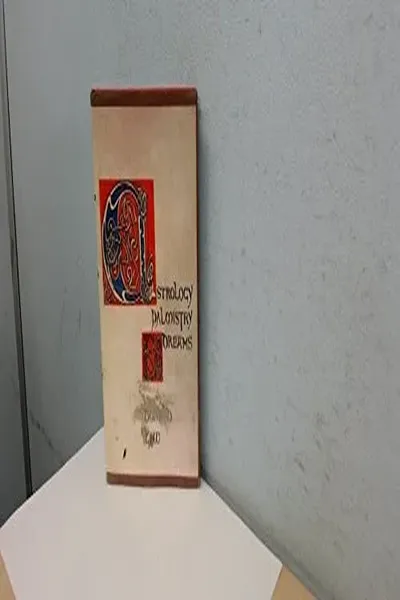
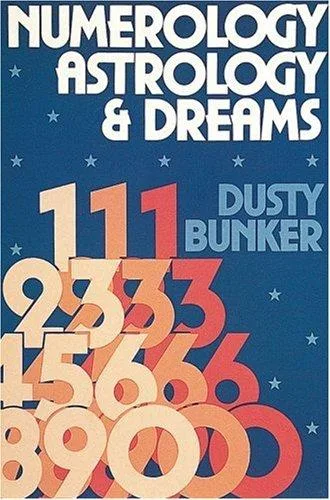
For those new to dream analysis, starting with practical guides is recommended. 'Fortunes and dreams : A practical manual of fortune telling, divination and the interpretation of dreams, signs and omens' by Astra Cielo offers a foundational approach to understanding dream symbolism in a divinatory context. 'Guide to Fortune-Telling by Dreams' provides accessible methods for decoding common dream imagery. 'Numerology, Astrology and Dreams' by Dusty Bunker links dream analysis with other esoteric systems, offering a broader perspective. 'Astrology, palmistry, and dreams' by Donald Law similarly integrates dream interpretation into a wider framework of self-knowledge.
Intermediate Reading
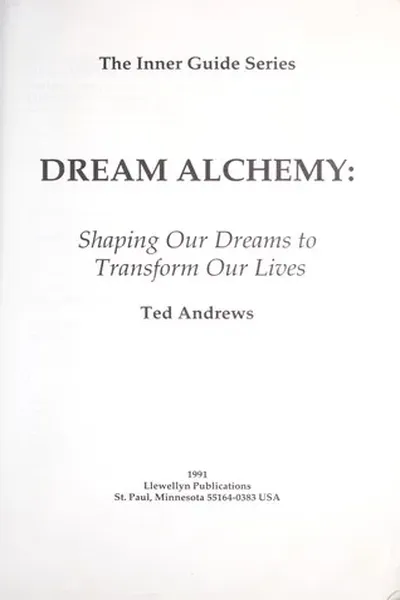
Moving beyond basic guides, intermediate texts explore more complex theories and historical contexts. 'The interpretation of dreams and moles, with other curious matters, relating to love and courtship' (Anonymous) offers insights into older traditions of dream analysis. 'The mystic oracle, or, The complete fortune-teller and dream book' (1894) presents a comprehensive compilation of divinatory practices. Arthur E. Powell's 'The Astral Body and other astral phenomena' (1927) introduces concepts of astral projection and its relation to dream states. 'Dream alchemy' by Ted Andrews bridges practical techniques with symbolic understanding.
Classical / Advanced Texts
Serious students will find value in primary sources and seminal works. Carl Gustav Jung's 'Critique of psychoanalysis' and 'Psychologie und Alchemie' are essential for understanding his analytical psychology and its application to dream symbolism, particularly the archetypal approach. Paschal Beverly Randolph's 'Tom Clark and His Wife: Their Double Dreams, And the Curious Things that Befell Them Therein; Being the Rosicrucian's Story' provides a historical Rosicrucian perspective. Guillaume de Lorris' 'Roman de la Rose' offers a significant medieval allegorical work where dreams play a crucial role.
Reading Order — Step by Step
Begin with practical, accessible guides like 'Fortunes and dreams' by Astra Cielo and 'Guide to Fortune-Telling by Dreams' for foundational understanding in Weeks 1-2. By Month 2, transition to intermediate texts such as 'The Astral Body and other astral phenomena' by Arthur E. Powell and 'Dream alchemy' by Ted Andrews to explore broader concepts. In Month 3 and beyond, engage with advanced works like Carl Gustav Jung's 'Critique of psychoanalysis' and 'Psychologie und Alchemie' for in-depth theoretical knowledge, supplemented by historical texts like 'The Philosophy of Mystery' by Walter Cooper Dendy.
Frequently Asked Questions
Which dream interpretation book should I read first?
For a beginner, 'Fortunes and dreams' by Astra Cielo or 'Guide to Fortune-Telling by Dreams' are excellent starting points. They offer practical, accessible methods for understanding common dream symbols without requiring prior knowledge.
Are dreams predictive?
Historically, many cultures viewed dreams as prophetic. Modern psychological approaches tend to see dreams as reflections of the subconscious, processing current concerns or past experiences, rather than literal predictions of the future.
How do I start interpreting my own dreams?
Begin by keeping a dream journal, noting down details immediately upon waking. Look for recurring symbols or themes. Use practical guides to explore potential meanings, but remember that the most accurate interpretation often relates to your personal experiences and feelings.
What is the difference between psychoanalysis and Jungian dream interpretation?
While both explore the subconscious, Freudian psychoanalysis often views dream symbols as representing repressed desires, particularly sexual ones. Jungian analysis, however, emphasizes archetypes and the collective unconscious, seeing dreams as a way to achieve psychological balance and individuation.
Can astrology help with dream interpretation?
Some traditions, like those found in 'Numerology, Astrology and Dreams' by Dusty Bunker, suggest a connection. Astrological charts can be analyzed in conjunction with dreams to explore potential influences or themes related to planetary positions at the time of dreaming or birth.
What are 'classical' texts in dream interpretation?
Classical texts often refer to ancient or foundational works that shaped the understanding of dreams. This can include early philosophical treatises, medieval allegories like 'Roman de la Rose', or 19th-century explorations of folklore and psychology.