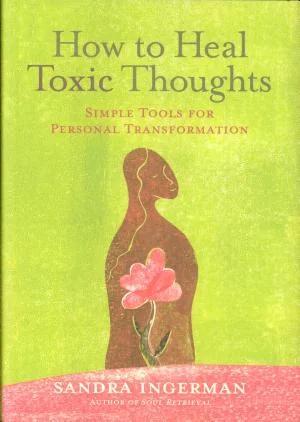
How to Heal Toxic Thoughts
 74
74

How to Heal Toxic Thoughts
Sandra Ingerman’s "How to Heal Toxic Thoughts" offers a compelling reinterpretation of alchemical principles for modern psychological distress. The central conceit – that negative thoughts are akin to internal poisons requiring alchemical transmutation – is potent and effectively articulated. Ingerman’s strength lies in her ability to bridge ancient esoteric concepts with practical, accessible techniques. The book’s initial premise, drawing parallels between physical and emotional toxicity, is particularly striking. However, while the alchemical metaphor is rich, some readers may find the practical application of "spiritual lead into gold" requires a significant leap of faith or further clarification on the precise mechanisms of this internal alchemy. A standout section details the process of identifying and disengaging from repetitive negative thought loops, offering a tangible first step for the reader. Despite the occasional abstractness, the work ultimately provides a valuable, spiritually-informed approach to mental well-being, encouraging a proactive rather than reactive stance toward inner challenges.
📝 Description
74
Sandra Ingerman's 2007 book, How to Heal Toxic Thoughts, argues negative mental states act like physical toxins.
Published in 2007, Sandra Ingerman's How to Heal Toxic Thoughts presents a framework for understanding and transforming negative mental states. The book posits that persistent negative thoughts and emotions can be as detrimental to well-being as physical toxins, leading to a range of ailments from depression to burnout. Ingerman draws upon the principles of ancient alchemy, reframing its pursuit as an internal process for transforming destructive psychological states into constructive ones. The work introduces concepts such as identifying "toxic thoughts" as distinct entities, understanding their energetic impact, and developing methods for their "transmutation." It addresses the root energetic and psychological origins of distress, offering actionable techniques grounded in spiritual psychology.
This work is intended for individuals grappling with persistent negative thought patterns, those seeking deeper self-understanding, and practitioners of spiritual or personal development. It appeals to those who believe in the power of internal alchemy to effect external change and are open to applying ancient wisdom traditions to modern psychological challenges. The 2007 publication date places it within a period of growing interest in mindfulness and alternative healing modalities.
Ingerman adapts the principles of historical alchemy, a discipline focused on transforming base metals into gold, to the inner life. This book reframes that ancient pursuit as a psychological and spiritual process, a metaphor for converting destructive mental patterns into beneficial ones. It connects this alchemical ideal to modern spiritual development, suggesting that internal transformation can lead to external well-being, a concept echoed in various contemplative traditions.
💡 Why Read This Book?
• Gain practical techniques for transforming destructive thought patterns, inspired by the specific alchemical concept of "spiritual lead into gold" as applied in the book's core methodology. • Learn to identify and address the energetic impact of "toxic thoughts," moving beyond surface-level coping to deeper psychological and spiritual healing, as explored in the book's unique framework. • Understand the historical parallels between ancient alchemical pursuits and modern psychological self-help, referencing the book's 2007 publication and its connection to broader spiritual movements of the era.
⭐ Reader Reviews
Honest opinions from readers who have explored this book.
❓ Frequently Asked Questions
What is the primary goal of Sandra Ingerman's "How to Heal Toxic Thoughts"?
The primary goal is to provide readers with methods to identify and transform negative thought patterns that are harmful to their mental and physical health, drawing parallels to ancient alchemical processes of transmutation.
When was "How to Heal Toxic Thoughts" first published?
The book was first published in 2007, placing it within the early 21st-century wave of interest in spiritual psychology and self-help.
What is the main metaphor used in the book for personal transformation?
The main metaphor is that of alchemy, specifically the process of transforming "spiritual lead into gold," representing the transmutation of negative thoughts and emotions into positive, constructive ones.
Who is Sandra Ingerman, the author?
Sandra Ingerman is an author and shamanic practitioner known for her work in soul retrieval and her integration of shamanic practices with psychological healing, with "How to Heal Toxic Thoughts" being one of her influential works.
How does the book connect physical and mental well-being?
It posits that negative feelings and thoughts can be as detrimental to one's health as physical poisons, impacting the body and leading to illness or burnout, thereby emphasizing the interconnectedness of mind and body.
What kind of strategies does the book offer?
The book offers strategies derived from ancient alchemical principles, adapted for modern use, to process harmful emotions and thoughts, aiming for a fundamental shift rather than superficial symptom management.
🔮 Key Themes & Symbolism
Inner Alchemy Metaphor
The book extensively employs the metaphor of alchemical transmutation, a historical practice focused on transforming base metals into gold. Ingerman applies this concept to the human psyche, suggesting that negative thoughts and emotions, akin to "spiritual lead," can be transformed into valuable inner resources and positive states, mirroring the alchemists' quest. This approach offers a potent, symbolic framework for psychological healing, moving beyond mere symptom reduction to fundamental inner change.
Toxicity of Thought
Central to Ingerman's thesis is the idea that certain thought patterns function as internal toxins. These are not simply unpleasant feelings but actively damaging forces that can degrade mental and physical health, leading to conditions like depression, burnout, and various illnesses. The book encourages readers to recognize these "toxic thoughts" as distinct phenomena that require active processing and neutralization, much like a physical poison would.
Processing Emotions
Beyond identifying negative states, the book provides practical strategies for processing them. This involves confronting and working through harmful emotions and thoughts rather than suppressing or avoiding them. The techniques aim to "transmute" the energetic charge of these experiences, turning potentially destructive internal forces into catalysts for growth and wisdom, aligning with the alchemical goal of refinement.
Spiritual Psychology Integration
Ingerman's work bridges the gap between spiritual traditions and psychological well-being. It draws from ancient esoteric knowledge, particularly alchemy, and frames psychological healing within a spiritual context. This integration suggests that true healing involves not just cognitive or emotional shifts but also a deeper connection to one's inner spiritual nature and the use of symbolic processes for transformation.
💬 Memorable Quotes
Direct passages from the work, attributed to the author.
“Negative feelings can be as toxic to our health as physical poisons.”
— This foundational statement from the original blurb highlights the book's core premise: that the impact of our inner emotional landscape on our physical well-being is profound and often underestimated, equating mental distress with tangible physical harm.
“Turning spiritual lead into gold.”
— This iconic alchemical phrase is recontextualized by Ingerman as the central aim of her work. It signifies the profound personal transformation possible, where difficult emotions and negative thought patterns are transmuted into wisdom, strength, and inner peace.
“Ingerman reveals the secrets of the ancient alchemists.”
— This phrase from the blurb suggests the book unpacks esoteric knowledge, making it accessible and applicable to contemporary readers seeking methods for self-improvement and healing through ancient, symbolic frameworks.
“Strategies for processing harmful thoughts and emotions.”
— This highlights the practical, actionable nature of the book. It promises readers concrete methods and techniques they can implement to actively work with and transform challenging internal experiences, rather than simply observing them.
“The original publication date of 2007.”
— This fact anchors the book in a specific historical moment, suggesting its content emerged during a period when alternative healing and spiritual psychology were gaining broader traction and accessibility.
🌙 Esoteric Significance
Tradition
This work draws primarily from the Hermetic and alchemical traditions, reinterpreting their symbolic language for psychological healing. While alchemy historically focused on material transformation, Ingerman adapts its core principles of transmutation and purification to the inner world of thoughts and emotions. It fits within a lineage of esoteric psychology that views the psyche as capable of profound transformation through symbolic processes, moving beyond literal interpretation to metaphorical understanding.
Symbolism
The central symbol is the alchemical process of transforming "lead" (negative thoughts, emotions) into "gold" (wisdom, inner peace). Another motif is the idea of "toxicity" itself, representing how certain mental states can poison one's well-being, much like historical notions of poisons in the physical realm. The concept of "transmutation" acts as a symbolic key, denoting the active, transformative process the reader undertakes.
Modern Relevance
Ingerman's approach remains relevant today, influencing contemporary spiritual teachers and practitioners who blend psychology with esoteric wisdom. Her work informs modern somatic experiencing and trauma-informed therapies that acknowledge the energetic and symbolic dimensions of emotional distress. Thinkers in consciousness studies and integrative psychology often reference such works when exploring non-ordinary states of mind and symbolic healing pathways.
👥 Who Should Read This Book
• Individuals experiencing persistent negative thought loops and emotional distress who are seeking a spiritually-informed approach beyond conventional therapy. • Students of Western Esotericism, particularly those interested in alchemy and its psychological applications, looking for a practical guide to internal transmutation. • Healers, coaches, and therapists interested in expanding their toolkit with symbolic and metaphorical techniques for facilitating client transformation.
📜 Historical Context
Published in 2007, "How to Heal Toxic Thoughts" emerged during a period of increasing public engagement with mindfulness, positive psychology, and alternative healing modalities. This era saw a confluence of scientific interest in the mind-body connection and a renewed exploration of ancient wisdom traditions for contemporary application. Ingerman's work can be seen as part of a broader movement that sought to integrate spiritual or esoteric concepts into mainstream self-help and therapeutic discourse. It followed significant popularization of shamanic practices by figures like Michael Harner and a growing interest in Jungian psychology's emphasis on archetypes and symbols. While not directly engaging with academic philosophy, its alchemical framing resonated with the ongoing scholarly interest in Hermeticism and its influence on Western thought. The book's approach, focusing on internal transformation through symbolic metaphor, distinguished it from purely cognitive-behavioral approaches prevalent at the time, offering a more spiritually grounded alternative.
📔 Journal Prompts
The process of "spiritual lead into gold": How might your most challenging thoughts be transmuted?
Identifying "toxic thoughts": What are the specific patterns you recognize in your own mind?
Reflecting on the alchemical goal: What does inner "gold" mean to you?
The energetic impact of emotions: How do you currently experience the "toxicity" of negative feelings?
Strategies for processing: Which of the book's proposed methods feel most accessible for your current challenges?
🗂️ Glossary
Toxic Thoughts
Negative, persistent, and harmful mental patterns that actively degrade an individual's psychological and physical well-being, akin to internal poisons.
Alchemical Transmutation
The core metaphor of the book, representing the process of transforming base or negative psychological states (spiritual lead) into valuable inner resources or positive states (gold).
Spiritual Lead
The symbolic representation of negative thoughts, emotions, and psychological burdens that weigh an individual down and hinder their well-being.
Spiritual Gold
The symbolic representation of inner wisdom, peace, resilience, and positive states of being achieved through the process of transforming negative psychological material.
Processing Harmful Emotions
Active techniques and methods described in the book for working with and transforming difficult feelings and thoughts, rather than suppressing or avoiding them.
Inner Alchemy
The application of alchemical principles and symbolism to the psychological and spiritual transformation of the individual, as presented in the book.
Burnout
A state of emotional, physical, and mental exhaustion caused by excessive and prolonged stress, often a consequence of unaddressed "toxic thoughts" and emotions.
This book appears in 1 collection
🔮 Readers Also Liked
Browse all →







From the “Shamanism” Collection
View all →







More Free Occult Philosophy Books
View all →