Tout le peuple l'ecoutait
 78
78

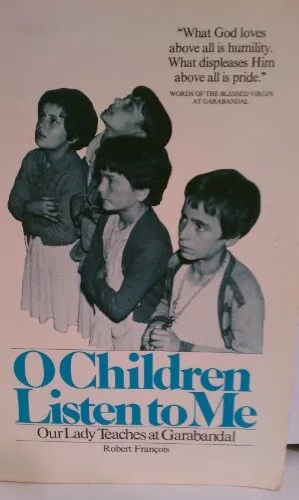
Tout le peuple l'ecoutait
Robert François’s “Tout le peuple l'ecoutait,” first appearing in 1980, offers a dense, intellectually rigorous examination of esoteric principles. It eschews the more accessible, often watered-down spiritualism that became prevalent in the same decade, instead grounding its arguments in a more traditional, almost scholastic, approach to mysticism. The book’s strength lies in its detailed exposition of concepts like energetic resonance and the symbolic language of the cosmos. However, its deliberate complexity can also be its primary limitation; the prose is demanding, requiring sustained concentration and a pre-existing familiarity with esoteric terminology. A passage discussing the 'Inner Citadel' as a locus of psychic control, for instance, exemplifies this: while rich with implication, it assumes a reader already attuned to the specific psychological frameworks being invoked. François’s work is for the dedicated student, not for those seeking quick spiritual fixes.
📝 Description
78
Robert François's 1980 work, Tout le peuple l'ecoutait, examines practical occult philosophy.
Published in 1980, Robert François's Tout le peuple l'ecoutait moves beyond theory to discuss the practical application of mystical principles. The book guides readers through complex ideas with a methodical approach, focusing on how inner states affect external manifestations. It proposes a system for understanding the subtle energies that shape reality. This volume is particularly suited for readers interested in the core texts of 20th-century esoteric movements who seek to apply metaphysical concepts in their daily lives. The work demands a serious intellectual engagement with spiritual subjects and is not for the casual reader.
François's writing connects to older, disciplined schools of thought, potentially drawing from French occult traditions predating the widespread 'New Age' phenomenon. Its detailed examination of specific concepts suggests a scholarly engagement with mysticism, distinguishing it from simpler self-help spiritualities. The book addresses the interconnectedness of consciousness and matter, the power of symbolic language, and principles of energetic resonance.
Tout le peuple l'ecoutait appeared in 1980, a time of renewed interest in Western esotericism following the counter-cultural movements of the preceding decades. This period saw many spiritual paths emerge, blending Eastern philosophies with revivals of European mystical traditions. François's book, however, maintained a connection to older, more disciplined schools of thought. It possibly drew from French occult traditions that existed before the proliferation of 'New Age' ideas, offering a more rigorous approach than many contemporary publications.
💡 Why Read This Book?
• Gain a structured understanding of energetic resonance, a core concept in many esoteric traditions, as explained through François's specific framework, offering a nuanced perspective distinct from popular New Age interpretations. • Explore the symbolic language of the cosmos, learning how François interprets specific archetypal patterns as keys to unlocking deeper meanings, providing a unique lens for analyzing symbols beyond their common associations. • Understand the principle of the 'Inner Citadel,' a concept François develops to explain psychic fortification and mental clarity, offering practical metaphysical strategies that differ from contemporary psychological self-help techniques.
⭐ Reader Reviews
Honest opinions from readers who have explored this book.
❓ Frequently Asked Questions
What is the primary focus of Robert François's 'Tout le peuple l'ecoutait'?
The book primarily focuses on the practical application of esoteric principles, exploring the connection between consciousness and the material world, the significance of symbolic language, and energetic resonance.
When was 'Tout le peuple l'ecoutait' first published?
'Tout le peuple l'ecoutait' was first published in 1980, placing it within a period of significant interest in esoteric studies following the cultural shifts of the preceding decades.
Does the book offer simple explanations of complex spiritual ideas?
No, the book is known for its intellectual rigor and dense prose, requiring a dedicated reader familiar with esoteric concepts. It offers detailed examinations rather than simplified overviews.
What esoteric traditions or concepts does the book draw upon?
While synthesizing its own perspective, the work engages with concepts such as energetic resonance, symbolic language, and the notion of 'Synchronicity,' echoing themes found in Western esoteric traditions.
Is 'Tout le peuple l'ecoutait' considered a New Age text?
It is generally considered distinct from many New Age texts of its era. François's approach is more scholarly and rooted in older esoteric disciplines, contrasting with the more accessible spiritualism common at the time.
What is the 'Inner Citadel' concept in the book?
The 'Inner Citadel' refers to a metaphorical space within the psyche that François discusses as a means of achieving psychic fortification and mental clarity through the application of esoteric principles.
🔮 Key Themes & Symbolism
Energetic Resonance
François elaborates on the principle of energetic resonance as a fundamental force shaping reality, extending beyond simple vibrational frequencies. The work posits that consciousness itself participates in this resonance, allowing for reciprocal influence between the inner world and external circumstances. This concept is presented not as a passive phenomenon but as an active principle that can be understood and, to some extent, directed. The book suggests that recognizing and working with these resonant patterns is key to manifesting desired outcomes and achieving a greater coherence between one's intentions and experiences. This framework provides a detailed perspective on how subtle energies operate and interact within the cosmic order.
Symbolic Language of the Cosmos
The book emphasizes the universe as a text written in a symbolic language, accessible through dedicated study and inner perception. François argues that symbols are not mere representations but active conduits of meaning and energy. He examines how archetypal patterns and specific motifs function as keys to understanding the deeper workings of both the macrocosm and the microcosm. This perspective moves beyond purely intellectual interpretation, suggesting that true comprehension involves a lived engagement with these symbols. The work encourages readers to see the world not just as it appears, but as a rich lexicon of signs pointing to underlying spiritual realities and universal laws.
The Inner Citadel
François introduces the concept of the 'Inner Citadel' as a vital locus of psychic stability and spiritual authority. This internal sanctuary is presented as a space that can be cultivated through disciplined esoteric practice, offering protection against psychic disturbances and external influences. It represents a state of inner coherence and self-mastery, where one's will and perception are aligned with higher principles. The book details how the development of this 'Inner Citadel' is not merely about defense but about establishing a strong foundation for conscious creation and authentic spiritual growth. It is a core element in achieving equilibrium and clarity in a chaotic world.
Consciousness and Manifestation
A central thesis of the work is the profound role of consciousness in the process of manifestation. François explores how our thoughts, beliefs, and inner states are not isolated phenomena but actively participate in shaping our perceived reality. The book outlines a sophisticated model where consciousness acts as a field that interacts with universal energies, influencing the patterns and events that manifest in our lives. This perspective goes beyond simplistic affirmations, detailing the subtle mechanisms through which intention, focus, and energetic alignment contribute to the creation of one's experience. It underscores the responsibility and power inherent in the conscious mind.
💬 Memorable Quotes
Direct passages from the work, attributed to the author.
“The world is a mirror reflecting the state of the inner observer.”
— This statement expresses the book's view on the relationship between consciousness and reality. It suggests that external circumstances are not random but are a direct consequence of one's internal landscape and perspective.
“Symbols are not dead signs, but living keys to hidden doors.”
— This highlights the book's perspective on symbolism. François posits that symbols possess inherent power and act as active agents that can unlock deeper levels of understanding and consciousness.
“Energetic resonance dictates the harmony or discord of existence.”
— This aphorism points to the foundational role of energetic principles in the book. It suggests that the quality of our energetic interactions determines the overall coherence and well-being of both the individual and the cosmos.
“The Inner Citadel is built not with stone, but with focused intention.”
— This emphasizes the psychological and spiritual nature of the 'Inner Citadel.' It is presented as a construct of the mind and will, requiring disciplined inner work rather than physical effort.
“To truly listen is to align one's being with the universal voice.”
— This interpretation of the title suggests that profound understanding and connection come from a state of deep receptivity and alignment with broader cosmic principles or a higher intelligence.
🌙 Esoteric Significance
Tradition
This work appears to draw from the broad stream of Western Esotericism, likely synthesizing elements from Hermeticism, Neoplatonism, and possibly Kabbalistic thought, though adapted into a unique framework. François's emphasis on the correspondence between the inner and outer worlds, the power of symbolic language, and the concept of energetic resonance aligns with perennialist philosophies found across these traditions. It departs from strictly adhering to any single lineage, instead constructing a cohesive system that prioritizes practical application and inner transformation, reflecting a common trend in 20th-century esoteric writing to integrate diverse sources into a personal, yet systematic, philosophy.
Symbolism
The book prominently features the concept of the 'Inner Citadel,' a symbol for a fortified psychic center achieved through disciplined inner work. Another key motif is the universe as a 'symbolic language,' where natural forms and events act as potent signs pointing to deeper spiritual realities. François likely explores archetypal symbols, perhaps referencing geometric forms or cosmic patterns, as fundamental expressions of universal laws and energies that govern existence and consciousness.
Modern Relevance
Contemporary practitioners of Western Esotericism, particularly those interested in applied metaphysics and consciousness studies, continue to find value in François's systematic approach. His ideas on energetic resonance and the power of focused intention resonate with modern concepts in quantum consciousness research and subtle energy therapies. Thinkers and groups exploring the intersection of psychology and spirituality, or those seeking to deepen their understanding of symbolic systems beyond surface-level interpretation, may draw upon this work for its rigorous conceptualization and emphasis on inner discipline.
👥 Who Should Read This Book
• Serious students of Western Esotericism: Individuals seeking to understand the foundational concepts of 20th-century esoteric thought, particularly those interested in rigorous, non-simplistic explanations of metaphysical principles. • Practitioners of occult disciplines: Those engaged in practices requiring a deep understanding of symbolic language and energetic dynamics, who will benefit from François's structured approach to these subjects. • Comparative religion scholars: Researchers interested in the evolution of spiritual thought in the late 20th century, offering insight into a more disciplined, less mainstream current of esoteric philosophy.
📜 Historical Context
Robert François's "Tout le peuple l'ecoutait," published in 1980, emerged during a vibrant, yet fragmented, period for esoteric thought. The preceding decade had seen a surge in spiritual exploration, influenced by the counterculture and increased access to Eastern philosophies. However, by 1980, the landscape was diversifying. While the "New Age" movement was gaining momentum with its often eclectic and accessible approaches, authors like François represented a current that sought to maintain a connection to more rigorous, historically grounded esoteric disciplines. His work can be seen as a response to, or at least a contrast with, the more superficial spiritualities proliferating at the time. He engaged with concepts that echoed earlier occult revivals and Hermetic traditions, distinguishing his approach from the more psychologized or therapeutically focused spiritualities that were also gaining traction. The book's detailed conceptual framework suggests an intellectual lineage that valued depth and systematic study over popular appeal, positioning it within a niche of serious esoteric scholarship.
📔 Journal Prompts
The symbolic language of the cosmos: How does the concept of the universe as a text written in symbols apply to a recent significant event in your life?
Reflect on the 'Inner Citadel': What are the primary external influences that challenge your sense of inner stability, and how might cultivating an 'Inner Citadel' address them?
Energetic resonance: Identify an instance where you felt a strong energetic resonance (positive or negative) with a person, place, or idea, and analyze its potential meaning.
The observer's mirror: Consider a recurring pattern in your external life; how might this pattern be a reflection of your current inner state or belief system?
Universal voice: Describe a moment when you felt a sense of profound alignment or understanding, akin to 'listening to the universal voice.'
🗂️ Glossary
Energetic Resonance
The principle by which distinct energetic frequencies or patterns interact, leading to sympathetic vibrations, attraction, or repulsion. In this context, it extends to the interaction of consciousness and subtle energies.
Symbolic Language
The idea that the universe communicates through archetypal forms, signs, and patterns that hold deeper meanings accessible through intuition and dedicated study, beyond literal interpretation.
Inner Citadel
A metaphorical internal space of psychic stability, mental clarity, and spiritual fortitude cultivated through disciplined esoteric practice and focused intention.
Synchronicity
Meaningful coincidences that suggest an underlying order or connection between the subjective inner world and objective external events, viewed as more than mere chance.
Manifestation
The process by which thoughts, intentions, and energetic states influence and shape external reality, leading to the appearance of specific circumstances or events.
Consciousness Field
The concept that consciousness operates as an interactive field capable of influencing and being influenced by subtle energies and the fabric of reality.
Microcosm/Macrocosm
The principle of correspondence stating that the smaller world (microcosm, the individual) reflects the structure and laws of the larger world (macrocosm, the universe), and vice versa.
🔮 Readers Also Liked
Browse all →







More by Robert François
All books →
More Free Occult Philosophy Books
View all →