Dreams
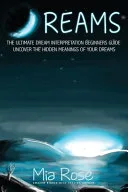
 80
80

Dreams
Mia Rose’s "Dreams" attempts to bridge the gap between the ephemeral nature of dreams and the reader's desire for concrete understanding. The strength of the book lies in its accessible approach to complex psychological concepts, making dream interpretation feel less daunting. Rose effectively prompts readers to consider their personal associations with dream symbols, rather than relying on universal, often inaccurate, dictionary definitions. A limitation, however, is the occasional lack of depth when discussing the more esoteric implications of dream symbolism. For instance, the exploration of recurring dream figures could benefit from more detailed engagement with Jungian archetypes or alchemical parallels. Rose’s encouragement to journal dream experiences is a practical and valuable takeaway, fostering a sustained engagement with the material. "Dreams" serves as a solid, if introductory, primer for the aspiring dream interpreter.
📝 Description
80
Mia Rose's Dreams, published December 24, 2019, deciphers the unconscious through nocturnal visions.
Dreams, by Mia Rose, aims to help readers understand the symbolic language of their unconscious mind. It moves past simple dream dictionaries to discuss the personal and spiritual meaning of nighttime visions. The book is for people interested in the messages their dreams convey, especially those who feel a gap between their waking lives and the vivid images they experience while sleeping. It suits beginners who want to find personal meaning and those already involved in spiritual or psychological self-study.
Rose guides readers to identify recurring motifs and connect them to their inner states and life situations. The goal is to encourage a more active conversation with the dream world. The book introduces ideas like archetypal imagery, personal symbolism, and how dreams contribute to spiritual growth.
Published in late 2019, Dreams engages with a modern interest in Jungian psychology and dream analysis, traditions that look to dreams as keys to the unconscious. This work acknowledges a long history of dream interpretation, stretching from ancient oracular practices to contemporary psychoanalytic methods. It places itself within this lineage, seeking to connect individual dream experiences to broader psychological and spiritual understanding.
💡 Why Read This Book?
• Gain practical methods for decoding personal dream symbols, moving beyond generic interpretations by focusing on your unique associations as Rose suggests. • Understand the role of dreams in spiritual development, learning to recognize messages from your subconscious as outlined in the book's approach. • Develop a consistent dream journaling practice, a core technique recommended by Mia Rose to foster a deeper connection with your inner world.
⭐ Reader Reviews
Honest opinions from readers who have explored this book.
❓ Frequently Asked Questions
What is the publication date of Mia Rose's "Dreams"?
Mia Rose's "Dreams" was first published on December 24, 2019. This date places it within a contemporary resurgence of interest in esoteric and psychological self-help literature.
Does "Dreams" by Mia Rose offer interpretations for common dream symbols?
While "Dreams" encourages personal interpretation, it also guides readers on how to approach common symbols, emphasizing the importance of individual context over generic definitions as Rose explains.
Is Mia Rose's "Dreams" suitable for beginners in dream analysis?
Yes, the book is designed for those new to dream interpretation. It offers clear explanations and practical exercises to help beginners understand their dreams' hidden meanings.
What is the primary goal of reading Mia Rose's "Dreams"?
The primary goal is to learn how to interpret the hidden meanings of your dreams, understand their connection to your spiritual self, and utilize this knowledge for personal growth.
Does the book discuss the spiritual significance of dreams?
Yes, "Dreams" explores the spiritual dimension of dreaming, suggesting that dreams can offer guidance and insights into one's spiritual journey and connection to a deeper self.
Where can I find more information about interpreting dreams from an esoteric perspective?
Mia Rose's "Dreams" itself is a valuable resource for esoteric dream interpretation, offering methods and concepts grounded in psychological and spiritual understanding.
🔮 Key Themes & Symbolism
Personal Symbolism
The work emphasizes that dream symbols are not universally fixed but deeply personal. Rose guides readers to connect dream imagery with their own life experiences, memories, and emotional states. This approach moves away from rigid dream dictionaries, suggesting that the true meaning of a symbol like a 'house' might represent the dreamer's psyche, physical body, or a specific life situation, depending on individual associations.
Spiritual Connection
"Dreams" posits that our nocturnal visions serve as a conduit to our spiritual selves or a higher consciousness. The book explores how recurring dreams or particularly vivid ones can offer guidance, warnings, or affirmations pertinent to the dreamer's spiritual path. It encourages seeing dreams not as random neural firings but as meaningful dialogues from within.
Dream Interpretation Techniques
Rose outlines practical methods for engaging with dreams, including the importance of dream journaling and active reflection. The book advocates for exploring the emotional tone of a dream, identifying key figures and scenarios, and considering how these elements might mirror waking life challenges or desires, thereby facilitating self-understanding.
Archetypal Imagery
While focusing on personal meaning, the work also touches upon the concept of universal archetypes present in dreams, echoing Jungian thought. It suggests that certain powerful images or characters may tap into collective human experiences, providing a deeper layer of interpretation beyond the individual's immediate life circumstances.
💬 Memorable Quotes
Direct passages from the work, attributed to the author.
“The feeling that a dream really meant something, but not knowing the meanings behind the strange images.”
— This captures the common human experience of waking with a sense of dream significance, highlighting the core problem Rose's book addresses: the gap between intuitive recognition and conscious understanding of dream messages.
“Millions of people also ignores the meaning of these dreams not knowing how to interpret them.”
— This points to the widespread nature of dream neglect, suggesting that a lack of accessible tools or knowledge prevents many from accessing the potential insights their dreams offer for self-awareness.
“Learn To Interpret the Hidden Meaning of Your Dreams from Best Selling Author Mia Rose”
— This phrase frames the book as a practical learning resource, positioning Mia Rose as an authority who can guide readers toward unlocking the subconscious messages within their dreams.
“their connections with their spiritual se”
— This fragment suggests the book's aim to link dream interpretation with a broader spiritual context, implying that dreams are not merely psychological phenomena but also conduits for spiritual insight and connection.
“Have you ever woken with the feeling that the dream you've just had really meant something”
— This opening question directly engages the reader, tapping into a relatable experience and establishing the premise that dreams hold significant, albeit often obscured, meaning.
🌙 Esoteric Significance
Tradition
This work fits within the modern esoteric tradition that draws heavily from Jungian psychology, blending psychological insights with spiritual exploration. It aligns with contemporary New Age and self-help movements that view dreams as a direct line to the inner self and a source of spiritual guidance, rather than solely as products of the personal unconscious or pathology.
Symbolism
The book likely explores symbols such as water (representing emotions or the unconscious), flying (freedom or detachment), and falling (loss of control or regression). In esoteric traditions, these often symbolize transitions, emotional states, or spiritual journeys. For instance, water might relate to the subconscious depths in Hermeticism, while falling could signify a descent into the lower self or a necessary surrender.
Modern Relevance
Contemporary practices in mindfulness, shadow work, and even certain therapeutic modalities like Internal Family Systems (IFS) echo the book's emphasis on understanding inner voices and symbolic language. Thinkers and practitioners exploring lucid dreaming or the integration of dream work into daily spiritual practice find resonance with Rose's accessible approach.
👥 Who Should Read This Book
• Individuals seeking to understand their subconscious mind, particularly those experiencing vivid or recurring dreams that feel significant. • Beginners in dream analysis who want a practical, step-by-step guide to interpreting personal dream symbolism without complex jargon. • Those interested in the spiritual or psychological aspects of dreaming, looking to connect their nocturnal experiences with personal growth and self-awareness.
📜 Historical Context
Published in late 2019, Mia Rose's "Dreams" arrives in an era marked by a sustained public fascination with psychology, spirituality, and self-discovery. It taps into a lineage of dream interpretation that spans from ancient divinatory practices to the 20th-century psychoanalytic work of figures like Sigmund Freud and Carl Jung, who both explored dreams as keys to the unconscious. While Freud focused on repressed desires, Jung expanded the concept to include archetypes and the collective unconscious. "Dreams" operates within this broader Jungian framework, emphasizing personal meaning and spiritual connection over purely pathological interpretations. The book's publication context is one where online resources and popular psychology books frequently address dream analysis, yet often lack the depth found in more scholarly traditions. Its reception, though not widely documented in major academic circles, likely contributes to the ongoing popular engagement with esoteric and psychological self-help literature.
📔 Journal Prompts
The feeling of a dream meaning something, and its personal significance.
Interpreting the strange images within your dreams.
Identifying connections between dreams and your spiritual self.
Recalling and analyzing recurring dream motifs.
The role of personal associations in dream interpretation.
🗂️ Glossary
Archetype
Universal, archaic patterns and images that derive from the collective unconscious and are the psychic counterpart of a biological or instinctual factor.
Subconscious Mind
A part of the mind of which one is not aware but which influences one's behavior and feelings; often used interchangeably with unconscious.
Dream Dictionary
A reference book or list that assigns fixed meanings to dream symbols, often criticized for ignoring personal context.
Symbolism
The use of symbols to represent ideas or qualities, particularly in the context of dreams where images stand for deeper concepts.
Nightmare
A frightening or distressing dream, often interpreted as a manifestation of unresolved fears or anxieties.
Lucid Dreaming
The phenomenon of becoming aware that one is dreaming while the dream is still occurring, sometimes allowing for conscious control.
Collective Unconscious
A concept introduced by Carl Jung, referring to a deeper layer of the unconscious psyche shared by all humans, containing archetypes.