Homeopathy

 71
71

Homeopathy
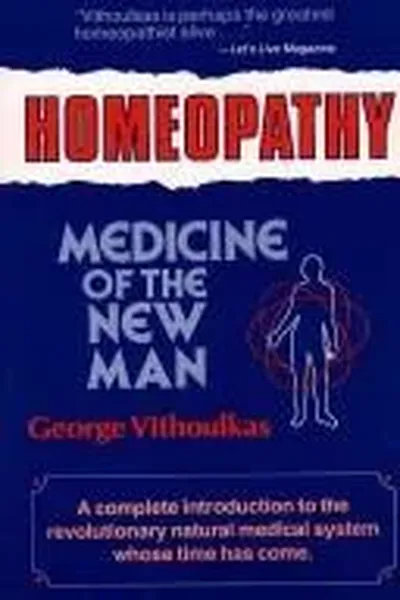
George Vithoulkas’s Homeopathy is a dense, authoritative exploration of a system that demands rigorous adherence to its own logic. Vithoulkas, a prominent figure in the field since the mid-20th century, presents homeopathy not as a fringe therapy but as a sophisticated science of healing based on energetic principles. His strength lies in his methodical approach, dissecting the philosophy and practice with an academic rigor that distinguishes his work from more superficial treatments of the subject. The detailed examination of the vital force and the totality of symptoms provides a compelling framework for understanding the homeopathic perspective. However, the text’s sheer depth can be a barrier for newcomers; its intricate theoretical discussions, while illuminating for the initiated, might prove overwhelming for those unacquainted with Vithoulkas’s specific lineage of homeopathic thought or the broader vitalistic traditions. A particularly striking passage involves his detailed explanation of how a single remedy can address a complex array of seemingly disparate symptoms by targeting the root disturbance of the vital force. This book serves as an essential, albeit challenging, reference for dedicated students of classical homeopathy.
📝 Description
71
George Vithoulkas's 1985 book, Homeopathy, explains healing through "like cures like."
This work presents homeopathy as a system where highly diluted substances, which mimic illness symptoms in larger doses, stimulate the body's natural healing capacity. It goes beyond a mere list of remedies to detail the philosophy and practice of classical homeopathy. Vithoulkas emphasizes treating the patient holistically, considering physical, mental, and emotional symptoms to choose the correct remedy. The book aims to clarify how these subtle energetic treatments can bring about balance.
It is aimed at students and practitioners of homeopathy who want a deeper grasp of its core principles and advanced uses. Individuals interested in alternative medicine, vitalistic philosophies, or non-conventional energetic health models will also find value. Those curious about the historical roots and theoretical basis of Vithoulkas's approach will encounter substantial information. Engaging with its complex ideas, which extend beyond symptom management, requires dedication.
Published in 1985, Vithoulkas's Homeopathy situates itself within vitalistic traditions that posit an animating life force distinct from purely material processes. This perspective, dating back to Hahnemann's late 18th-century work, contrasts with reductionist views of disease. The book elaborates on a method of healing that uses energetic signatures of substances to interact with this vital force, aiming for a restoration of balance rather than direct symptom suppression. It contributes to a lineage of thought that views health as a dynamic equilibrium influenced by subtle energies.
💡 Why Read This Book?
• Gain a precise understanding of the "law of similars" as articulated by Vithoulkas, moving beyond the common "like cures like" simplification to grasp its energetic implications for stimulating healing. • Learn the critical importance of the "totality of symptoms" in classical homeopathy, appreciating how Vithoulkas guides practitioners to assess physical, mental, and emotional indicators for accurate remedy selection. • Explore the concept of the "vital force" as presented by Vithoulkas, understanding its role in health and disease within his vitalistic framework, which differs significantly from purely materialistic medical models.
⭐ Reader Reviews
Honest opinions from readers who have explored this book.
❓ Frequently Asked Questions
What is the central principle of homeopathy as explained by George Vithoulkas?
The central principle is "similia similibus curentur," or "like cures like." Vithoulkas explains this as using highly diluted substances that, in larger doses, cause symptoms similar to the illness, to stimulate the body's own healing response.
When was George Vithoulkas's book on homeopathy first published?
George Vithoulkas's seminal work on homeopathy was first published in 1985, establishing itself as a key text in the field during a period of growing interest in alternative medicine.
What does Vithoulkas mean by the 'vital force' in homeopathy?
The 'vital force' refers to an animating, energetic principle that Vithoulkas posits is responsible for maintaining health. He argues that illness arises when this force is disturbed, and homeopathic remedies work to restore its balance.
How does Vithoulkas approach remedy selection in his book?
Vithoulkas emphasizes selecting remedies based on the "totality of symptoms"—a comprehensive picture including physical, mental, and emotional characteristics of the patient. This holistic approach guides the choice of the most similar substance.
Is this book suitable for beginners in homeopathy?
While comprehensive, the book delves into complex philosophical and practical aspects. It is best suited for students and practitioners with some foundational knowledge, rather than absolute beginners seeking a basic introduction.
🔮 Key Themes & Symbolism
The Vital Force
Vithoulkas posits the existence of a 'vital force' as the animating principle of life, central to health and disrupted in disease. This energetic concept underscores the vitalistic underpinnings of his homeopathic philosophy. The book details how this force manifests and how its imbalance leads to various ailments. Understanding the vital force is presented as crucial for comprehending how subtle homeopathic remedies can effect profound healing, not by directly attacking disease, but by rebalancing this fundamental life energy. This perspective offers an alternative to purely biochemical or mechanical models of health.
Totality of Symptoms
A core part of Vithoulkas's method is the "totality of symptoms," which goes beyond mere physical complaints. It encompasses the unique, peculiar, and characteristic symptoms of the individual, including mental states, emotional dispositions, and general modalities (what makes symptoms better or worse). The work meticulously outlines how a practitioner must gather this complete picture to accurately match a remedy, ensuring that the chosen substance addresses the entirety of the patient's disturbed state, not just isolated manifestations. This holistic case-taking is presented as the art of classical homeopathy.
Similia Similibus Curentur
The ancient principle 'like cures like' is explored in depth, moving beyond its simplistic interpretation. Vithoulkas explains how substances that produce specific symptom pictures in a healthy person can, when prepared as highly diluted homeopathic remedies, stimulate the vital force to resolve similar symptom pictures in a sick person. The book elaborates on the energetic nature of this interaction, suggesting that the remedy provides a subtle energetic stimulus that speaks to and corrects the underlying energetic disturbance of the vital force, thereby initiating the healing process.
Potency and Dilution
Vithoulkas addresses the often-misunderstood concept of homeopathic potency, which is achieved through serial dilution and succussion (vigorous shaking). He explains how these processes are believed to increase the energetic or dynamic power of a substance, rather than diminishing its medicinal effect. The work provides a rationale for how these infinitesimally small doses, often beyond the point of containing even a single molecule of the original substance, can exert a profound influence on the vital force. This aspect highlights the subtle, energetic dimension central to homeopathic practice as taught by Vithoulkas.
💬 Memorable Quotes
Direct passages from the work, attributed to the author.
“The whole of homeopathy is based on the law of similars.”
— This statement expresses the foundational principle of homeopathy, emphasizing that the selection of a remedy is intrinsically tied to its ability to produce symptoms similar to those experienced by the patient. It underscores the core tenet that drives the entire system of treatment.
“The vital force is the animating principle of life.”
— This defines the central concept of the vital force, positing it as the essential energetic element that sustains life and health. Its disruption is seen as the root cause of illness, making its restoration the ultimate goal of homeopathic intervention.
“We must consider the totality of the symptoms.”
— This highlights the holistic approach to diagnosis and treatment in homeopathy, stressing the need to observe and address all aspects of a patient's condition – physical, mental, and emotional – rather than focusing on isolated symptoms.
“Potentization is the process that makes a substance energetically active.”
— This interpretation clarifies the meaning of 'potentization' in homeopathy, referring to the serial dilution and succussion process. It asserts that this method imbues the substance with a subtle energetic power crucial for its therapeutic action.
“Homeopathy aims to stimulate the body’s self-healing capacity.”
— This concisely states the therapeutic goal of homeopathy. It frames the intervention not as an external force overpowering disease, but as an internal stimulation that activates the organism's innate ability to restore itself to health.
🌙 Esoteric Significance
Tradition
Vithoulkas's work draws heavily from the vitalistic and energetic traditions, which have roots in ancient philosophies but were significantly developed in Western esotericism through figures like Paracelsus and later, Samuel Hahnemann. While not strictly Hermetic or Kabbalistic, it aligns with esoteric principles that emphasize the existence of subtle energies beyond the purely material. It represents a modern manifestation of the perennial philosophy’s interest in unseen forces governing health and existence, distinct from but often overlapping with Theosophical concepts of 'life force' or 'prana'.
Symbolism
The primary 'symbol' is the remedy itself, acting as a symbolic representation of the illness it is meant to cure via the law of similars. The process of dilution and succussion (potentization) can be seen as a symbolic transformation, turning a material substance into a refined energetic signal. The 'vital force' acts as a symbolic locus for the body's inherent intelligence and capacity for healing, a guiding principle that orchestrates well-being.
Modern Relevance
Vithoulkas's rigorous articulation of homeopathic principles continues to inform contemporary practitioners and students. His emphasis on the vital force and the totality of symptoms is echoed in various holistic health movements, including functional medicine and certain branches of naturopathy that seek to address root causes and individual constitutions. His work remains a key reference point for those exploring energetic medicine and the philosophical underpinnings of healing systems that operate outside conventional paradigms.
👥 Who Should Read This Book
• Aspiring and practicing homeopaths seeking to deepen their understanding of classical principles and Vithoulkas's systematic approach to case analysis and remedy selection. • Students of vitalistic philosophies and energetic medicine interested in how non-material forces are theorized to influence health and disease. • Researchers and practitioners of complementary and alternative medicine (CAM) looking to grasp a foundational text that shaped modern homeopathic practice and its theoretical framework.
📜 Historical Context
George Vithoulkas’s Homeopathy, first published in 1985, appeared during a significant resurgence of interest in alternative healing modalities. This period saw growing dissatisfaction with the side effects and limitations of conventional medicine, leading many to explore vitalistic and holistic approaches. Vithoulkas’s work contributed to this trend by offering a highly structured and philosophical defense of classical homeopathy, positioning it as a sophisticated system of medicine. His approach stood in contrast to the increasingly mechanistic and reductionist tendencies in biomedical research that dominated the late 20th century. While Hahnemann had laid the groundwork in the early 19th century, Vithoulkas’s 1985 text provided a contemporary articulation, engaging with a global audience seeking comprehensive health alternatives. His influence grew alongside figures like Rudolf Steiner, who also explored energetic and holistic concepts, though from a different philosophical base.
📔 Journal Prompts
The vital force as the animating principle: how does this concept differ from purely physical explanations of health?
Reflect on the 'totality of symptoms' and its implications for understanding individual versus generalized disease patterns.
Consider the principle of 'like cures like' (similia similibus curentur) and its energetic interpretation.
Analyze the process of potentization: what does it symbolize about the transformation of matter into energy in healing?
How might the concept of the vital force inform your personal approach to well-being?
🗂️ Glossary
Vital Force
The animating, energetic principle that Vithoulkas posits is responsible for maintaining health. Its disturbance leads to illness, and its restoration is the aim of homeopathic treatment.
Similia Similibus Curentur
Latin for 'like cures like,' the fundamental principle of homeopathy. It states that a substance capable of producing certain symptoms in a healthy person can cure similar symptoms in a sick person.
Totality of Symptoms
The complete picture of a patient's condition, encompassing physical, mental, and emotional symptoms, as well as general modalities, used for accurate homeopathic remedy selection.
Potentization
The process of preparing homeopathic remedies through serial dilution and succussion (vigorous shaking), believed to increase the energetic power of the substance.
Materia Medica
A comprehensive reference work describing the medicinal effects of substances on the human body, used in homeopathy to identify appropriate remedies based on symptom profiles.
Succussion
The process of vigorously shaking a diluted substance during the preparation of homeopathic remedies, considered essential for increasing its energetic potency.
Modality
Factors that can make a symptom or condition better or worse, such as heat, cold, time of day, or certain movements, which are crucial in homeopathic case-taking.
🔮 Readers Also Liked
Browse all →









More by George Vithoulkas
All books →




More Free Occult Philosophy Books
View all →