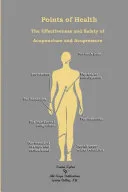
Points of Health The Effectiveness and Safety of Acupuncture and Acupressure
 79
79

Points of Health The Effectiveness and Safety of Acupuncture and Acupressure
Irwin Tyler's "Points of Health" offers a commendable exploration of acupuncture and acupressure, moving beyond simplistic explanations to address the underlying mechanics of these ancient healing arts. The book's strength lies in its clear articulation of how these practices interface with the body's own regulatory systems, providing a solid rationale for their efficacy. Tyler effectively contrasts the holistic perspective with conventional medicine, a point well-made in his discussion of illness prevention versus symptom management. However, the initial chapters, while informative, occasionally verge on overly broad comparisons that might alienate readers already familiar with CAM. A more focused engagement with specific meridian theory, perhaps referencing the foundational texts of the Yellow Emperor's Classic, could have further anchored the work. Nevertheless, Tyler presents a balanced and accessible argument for the effectiveness and safety of these time-tested therapies.
📝 Description
79
Irwin Tyler's 1993 book details acupuncture and acupressure's health benefits.
This volume examines the principles and applications of acupuncture and acupressure, presenting them as potent methods for health maintenance and illness prevention. It contrasts their holistic approach with conventional Western medicine, highlighting their capacity to bolster the body's innate healing mechanisms rather than solely treating symptoms. The work seeks to demystify these ancient practices, making their effectiveness and safety accessible to a broader audience.
Individuals interested in complementary and alternative medicine, particularly those seeking non-pharmacological approaches to health, will find this book useful. It caters to both practitioners looking to deepen their understanding of these techniques and patients curious about their potential benefits for various ailments. Those who value preventative health strategies and a balanced, body-centered approach to wellness will find this book relevant.
The book explores the energetic pathways, or meridians, within the body and how specific points along these channels can be stimulated to influence physiological functions. It details the mechanisms by which acupuncture (using needles) and acupressure (using finger pressure) can alleviate pain, reduce stress, and restore systemic balance. The emphasis is on understanding the 'why' behind their effectiveness, moving beyond mere symptomatic relief to address root causes of imbalance.
Originating in ancient China over 4,500 years ago, acupuncture and acupressure are among the world's oldest continuously practiced medical systems. These therapies are grounded in the concept of 'Qi,' or vital energy, flowing through specific pathways known as meridians. This book places these practices within the broader tradition of holistic healing, recognizing their long history of empirical success that predates modern biomedical paradigms and often aligns with spiritual development paths.
💡 Why Read This Book?
• Learn how over 4,500 years of empirical healing with acupuncture and acupressure can offer alternatives to conventional symptom-based treatments, as detailed in the historical context. • Understand the fundamental concept of Qi and meridian pathways, gaining insight into the energetic basis of these practices and how stimulating specific points restores balance. • Evaluate the safety and effectiveness of these modalities for preventative health and managing various conditions, moving beyond anecdotal evidence to a reasoned explanation of their mechanisms.
⭐ Reader Reviews
Honest opinions from readers who have explored this book.
❓ Frequently Asked Questions
What is the primary difference between acupuncture and acupressure as explained in 'Points of Health'?
The book clarifies that while both therapies target specific points on the body's meridians, acupuncture utilizes fine needles for stimulation, whereas acupressure employs firm finger pressure, offering distinct yet related approaches to restoring energetic balance.
How does 'Points of Health' address the safety of acupuncture and acupressure?
Irwin Tyler emphasizes the inherent safety of these practices when performed correctly, noting their long history of use with minimal adverse effects compared to some conventional medical interventions.
What historical period does the book reference for the origins of acupuncture and acupressure?
The book points to a history spanning over 4,500 years, originating in ancient China, to establish the deep empirical roots and longevity of these healing methods.
Can 'Points of Health' help someone understand how these therapies prevent illness, not just treat it?
Yes, the book dedicates significant attention to the holistic principle of preventing illness by maintaining the body's natural balance and reinforcing its defenses, a key tenet of these ancient practices.
What is the central concept discussed regarding how these therapies work?
The core concept explored is the flow of vital energy, or Qi, through specific pathways known as meridians. Stimulating points along these meridians is presented as the mechanism for influencing health.
Is this book suitable for someone new to holistic medicine?
Absolutely. 'Points of Health' is designed to demystify acupuncture and acupressure, explaining their principles and applications in an accessible manner for newcomers to holistic healing approaches.
🔮 Key Themes & Symbolism
Holistic Health Philosophy
This work champions a rethinking from reactive symptom treatment to proactive health cultivation. It posits that true wellness arises from internal balance, a state actively fostered by modalities like acupuncture and acupressure. Unlike conventional approaches that often focus on disease, these practices aim to strengthen the body's inherent capacity to prevent illness and maintain vitality. The book frames this not as a fringe idea but as a return to ancient wisdom that predates modern medical specialization.
Energetic Meridian Theory
Central to the book's explanation is the concept of Qi, or vital energy, flowing through a network of invisible pathways called meridians. Tyler elucidates how blockages or imbalances in this flow lead to disharmony and disease. Acupuncture and acupressure are presented as precise tools to unblock these pathways and restore the harmonious circulation of Qi, thereby addressing the root cause of many health issues. This energetic perspective offers a unique lens through which to view bodily function and dysfunction.
Comparative Healing Modalities
The text critically compares the effectiveness and safety profiles of acupuncture and acupressure against conventional Western medicine. It argues that while Western medicine excels in acute care, holistic therapies offer superior long-term solutions for chronic conditions and preventative health. By detailing the mechanisms of action for both approaches, the book empowers readers to make informed choices about their healthcare, highlighting where ancient practices may offer a more balanced and sustainable path to well-being.
Empirical Foundation of Ancient Practices
Tyler underscores the millennia-long empirical evidence supporting acupuncture and acupressure. These are not theoretical constructs but therapies refined through continuous application over 4,500 years. The book draws attention to this extensive history of successful healing as a evidence of their inherent efficacy and safety, challenging the notion that only recently developed scientific methods can validate therapeutic approaches.
💬 Memorable Quotes
Direct passages from the work, attributed to the author.
“Holistic medicine has a very special concern - preventing illness and maintaining health.”
— This statement expresses the book's core philosophy, positioning proactive wellness and preventative care as paramount, a distinct focus compared to reactive symptom management often seen in conventional medicine.
“Acupuncture and Acupressure have over 4,500 years of recorded healings.”
— This highlights the profound historical depth and empirical validation of these practices, suggesting their efficacy is not a recent discovery but a time-tested tradition.
“This book explains how they work and why, for many kinds of health problems, it is a better healing approach than conventional [medicine].”
— The author asserts a comparative advantage for acupuncture and acupressure in specific health contexts, promising a rational explanation for their effectiveness beyond mere tradition.
“While conventional medicine has a powerful arsenal of weapons to coax the ill body back to health, holistic medicine uses a wider range of therapies which reinforce the body's own defenses to restore balance.”
— This interpretation emphasizes the difference in approach: conventional medicine actively intervenes, while holistic medicine empowers the body's intrinsic healing capabilities, promoting self-regulation and balance.
“reinforce the body's own defenses to restore balance.”
— This concise phrase captures the essence of the holistic approach discussed, focusing on strengthening internal resilience and promoting equilibrium as the foundation for health and recovery.
🌙 Esoteric Significance
Tradition
This work intersects with the Hermetic tradition by exploring the concept of 'As Above, So Below' applied to the human body. While not explicitly Hermetic, its focus on vital energy (Qi) and interconnectedness aligns with perennialist philosophies that view underlying universal forces governing both macrocosm and microcosm. It departs from more mystical Hermeticism by emphasizing empirical observation and physiological explanation, grounding its esoteric concepts in tangible health outcomes.
Symbolism
The primary 'symbol' explored is the meridian, an invisible energetic pathway. These pathways can be seen as symbolic representations of interconnectedness and flow, akin to the 'channels' or 'streams' often discussed in mystical traditions. The 'points' themselves act as symbolic access points to this energetic network, allowing for targeted intervention to restore balance, mirroring the Hermetic principle of sympathetic magic where influencing a part affects the whole.
Modern Relevance
Contemporary practitioners of Traditional Chinese Medicine (TCM), acupuncturists, and acupressure therapists continue to draw upon the principles outlined in works like Tyler's. Furthermore, the growing fields of integrative medicine and mind-body wellness echo the book's emphasis on holistic health and the body's self-healing capacities. Thinkers in the wellness movement who advocate for preventative care and natural therapies often find resonance with the foundational ideas presented here.
👥 Who Should Read This Book
['• Patients seeking detailed, rational explanations for the effectiveness and safety of acupuncture and acupressure as alternatives or complements to conventional treatments.', '• Holistic health practitioners aiming to deepen their understanding of meridian theory and energetic balancing beyond basic technique application.', '• Researchers and students of comparative medicine interested in the historical development and empirical basis of non-Western healing modalities.']
📜 Historical Context
Published in 2013, Irwin Tyler's "Points of Health" emerged during a period of burgeoning interest in complementary and alternative medicine (CAM) within Western healthcare discourse. While acupuncture had gained significant traction since the Nixon-era 'ping-pong diplomacy' of the 1970s, many practitioners and patients still sought clearer explanations of its mechanisms and safety. The work engages with the established discourse on holistic health, which gained momentum through figures like Andrew Weil and Deepak Chopra, contrasting it with the dominant biomedical model. Tyler's text positions itself within this broader intellectual current, seeking to explain ancient Chinese medical practices for a contemporary audience. It arrived at a time when medical journals were increasingly publishing studies on acupuncture, though debates continued regarding placebo effects and standardization. The work implicitly argues for the empirical validity of practices that had been validated over millennia, a stance that often contrasted with the reductionist approaches prevalent in pharmaceutical-driven medicine.
📔 Journal Prompts
The concept of Qi flow through meridians: How might imbalances in this flow manifest in your daily life?
The 4,500-year history of acupuncture and acupressure: What does this longevity suggest about human resilience and healing?
Comparing conventional medicine's 'arsenal of weapons' with holistic medicine's reinforcement of 'body's own defenses': Which approach currently dominates your healthcare decisions?
The effectiveness and safety of these modalities: What specific health concerns could you explore using acupuncture or acupressure based on the book's insights?
Restoring balance: What personal practices could you integrate to better reinforce your body's own defenses?
🗂️ Glossary
Acupuncture
A therapeutic technique originating in ancient China, involving the insertion of fine needles into specific points on the body's energy pathways (meridians) to stimulate healing and restore balance.
Acupressure
A therapeutic technique similar to acupuncture, but utilizing firm finger pressure instead of needles to stimulate specific points on the body's meridians, aiming to release blockages and promote healing.
Qi (Chi)
The fundamental concept in Traditional Chinese Medicine representing vital life force or energy that flows throughout the body, influencing health and well-being.
Meridians
Specific, invisible pathways or channels within the body through which Qi is believed to flow. These pathways connect different organs and bodily systems.
Holistic Medicine
An approach to healthcare that emphasizes the interconnectedness of mind, body, and spirit, focusing on overall wellness and the prevention of illness rather than just treating symptoms.
Conventional Medicine
The system of medicine commonly practiced in Western countries, typically based on scientific research, pharmaceuticals, surgery, and the treatment of specific diseases or symptoms.
Balance
In the context of this book, refers to the harmonious state of the body's energetic systems (like Qi flow) and physiological functions, crucial for maintaining health and preventing illness.