Paintings of Master Qi Gong
 74
74

Paintings of Master Qi Gong
The sheer volume of work presented in *Paintings of Master Qi Gong* is impressive, offering a broad survey of the artist's output. WANG Jihui's translations of the accompanying captions are clear, facilitating access for an English-speaking audience. However, the book’s presentation, while rich in imagery, could benefit from more in-depth critical analysis. A specific passage detailing the artist's use of negative space in his landscapes, for instance, is present but lacks deeper interpretive context. While the reproductions themselves are of high quality, a more extensive discussion of Qi Gong's influences, perhaps referencing contemporaries like Zhang Daqian or Fu Baoshi, would have enriched the scholarly value. Nevertheless, for visual appreciation and initial exposure to Qi Gong's distinct style, the book serves its purpose.
📝 Description
74
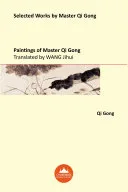
Paintings of Master Qi Gong, translated by WANG Jihui, brings over two hundred full-color artworks to English readers for the first time.
This volume presents more than two hundred full-color reproductions of paintings and calligraphy by the artist Qi Gong. Translated by WANG Jihui, it is the first time these works are available in English. The collection offers a comprehensive look at the artist's visual output, spanning both traditional ink wash painting and calligraphy.
Qi Gong's artistic career began in the latter half of the 20th century. His work appeared during a time of China's growing connection to the global art market and a revival of traditional art forms alongside modern approaches. His art emerged as part of a wider cultural change, where artists reconsidered classical aesthetics for new audiences.
The book highlights Qi Gong's skill with the brush, his approach to both naturalistic and abstract styles, and the philosophical ideas behind his compositions. Themes like the relationship between emptiness and form, the active connection between ink and empty space, and the expression of spiritual qualities through images are present in his art.
Qi Gong's art connects to Taoist principles and Chan (Zen) Buddhism, traditions that emphasize direct experience and the manifestation of the ineffable. His compositions reflect a deep understanding of the energetic flow (qi) inherent in nature and the cosmos. The balance of ink and empty space, a central concern in his work, mirrors the Taoist concept of wu wei (non-action) and the Buddhist notion of shunyata (emptiness). This approach to art is not merely decorative; it is a practice intended to transmit spiritual insight and cultivate a state of harmony with the natural order.
💡 Why Read This Book?
• Gain direct visual access to over 200 full-color artworks by Qi Gong, providing an unparalleled opportunity to study his unique brushwork and composition directly. • Understand the philosophical concepts embedded in Qi Gong's art, such as the balance between form and emptiness, as presented through the artist's own visual language. • Appreciate the significance of WANG Jihui's translation efforts, making a substantial body of Chinese contemporary art accessible to an English-speaking readership for the first time since its original publication.
⭐ Reader Reviews
Honest opinions from readers who have explored this book.
❓ Frequently Asked Questions
When was Paintings of Master Qi Gong first published?
The book *Paintings of Master Qi Gong*, featuring translations by WANG Jihui, was first published in English in 2018.
What type of artwork is featured in this book?
The book showcases over two hundred works by Master Qi Gong, primarily focusing on his paintings and calligraphy.
Who is the translator for this collection of Qi Gong's work?
The translator responsible for rendering the captions and accompanying texts into English is WANG Jihui.
Is this the only book available on Qi Gong's art?
This volume is noted as the first in a series focusing on Qi Gong's paintings, calligraphy, and literary thought, suggesting further publications may follow.
What distinguishes Qi Gong's artistic style?
Qi Gong's style is characterized by its exploration of ink washes, dynamic brushstrokes, and the interplay of form and negative space, often imbued with philosophical undertones.
What historical period does Qi Gong's art represent?
Qi Gong's art represents contemporary Chinese artistic expression, evolving through the latter half of the 20th century and into the 21st, reflecting both traditional aesthetics and modern sensibilities.
🔮 Key Themes & Symbolism
Ink and Void Dynamics
The collection frequently highlights Qi Gong's profound understanding of negative space, often termed 'void' or 'emptiness' (空, kōng). This is not merely the absence of pigment but an active compositional element, balancing the tangible forms of ink. The works explore how this interplay creates visual harmony and suggests the boundless potential inherent in stillness, a core concept in Daoist philosophy and traditional Chinese aesthetics.
Spiritual Resonance of Nature
Many pieces depict natural elements—mountains, water, flora—rendered with evocative brushwork. These are not mere representational studies but aim to capture the vital energy (qi) and spiritual essence of the subject. The artist’s technique seeks to convey a connection between the human observer, the natural world, and the underlying cosmic order, reflecting a deep appreciation for the animating forces of the universe.
Calligraphy as Visual Philosophy
Beyond painting, Qi Gong's calligraphy serves as an extension of his artistic and philosophical vision. The fluidity of the strokes, the deliberate placement of characters, and the energy conveyed through each line speak volumes. This section examines how his calligraphic practice embodies principles of discipline, spontaneity, and the expression of inner states, mirroring the aesthetic and ethical ideals of scholar-officials.
Contemporary Artistic Evolution
The volume situates Qi Gong's art within the context of modern Chinese art. It demonstrates how he synthesizes traditional techniques and philosophical concepts with a contemporary sensibility, appealing to a global audience. The book implicitly addresses the challenge of preserving artistic heritage while innovating, showcasing an artist who has successfully navigated this path.
💬 Memorable Quotes
Direct passages from the work, attributed to the author.
“Each brushstroke carries the energy of the moment and the stillness of eternity.”
— This interpretation highlights the dynamic yet timeless quality of Qi Gong's art. It suggests that his technique captures fleeting natural phenomena while simultaneously connecting to a deeper, enduring cosmic order.
“Mountains rise and water flows; in their forms, one finds the patterns of the Dao.”
— This concept points to the artist's view of nature as a conduit for philosophical understanding. The depicted landscapes are not just scenery but visual manifestations of fundamental cosmic principles.
“Calligraphy is the dance of the spirit upon the page.”
— This interpretation emphasizes the expressive and spiritual dimension of Qi Gong's calligraphy. It suggests that the act of writing is a profound form of self-expression and energetic manifestation.
💡 Key Ideas
Editorial paraphrase of the work's core concepts — not direct quotes.
The essence of a painting lies not just in the ink, but in the space it leaves untouched.
This paraphrase captures the emphasis on negative space within Qi Gong's work. It suggests that the 'void' is as crucial as the applied pigment in defining the composition and conveying meaning, reflecting Daoist principles of emptiness.
True art reflects the inner landscape as much as the outer world.
This paraphrase underscores the introspective aspect of Qi Gong's work. It implies that his paintings and calligraphy are not solely objective representations but are deeply infused with the artist's internal state and philosophical outlook.
🌙 Esoteric Significance
Tradition
Qi Gong's work aligns significantly with Daoist and Chan (Zen) Buddhist philosophies, emphasizing harmony with nature, the power of emptiness, and the cultivation of inner energy (qi). His art departs from purely representational aims to evoke spiritual states and cosmic principles. It fits within the broader lineage of literati painting (文人画, wénrén huà), which historically integrated poetry, calligraphy, and painting to express scholarly ideals and a connection to the natural world.
Symbolism
Key symbols include mountains and water, representing the dynamic interplay of yang and yin forces and the enduring presence of nature. The use of 'emptiness' (void) symbolizes potentiality, the unmanifested Dao, and the importance of stillness in perception. Trees and flora often represent resilience, growth, and the vital energy (qi) that animates all existence, rendered through specific brush techniques that imbue them with life.
Modern Relevance
Contemporary artists and practitioners of meditation and mindfulness often draw inspiration from Qi Gong's ability to merge aesthetic practice with philosophical depth. His approach to capturing 'qi' or vital energy speaks to modern concepts of bioenergetics and holistic well-being. Thinkers exploring the intersection of art, spirituality, and environmentalism find parallels in his evocation of natural forces and cosmic balance.
👥 Who Should Read This Book
• Collectors and enthusiasts of contemporary Chinese ink painting seeking to acquire or appreciate significant works from a recognized master. • Students of art history and philosophy interested in the visual manifestation of Daoist and Buddhist principles in 20th and 21st-century art. • Individuals practicing or studying meditation, qi gong (the practice), or contemplative arts who seek inspiration from visual representations of energy, balance, and natural harmony.
📜 Historical Context
Qi Gong's artistic trajectory unfolded against the backdrop of a rapidly changing China, particularly from the late 20th century onwards. This era saw a significant re-engagement with traditional arts following the Cultural Revolution, coupled with an opening to international artistic discourse. While artists like Wu Guanzhong were exploring more modernist interpretations of Chinese landscape, Qi Gong’s work represented a distinct path, one that deeply revered classical brush-and-ink techniques while infusing them with contemporary vitality. His rise coincided with a global surge of interest in Chinese art, making works like *Paintings of Master Qi Gong* crucial in bridging cultural divides. The reception of such art often navigated between traditionalist appreciation and modern art critiques, positioning Qi Gong as a significant figure in contemporary Chinese art history.
📔 Journal Prompts
The interplay of ink and void in Qi Gong's landscapes.
Reflecting on the spiritual essence conveyed through depictions of nature.
The dynamic energy captured in Qi Gong's calligraphic strokes.
How Qi Gong's art embodies the balance of form and emptiness.
Connecting the visual language of Qi Gong's paintings to Daoist principles.
🗂️ Glossary
Qi Gong (artist)
Refers to the contemporary Chinese artist whose paintings and calligraphy are featured in this volume. His name is transliterated as Qi Gong (奇石).
Calligraphy
The art of decorative handwriting or handwritten lettering. In Chinese tradition, it is a highly respected art form, often conveying philosophical and emotional depth through brushwork.
Ink Wash Painting
A type of Chinese ink-drawing or painting using black ink with water. It is a technique that emphasizes brushstrokes, tonal variations, and the expressive quality of ink.
Void/Emptiness (空, kōng)
In Chinese philosophy, particularly Daoism and Buddhism, emptiness refers not to absence but to potentiality, the unmanifested source, and a state of profound stillness that allows for true perception.
Dao (道)
The fundamental principle of the universe in Daoism. It is the natural order, the way of things, often described as ineffable and the source of all existence.
Literati Painting (文人画, wénrén huà)
A style of Chinese painting traditionally produced by scholars, emphasizing personal expression, scholarly ideals, and a connection to nature over mere technical skill or commercial appeal.
Brushwork
The style or technique of applying paint or ink with a brush. In Chinese painting, brushwork is highly valued for its expressive capacity, conveying energy, texture, and form.