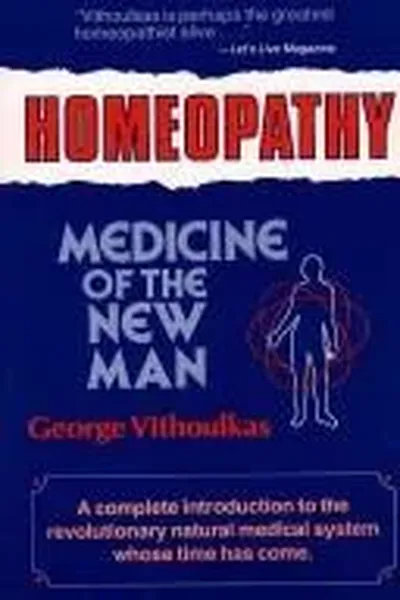
Homoeopathy

 77
77

Homoeopathy
Vithoulkas's "Homoeopathy" presents a rigorous, if somewhat dense, exposition of classical homeopathic principles. Its strength lies in its systematic approach, particularly in detailing Vithoulkas's own method of case analysis and remedy selection, which aims for a deeper understanding of the patient's energetic state. The section discussing the vital force, while challenging, is central to grasping the philosophy. However, the text can feel overwhelming for newcomers, lacking the gentler introduction some might expect. A limitation is the absence of practical case examples illustrating the application of these complex theories in everyday practice. The passage on potentization, explaining the energetic transfer, is particularly illustrative of the work's unique perspective. It offers a foundational text for serious students of Vithoulkas's school of thought.
📝 Description
77
George Vithoulkas's 1985 book details the principles and practice of homeopathic medicine.
This book examines the core principles of homeopathic medicine, a system developed in the late 18th century. It explains the law of similars, where remedies are chosen for their ability to produce symptoms similar to the illness in a healthy person. The text also covers the preparation and selection of homeopathic remedies.
The work is intended for practitioners and students of homeopathy who want to understand its philosophical basis and Vithoulkas's structured approach. It aims to help readers move past memorizing materia medica to grasp the energetic and informational aspects of healing. Those interested in vitalism and the history of healing practices will also find this book informative.
Vithoulkas's "Homoeopathy" was published in 1985, a period when alternative medicine was growing but still met with skepticism. The book engages with Samuel Hahnemann's original ideas from the early 19th century. It distinguishes itself from less systematic or purely symptom focused methods that had appeared previously.
Homeopathy, as presented by Vithoulkas, connects to vitalist philosophies that view disease as a disturbance of a life force. This perspective aligns with esoteric traditions that posit an underlying energetic or spiritual dimension to health and illness. The concept of potentization, where remedies are believed to gain energetic or informational potency through dilution and succussion, reflects a broader esoteric interest in subtle energies and their manipulation for healing. Vithoulkas's emphasis on individualization further suggests a holistic view of the person, common in esoteric thought, where the unique energetic signature of the patient is central to treatment.
💡 Why Read This Book?
• Understand the 'law of similars' as Vithoulkas defines it, learning how symptom-matching forms the basis of a specific healing modality. • Grasp the concept of the 'vital force' as described in the text, gaining insight into a non-material energetic principle central to homeopathic philosophy. • Learn about 'potentization' as explained by Vithoulkas, discovering the theory behind the preparation of homeopathic remedies and their energetic nature.
⭐ Reader Reviews
Honest opinions from readers who have explored this book.
❓ Frequently Asked Questions
What is the historical origin of the principles discussed in Vithoulkas's 'Homoeopathy'?
The principles discussed originate with Samuel Hahnemann, who developed homeopathy in the late 18th century. Vithoulkas builds upon Hahnemann's foundational work, first published in his seminal text 'Organon of the Art of Healing'.
How does Vithoulkas's approach to homeopathy differ from other systems?
Vithoulkas emphasizes a deep, energetic understanding of disease and remedy, focusing on the 'vital force' and individualization. This classical approach aims for a holistic cure rather than just symptom suppression, differentiating it from more superficial or symptomatic methods.
What is the 'law of similars' in homeopathy?
The 'law of similars' (similia similibus curentur) is the core principle, suggesting that a substance which causes symptoms in a healthy person can be used to treat similar symptoms in a sick person.
What is the 'vital force' according to Vithoulkas?
The 'vital force' is understood as a dynamic, animating energy that maintains the organism's health. Illness is seen as a disturbance of this force, and homeopathic remedies aim to restore its balance.
When was George Vithoulkas's book on Homoeopathy first published?
George Vithoulkas's seminal work on Homoeopathy was first published in 1985, offering his systematic interpretation of the practice.
What does 'potentization' mean in the context of this book?
Potentization refers to the process of preparing homeopathic remedies through serial dilution and succussion (vigorous shaking). Vithoulkas explains this as enhancing the energetic or informational capacity of the original substance.
🔮 Key Themes & Symbolism
The Vital Force
Central to Vithoulkas's philosophy is the concept of the 'vital force' (Lebenskraft), an animating, intelligent energy that sustains life. The work posits that disease represents a deviation or disturbance in this force, not merely a material pathology. Homeopathic treatment, therefore, aims to re-establish the harmony and balance of this inherent energy. This concept aligns with vitalist philosophies prevalent in certain esoteric traditions, viewing the body as more than a collection of physical parts, but as an energetic system governed by an unseen principle.
Similia Similibus Curentur
The 'law of similars,' or 'like cures like,' is presented as the fundamental principle of homeopathic prescribing. Vithoulkas details how remedies are selected based on their provings—the symptoms they induce in healthy individuals. The art of homeopathy, as elucidated in the book, lies in matching the totality of a patient's unique symptoms, including their mental and emotional states, with the symptom picture of a specific remedy. This principle reflects an understanding of energetic resonance and informational exchange within the healing process.
Potentization and Energetic Medicine
Vithoulkas thoroughly explains the process of 'potentization,' the method of preparing homeopathic remedies through successive dilutions and succussions. He argues that this process does not diminish but rather enhances the energetic or spiritual properties of the original substance. This concept places homeopathy within the area of energetic medicine, suggesting that remedies act on a subtler, non-physical level to stimulate the body's self-healing capabilities, aligning with esoteric views on subtle energies and vibrational medicine.
The Art of Case Taking
Beyond mere symptom collection, Vithoulkas emphasizes the 'art' of case-taking as crucial for accurate homeopathic prescribing. This involves discerning the most characteristic and peculiar symptoms of the patient, including their mental, emotional, and physical manifestations. The book guides the reader to understand the hierarchy of symptoms and how to differentiate between superficial complaints and deeper disturbances of the vital force, reflecting an intuitive and analytical approach to understanding the individual's unique energetic signature.
💬 Memorable Quotes
Direct passages from the work, attributed to the author.
“The vital force is the fundamental basis of our existence.”
— This statement underscores the central role of the vital force in Vithoulkas's understanding of health and disease. It suggests that true healing involves addressing this animating principle rather than just superficial symptoms.
“Potentization unlocks the energetic potential of a substance.”
— This interpretation conveys the idea that the preparation process of homeopathic remedies is not merely dilution but an enhancement of their subtle energetic properties, making them capable of influencing the vital force.
“Homeopathy treats the patient, not the disease name.”
— This common homeopathic aphorism, likely reflected in Vithoulkas's teachings, stresses the individualistic nature of treatment. It means focusing on the person's unique experience of illness rather than a generic diagnosis.
💡 Key Ideas
Editorial paraphrase of the work's core concepts — not direct quotes.
Similia similibus curentur is the law that governs homeopathic healing.
This paraphrase highlights the foundational principle of homeopathy. It implies that the body possesses an inherent ability to heal when stimulated by a remedy that speaks to its own disturbed energetic state.
The totality of symptoms must be considered for correct remedy selection.
This paraphrased concept emphasizes the holistic approach required in homeopathy, where a remedy is chosen based on its ability to match the entire unique symptom picture presented by the patient, not just isolated complaints.
🌙 Esoteric Significance
Tradition
Vithoulkas's work draws heavily from vitalist philosophies, which have roots in Hermeticism and ancient Greek medicine, particularly the concept of an animating life force. While not explicitly Kabbalistic or Gnostic, the emphasis on an unseen, intelligent energy governing health aligns with the broader esoteric worldview that posits subtle bodies and energetic principles underlying physical reality. His approach can be seen as a modern manifestation of these ancient healing paradigms, translated into a specific therapeutic system.
Symbolism
The concept of the 'vital force' itself acts as a primary symbol, representing the unseen animating principle of life, akin to the *pneuma* or *prana*. The 'law of similars' symbolizes energetic resonance and informational correspondence, where a like disturbance can correct another. The process of 'potentization' can be seen as symbolizing spiritualization or energetic refinement, transforming a material substance into a carrier of subtle energy or information, mirroring alchemical processes of purification and transformation.
Modern Relevance
Vithoulkas's teachings continue to influence contemporary homeopathic practitioners and students, particularly those committed to classical homeopathy. His systematic approach is foundational for many training programs. Thinkers and practitioners in fields like subtle energy medicine, bioenergetics, and consciousness studies may find resonance with his emphasis on non-material forces in healing. The International Academy of Classical Homeopathy, founded by Vithoulkas, remains a key institution disseminating his methods globally.
👥 Who Should Read This Book
• Aspiring and practicing homeopaths seeking to master classical principles and Vithoulkas's systematic approach to case management. • Students of esoteric medicine and vitalist philosophies interested in understanding a foundational system of energetic healing. • Researchers in the history of medicine and alternative healing modalities looking for a detailed exposition of 18th and 19th-century healing concepts.
📜 Historical Context
George Vithoulkas's "Homoeopathy" emerged in 1985, a period marked by a growing interest in alternative and complementary medicine, yet still largely outside the medical establishment's acceptance. The work is deeply rooted in the tradition established by Samuel Hahnemann in the early 19th century. Vithoulkas's contribution lies in systematizing and elaborating on Hahnemann's principles, particularly his own method of case analysis and understanding of the vital force. This period saw contemporary figures like Herbert A. E. Tieken and further development in classical homeopathy, sometimes contrasted with the rise of more complex or combination-approach homeopathic practices. Vithoulkas's rigorous adherence to classical principles positioned his work as a definitive statement for a specific school of thought within the broader homeopathic movement.
📔 Journal Prompts
The vital force as an energetic principle: How does this concept challenge conventional views of the body?
Reflecting on the law of similars: Consider a time when 'like calls to like' in a non-medical context.
Vithoulkas's method of potentization: What does this process imply about the nature of healing substances?
The hierarchy of symptoms: How might prioritizing certain symptoms change a diagnostic approach?
Individualizing treatment: Explore the implications of treating the unique patient rather than a disease label.
🗂️ Glossary
Vital Force
The fundamental, animating, and intelligent energy that sustains life and health in an organism. Vithoulkas posits that disease is a disturbance of this force.
Law of Similars
The homeopathic principle (similia similibus curentur) stating that a substance capable of producing symptoms in a healthy person can cure similar symptoms in a sick person.
Potentization
The process of preparing homeopathic remedies through serial dilution and succussion (vigorous shaking), believed to enhance the substance's energetic properties.
Materia Medica
A comprehensive compilation of the known effects of substances (remedies) on the healthy human body, used for selecting the appropriate homeopathic treatment.
Symptom Totality
The complete picture of a patient's symptoms, including mental, emotional, and physical characteristics, used as the basis for selecting a homeopathic remedy.
Provings
The process of testing substances on healthy volunteers to determine the symptom picture they produce, which then informs their use as homeopathic remedies.
Similia Similibus Curentur
Latin for 'like cures like,' the fundamental law guiding homeopathic prescribing.
🔮 Readers Also Liked
Browse all →









More by George Vithoulkas
All books →




More Free Occult Philosophy Books
View all →