Hieroglyphics
 72
72

Hieroglyphics
Platt's "Hieroglyphics" offers a commendable immersion into the symbolic universe of ancient Egypt. His strength lies in meticulously detailing the phonetic, ideographic, and determinative aspects of the script, grounding the esoteric in tangible linguistic structures. A particularly effective passage details the ritualistic use of cartouches, demonstrating how inscribed names held potent magical efficacy. The limitation, however, is a somewhat dry presentation that could benefit from more direct engagement with the emotional or experiential dimensions of Egyptian spirituality. While thorough, it occasionally feels more like an exhaustive catalog than a living exploration. Nevertheless, for those seeking a rigorous, fact-based understanding of Egyptian sacred writing, it serves as a solid reference.
📝 Description
72
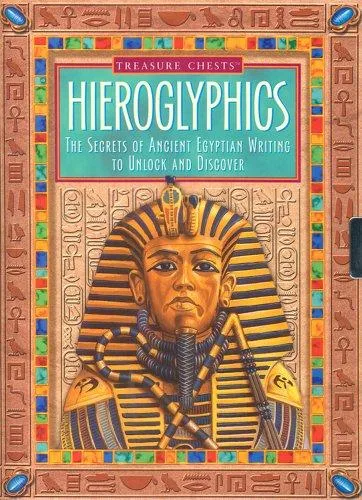
Richard Platt's 2003 book, Hieroglyphics, examines Egyptian writing not just as a language, but as a spiritual and cosmological system.
Hieroglyphics by Richard Platt treats ancient Egyptian writing as more than a system for communication. Platt details how hieroglyphs functioned as a spiritual and cosmological framework for the pharaohs. The book deciphers this visual language, showing its connections to religious beliefs, magical practices, and the ancient Egyptian view of the afterlife. Platt situates the study of hieroglyphs within their original contexts, such as temples, tombs, and rituals, moving beyond simple translation.
This work is suited for serious students of Egyptology, comparative mythology, and ancient religions. It appeals to those who approach esoteric subjects with academic rigor, aiming to understand the principles of a civilization that influenced later mystical traditions. Readers interested in the links between language, ritual, and cosmic order will find substantial content.
Published in 2003, Hieroglyphics engages with a long tradition of studying Egyptian symbolism for its esoteric meanings. This interest built upon the foundational decipherment of hieroglyphs in the 19th century, which opened up new avenues for interpreting ancient Egyptian texts and practices. Platt's book contributes to this ongoing academic and occult inquiry, offering a contemporary perspective on the symbolic depth of Egyptian writing and its perceived connection to cosmic principles and mystical traditions.
💡 Why Read This Book?
• Gain an understanding of *medu netjer*, the Egyptian concept of "divine words," and how it frames the sacred purpose of hieroglyphic writing, moving beyond simple translation. • Explore the practical application of hieroglyphs in Egyptian ritual and magic, particularly how inscriptions were believed to actively shape reality and uphold *Ma'at*. • Decipher the meaning of key symbols like the *ankh* and *wadjet* eye within their specific cosmological and funerary contexts, as presented in the book.
⭐ Reader Reviews
Honest opinions from readers who have explored this book.
❓ Frequently Asked Questions
When was Richard Platt's "Hieroglyphics" first published?
Richard Platt's "Hieroglyphics" was first published in 2003, contributing to the ongoing academic and esoteric study of ancient Egyptian writing systems.
What does *medu netjer* mean in the context of Egyptian hieroglyphs?
*Medu netjer* translates to "divine words" and signifies the Egyptian belief that hieroglyphs were of divine origin, imbued with sacred power and cosmic significance.
How does "Hieroglyphics" relate to the concept of *Ma'at*?
The book explains how hieroglyphic inscriptions were seen as integral to maintaining *Ma'at*, the principle of cosmic order, truth, and justice, by giving form to divine will and preserving essential truths.
What is the significance of the Duat as discussed in the book?
The Duat refers to the Egyptian underworld or realm of the dead. Platt's work explores how hieroglyphs were used in funerary texts to guide and protect the deceased on their journey through the Duat.
Did Jean-François Champollion's work influence the study of hieroglyphs discussed in Platt's book?
Yes, Champollion's groundbreaking decipherment of hieroglyphs in the 1820s, enabled by the Rosetta Stone, laid the foundation for all subsequent scholarly understanding, including the approaches explored by Platt.
What is the primary focus of Richard Platt's "Hieroglyphics"?
The book's primary focus is on understanding hieroglyphs not just as an alphabet but as a complex symbolic language deeply intertwined with ancient Egyptian religion, cosmology, and ritual practices.
🔮 Key Themes & Symbolism
The Sacred Nature of Writing
Platt emphasizes that for ancient Egyptians, hieroglyphs, or *medu netjer*, were not mere letters but divine utterances holding inherent power. The act of writing and reading was a ritualistic engagement with the cosmic order. The book explores how this sacred script was used in temples, tombs, and on amulets to communicate with deities, ensure rebirth, and manifest divine will. This perspective shifts the understanding of language from a tool of communication to a force shaping reality, a core tenet in many esoteric traditions.
Cosmic Order and Ma'at
Central to the book's thesis is the concept of *Ma'at*, the personification of truth, balance, and cosmic order. Hieroglyphic inscriptions were considered vital in upholding and perpetuating *Ma'at* within the Egyptian worldview. Platt details how prayers, spells, and royal decrees inscribed in hieroglyphs were intended to align the earthly realm with divine harmony. This connection between written word and cosmic stability is a recurring theme in esoteric thought, linking linguistic precision to universal equilibrium.
Symbolism in Ritual and Afterlife
The work meticulously examines the potent symbolism embedded within individual hieroglyphs and their combinations. Symbols like the *ankh* for life, the *wadjet* eye for protection, and various animal or divine forms are analyzed not just for their phonetic or semantic value but for their magical and religious efficacy. The book illustrates how these symbols were crucial components of rituals and funerary practices, intended to facilitate the deceased's transition through the Duat and ensure eternal life.
The Language of the Gods
Platt presents hieroglyphs as a direct link to the divine realm, a language spoken by the gods and revealed to humanity. This sacred lexicon was believed to possess inherent creative power, capable of bringing into being what was inscribed. The book looks at the implications of this belief for Egyptian society, where scribes were not just administrators but intermediaries between the human and divine. This concept resonates strongly with hermetic principles of correspondence and the power of the Word.
💬 Memorable Quotes
Direct passages from the work, attributed to the author.
“The Egyptians viewed their hieroglyphs as *medu netjer*, divine words, not simply letters.”
— This highlights the fundamental esoteric understanding that the script itself was sacred, imbued with spiritual power beyond its communicative function, a concept central to many mystical systems.
“The *ankh* symbolized life, essential for existence in both the earthly and afterlife realms.”
— This points to the deep symbolic meaning of specific hieroglyphs, illustrating how individual signs were potent carriers of complex theological and cosmological ideas integral to Egyptian belief.
“The Duat was the underworld, a realm navigated by the deceased with the aid of funerary texts.”
— This interpretation emphasizes the practical application of hieroglyphic knowledge in guiding souls through the afterlife, demonstrating the script's an important role in eschatological beliefs and practices.
💡 Key Ideas
Editorial paraphrase of the work's core concepts — not direct quotes.
Inscriptions were believed to uphold and manifest *Ma'at*, the principle of cosmic order.
This paraphrased concept underscores the vital role of written language in maintaining universal balance and divine justice, suggesting that words had the power to shape reality according to sacred law.
Cartouches were not just decorative but contained names imbued with protective and royal power.
This paraphrased concept reveals the magical potency attributed to names when inscribed within specific hieroglyphic forms, linking personal identity and royal authority to divine protection.
🌙 Esoteric Significance
Tradition
The work aligns with the Hermetic and Gnostic traditions, which often view ancient Egyptian civilization as a source of primordial wisdom and sacred knowledge. Platt's focus on hieroglyphs as *medu netjer* (divine words) reflects the Hermetic principle of the power of the Word and the divine origins of language. It situates Egyptian writing within a broader understanding of symbolic systems believed to encode universal truths, a common pursuit in Western esotericism seeking to understand the blueprints of creation.
Symbolism
Key symbols like the *ankh* (life) and the *wadjet* eye (protection, royal power) are examined not just for their literal meaning but for their energetic and spiritual significance. The *ankh* represents the vital force and eternal life, while the *wadjet* eye embodies wholeness, healing, and divine vigilance. Platt's analysis reveals how these symbols functioned within rituals and funerary contexts to channel cosmic energies and ensure spiritual well-being, reflecting a worldview where signs were active agents.
Modern Relevance
Contemporary esoteric practitioners, particularly those in Hermetic orders or studying comparative mythology, draw upon detailed analyses like Platt's to understand the foundational symbolism of Western esotericism. Modern occultists often reference Egyptian cosmology and its linguistic structures to inform their magical practices, meditation techniques, and understanding of archetypal forces. The book serves as a reliable reference for those seeking to connect with the deep currents of ancient Egyptian spirituality that continue to influence contemporary mystical thought and practice.
👥 Who Should Read This Book
• Students of comparative mythology and ancient religions seeking to understand the linguistic underpinnings of Egyptian spiritual beliefs. • Researchers of Western esoteric traditions interested in the source material and symbolism that influenced Hermeticism and Gnosticism. • Aspiring Egyptologists or enthusiasts who wish to move beyond basic introductions to grasp the profound symbolic and ritualistic dimensions of hieroglyphic writing.
📜 Historical Context
Richard Platt's "Hieroglyphics," published in 2003, engages with a long tradition of interpreting ancient Egyptian writing, a field dramatically reshaped by Jean-François Champollion's decipherment of hieroglyphs in the 1820s. This followed the discovery of the Rosetta Stone in 1799, an important moment that unlocked millennia of Egyptian history and thought. Platt's work emerges in an era where academic Egyptology coexists with a persistent interest in the occult and esoteric dimensions of ancient cultures, a lineage traceable through figures like Helena Blavatsky and later occultists who sought hidden meanings in Egyptian symbolism. The book implicitly dialogues with both rigorous linguistic analysis and more speculative interpretations of Egyptian cosmology, offering a contemporary synthesis. While academic reception focused on its linguistic and historical accuracy, the esoteric community often found validation for its own interpretations of sacred language within such detailed studies.
📔 Journal Prompts
The concept of *medu netjer* as divine words.
Reflect on the function of hieroglyphic inscriptions in maintaining *Ma'at*.
The symbolic meaning of the *ankh* in Egyptian cosmology.
The role of the scribe as an intermediary between human and divine realms.
The journey through the Duat as represented by hieroglyphic texts.
🗂️ Glossary
Medu Netjer
Literally "divine words"; the ancient Egyptian term for hieroglyphs, emphasizing their sacred origin and power.
Ma'at
The ancient Egyptian concept representing cosmic order, truth, justice, and universal balance, often personified as a goddess.
Ankh
A hieroglyphic symbol representing "life," a crucial emblem in Egyptian religion and art, signifying existence and immortality.
Wadjet Eye
The Eye of Horus, a powerful symbol of protection, royal power, healing, and restoration in ancient Egyptian mythology.
Duat
The ancient Egyptian underworld or field of the dead, depicted in funerary texts as a place of trials and transformation.
Cartouche
An oval frame enclosing the name of a royal personage, believed to offer magical protection and signify royal authority.
Determinative
A hieroglyphic sign placed at the end of a word to indicate its general meaning or category, aiding in disambiguation.
🔮 Readers Also Liked
Browse all →








More by Richard Platt
All books →
More Free Occult Philosophy Books
View all →