The Gnostics
 80
80

The Gnostics
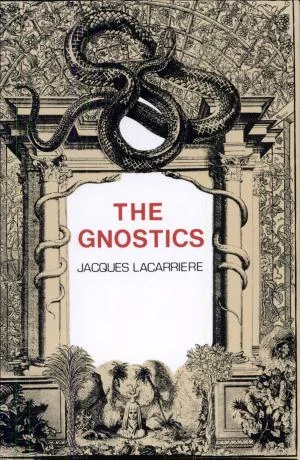
Lacarriere's "The Gnostics" offers a lucid exposition of a profoundly influential, yet often misunderstood, spiritual current. The author's strength lies in his ability to synthesize vast historical and textual evidence into a coherent narrative, avoiding the esoteric jargon that often obscures this subject. His treatment of the Gnostic rejection of the material world as a prison, particularly as it relates to the figure of the Demiurge, is particularly illuminating. However, the book occasionally feels more like a comprehensive survey than a deep critical engagement. While it excels at mapping the terrain of Gnostic thought, it sometimes lacks a robust engagement with more recent scholarly debates or the lived experience of Gnostic practitioners. Nevertheless, it remains a solid, informative introduction for those seeking to grasp the core of Gnostic philosophy.
📝 Description
80
Jacques Lacarriere's 1964 work examines the Gnostic movement's origins, core beliefs, and historical context.
Published in 1964, Jacques Lacarriere's "The Gnostics" offers a detailed account of Gnostic thought and its historical development. The book traces the emergence of this spiritual tradition, explaining its fundamental principles and varied manifestations. Lacarriere provides an introduction to a complex philosophical and religious current that stood apart from established orthodoxies.
The author places Gnosticism within the intellectual landscape of the ancient Near East and the Roman Empire, a time of significant spiritual and philosophical innovation. The text implicitly contrasts Gnostic ideas with developing Christian doctrines and Hellenistic philosophies. It acknowledges the influence Gnostic ideas exerted, even as church authorities moved to suppress them, particularly after the Council of Nicaea in 325 CE.
This book situates Gnosticism as a significant current within early Western esotericism. It highlights a spiritual path that diverged from mainstream religious and philosophical developments of its time. Lacarriere's work focuses on the Gnostic cosmology and their pursuit of salvific knowledge, offering insight into a tradition often viewed as a precursor or alternative to later esoteric schools.
💡 Why Read This Book?
• Understand the Gnostic concept of the Demiurge, a creator deity distinct from the supreme, unknowable God, a core tenet of their cosmology. • Grasp the meaning of 'gnosis,' the direct, intuitive knowledge central to Gnostic salvation, as presented in Lacarriere's historical account. • Explore the historical milieu of Gnosticism, understanding its emergence in the ancient Near East alongside other philosophical and religious movements of that era.
⭐ Reader Reviews
Honest opinions from readers who have explored this book.
❓ Frequently Asked Questions
What is the origin of Gnosticism as discussed in Lacarriere's book?
Lacarriere's work traces Gnosticism's origins to the ancient Near East, placing its emergence within a dynamic period of diverse spiritual and philosophical inquiry in the early centuries CE.
Who is the Demiurge in Gnostic belief according to the book?
The book explains the Demiurge as a flawed creator of the material world, often identified with the God of the Old Testament, distinct from the true, transcendent God of Gnosticism.
What does 'gnosis' mean in the context of this book?
'Gnosis' refers to a special, intuitive knowledge or insight that Gnostics believed was the key to spiritual liberation and understanding the true nature of reality.
Does the book cover the historical suppression of Gnosticism?
Yes, the work implicitly discusses the historical context, acknowledging how Gnostic ideas were often challenged and suppressed by the developing orthodox Christian Church.
Is Jacques Lacarriere's book suitable for beginners in esoteric studies?
Yes, "The Gnostics" is structured to provide a clear and accessible introduction to the complex subject matter, making it suitable for those new to esoteric traditions.
What is the main difference between Gnosticism and mainstream Christianity discussed?
The book highlights Gnosticism's radical dualism and emphasis on gnosis for salvation, contrasting it with orthodox Christianity's focus on faith, divine grace, and a benevolent creator God.
🔮 Key Themes & Symbolism
The Material World as Illusion
Lacarriere investigates the Gnostic perspective that the material universe is not the pinnacle of creation but a flawed, illusory realm. This perspective stems from a radical dualism, separating the imperfect material cosmos from a perfect, spiritual divine realm. The work details how Gnostics viewed this world as a prison, designed by a lesser deity, from which the divine spark within humanity seeks escape through esoteric knowledge.
Salvation Through Gnosis
Central to Gnostic philosophy, as explored in this book, is the concept of 'gnosis' – a direct, experiential knowledge of the divine. This is not mere intellectual understanding but a profound, revelatory insight that awakens the soul to its true origin and destiny. Lacarriere elucidates how this salvific knowledge serves as the primary means for escaping the material entrapment and reconnecting with the transcendent God.
The Demiurge and the Archons
The book examines the figure of the Demiurge, often conflated with the God of the Hebrew Bible, who is depicted as the architect of the flawed material universe. Alongside the Demiurge, Lacarriere discusses the Archons, subordinate rulers who maintain the material world's order and obstruct humanity's spiritual ascent. Understanding these figures is crucial to grasping the Gnostic cosmology and its inherent critique of established cosmic authority.
The Divine Spark Within
Lacarriere's inquiry highlights the Gnostic belief in a divine 'spark' or fragment of the supreme God imprisoned within the human soul. This inner divinity is unaware of its true nature, trapped by ignorance and the material world. The pursuit of gnosis, therefore, is also an act of inner remembrance and awakening, allowing the divine spark to recognize itself and ascend back to its source.
💬 Memorable Quotes
Direct passages from the work, attributed to the author.
“Gnosticism is a spiritual quest that originated in the ancient Near East.”
— This statement frames Gnosticism not as a static dogma, but as an active, ongoing search for spiritual truth, emphasizing its historical roots and geographical beginnings.
“The material world is often seen as a prison.”
— This concisely captures a core Gnostic tenet: the belief that the physical existence is a trap, obscuring the soul's divine nature and hindering its return to the spiritual realm.
“The Demiurge created the flawed cosmos.”
— This interpretation focuses on the Gnostic creator-god figure, emphasizing its role in the flawed construction of the material reality, differentiating it from the supreme, perfect deity.
“A divine spark resides within humanity.”
— This refers to the Gnostic belief in an inherent, divine element within the human soul, which is often dormant or unrecognized, seeking to be awakened through spiritual understanding.
💡 Key Ideas
Editorial paraphrase of the work's core concepts — not direct quotes.
Gnosis is the key to liberation.
This paraphrased concept highlights the central role of intuitive, esoteric knowledge in Gnostic soteriology, presenting it as the essential element for spiritual freedom and enlightenment.
🌙 Esoteric Significance
Tradition
This work firmly situates itself within the study of Gnosticism, a prominent lineage within Western esotericism. It aligns with the broader Hermetic and esoteric traditions by exploring themes of hidden knowledge, cosmic dualism, and the liberation of the spirit from material constraints. Lacarriere's approach, while scholarly, engages with the core tenets that define Gnosticism as a distinct spiritual path, often seen as a counter-tradition to mainstream religious development.
Symbolism
Key symbols explored include the Pleroma, representing the divine fullness or totality of the spiritual realm, often contrasted with the deficient material world. The Serpent, frequently a positive figure in Gnostic myths as a bringer of knowledge, stands in stark opposition to its traditional biblical portrayal. The concept of the 'divine spark' within humanity is another crucial motif, symbolizing the trapped fragment of divinity seeking reunification with its source.
Modern Relevance
Contemporary esoteric practitioners and thinkers, particularly those interested in dualistic philosophies and critiques of materialist culture, continue to draw from Gnostic thought. Movements exploring consciousness, liberation from societal conditioning, and alternative spiritual cosmologies often reference Gnostic ideas. The resurgence of interest in Gnostic texts, like those found in the Nag Hammadi library, fuels ongoing engagement with figures like the Demiurge and the pursuit of self-knowledge as a path to freedom.
👥 Who Should Read This Book
• Students of comparative religion and early Christian history seeking to understand alternative spiritualities of the ancient world. • Esoteric practitioners interested in the philosophical underpinnings of Gnosticism, dualism, and the concept of gnosis. • Readers curious about intellectual history and the diverse ways ancient societies conceived of creation, divinity, and human purpose.
📜 Historical Context
Published in 1989, Jacques Lacarriere's "The Gnostics" emerged during a period of renewed academic and popular interest in esoteric traditions. It entered a scholarly landscape that had been significantly shaped by earlier works like those of Hans Jonas. The book navigates the complex intellectual currents of the Hellenistic period, a time when syncretism and diverse philosophical schools, including Neoplatonism and various mystery religions, flourished alongside nascent Christianity. Gnosticism itself represented a radical departure from emerging orthodoxies, particularly the Pauline Christianity that would eventually dominate. While Lacarriere's work focuses on the historical and philosophical aspects, its publication year reflects a time when scholars were increasingly re-evaluating the impact and diversity of early Christian and para-Christian movements, moving beyond earlier, often polemical, dismissals of Gnostic systems.
📔 Journal Prompts
The Gnostic concept of the Demiurge and its implications for understanding flawed creation.
Reflect on the Gnostic idea of 'gnosis' as a pathway to liberation.
Consider the Gnostic view of the material world as a prison.
Analyze the symbolic role of the divine spark within human consciousness.
The historical context of Gnosticism alongside early Christianity and Hellenistic philosophy.
🗂️ Glossary
Gnosis
A Greek term meaning 'knowledge,' specifically referring to intuitive, esoteric, or revelatory insight central to Gnostic salvation and understanding of the divine.
Demiurge
In Gnosticism, the creator of the material universe, often depicted as a lesser, flawed deity, sometimes identified with the God of the Old Testament.
Pleroma
The totality of divine powers and fullness of God's presence in the supreme spiritual realm, contrasted with the imperfect material creation.
Archons
Rulers or powers in the Gnostic cosmology, often subordinate to the Demiurge, who govern the material world and can obstruct spiritual ascent.
Dualism
A philosophical or religious doctrine that posits two fundamental, often opposing, principles or substances, such as spirit and matter, good and evil.
Divine Spark
A fragment or essence of the supreme God believed to be imprisoned within the human soul, capable of awakening through gnosis.
Aeons
Emanations or divine beings originating from the supreme God in Gnostic cosmology, forming the Pleroma.
This book appears in 1 collection
🔮 Readers Also Liked
Browse all →









From the “Gnosticism” Collection
View all →







More Free Occult Philosophy Books
View all →