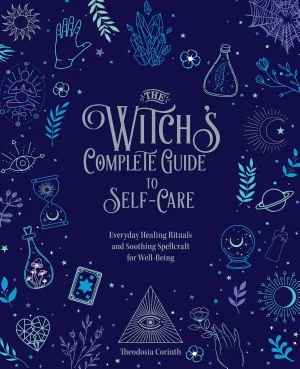
The Witch's Complete Guide to Self-Care
 72
72

The Witch's Complete Guide to Self-Care
Theodosia Corinth's guide attempts a crucial synthesis: aligning the demands of magical practice with the necessity of personal well-being. Corinth’s strength lies in her direct, unadorned prose, which avoids the often-flowery language found in similar texts. She presents self-care not as an indulgence but as a vital component of sustained spiritual work. One particularly effective section details "energetic hygiene," offering concrete methods for cleansing one's auric field after taxing interactions or rituals. However, the book sometimes feels overly focused on the individual, occasionally neglecting the communal or ancestral aspects that are equally significant in many witchcraft traditions. A more robust exploration of these dimensions could have elevated the work further. Despite this limitation, Theodosia Corinth's guide is a valuable resource for contemporary practitioners seeking balance.
📝 Description
72
Published in October 2021, The Witch's Complete Guide to Self-Care addresses modern witchcraft and personal restoration.
Theodosia Corinth's 2021 book, The Witch's Complete Guide to Self-Care, offers practical ways for witches to manage modern life. It aims to help readers combat burnout and find a stable sense of self by connecting magical practice with personal healing. The guide is for those who feel distant from their spiritual paths or burdened by outside pressures. Corinth presents methods for integrating magic into everyday routines, focusing on energetic hygiene and herbalism for rejuvenation. The book argues that self-care is a necessary part of effective magical practice, not merely an indulgence.
This book joins a contemporary movement within witchcraft that applies older traditions to current issues. It moves away from purely academic studies of witchcraft, instead detailing accessible self-care techniques. The work is relevant for modern practitioners who seek to balance their spiritual lives with the stresses of contemporary existence.
💡 Why Read This Book?
• You will learn practical 'energetic hygiene' techniques, specifically outlined in chapter 3, that go beyond basic cleansing rituals to protect your personal energy field from daily depletion. • You will gain methods for integrating herbal allies and elemental correspondences into your routine, as detailed in the 'Kitchen Witchery' section, fostering a deeper connection to natural cycles. • You will discover how to reconnect with your personal 'wyrd' or destiny through guided introspection, a concept explored in the 'Reclaiming Purpose' chapter, providing a framework for renewed focus.
⭐ Reader Reviews
Honest opinions from readers who have explored this book.
❓ Frequently Asked Questions
When was The Witch's Complete Guide to Self-Care first published?
The book was first published on October 19, 2021, making it a contemporary guide for modern practitioners.
What is 'energetic hygiene' as discussed in the book?
'Energetic hygiene' refers to practices designed to cleanse and protect one's spiritual and emotional energy field, essential for maintaining balance and preventing burnout in magical work.
Does the book require prior extensive knowledge of witchcraft?
No, the guide is designed for modern witches, offering accessible strategies that can be adapted by those with varying levels of experience.
What kind of self-care practices are included?
The book includes a range of practices such as ritual baths, elemental attunement, kitchen witchery, and methods for reclaiming personal purpose.
Who is the author of The Witch's Complete Guide to Self-Care?
The author is Theodosia Corinth, who first published this work in 2021.
Is this book suitable for secular witches?
While rooted in esoteric concepts, the book's focus on personal well-being and practical application makes many of its self-care strategies adaptable for individuals who practice witchcraft from a secular perspective.
🔮 Key Themes & Symbolism
Energetic Hygiene
This theme addresses the critical need for maintaining one's energetic field. Theodosia Corinth posits that regular cleansing and protective practices are not merely supplementary but foundational to sustained magical work. The book outlines specific rituals and daily habits, drawing on concepts of spiritual cleanliness to prevent energetic depletion and psychic fatigue, crucial for practitioners in the 21st century.
Reclaiming Purpose
The work explores the modern witch's struggle with societal pressures and existential drift, offering pathways to rediscover and reaffirm personal spiritual direction. It encourages introspection and the intentional reconstruction of one's life path, aligning daily actions with deeper magical intent. This theme emphasizes the active role of the witch in defining and living their authentic purpose.
Integration of Magic and Daily Life
A central tenet of the guide is the seamless blending of esoteric practices with everyday existence. It moves away from viewing magic as an isolated activity, instead promoting its integration into self-care routines, domestic life, and personal well-being. This approach democratizes magical practice, making it accessible and sustainable for contemporary individuals.
Self-Care as a Spiritual Discipline
Corinth reframes self-care not as a secular indulgence but as a sacred duty for the witch. The book details how practices like mindful herbalism, ritualistic rest, and emotional processing serve as essential spiritual disciplines, fortifying the practitioner's connection to themselves and the divine, thereby enhancing their magical efficacy.
💬 Memorable Quotes
Direct passages from the work, attributed to the author.
“Your energy is a sacred wellspring; protect it fiercely.”
— This statement emphasizes the intrinsic value and vulnerability of personal energy. It serves as a call to action for practitioners to actively engage in protective measures against depletion, framing self-care as a spiritual imperative.
“Burnout is not a badge of honor; it is a call to return.”
— This counters the often-glorified image of the 'suffering artist' or 'hard-working mystic.' It reframes exhaustion not as a sign of dedication but as a signal that one's spiritual or energetic resources require replenishment and recalibration.
“The mundane is merely magic waiting to be recognized.”
— This interpretation suggests that the everyday tasks and elements of life are imbued with potential magical significance. It encourages practitioners to find the sacred in the ordinary, transforming routine activities into opportunities for spiritual connection.
“Purpose is not found; it is cultivated through conscious tending.”
— This highlights an active, ongoing process of self-creation and spiritual development. It implies that one's 'wyrd' or destiny is not a fixed point but something that requires consistent effort and intentional engagement to grow and flourish.
“Healing the self is the first act of potent magic.”
— This places personal well-being at the forefront of magical efficacy. It argues that internal balance and self-acceptance are prerequisites for effectively manifesting external change or engaging in powerful magical operations.
🌙 Esoteric Significance
Tradition
This work operates within the broad spectrum of modern Western esotericism, drawing implicitly from Neopagan and Wiccan traditions but focusing on universally applicable principles of energetic and psychological well-being. It departs from strictly codified magical systems by prioritizing personal experience and adaptable self-care modalities. Its lineage can be traced to the modern resurgence of interest in folk magic and personal spirituality that gained momentum in the latter half of the 20th century.
Symbolism
The book frequently employs natural symbolism, particularly concerning herbs and elements. For instance, the use of specific herbs like lavender for calming or rosemary for clarity acts as a direct connection to elemental and planetary correspondences. The concept of the 'sacred wellspring' serves as a metaphor for the practitioner's vital energy, emphasizing its finite nature and the need for replenishment, echoing ancient ideas of life force or prana.
Modern Relevance
Theodosia Corinth’s emphasis on 'energetic hygiene' and burnout prevention directly informs contemporary discussions in wellness and spirituality. Practitioners of modern witchcraft, energy healers, and even secular individuals interested in mindfulness and self-management often cite the book's practical approach. Its principles resonate with current trends in therapeutic witchcraft and the integration of psychological self-care with spiritual practice.
👥 Who Should Read This Book
['• Busy modern witches: Individuals seeking to maintain their magical practice amidst demanding careers and personal lives will find actionable strategies for energy management and spiritual replenishment.', '• Emerging practitioners: Those new to witchcraft or esoteric studies can use this guide to establish a healthy foundation, learning to prioritize self-care as a core component of their path.', "• Burned-out spiritual seekers: Anyone feeling drained by their spiritual or magical pursuits will benefit from the book's focus on restorative practices and reclaiming personal purpose."]
📜 Historical Context
Theodosia Corinth's The Witch's Complete Guide to Self-Care, published in October 2021, arrived amidst a surge of interest in esoteric practices and personal wellness, particularly amplified by the global events of the preceding years. It entered a landscape where online communities and social media platforms had democratized access to witchcraft, leading to a proliferation of guides aimed at modern practitioners. Corinth's work distinguished itself by focusing on the practical, often overlooked, aspect of self-care as integral to magical sustainability. This contrasted with earlier, more theoretical or historical examinations of witchcraft prevalent in academic circles or within older, established occult orders. While authors like Doreen Valiente had begun to articulate a more personal form of witchcraft in the mid-20th century, Corinth's approach is distinctly contemporary, addressing the specific anxieties and pressures faced by individuals in the digital age. The book's reception was largely positive within online witch communities, appreciated for its directness and actionable advice, although some traditionalists might find its focus on individual well-being less aligned with communal or ancestral practices.
📔 Journal Prompts
Your sacred wellspring: How is it currently being replenished or depleted?
Reflect on the 'mundane magic' in your daily routine.
Identify one self-care ritual to cultivate your personal purpose.
How does energetic hygiene factor into your current spiritual practice?
Consider the 'call to return' burnout presents for you.
🗂️ Glossary
Energetic Hygiene
Practices designed to cleanse, protect, and maintain the practitioner's vital energy field, preventing depletion and promoting spiritual well-being.
Wyrd
A concept often associated with fate or destiny, particularly in Germanic traditions, interpreted here as a personal path or purpose to be actively cultivated.
Aura
The subtle energy field surrounding a living being, believed to reflect physical, emotional, and spiritual states; maintaining its integrity is key to energetic hygiene.
Kitchen Witchery
The practice of infusing everyday cooking and domestic tasks with magical intent and energy, using food and the home environment as tools for spiritual work.
Elemental Attunement
Consciously connecting with and drawing energy from the four classical elements (Earth, Air, Fire, Water) to achieve balance and enhance magical practice.
Ritualistic Rest
Intentional periods of rest and recuperation framed as sacred acts, designed to restore energy and facilitate spiritual renewal, rather than mere passive inactivity.
Sacred Wellspring
A metaphor for an individual's internal source of life force, creativity, and spiritual energy, which requires protection and replenishment.
This book appears in 1 collection
🔮 Readers Also Liked
Browse all →









From the “Witchcraft” Collection
View all →






More Free Occult Philosophy Books
View all →