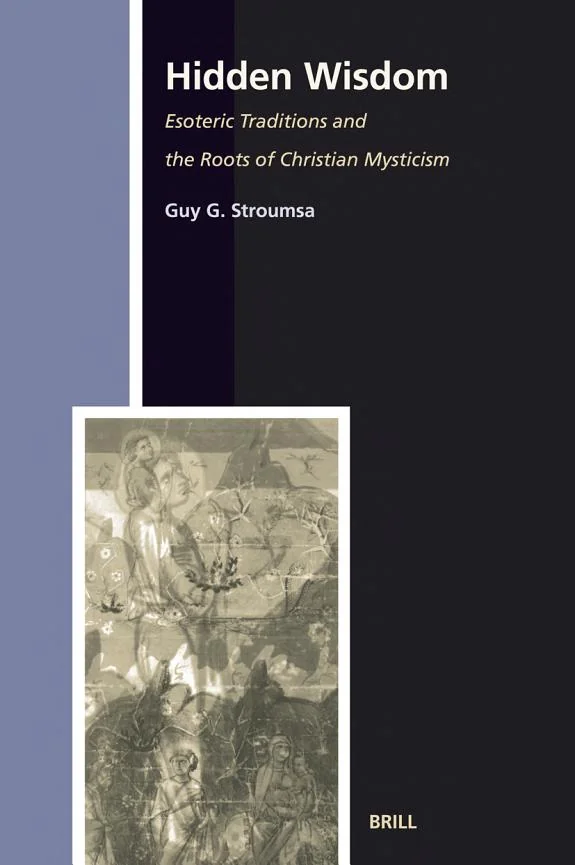
Hidden Wisdom
 83
83

Hidden Wisdom
Gedaliahu A. Guy Stroumsa's Hidden Wisdom offers a compelling re-evaluation of esoteric currents in early Christianity, moving beyond simplistic attributions to Hellenistic mystery cults. The strength lies in its rigorous analysis of Patristic hermeneutics, demonstrating how figures like Origen, through sophisticated interpretive methods, cultivated hidden meanings within scripture. Stroumsa persuasively argues for a Jewish matrix underlying these traditions, a point often overlooked. A limitation, perhaps inherent in its scholarly depth, is that the dense engagement with theological exegesis might prove challenging for readers less familiar with the specific hermeneutical debates of Late Antiquity. The exploration of how early Christians interpreted texts like the Song of Songs allegorically to uncover mystical union is particularly illuminating. Hidden Wisdom provides a vital corrective to scholarship, grounding esoteric Christianity firmly within its Jewish and internal Christian development.
📝 Description
83
Gedaliahu A. Guy Stroumsa's Hidden Wisdom analyzes the origins of esoteric traditions within early Christianity.
Hidden Wisdom traces the development of esoteric traditions in early Christianity, moving beyond simple echoes of Hellenistic Mystery cults. Guy G. Sṭrûmzā shows how Patristic hermeneutics in Eastern and Western theology fostered these hidden currents. The book argues that these streams of thought significantly shaped the emerging Christian mysticism of Late Antiquity, offering a fresh perspective on Christianity's formative centuries.
The work situates its analysis in Late Antiquity, a period from the 2nd to 5th centuries CE marked by Christian doctrine's consolidation and the ongoing influence of Gnosticism and Neoplatonism. Stroumsa engages with the hermeneutical strategies of figures like Origen and the Cappadocian Fathers. He challenges views that overstate external influences such as the Eleusinian Mysteries or Stoicism, instead highlighting internal Christian debates and interpretive shifts that led to esoteric interpretations.
This book examines how 'esoteric traditions' diverged from mainstream Christian teachings in Late Antiquity. These traditions often drew from Jewish apocalyptic and mystical practices, adapting them within Christian discourse. Stroumsa focuses on the internal interpretive methods used by Church Fathers, demonstrating how specific hermeneutical strategies cultivated a distinct mystical current within early Christianity, separate from external philosophical or cultic parallels.
💡 Why Read This Book?
• Understand the specific interpretive methods, like allegorical exegesis, used by early Church Fathers (e.g., Origen) to develop esoteric Christian thought, as detailed in the analysis of Patristic hermeneutics. • Gain insight into the Jewish roots of early Christian mysticism, challenging the common assumption of Greek Mystery religion influence, a key argument presented regarding the origins of these traditions. • Explore the foundational texts and concepts that contributed to the emergence of Christian mysticism in Late Antiquity, moving beyond surface-level theological doctrines to uncover deeper currents of spiritual practice.
⭐ Reader Reviews
Honest opinions from readers who have explored this book.
❓ Frequently Asked Questions
What is the primary argument of Hidden Wisdom regarding the origins of esoteric Christianity?
The book argues that esoteric traditions in early Christianity primarily stem from its Jewish background, rather than from Greek Mystery religions as commonly asserted. It details how these traditions were transformed through Patristic hermeneutics.
Which historical period does Hidden Wisdom focus on?
The book concentrates on Late Antiquity, specifically the formative centuries of early Christianity, roughly from the 2nd to the 5th centuries CE, examining the development of esoteric thought and nascent Christian mysticism.
What role does 'Patristic hermeneutics' play in the book's thesis?
Patristic hermeneutics, the interpretive methods used by early Church Fathers, is central. The work shows how these methods were employed to uncover and transmit hidden, esoteric meanings within Christian scripture and tradition.
Does the book discuss specific Christian mystics?
While focusing on the broader traditions and interpretive frameworks, the book analyzes the hermeneutical output of key figures like Origen, whose work laid groundwork for later mystical developments.
How does Hidden Wisdom challenge existing scholarship?
It challenges the prevailing view that early Christian esotericism was heavily influenced by Hellenistic mystery cults, instead emphasizing the significance of Jewish heritage and internal Christian interpretive practices.
What is meant by 'nascent Christian mysticism' in the context of this book?
Nascent Christian mysticism refers to the early stages of spiritual and contemplative practices within Christianity that emerged from the esoteric traditions and their interpretation by Church Fathers during Late Antiquity.
🔮 Key Themes & Symbolism
Jewish Roots of Esotericism
This theme investigates the often-underestimated Jewish background of early Christian esoteric thought. Stroumsa argues that concepts like messianic expectation, apocalyptic visions, and mystical ascent found in Second Temple Judaism provided a fertile ground for the development of hidden Christian teachings. The work examines how early Christians, many of whom were Jewish or Hellenized Jews, reinterpreted these existing frameworks within their nascent faith, moving beyond simple adoption to a unique synthesis.
Patristic Hermeneutics
The interpretive strategies employed by early Church Fathers (the 'Patristics') are central to understanding how esoteric traditions were preserved and transmitted. This theme explores how figures like Origen utilized allegorical, symbolic, and typological readings of scripture to reveal deeper, hidden spiritual meanings. The work highlights how this hermeneutical approach allowed for the development of Christian mysticism by providing a method for accessing divine knowledge and spiritual experience through scriptural exegesis.
Transformation into Mysticism
Hidden Wisdom traces the crucial transformation of early esoteric traditions into what would become nascent Christian mysticism. It posits that the careful application of hermeneutics by figures in Late Antiquity gradually shaped these hidden teachings into distinct contemplative and experiential pathways. The book illustrates how this process, occurring in both the Eastern and Western branches of Christianity, laid the groundwork for later mystical movements and theologies that emphasized direct experience of the divine.
Challenging Hellenistic Influence
A significant aspect of the book is its direct challenge to the conventional scholarly view that early Christian esotericism was primarily a product of Greek Mystery religions. Stroumsa critically assesses claims of influence from cults like the Eleusinian or Mithraic mysteries, finding them less convincing than the evidence for continuity with Jewish mystical and sapiential traditions. This theme reframes the intellectual origins, placing emphasis on internal development and Semitic antecedents.
💬 Memorable Quotes
Direct passages from the work, attributed to the author.
“Esoteric traditions... eventually formed the basis of nascent Christian mysticism in Late Antiquity.”
— This core assertion highlights the book's central thesis: that the hidden spiritual currents within early Christianity were not peripheral but foundational to the development of its mystical dimensions.
“These esoteric traditions do not reflect the influence of Greek Mystery religions... but rather seem to stem from the Jewish background of Christianity.”
— This statement directly confronts a common scholarly assumption, redirecting the focus towards the Semitic heritage of early Christianity as the primary wellspring for its esoteric practices and beliefs.
“The work investigates... their transformation in Patristic hermeneutics, in the West as well as in the East.”
— This points to the methodological focus of the book, emphasizing how the interpretive techniques of early Church Fathers were crucial in shaping and preserving these hidden traditions across different Christian centers.
“The study argues for the internal development of Christian esoteric thought.”
— This interpretation emphasizes the book's focus on how Christianity developed its own unique esoteric systems through interpretation and adaptation, rather than simply borrowing wholesale from external pagan sources.
💡 Key Ideas
Editorial paraphrase of the work's core concepts — not direct quotes.
The origins of these traditions are explored in relation to Jewish apocalyptic literature and mystical speculation.
This paraphrased concept underscores the specific sources and intellectual milieu that Stroumsa identifies as critical for understanding the genesis of Christian esoteric thought, moving beyond Greek philosophical influences.
🌙 Esoteric Significance
Tradition
This work engages with the nascent tradition of Christian esotericism, particularly as it developed within the broader context of Late Antiquity. It fits within the lineage of scholars who trace mystical and Gnostic impulses back to the Jewish milieu from which Christianity emerged. Stroumsa's contribution lies in his rigorous analysis of how these impulses were sustained and transformed through specifically Christian interpretive frameworks, rather than being solely derivatives of external pagan systems.
Symbolism
The book implicitly engages with symbols of hidden knowledge and spiritual ascent prevalent in early Christian thought. While not focusing on specific visual symbols, it discusses the interpretation of scriptural texts like the Song of Songs as symbolic representations of the soul's union with the divine. The concept of 'hidden manna' or secret teachings passed down orally also functions symbolically, representing esoteric knowledge reserved for initiates.
Modern Relevance
Contemporary scholars of mysticism, comparative religion, and early Christianity continue to draw on Stroumsa's arguments regarding the Jewish roots of Christian esotericism. His work informs modern discussions on the diversity within early Christianity and the internal mechanisms by which spiritual traditions evolve. Thinkers exploring the historical development of contemplative practices and the interplay between exegesis and mystical experience find his analysis of Patristic hermeneutics particularly relevant.
👥 Who Should Read This Book
• Scholars of early Christianity and Late Antiquity: They will gain a refined understanding of the intellectual currents shaping Christian doctrine and mysticism, particularly concerning the debate over Hellenistic versus Jewish influences. • Students of comparative religion: This book offers a case study in how religious traditions borrow, adapt, and transform elements from their parent cultures, specifically examining the Jewish-Christian interface. • Aspiring mystics and theologians: Readers interested in the historical origins of Christian contemplative practices will find valuable insights into the foundational interpretive methods and conceptual frameworks that gave rise to Christian mysticism.
📜 Historical Context
Hidden Wisdom emerges from the intellectual ferment of the late 20th century, engaging with scholarship on Late Antiquity (c. 300-600 CE) and the origins of Christian thought. This era was marked by intense theological debate, the codification of Christian doctrine, and the assimilation of diverse philosophical traditions. Stroumsa's work directly addresses the ongoing scholarly discussion concerning the influences on early Christianity, particularly challenging the long-held thesis of significant impact from Hellenistic Mystery religions, championed by scholars like Franz Cumont. Instead, he builds upon the work of scholars like Gershom Scholem who emphasized Jewish mystical antecedents. The reception of Stroumsa's arguments contributes to a more nuanced understanding of Christianity's complex relationship with its Jewish heritage and its internal development of mystical practices during a period of profound intellectual and religious transformation.
📔 Journal Prompts
The Jewish antecedents of Christian esoteric traditions: initial reflections.
Assessing the role of Patristic hermeneutics in concealing and transmitting hidden knowledge.
The transformation of esoteric currents into nascent Christian mysticism: personal connections.
Comparing the claimed influence of Greek Mystery religions versus Jewish backgrounds.
How did the concept of 'hidden wisdom' shape early Christian spiritual practice?
🗂️ Glossary
Esoteric Traditions
Beliefs, practices, and teachings reserved for a select group of initiates, often involving hidden meanings or spiritual insights not accessible to the general populace.
Patristic Hermeneutics
The principles and methods of biblical interpretation employed by the early Church Fathers (Patristics) during the formative centuries of Christianity.
Late Antiquity
The historical period spanning roughly from the 3rd to the 7th century CE, characterized by significant cultural, religious, and political transitions in the Mediterranean world.
Nascent Christian Mysticism
The early stages of development of Christian contemplative and experiential spirituality, emerging from the interpretation of scripture and tradition in the first few centuries.
Allegorical Exegesis
A method of biblical interpretation that seeks symbolic or spiritual meanings beyond the literal text, often used to uncover deeper theological or mystical truths.
Jewish Background of Christianity
The religious, cultural, and intellectual heritage of Judaism that significantly influenced the origins and early development of Christianity.
Greek Mystery Religions
Ancient Greco-Roman religious cults characterized by secret rites and initiations, such as the Eleusinian or Dionysian Mysteries, often contrasted with or compared to early Christian practices.
This book appears in 1 collection
🔮 Readers Also Liked
Browse all →








From the “Christian Mysticism” Collection
View all →








More Free Mysticism & Contemplation Books
View all →