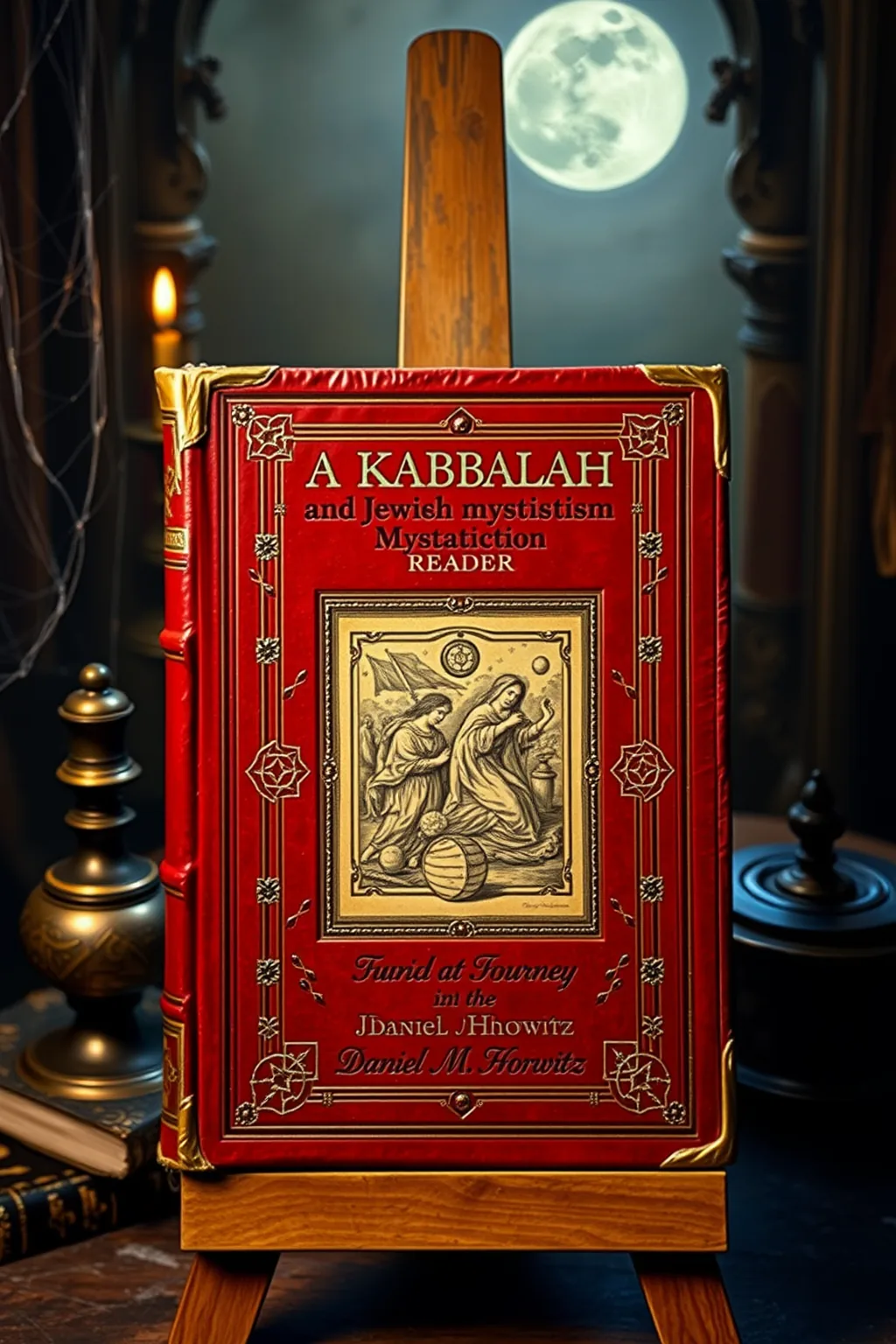
A Kabbalah and Jewish Mysticism Reader
 77
77

A Kabbalah and Jewish Mysticism Reader
Daniel M. Horwitz’s *A Kabbalah and Jewish Mysticism Reader* offers a structured entry point into a vast and often intimidating body of literature. The decision to present annotated selections from figures like Abraham Joshua Heschel alongside the Zohar is commendable, bridging the gap between academic philosophy and the visceral experience of Kabbalistic texts. Horwitz's introductions are particularly helpful in contextualizing readings for students encountering these ideas for the first time, providing necessary historical and conceptual frameworks. However, the reader occasionally feels more like a syllabus than a standalone exploration. While the selection is broad, the commentary, though insightful, sometimes prioritizes pedagogical function over deep interpretive engagement, leaving one wishing for more of Horwitz’s unique voice on specific passages. Despite this, the anthology stands as a valuable resource for initiating study in a complex field.
📝 Description
77
Daniel M. Horwitz published A Kabbalah and Jewish Mysticism Reader in 2016, an annotated anthology of key Jewish mystical texts.
This collection presents a curated selection of Jewish mystical writings, designed for educational use. It includes excerpts from significant texts such as the Talmud and the Zohar, alongside writings from prominent figures like Ba'al Shem Tov, Rav Kook, and Abraham Joshua Heschel. Editor Daniel M. Horwitz provides introductions and commentary to aid understanding for students and educators.
The reader is suitable for adult education and college courses, accommodating learners from beginners to advanced scholars. It is especially relevant for those studying religious studies, comparative mysticism, or the history of religion. The book addresses the growing academic interest in esoteric traditions and contributes to scholarly discussions on Kabbalah and Jewish mysticism.
This reader enters the academic study of Kabbalah, a field shaped by scholars like Gershom Scholem. It engages with the ongoing effort to interpret and share Jewish mystical thought, a tradition historically marked by exclusive interpretations. By compiling these texts, the book participates in the broader scholarly project of understanding Jewish mysticism's place in intellectual history, following its emergence in academic circles since the late 19th century.
💡 Why Read This Book?
• Learn about the five major categories of Jewish mysticism as outlined by Daniel M. Horwitz, gaining a structured understanding of the tradition's diverse expressions. • Engage directly with primary source excerpts from the Zohar and writings by Ba'al Shem Tov, understanding their foundational role in Kabbalistic thought. • Appreciate the commentary provided by Horwitz on figures like Rav Kook, offering scholarly context to complex theological concepts first published in 2016.
⭐ Reader Reviews
Honest opinions from readers who have explored this book.
❓ Frequently Asked Questions
What are the five major types of Jewish mysticism discussed in this reader?
The reader, published in 2016, categorizes Jewish mysticism into five primary types, which are detailed in Daniel M. Horwitz's introduction, offering a framework for understanding the diverse expressions of this tradition.
Which foundational texts are included in A Kabbalah and Jewish Mysticism Reader?
The anthology features annotated readings from key Jewish mystical works, including selections from the Talmud and the influential Zohar, providing direct access to primary source material.
Who are some of the key figures whose writings are featured?
The book includes writings by significant mystics and thinkers such as Ba'al Shem Tov, Rav Kook, and Abraham Joshua Heschel, alongside selections from the Talmud and Zohar.
What is the intended audience for this book?
This reader is designed for adult education and college classroom settings, making Jewish mystical works accessible to learners of all levels, from beginners to advanced students.
What is the significance of the annotations and introductions?
Daniel M. Horwitz provides insightful introductions and commentary to accompany the readings, aiming to facilitate teaching and learning by offering historical context and conceptual guidance.
When was A Kabbalah and Jewish Mysticism Reader first published?
The book was first published in April 2016, positioning it as a contemporary resource for the study of Jewish mysticism.
🔮 Key Themes & Symbolism
The Nature of Divine Emanation
The reader explores the concept of divine emanation through the Sefirot, a central theme in Kabbalistic cosmology. It explores how the Infinite (*Ein Sof*) manifests in the created world, a process often described through metaphors of light, vessels, and divine contraction (*Tzimtzum*). Texts from the Zohar and later Kabbalists illuminate these complex ideas, offering perspectives on the structure of reality and the divine presence within it.
Hasidic Devotion and Immanence
The writings of Ba'al Shem Tov introduce readers to the core tenets of Hasidism, emphasizing the immanence of God in all aspects of creation and the importance of joyous, ecstatic prayer. This perspective contrasts with more intellectual or ascetic forms of mysticism, highlighting the potential for divine connection through everyday life and sincere devotion. The reader showcases how this movement revitalized Jewish mystical practice.
Comparative Mystical Frameworks
Daniel M. Horwitz’s introduction categorizes Jewish mysticism into five distinct types, providing a comparative framework for understanding its varied expressions. This analytical approach helps readers discern the differences and connections between various schools of thought, from the early Merkabah mysticism to later Lurianic Kabbalah and Hasidism, offering a structured way to approach the subject.
The Role of Sacred Texts
This reader underscores the critical role of sacred texts in Jewish mysticism. It presents selections from the Talmud and the Zohar, demonstrating how these foundational works are interpreted and reinterpreted through a mystical lens. The commentary guides readers in understanding how scripture and tradition serve as conduits for divine revelation and mystical experience.
💬 Memorable Quotes
Direct passages from the work, attributed to the author.
“Five major types of Jewish mysticism are presented.”
— This highlights the reader's structured approach, aiming to categorize and clarify the diverse historical and philosophical expressions of Jewish mystical thought for pedagogical purposes.
“Readings from the Talmud and Zohar are included.”
— This emphasizes the anthology's focus on primary source material, featuring foundational texts central to the development and understanding of Kabbalistic ideas.
“Commentary accompanies writings by Ba'al Shem Tov.”
— This indicates the inclusion of Hasidic thought, with contextual analysis provided to help readers grasp the specific teachings and spiritual approach of this influential movement.
“Designed to facilitate teaching to all levels.”
— This points to the book's primary intention as an educational tool, aiming to bridge the gap between complex mystical concepts and learners in academic or adult education settings.
“Works by Rav Kook and Abraham Joshua Heschel are featured.”
— This shows the inclusion of more modern thinkers, demonstrating the continuity and evolution of Jewish mystical thought into the 20th century, alongside classical texts.
🌙 Esoteric Significance
Tradition
This work is firmly rooted in the Kabbalistic tradition, a lineage within Jewish mysticism that explores divine cosmology, creation, and the human soul's relationship with the divine. It also touches upon Hasidic thought, a significant offshoot that emphasizes immanence and ecstatic devotion. By presenting annotated readings from foundational texts like the Zohar and works by influential figures such as Ba'al Shem Tov, the reader positions itself as a gateway to understanding these specific esoteric streams within Judaism.
Symbolism
Central to Jewish mysticism are symbols like the Tree of Life (*Etz Chaim*), representing the ten Sefirot (divine emanations) and their interconnectedness, and the concept of *Ein Sof*, the Infinite, often symbolized by light or emptiness. The reader likely explores these through its included texts, offering insights into how these symbols function as conceptual maps of the divine and the cosmos, facilitating meditative and contemplative practices.
Modern Relevance
Contemporary thinkers and practitioners engaging with Kabbalah and Jewish mysticism, as well as scholars of comparative religion and esotericism, find value in curated anthologies like this. It provides a structured approach to primary sources, aiding those who seek to understand the historical development and diverse expressions of Jewish mystical thought in relation to modern spiritual inquiry and academic research.
👥 Who Should Read This Book
• Students of comparative religion seeking a structured introduction to Jewish mystical traditions, including Kabbalah and Hasidism. • Adult education facilitators and college instructors needing a curated anthology with helpful commentary for teaching foundational mystical texts. • Individuals interested in exploring the theological and philosophical underpinnings of Jewish mysticism, from classical sources like the Zohar to modern interpreters.
📜 Historical Context
First published in April 2016, *A Kabbalah and Jewish Mysticism Reader* emerges in an era of robust academic engagement with esoteric traditions. The study of Kabbalah, significantly advanced by scholars like Gershom Scholem in the mid-20th century, has since broadened, making primary texts more accessible. This reader builds upon that foundation, offering curated selections that read through the complex intellectual currents of Jewish mysticism from medieval Spain, where the Zohar emerged, to the development of Hasidism in 18th-century Eastern Europe. It implicitly engages with a lineage of scholarship that has sought to integrate these often-esoteric teachings into broader historical and philosophical discourse, moving beyond earlier, more devotional or purely theological interpretations prevalent before the academic study of mysticism gained traction.
📔 Journal Prompts
The five major types of Jewish mysticism as presented by Horwitz.
The role of the Zohar in articulating Kabbalistic cosmology.
Ba'al Shem Tov's emphasis on divine immanence.
The concept of Ein Sof and its symbolic representation.
Reflections on the Sefirot as divine emanations.
🗂️ Glossary
Kabbalah
A system of Jewish mysticism that explores the nature of God, creation, and the human soul, often utilizing esoteric interpretations of the Torah and sacred texts.
Zohar
The foundational work of Kabbalah, a collection of mystical commentaries on the Torah, believed by many to have been written by Rabbi Shimon bar Yochai in the 2nd century CE, though scholarly consensus places its composition later.
Ein Sof
A Kabbalistic term meaning 'Without End' or 'Infinite,' referring to the Godhead in its absolute, unknowable, and transcendent aspect before any emanation or creation occurred.
Sefirot
The ten divine emanations or attributes through which God, the Ein Sof, is said to have created and continues to sustain the universe. They form the structure of the Kabbalistic Tree of Life.
Tzimtzum
A Kabbalistic concept, particularly central in Isaac Luria's teachings, describing God's 'contraction' or withdrawal of divine light to create a space for creation to exist.
Ba'al Shem Tov
Rabbi Israel ben Eliezer (c. 1700–1760), founder of the Hasidic movement, known for his teachings on divine immanence, joy, and the accessibility of mystical experience for all Jews.
Rav Kook
Rabbi Abraham Isaac Kook (1865–1935), a seminal figure in modern Religious Zionism and a philosopher and mystic whose writings synthesized traditional Kabbalah with modern thought.