A Big Jewish book

 81
81

A Big Jewish book
Jerome Rothenberg’s A Big Jewish Book is less a book and more a densely packed archive of Jewish cultural memory, refracted through the prism of experimental poetry. The sheer scope of its ambition is its greatest strength; Rothenberg marshalls Yiddishkeit, Kabbalistic lore, and diasporic laments into a singular, often jarring, poetic construct. However, this encyclopedic quality can also be a limitation, demanding considerable readerly effort to parse its intricate layers. The section dedicated to reimagining the Kaddish prayer, for instance, powerfully demonstrates the book’s capacity to excavate profound spiritual and emotional resonances from seemingly disparate textual fragments. It is a challenging, essential document for understanding post-war Jewish American literary expression.
📝 Description
81
Jerome Rothenberg published A Big Jewish Book in 1978, assembling texts to explore Jewish identity.
A Big Jewish Book is not a traditional narrative but an experimental collection of writings and images. Published in 1978, it brings together Yiddish poetry, Hasidic stories, Kabbalistic ideas, and historical records. Jerome Rothenberg uses these diverse sources to create a complex portrait of Jewish life and thought. The book questions and reshapes ideas about what it means to be Jewish, especially in relation to literature and cultural heritage. It appeals to readers interested in avant-garde poetry and the ways contemporary artists engage with their traditions.
The work emerged during a time of significant poetic experimentation and a growing focus on ethnic identities in American literature. Rothenberg, a notable figure in post-war avant-garde poetry, created a dense, fragmented structure that mirrors a cultural shift away from established forms. This approach offers an alternative to more conventional explorations of heritage. The book's structure and content are a deliberate response to the challenges of representing history and personal experience in the late 20th century.
This book engages with Jewish mysticism through its inclusion of Kabbalistic concepts and Hasidic narratives. It does not present a systematic theological treatise but rather uses these elements as fragments within a larger poetic collage. The work reflects a modern approach to esoteric traditions, treating them not as dogma but as sources for creative reimagining. Rothenberg's method suggests that identity and spirituality can be constructed from dispersed textual and cultural elements, echoing certain modern interpretations of mystical thought.
💡 Why Read This Book?
• Gain insight into the experimental poetic techniques Rothenberg employed to reconstruct Jewish identity, particularly his use of collage and textual juxtaposition, as seen in the diverse sources he draws upon. • Understand the specific historical and cultural milieu of 1978, a period of renewed ethnic consciousness and poetic innovation that shaped the book's radical form. • Explore the complex relationship between tradition and avant-garde practice through Rothenberg's engagement with specific Jewish concepts like the diaspora and Kabbalistic thought.
⭐ Reader Reviews
Honest opinions from readers who have explored this book.
❓ Frequently Asked Questions
What is the primary purpose of Jerome Rothenberg's A Big Jewish Book?
The book serves as an experimental exploration of Jewish identity and heritage through poetry. It aims to reconstruct and interrogate these themes by assembling fragments from various Jewish cultural and religious sources, challenging conventional literary forms.
When was A Big Jewish Book first published and by whom?
A Big Jewish Book was first published in 1978 by Jerome Rothenberg, a significant figure in the American avant-garde poetry movement.
What kind of literary style does A Big Jewish Book employ?
It employs an experimental and avant-garde style, characterized by collage, fragmentation, and the juxtaposition of diverse textual materials, including Yiddish poetry, religious texts, and historical documents.
Who are some key figures or movements that influenced A Big Jewish Book?
Influences include Yiddish poets, Hasidic teachings, Kabbalistic mysticism, and the broader avant-garde literary movements of the mid-20th century, such as the Black Mountain poets.
Is A Big Jewish Book a narrative or a collection of poems?
It is best understood as an assemblage or a poetic sequence rather than a traditional narrative. It combines poetry, prose fragments, and visual elements to create a complex, multi-layered work.
What specific Jewish traditions does Rothenberg draw upon?
Rothenberg draws upon a wide spectrum of Jewish traditions, including Yiddish literature, Hasidism, Kabbalah, liturgical texts, and historical accounts of Jewish life in the diaspora.
🔮 Key Themes & Symbolism
Diaspora and Displacement
The work grapples profoundly with the experience of the Jewish diaspora, exploring themes of exile, rootlessness, and the longing for a homeland or spiritual center. Rothenberg assembles fragments from centuries of Jewish history and literature that speak to this perpetual state of being 'other' and 'away.' The poetic form itself, fragmented and dispersed, mirrors the scattered nature of Jewish communities across the globe. It questions how identity is maintained and transformed under conditions of displacement, drawing on both historical accounts and mystical interpretations of cosmic separation.
Reimagining Jewish Identity
A Big Jewish Book is a significant intervention in how Jewish identity can be represented in contemporary literature. Rothenberg deliberately moves beyond conventional narratives, employing avant-garde techniques to create a fluid, complex portrait. He interrogates inherited notions of Jewishness, seeking to reclaim and recontextualize them for a modern audience. This involves engaging with both the sacred and the secular aspects of Jewish life, demonstrating that identity is a dynamic construct shaped by memory, language, and continuous reinterpretation.
The Poetics of Kabbalah and Mysticism
Rothenberg's work is deeply influenced by Jewish mystical traditions, particularly Kabbalah. He integrates Kabbalistic concepts, symbols, and linguistic play into his poetic structure, suggesting that mystical experience offers a framework for understanding the divine and the human condition. The book explores the idea of hidden meanings within texts and the universe, and how language itself can be a conduit to transcendent realities. This engagement with mysticism provides a spiritual dimension to the exploration of diaspora and identity.
Language as Cultural Archive
This book treats language not merely as a tool for communication but as a living archive of cultural memory and spiritual heritage. Rothenberg meticulously gathers and reassembles words, phrases, and texts from diverse Jewish sources – Yiddish folk songs, ancient prayers, Hasidic teachings, historical documents. By placing these elements in new contexts, he seeks to reveal their latent power and to demonstrate how language shapes and preserves collective identity across generations, even in the face of historical upheaval and assimilation.
💬 Memorable Quotes
Direct passages from the work, attributed to the author.
“The Kaddish is a prayer for the dead, a prayer for the living, a prayer for the world.”
— This interpretation of the Kaddish prayer highlights its complex nature, extending beyond mere mourning to encompass a broader affirmation of life, community, and cosmic order within Jewish tradition.
“The scattered pieces of Israel, held together by a thread of longing.”
— This phrase captures the essence of the diasporic experience, emphasizing the fragmentation of the Jewish people across the globe and the persistent, unifying force of collective memory and hope.
“A language of exile that becomes a language of return.”
— This concept suggests that the very language developed and shaped by the experience of exile can, paradoxically, contain the seeds of spiritual or cultural re-connection and homecoming.
“The word broken, the word made whole again.”
— This speaks to the process of textual and spiritual reconstruction central to the book, where fragmented or lost elements of Jewish tradition are reassembled to create new meaning and wholeness.
“From the shtetl to the cybernetic age, the echo persists.”
— This highlights the enduring relevance of Jewish cultural and spiritual themes across vastly different historical periods, from traditional Eastern European villages to modern technological societies.
🌙 Esoteric Significance
Tradition
A Big Jewish Book draws heavily from the Hermetic and Kabbalistic traditions within Judaism. Rothenberg reinterprets these esoteric streams not as isolated doctrines but as living reservoirs of symbolic language and spiritual practice. The work departs from purely academic or devotional approaches by integrating these elements into a radical poetic methodology, suggesting that the act of poetic creation itself can be a form of spiritual exploration and re-enchantment.
Symbolism
Key symbols include the Sefirot from Kabbalah, representing divine emanations and pathways of creation, which Rothenberg uses to structure his exploration of consciousness and identity. The motif of the 'broken vessel' (shvirat ha-kelim) from Lurianic Kabbalah also appears, symbolizing cosmic fragmentation and the task of repair, mirrored in the book’s own fragmented structure. The Yiddish language itself functions as a symbol of diasporic survival and cultural persistence.
Modern Relevance
Contemporary poets and scholars interested in the intersections of language, spirituality, and identity find Rothenberg’s work seminal. Thinkers exploring post-modern approaches to religious texts and practitioners of experimental poetics continue to draw inspiration from his innovative methods. His approach to re-contextualizing ancient mystical traditions within a contemporary avant-garde framework remains relevant for those seeking to bridge the gap between esoteric knowledge and modern artistic expression.
👥 Who Should Read This Book
• Students of avant-garde and experimental poetry seeking to understand how poets engage with cultural heritage and religious traditions in non-traditional ways. • Readers interested in Jewish studies and comparative religion who wish to explore the representation of Jewish identity and mysticism in 20th-century literature. • Practitioners of textual analysis and literary scholars looking for a case study in radical poetic form and the re-appropriation of historical and religious materials.
📜 Historical Context
Published in 1978, Jerome Rothenberg’s A Big Jewish Book emerged from a fertile period of experimental literature and a concurrent resurgence of interest in ethnic and religious identities. Rothenberg was a key figure in the post-war avant-garde, associated with movements like the San Francisco Renaissance and the poets of Black Mountain College. The book’s dense, collage-like structure can be seen as a response to the fragmented cultural field of the late 20th century and a departure from more conventional poetic forms. In an era when poets like Allen Ginsberg were also exploring their Jewish heritage, Rothenberg’s approach was distinct in its radical formal experimentation and its deep engagement with Kabbalistic and Yiddish sources. The work engaged with a cultural milieu where reclaiming ancestral traditions was becoming increasingly significant, offering a complex counterpoint to assimilationist pressures.
📔 Journal Prompts
The concept of the 'broken vessel' in relation to personal identity.
Reflections on the role of Yiddish language in preserving cultural memory.
How does Rothenberg's poetic fragmentation mirror the experience of diaspora?
Exploring the Kabbalistic Sefirot as pathways of personal transformation.
The tension between tradition and innovation in representing spiritual experience.
🗂️ Glossary
Kabbalah
A system of Jewish mysticism that explores the nature of God, the creation of the universe, and the relationship between the divine and humanity, often through symbolic interpretations of scripture and numerical values.
Yiddish
A High German-based language historically spoken by Ashkenazi Jews, characterized by Hebrew and Aramaic elements, serving as a significant cultural and literary medium for diasporic Jewry.
Diaspora
The dispersion of any people from their original homeland, specifically referring to the scattering of Jewish communities beyond ancient Israel and their subsequent history in various lands.
Sefirot
In Kabbalah, the ten divine emanations or attributes through which God interacts with the world, often depicted as a Tree of Life diagram.
Avant-garde
New and experimental ideas and methods in art, music, literature, or culture, often challenging established norms and traditions.
Kaddish
An ancient Jewish liturgical prayer, recited in Aramaic, primarily commemorating the dead and affirming God's sovereignty, particularly significant in memorial services.
Shtetl
A small town or village in Eastern Europe, historically with a significant Jewish population, representing a distinct cultural and social environment.
🔮 Readers Also Liked
Browse all →






More by Jerome Rothenberg
All books →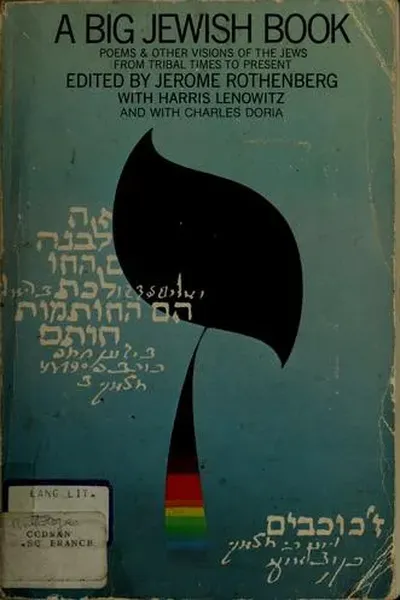
More Free Mysticism & Contemplation Books
View all →