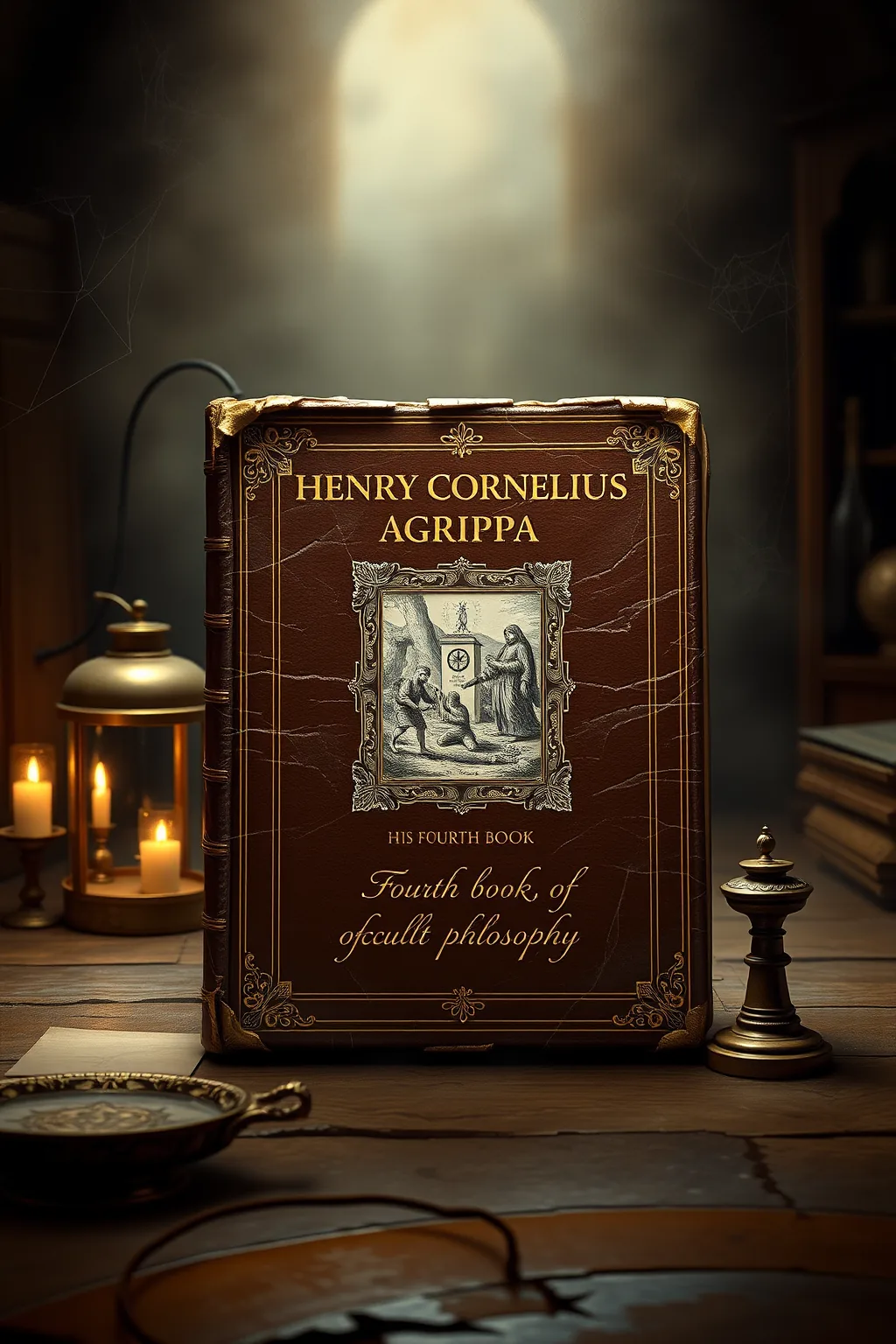
Henry Cornelius Agrippa, his fourth book of occult philosophy
 61
61

Henry Cornelius Agrippa, his fourth book of occult philosophy



Marcus Thorne (Esoteric Sciences Reviewer) — Heinrich Cornelius Agrippa's 'Fourth Book of Occult Philosophy' stands as a towering achievement in Western esotericism, offering a profound, albeit challenging, exploration of higher magic and divine science. Unlike its predecessors, this work plunges into the practical and theoretical applications of occult forces, focusing on astral projection, angelic conjuration, and the intricate pathways of spiritual ascension. Agrippa's synthesis of Hermetic, Neoplatonic, and Kabbalistic thought provides a robust framework for understanding the interconnectedness of the material and spiritual realms. The text demands rigorous study but rewards the dedicated practitioner with unparalleled insights into the nature of consciousness and the hidden mechanics of the universe. An essential read for serious occult scholars and advanced practitioners.
📝 Description
61
Agrippa's 'Fourth Book of Occult Philosophy' was published posthumously around 1559.
This book is an appendix to Agrippa's famous 'Three Books of Occult Philosophy.' It expands on themes introduced in the earlier volumes, focusing on practical applications of occult knowledge. Agrippa outlines methods for invoking spirits and understanding celestial influences. He details various rituals and magical operations aimed at achieving spiritual enlightenment and communion with divine forces.
The text synthesizes Neoplatonic, Hermetic, and Kabbalistic ideas. Agrippa presents a framework for understanding the interconnectedness of the cosmos. He explains how the microcosm, or human being, reflects the macrocosm, the universe. The book is intended for serious practitioners seeking to harness occult forces for personal transformation and spiritual growth.
Published after Heinrich Cornelius Agrippa's death, this work stands as a continuation of his more widely known 'Three Books of Occult Philosophy.' It draws heavily on Renaissance Neoplatonism and the Hermetic tradition, particularly the concept of correspondences between the celestial spheres and earthly phenomena. The text also incorporates elements of Kabbalah, presenting a synthesis of magical and philosophical ideas prevalent in occult circles of the 16th century. It reflects a desire to systematize and provide practical guidance for those seeking to understand and interact with the hidden forces of the universe.
💡 Why Read This Book?
Dive into the foundational texts of Western esotericism. Agrippa's 'Fourth Book' offers direct access to ancient magical and philosophical systems, revealing the interconnectedness of the cosmos and the potential for human spiritual elevation. Ideal for advanced practitioners, occult scholars, and seekers of hidden knowledge who wish to deepen their understanding of divine forces and their application.
⭐ Reader Reviews
Honest opinions from readers who have explored this book.
❓ Frequently Asked Questions
Is this book a direct continuation of Agrippa's 'Three Books of Occult Philosophy'?
While often presented as a 'fourth book,' its authorship is debated, with some scholars attributing it to Agrippa and others to his disciples, building upon his foundational work. It expands upon themes of celestial magic and angelic interactions.
What are the primary subjects covered in this text?
The book delves into advanced topics such as theurgy, angelic conjuration, astral projection, the nature of spirits, and the higher mysteries of divine philosophy, aiming to guide the practitioner towards spiritual perfection.
Who is the intended audience for this book?
This work is best suited for experienced practitioners of occult arts, scholars of Western esotericism, and those with a solid understanding of Agrippa's earlier works and related philosophical traditions.
Does this book contain practical spells or rituals?
While the text provides theoretical frameworks and descriptions of practices, its focus is more on the philosophical underpinnings and spiritual preparation required for advanced magical operations, rather than a mere collection of spells.
What is the historical significance of this 'Fourth Book'?
It represents a significant, albeit sometimes controversial, development in Renaissance occultism, influencing subsequent generations of magicians and mystics by pushing the boundaries of theoretical and practical occult philosophy.
🔮 Key Themes & Symbolism
Theurgy and Divine Communion
This theme explores the practice of theurgy, the art of invoking divine intelligences and spirits to achieve union with the divine. Agrippa presents a sophisticated system for ascending through various spiritual hierarchies, utilizing prayer, contemplation, and ritualistic practices to align the practitioner with celestial forces. The goal is not mere manipulation of energy, but a profound spiritual transformation that leads to a direct experience of the divine, bridging the gap between the human and the sacred.
Astral Projection and the Subtle Body
The text offers insights into the nature of the astral body and its capacity for independent travel beyond the physical form. Agrippa details methods and philosophical considerations for astral projection, emphasizing the importance of mental discipline, purified intention, and understanding the interconnectedness of the spiritual and material planes. This exploration reveals the potential for the soul to traverse unseen realms, gather hidden knowledge, and interact with spiritual entities in a non-physical state.
Angelic Hierarchies and Spiritual Guidance
A central tenet of the 'Fourth Book' is the intricate system of angelic hierarchies and their role as intermediaries between the divine and humanity. Agrippa outlines methods for understanding and communing with these angelic beings, viewing them as guides and sources of spiritual wisdom. The text suggests that by correctly invoking and collaborating with these celestial intelligences, practitioners can gain useful insights, receive divine assistance, and facilitate their spiritual evolution.
💬 Memorable Quotes
Direct passages from the work, attributed to the author.
“The universe is a book, and those who do not travel read only one page.”
— This metaphor highlights the importance of experience and exploration, both internal and external, for gaining true wisdom and a comprehensive understanding of existence.
“Magic is the science and art of understanding the hidden harmony of the world.”
— This defines magic not as mere conjuration, but as a profound philosophical pursuit aimed at uncovering the underlying order and interconnectedness that govern all phenomena.
“The highest wisdom is to know the true nature of things.”
— This underscores the ultimate goal of occult study: to achieve an authentic, unadulterated comprehension of reality, free from illusion and misunderstanding.
“Through contemplation, we ascend to the divine.”
— This statement points to the power of focused, introspective thought as a primary means of spiritual elevation and connection with higher consciousness.
💡 Key Ideas
Editorial paraphrase of the work's core concepts — not direct quotes.
Know thyself, and thou shalt know the universe and the gods.
This quote emphasizes the Hermetic principle of correspondence, suggesting that understanding one's inner self is the key to comprehending the greater cosmic order and divine principles.
🌙 Esoteric Significance
Tradition
This work is deeply rooted in the Hermetic, Neoplatonic, and Kabbalistic traditions, forming a central to Renaissance occult philosophy. It synthesizes these streams into a cohesive system of spiritual ascent, divinatory practices, and theurgy, aiming to bridge the human and divine through understanding cosmic correspondences and angelic hierarchies.
Symbolism
The text is rich with symbolism, drawing from planetary, angelic, and elemental correspondences. Symbols are not merely decorative but function as keys to unlocking deeper spiritual truths and facilitating communication with higher realms. Understanding these symbolic languages is essential for deciphering the intricate mechanisms of magic and the universe as presented by Agrippa.
Modern Relevance
In contemporary esoteric circles, Agrippa's 'Fourth Book' remains a vital text for those seeking a structured approach to advanced occultism and spiritual development. Its emphasis on theurgy, divine communion, and the interconnectedness of all things offers timeless principles for practitioners looking to deepen their spiritual practice and understanding of the cosmos.
👥 Who Should Read This Book
This profound text is recommended for seasoned practitioners of occult arts, scholars specializing in Western Esotericism, and serious students of Renaissance magic who possess a foundational understanding of Agrippa's 'Three Books' and related philosophical systems. It is not a starting point for novices but rather a deep dive for those ready to engage with advanced theoretical and practical aspects of theurgy, angelic communication, and astral exploration. Seekers aiming for profound spiritual transformation and a comprehensive grasp of occult cosmology will find immense value within its pages.
📜 Historical Context
Emerging from the intellectual ferment of the Renaissance, Heinrich Cornelius Agrippa von Nettesheim's works, including the debated 'Fourth Book of Occult Philosophy,' represent a central moment in the history of Western esotericism. Written in an era of renewed interest in classical philosophy, Hermeticism, and Kabbalah, these texts synthesized ancient wisdom with contemporary Christian thought, attempting to reconcile magical practices with theological frameworks. Agrippa, a physician, theologian, and occultist, navigated a complex intellectual landscape, often facing scrutiny from religious authorities. His writings provided a comprehensive, albeit sometimes controversial, system of occult philosophy that greatly influenced subsequent generations of occultists, alchemists, and mystics, shaping the trajectory of magical thought from the 16th century onwards.
📔 Journal Prompts
Reflect on a recent experience of synchronicities and consider how they might represent divine guidance.
Meditate on the concept of 'as above, so below.' How does this principle manifest in your personal life?
Explore the symbolism of a specific angel or divine name mentioned in the text. What qualities or energies does it represent to you?
Consider your current understanding of your own 'astral body.' What practices could help you become more aware of it?
How can the practice of theurgy be integrated into daily life, beyond formal ritual, to foster a sense of divine connection?
🗂️ Glossary
Theurgy
A system of ritualistic magic aimed at invoking divine beings or forces to achieve spiritual purification and union with the divine, distinct from goetia or lower magic.
Astral Projection
The practice of intentionally projecting one's consciousness or subtle body (astral body) out of the physical form to travel and interact in non-physical realms.
Hermeticism
A philosophical and religious tradition based on the writings attributed to Hermes Trismegistus, emphasizing divine wisdom, cosmic unity, and the interconnectedness of all things through principles like 'as above, so below'.
Neoplatonism
A philosophical school derived from Plato's teachings, focusing on the concept of the One as the ultimate source of all reality and the soul's journey towards mystical union with it.
Kabbalah
A complex system of Jewish mysticism that explores the nature of God and the universe through symbolic interpretation of scripture and concepts like the Sefirot (divine emanations).
This book appears in 5 collections
🔮 Readers Also Liked
Browse all →







More by Heinrich Cornelius Agrippa von Nettesheim
All books →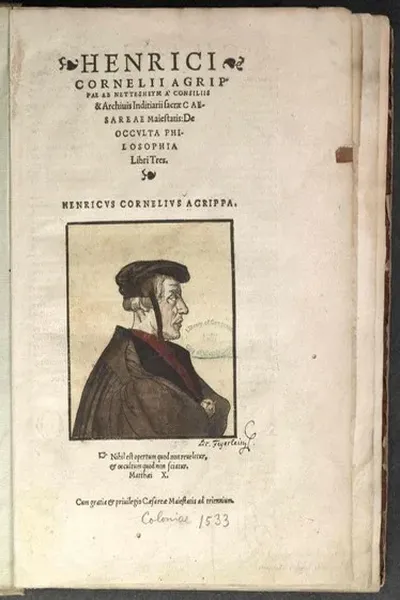





From the “Occultism” Collection
View all →






More Free Divination & Tarot Books
View all →