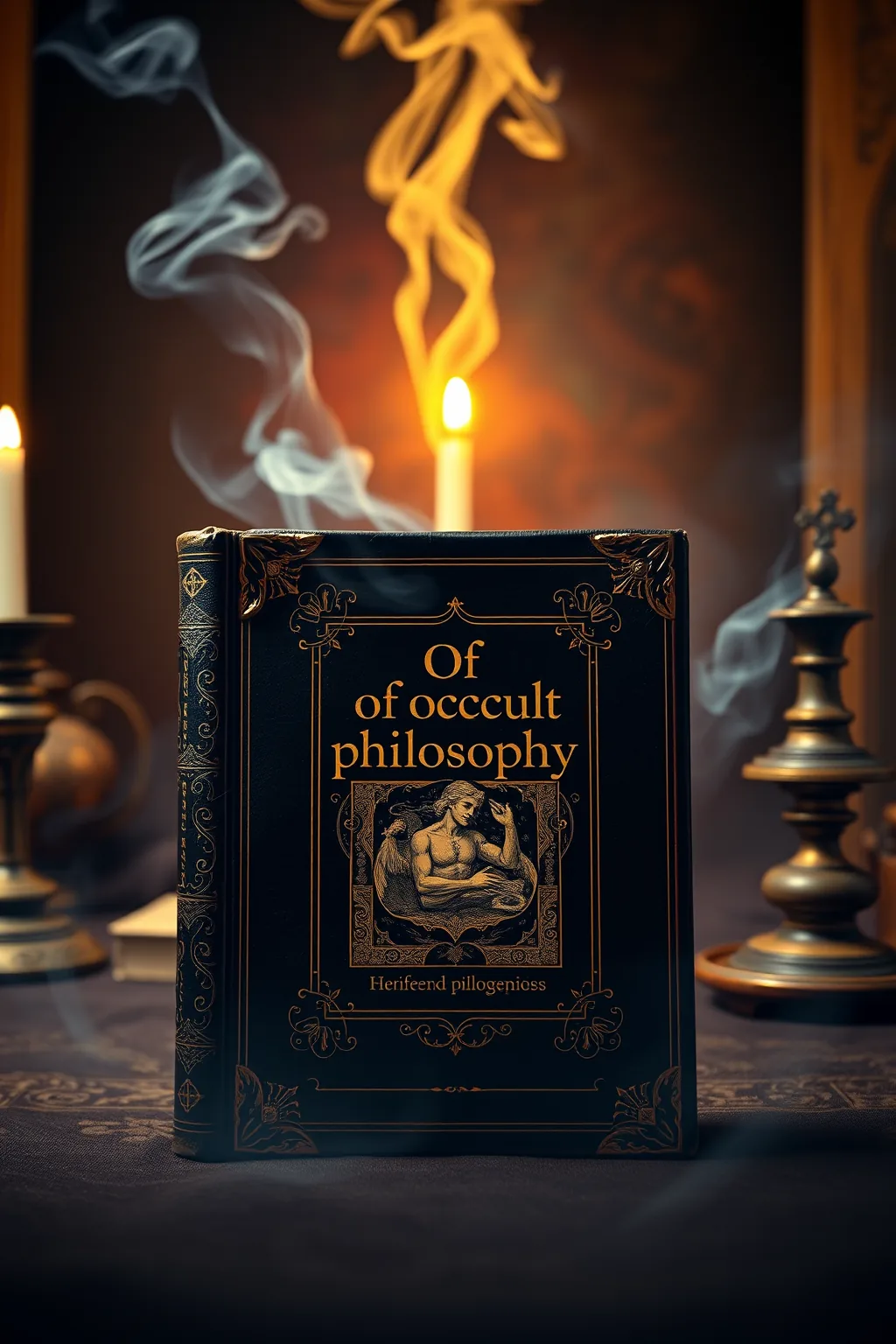
Of occult philosophy
 61
61

Of occult philosophy


Isolde Whitaker, Sacred Texts Editor, writes: Agrippa's 'Of Occult Philosophy' remains an indispensable pillar for anyone serious about the history and practice of Western esotericism. This comprehensive work, meticulously structured, offers profound insights into the interconnectedness of all things, from celestial spheres to earthly elements. Its strength lies in its systematic approach, synthesizing diverse philosophical and magical traditions into a coherent framework. While demanding, it rewards diligent study with a deep understanding of ancient magical theory, symbolism, and cosmology. Essential for scholars, practitioners, and serious seekers of hidden wisdom.
📝 Description
61
Heinrich Cornelius Agrippa's 'Of Occult Philosophy' was first published in 1531.
Heinrich Cornelius Agrippa von Nettesheim's 'Of Occult Philosophy' presents a systematic approach to magic, drawing from diverse philosophical and religious traditions. The work details correspondences between the celestial, elemental, and earthly realms, explaining how these connections can be understood and manipulated. Agrippa discusses the power inherent in divine names and symbols, and how understanding the structure of the cosmos can lead to greater knowledge.
The book is structured into three distinct parts. The first volume addresses natural magic, concerning the powers of the physical world. The second volume focuses on celestial and divine magic, including angelic magic and rituals. The third volume explores ceremonial magic, detailing its practice and purpose. Agrippa's aim was to reconcile magical practices with Christian theology, a complex undertaking for his time.
Published in 1531, 'Of Occult Philosophy' is a significant compilation of Renaissance magical thought. Agrippa synthesized Neoplatonic philosophy, Hermetic texts, Kabbalistic ideas, and elements of Christian mysticism. His work attempted to create a coherent system of magic that was both intellectually rigorous and theologically sound. It served as a reference for many subsequent occult traditions, bridging medieval magical practices with the humanist intellectual currents of the Renaissance.
💡 Why Read This Book?
Embark on a profound exploration of the universe's hidden architecture. 'Of Occult Philosophy' offers a rare glimpse into the foundational principles of Western magic and mysticism, revealing the interconnectedness of all existence. It is essential reading for scholars of esotericism, practitioners seeking to deepen their understanding of magical theory, and spiritual seekers yearning to comprehend the deeper currents of reality.
⭐ Reader Reviews
Honest opinions from readers who have explored this book.
❓ Frequently Asked Questions
What is the primary focus of Agrippa's 'Of Occult Philosophy'?
The book's primary focus is to systematically present a comprehensive theory of occult philosophy, exploring the interconnectedness of the natural, celestial, and divine realms through magic, cosmology, and ancient wisdom traditions.
Is this book suitable for beginners in occult studies?
While foundational, Agrippa's work is dense and complex. Beginners are advised to approach it with patience, perhaps with supplementary reading, as it assumes a certain level of philosophical and intellectual background.
What are the main branches of occultism discussed?
Agrippa discusses natural magic (physics), celestial magic (astrology and astronomy), and ceremonial or divine magic, exploring their theoretical underpinnings and practical applications.
Does the book provide practical spells or rituals?
While it lays the theoretical groundwork and discusses the principles behind rituals, the emphasis is more on understanding the philosophical and cosmological basis of magic rather than providing a grimoire of specific spells.
What is the historical significance of 'Of Occult Philosophy'?
It was one of the most influential occult texts of the Renaissance, shaping magical thought for centuries and impacting figures from Dee to the Rosicrucians, making it a crucial historical document.
🔮 Key Themes & Symbolism
The Tripartite Nature of Magic
Agrippa meticulously outlines the three primary divisions of occult philosophy: natural, celestial, and divine or theurgic magic. Natural magic explores the inherent virtues and sympathies within the material world, drawing power from earthly substances and their properties. Celestial magic looks at the influence of the stars and planets, understanding their correspondences with earthly phenomena and human destiny. Divine magic, the highest form, focuses on invoking spiritual entities and achieving union with the divine through prayer, contemplation, and sacred rites. This tripartite structure provides a comprehensive framework for understanding the diverse applications and theoretical underpinnings of magical practice.
The Great Chain of Being and Correspondences
Central to Agrippa's philosophy is the concept of the Great Chain of Being, a hierarchical structure connecting all levels of existence from the divine down to the most base matter. He posits a universe permeated by a network of hidden sympathies and antipathies, where everything corresponds to something else. The macrocosm (the universe) is reflected in the microcosm (humanity), and celestial bodies influence earthly events. Understanding these correspondences is key to effective magic, allowing the practitioner to manipulate one level of reality by acting upon its corresponding element elsewhere in the chain.
The Power of Symbols, Names, and Numbers
Agrippa emphasizes the profound power inherent in symbols, divine names, and numerical sequences. He argues that these elements are not mere arbitrary representations but are imbued with spiritual force and carry inherent meaning that connects to the underlying reality. By understanding and properly utilizing sacred names, sigils, and geometrical patterns derived from principles like the Kabbalistic Tree of Life, practitioners can tap into specific spiritual energies and influence the forces of nature, the heavens, and the spiritual realms. This highlights the importance of precise knowledge and intention in magical workings.
💬 Memorable Quotes
Direct passages from the work, attributed to the author.
“The world is a great beast, and man is a little world.”
— This aphorism illustrates the macrocosm-microcosm principle, suggesting that humanity mirrors the universe, possessing similar structures and potentials, making the inner accessible through the outer.
“There are three worlds: the material, the spiritual, and the divine.”
— This highlights the fundamental divisions of reality as understood in occult philosophy, outlining the distinct domains of existence that magic seeks to bridge or influence.
“Magic is the science of the hidden virtues of things.”
— This defines magic not as mere trickery, but as a profound investigation into the secret powers and inherent qualities that lie within all aspects of creation.
“The power of the name of God is above all powers.”
— This emphasizes the supreme significance of divine appellations in ceremonial magic, suggesting that the correct utterance or understanding of God's name holds immense spiritual authority and efficacy.
💡 Key Ideas
Editorial paraphrase of the work's core concepts — not direct quotes.
For there is nothing in the whole world, either above or below, but hath its proper harmony and correspondence with all things.
This quote captures Agrippa's core belief in universal interconnectedness, where every element in existence is linked by hidden sympathies, forming a cosmic symphony.
🌙 Esoteric Significance
Tradition
Agrippa's work is a monumental synthesis of Western esoteric traditions, most notably Hermeticism, Neoplatonism, and Kabbalah, with influences from ancient Greek philosophy and early Christian mysticism. He sought to create a unified system where these streams of thought converged, demonstrating the underlying unity of divine revelation and natural philosophy. His approach laid crucial groundwork for later magical and alchemical orders, influencing the Rosicrucian movement and subsequent developments in Western occultism.
Symbolism
The text is replete with detailed symbolism, drawing from celestial bodies, elemental forces, angelic hierarchies, divine names, and geometric patterns. Agrippa interprets these symbols as keys to understanding the hidden order of the universe and the mechanisms of divine influence. He elucidates how the specific forms, numbers, and correspondences of these symbols can be harnessed in ritual and contemplation to affect change in the material and spiritual realms, revealing the profound language through which the cosmos communicates.
Modern Relevance
Despite its historical roots, 'Of Occult Philosophy' remains remarkably relevant for modern seekers. It offers a profound cosmological framework that speaks to contemporary interests in interconnectedness, consciousness, and alternative ways of knowing. The book's emphasis on disciplined study, symbolic interpretation, and the potential for human spiritual development provides valuable insights for practitioners of modern magic, hermeticism, and those exploring consciousness studies, reminding us of the enduring power of ancient wisdom in understanding ourselves and the universe.
👥 Who Should Read This Book
This profound work is essential for several distinct groups. **Scholars of Western Esotericism** will find it an indispensable primary source, offering a comprehensive overview of Renaissance magical thought. **Aspiring Practitioners** of magic and hermeticism will discover the theoretical underpinnings of their craft, learning about correspondences, divine names, and elemental forces. **Spiritual Seekers** interested in a deeper understanding of the universe's hidden order, the nature of reality, and the potential for human spiritual evolution will find Agrippa's philosophical explorations deeply rewarding. Even **Skeptics** curious about the history of ideas and the enduring influence of occult philosophies will find valuable intellectual stimulation within its pages.
📜 Historical Context
Heinrich Cornelius Agrippa von Nettesheim penned 'Of Occult Philosophy' during the height of the Renaissance (published in 1531-1533), a period of fervent intellectual curiosity and a rediscovery of ancient wisdom. This era witnessed a unique synthesis of Christian theology, Hermeticism, Neoplatonism, and Kabbalah, challenging the rigid scholasticism of the Middle Ages. Agrippa's work emerged from this milieu, seeking to systematize and legitimize occult knowledge, which was often viewed with suspicion or outright condemnation. His comprehensive approach, drawing heavily from classical sources and contemporary mystical thought, aimed to demonstrate that magic, when understood correctly, was a noble pursuit aligned with divine order and human potential. The book became a foundational text for subsequent generations of occultists, philosophers, and even scientists, influencing the development of Western esotericism for centuries.
📔 Journal Prompts
Reflect on a symbol that holds personal significance for you. How might Agrippa interpret its hidden virtues and correspondences?
Consider the concept of the Great Chain of Being. How do you see the interconnectedness of different aspects of your life, from the mundane to the spiritual?
Agrippa discusses the power of divine names. What names or concepts of ultimate power resonate with you, and what do they signify?
Explore the idea of microcosm and macrocosm. In what ways does your personal experience reflect broader universal patterns or principles?
How does Agrippa's approach to magic, focusing on understanding and harmony, differ from modern sensationalized portrayals?
🗂️ Glossary
Microcosm
The concept that the human being is a miniature reflection of the greater universe (macrocosm), possessing similar structures and principles that allow for understanding the whole through the part.
Macrocosm
The universe as a whole, often viewed as a divinely ordered system with intricate relationships and correspondences that are mirrored in the microcosm (humanity).
Hermeticism
A religious, philosophical, and esoteric tradition based primarily upon the writings attributed to Hermes Trismegistus, emphasizing divine wisdom, alchemy, astrology, and the interconnectedness of all things.
Neoplatonism
A philosophical system originating in the 3rd century AD, based on the teachings of Plato but incorporating mystical and transcendental elements, emphasizing emanation from a supreme, ineffable 'One'.
Kabbalah
A body of Jewish mystical teachings that explore the divine nature and the creation of the universe through a complex system of symbolism, including the Tree of Life and divine names.
This book appears in 3 collections
🔮 Readers Also Liked
Browse all →





More by Heinrich Cornelius Agrippa von Nettesheim
All books →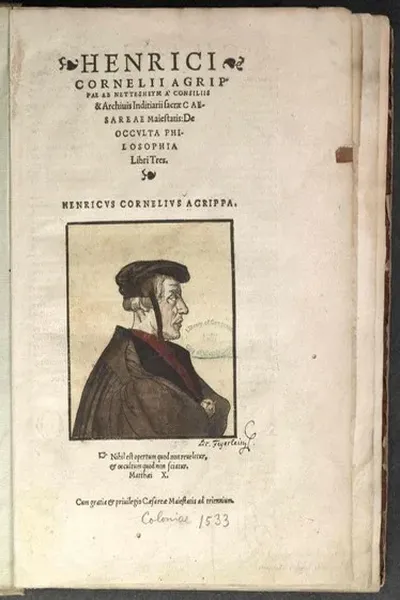





From the “Ritual Magic” Collection
View all →






More Free Magic & Ritual Books
View all →