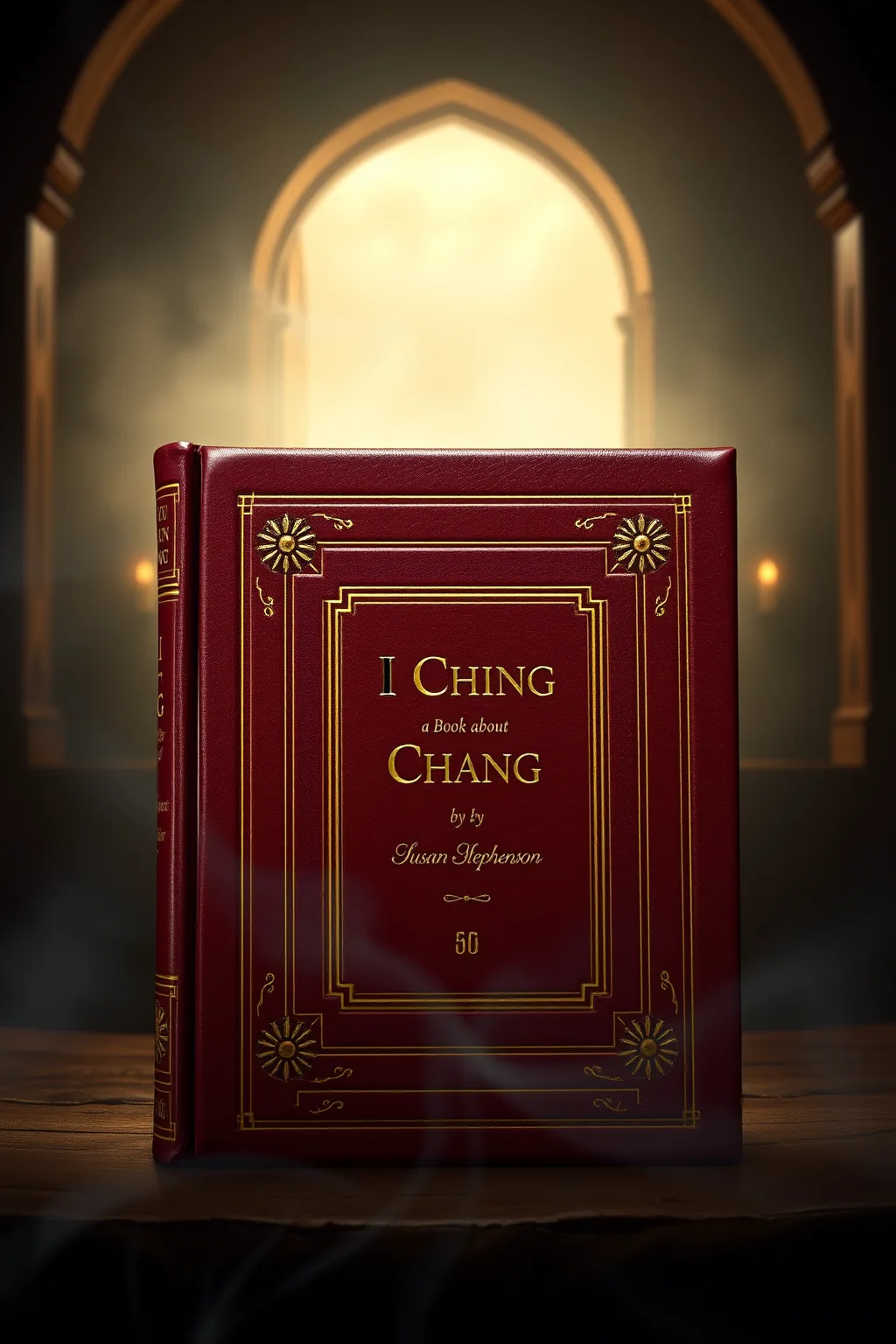
I Ching, a Book about Change
 61
61

I Ching, a Book about Change



Sophia Crane, Associate Editor — Susan Stephenson's "I Ching, a Book about Change" stands as a monumental contribution to the esoteric study of the Oracle. Stephenson's scholarly yet accessible prose masterfully deciphers the labyrinthine symbolism of the hexagrams, revealing their profound astrological, philosophical, and psychological underpinnings. She eschews simplistic interpretations, instead guiding the reader toward a nuanced understanding of the I Ching as a dynamic map of transformation. This work is indispensable for serious students of divination seeking to move beyond superficial readings and engage with the I Ching's potent, transformative energies. Its depth will resonate with both seasoned practitioners and earnest newcomers to ancient wisdom traditions.
📝 Description
61
Susan Stephenson's 1997 book deciphers the I Ching's symbolic language, connecting it to nature and human psychology.
Stephenson's "I Ching, a Book about Change" examines the ancient Chinese text known as the Oracle of Changes. The book explains the symbolic system of the hexagrams, which are central to the I Ching's philosophy. It argues that understanding the principles of change, as represented by these hexagrams, offers significant insight into human experience and the natural world.
This work goes beyond simple fortune-telling. Stephenson details how the hexagrams relate to natural cycles, psychological patterns, and the unfolding of events. The book aims to help readers find deeper meaning in the constant shifts of life by engaging with these ancient symbols. It is written for those seeking a more thorough grasp of the forces that influence reality.
The I Ching, or Book of Changes, is a cornerstone of Chinese philosophy and divination, dating back to at least the 11th century BCE. Its esoteric tradition involves interpreting the sixty-four hexagrams, formed by combinations of yin and yang lines, to understand cosmic patterns and guide human action. For centuries, scholars and practitioners have used the text for self-reflection, decision-making, and comprehending the dynamic interplay between heaven, earth, and humanity. Stephenson's work situates itself within this long lineage, focusing on the philosophical and psychological dimensions of the oracle's wisdom.
💡 Why Read This Book?
Uncover the universal language of transformation encoded within the ancient I Ching. Susan Stephenson's insightful exploration reveals the Oracle not just as a divinatory tool, but as a profound philosophical guide to navigating life's inevitable shifts. Ideal for seekers of wisdom, practitioners of esoteric arts, and anyone yearning to understand the dynamic interplay of forces that shape existence.
⭐ Reader Reviews
Honest opinions from readers who have explored this book.
❓ Frequently Asked Questions
What is the I Ching?
The I Ching, or "Book of Changes," is an ancient Chinese divination text and philosophical classic. It is comprised of 64 hexagrams, each representing a fundamental situation or archetype, used to gain insight into the present and future.
Who was Susan Stephenson?
Susan Stephenson was a respected scholar and author known for her deep engagement with esoteric traditions, particularly Chinese metaphysics and the I Ching. Her work is celebrated for its clarity and insightful interpretations.
How is this book different from other I Ching translations?
Stephenson's "I Ching, a Book about Change" distinguishes itself through its focus on the philosophical and symbolic dimensions, offering a richer context for understanding the hexagrams' transformative power beyond simple fortune-telling.
Is this book suitable for beginners?
Yes, while offering profound depth for advanced practitioners, Stephenson's clear explanations and structured approach make it accessible for beginners eager to explore the I Ching's wisdom.
What kind of 'change' does the I Ching address?
The I Ching addresses all forms of change: personal growth, relational dynamics, societal shifts, and the cyclical nature of the cosmos. It provides guidance on adapting to and harmonizing with these transformations.
🔮 Key Themes & Symbolism
The Nature of Cosmic Flux
This theme examines the I Ching's central tenet: that change is the fundamental essence of reality. Stephenson illuminates how the Oracle's structure reflects the ceaseless ebb and flow of the universe, from the smallest quantum fluctuations to the grand cycles of celestial bodies. It explores the philosophical implications of embracing impermanence and understanding the inherent dynamism within all phenomena, offering a framework for navigating life's inherent unpredictability with grace and wisdom.
Symbolic Language of the Hexagrams
Unpacking the intricate visual and conceptual language of the 64 hexagrams is paramount. Stephenson guides the reader through the symbolic meanings embedded within the trigrams (heaven, earth, water, fire, etc.) and their combinations. This section reveals how these symbols act as archetypal representations of human experiences, natural forces, and stages of development, providing a body of meaning that resonates across cultures and eras.
The Oracle as a Mirror of the Soul
Beyond mere prediction, the I Ching serves as a profound mirror for self-reflection and spiritual growth. Stephenson emphasizes its role as a tool for inner exploration, helping individuals to understand their current circumstances, identify potential challenges, and discover pathways toward conscious evolution. The Oracle's counsel is presented not as fate, but as guidance for wise action and the cultivation of inner harmony amidst external transformations.
💬 Memorable Quotes
Direct passages from the work, attributed to the author.
“The only constant in existence is change.”
— This core principle underscores the I Ching's philosophical foundation, urging acceptance of life's fluid nature rather than resistance.
“Wisdom lies in understanding the currents of time.”
— This emphasizes the importance of perceptive awareness and attunement to the unfolding of events to navigate life effectively.
“The hexagrams are maps of the soul's journey.”
— This profound statement positions the I Ching as a psychological and spiritual guide, charting the archetypal patterns of human experience.
“To know the moment is to know the path.”
— This signifies the power of present-moment awareness and timely action, derived from understanding the current energetic configuration.
💡 Key Ideas
Editorial paraphrase of the work's core concepts — not direct quotes.
Within every ending lies the seed of a new beginning.
This quote highlights the cyclical and regenerative aspect of transformation, suggesting that dissolution is not final but a precursor to renewal.
🌙 Esoteric Significance
Tradition
The I Ching is a central to East Asian esoteric thought, deeply intertwined with Taoism and Confucianism, but also influencing broader metaphysical traditions. It embodies principles of Yin and Yang, the Five Elements, and the cyclical nature of existence, often viewed as a cosmic blueprint for understanding universal forces and their interplay.
Symbolism
The core symbolism of the I Ching lies in its 64 hexagrams, formed from combinations of two trigrams. Each hexagram represents an archetypal situation or energetic pattern. The lines (solid 'yang' and broken 'yin') symbolize the dynamic interplay of complementary forces, offering clear insights into growth, decline, and transformation through their visual and conceptual relationships.
Modern Relevance
In contemporary times, the I Ching's relevance has expanded beyond its traditional applications. It serves as a powerful tool for psychological introspection, offering archetypal insights akin to Jungian psychology. Its principles of adaptability and understanding cyclical patterns are important for navigating personal, societal, and environmental changes, providing a timeless framework for conscious evolution and resilience.
👥 Who Should Read This Book
This profound exploration of the I Ching is essential for a diverse range of individuals. **Beginners** will find Stephenson's clear explanations a gentle yet useful introduction to this ancient wisdom. **Scholars** of Eastern philosophy and comparative religion will appreciate the meticulous research and insightful interpretations. **Seekers of spiritual growth** will discover a powerful tool for self-understanding and navigating life's transitions. **Practitioners of divination and esoteric arts** will gain a deeper, more nuanced connection to the Oracle's transformative energies and symbolic language.
📜 Historical Context
The I Ching, originating in ancient China, boasts a lineage stretching back over three millennia. Its foundational texts, the *Book of Changes*, evolved through distinct periods, incorporating philosophical interpretations from Confucian scholars like King Wen and the Duke of Zhou, and later mystical commentaries from Taoist traditions and the famed philosopher Confucius himself. During the Han Dynasty (206 BCE – 220 CE), the I Ching solidified its place as one of the Five Classics of Confucianism, influencing governance, ethics, and cosmology. Its transmission westward in the 19th and 20th centuries, notably through the work of Richard Wilhelm and later scholars like Susan Stephenson, introduced its profound wisdom to a global audience, resonating deeply with Western esotericists, psychologists, and philosophers seeking to understand the universal principles of change and cyclical patterns.
📔 Journal Prompts
Reflect on a recent significant change in your life. How does the I Ching's concept of flux apply?
Choose a hexagram that speaks to you today. What archetypal energies does it represent in your current situation?
Consider the balance of Yin and Yang in your daily life. Where do you see imbalances, and how can you harmonize them?
How can the principle of 'inner strength' (represented by certain hexagrams) guide you through a current challenge?
Journal about a time you resisted change. What might have been the outcome if you had embraced it with the wisdom of the I Ching?
🗂️ Glossary
Hexagram
A symbol composed of six stacked horizontal lines, each either solid (yang) or broken (yin). There are 64 unique hexagrams in the I Ching, representing fundamental archetypes and situations.
Trigram
A component of a hexagram, consisting of three stacked lines. There are eight basic trigrams (e.g., Heaven, Earth, Water, Fire), each with specific symbolic associations.
Yang
In the I Ching, represented by a solid line (—). It symbolizes active, masculine, light, and creative principles.
Yin
In the I Ching, represented by a broken line (--). It symbolizes passive, feminine, dark, and receptive principles.
Oracle
In the context of the I Ching, refers to the text and the system of divination used to consult it for guidance and insight into the nature of change.
This book appears in 4 collections
🔮 Readers Also Liked
Browse all →








From the “Remote Viewing” Collection
View all →






More Free Divination & Tarot Books
View all →