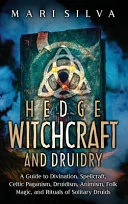
Hedge Witchcraft and Druidry
 80
80

Hedge Witchcraft and Druidry
Mari Silva's "Hedge Witchcraft and Druidry" attempts to consolidate two distinct, yet related, solitary paths into a single volume. The strength lies in its accessibility; it demystifies complex traditions for the beginner, particularly the sections on Ogham and basic spellcraft. The structure, presenting two "manuscripts," is clear, though it sometimes feels more like a compilation than a deeply integrated work. A limitation is the occasional lack of depth, particularly when discussing historical druidry, which tends to oversimplify the multifaceted nature of ancient Druidic practices. The exploration of hedge witchcraft as a liminal, solitary practice, however, is well-articulated. The book serves as a competent entry point, offering practical steps for solitary engagement with nature-based spirituality, but seasoned practitioners might find it lacks the nuanced historical or theoretical grounding they seek.
📝 Description
80
Mari Silva's 2023 book merges hedge witchcraft and solitary Druidry.
This volume combines two distinct but related paths for the independent spiritual seeker: hedge witchcraft and solitary Druidry. The first part details hedge witchcraft, covering divination, spellcasting, and folk magic with a nod to Celtic paganism. It emphasizes how these practices can be undertaken alone.
The second part introduces hedge Druidry, guiding readers on animism, Druidic magic, and the Ogham alphabet. It also provides instruction for solitary rituals within a Celtic context. The book aims to give readers a solid understanding and practical tools for engaging with nature-based spirituality on their own terms.
It is written for individuals drawn to nature and Celtic spirituality who prefer self-study to group affiliations. Readers interested in personal divination, creating their own spells, and grasping the core ideas of both paths will find this book useful. It is ideal for those who want a direct connection to the earth and its energies without needing formal covens or groves.
This work emerges from the 20th century's revival of European indigenous spiritualities. It addresses the growing interest in solitary pagan practices, distinguishing itself from earlier, more group-focused movements. By referencing figures like Robert Graves, it connects to historical discussions on pre-Christian European religions, while acknowledging modern scholarly critiques of such early interpretations. The book taps into a lineage of practitioners seeking independent spiritual engagement with nature.
💡 Why Read This Book?
• Gain foundational knowledge in solitary hedge witchcraft, learning practical divination and spellcraft techniques specifically detailed in the "Hedge Witchcraft" section. • Understand the core principles of solitary hedge druidry, including animism and the use of the Ogham alphabet for personal spiritual development as outlined in the "Hedge Druidry" section. • Develop a personal practice rooted in Celtic paganism, with actionable guidance on rituals and folk magic applicable to individuals not affiliated with larger groups.
⭐ Reader Reviews
Honest opinions from readers who have explored this book.
❓ Frequently Asked Questions
What is hedge witchcraft?
Hedge witchcraft is a solitary path focused on folk magic, divination, and spellcraft, often involving direct interaction with nature spirits and liminal spaces. It emphasizes personal practice outside of formal covens.
What is hedge druidry?
Hedge druidry is a solitary form of druidism emphasizing animism, the belief in the spirit of all natural things. It incorporates practices like using the Ogham for divination and engaging in personal rituals connected to the land.
Is this book suitable for beginners?
Yes, the book is structured to guide beginners through the core concepts and practices of both hedge witchcraft and hedge druidry in a solitary context.
What is Ogham?
Ogham is an ancient Celtic alphabet, often associated with druidry, where each letter is represented by a series of lines. It is used for divination, magical inscriptions, and as a symbolic language.
Does the book require a specific location for practice?
While it encourages connection with nature, the book's focus on solitary practice means rituals and magic can be adapted to personal environments, not requiring a specific sacred grove or location.
What is animism in the context of druidry?
Animism in druidry is the belief that all natural elements—plants, animals, stones, rivers—possess a spirit or consciousness, fostering a respectful and reciprocal relationship with the natural world.
🔮 Key Themes & Symbolism
Solitary Practice
The work consistently frames both hedge witchcraft and druidry as paths suitable for independent practitioners. It emphasizes self-reliance in developing magical skills, divination techniques, and personal ritual. The focus is on cultivating an internal spiritual life and a direct connection to the natural world without the need for group structures or formal initiations, making it accessible to those who prefer to walk their spiritual path alone.
Nature-Based Spirituality
Central to both traditions presented is a profound reverence for the natural world. Hedge witchcraft draws on folk magic and the energies of the land, while hedge druidry is rooted in animism, the belief in the spirit inherent in all living things and natural phenomena. This theme encourages practitioners to observe seasonal cycles, connect with local flora and fauna, and understand the earth as a living, sentient entity.
Celtic Roots
The book anchors hedge witchcraft and druidry within a Celtic pagan framework. It explores elements such as the Ogham alphabet, traditional folk magic practices, and a reverence for ancestral spirits and the land associated with Celtic cultures. This connection provides a historical and cultural context, linking modern solitary practices to ancient European spiritual traditions.
Divination and Spellcraft
Practical application is a significant focus, with detailed guidance on divination methods and spellcraft. For hedge witchcraft, this includes techniques for scrying or interpreting natural signs. For hedge druidry, it involves the symbolic language of the Ogham and the crafting of spells that align with natural energies and intentions, empowering the solitary practitioner with tangible magical tools.
💬 Memorable Quotes
Direct passages from the work, attributed to the author.
“The essence of hedge witchcraft lies in its solitary nature, interacting directly with the spirit of place.”
— This highlights the core tenet of hedge witchcraft as presented: a personal, independent spiritual path deeply connected to one's immediate environment and its inherent energies.
“Animism forms the bedrock of hedge druidry, recognizing the life force within all things.”
— This statement defines a fundamental principle of the druidic path explored, emphasizing the interconnectedness of all existence and the spiritual presence within the natural world.
“The Ogham provides a symbolic language for understanding the deeper currents of nature.”
— This interpretation focuses on the Ogham's role beyond mere script, presenting it as a mystical tool for divination and insight into natural cycles and energies within druidry.
“Rituals are most potent when aligned with personal intent and the rhythms of the earth.”
— This emphasizes the importance of both internal focus (intent) and external synchronization (natural cycles) for effective magical and spiritual workings in solitary practice.
“Folk magic offers accessible pathways to empower the solitary practitioner.”
— This suggests that traditional, community-based magical practices can be adapted and utilized effectively by individuals practicing alone, providing practical means for spiritual and magical engagement.
🌙 Esoteric Significance
Tradition
This work aligns with modern neopagan and eclectic witchcraft traditions, specifically focusing on solitary practice rooted in Celtic animism and folk magic. While drawing from historical druidic concepts, it presents a contemporary interpretation tailored for individual spiritual exploration, diverging from more structured or academically reconstructed druidic orders.
Symbolism
Key symbols include the Ogham, an ancient Celtic alphabet used for divination and magical inscription, representing the sacred language of trees and nature. The concept of the 'hedge' itself symbolizes liminality – the space between worlds – crucial for solitary practitioners seeking direct communication with spirits and the natural realm.
Modern Relevance
The book's emphasis on solitary, nature-based spirituality appeals to contemporary trends in ecopsychology and the search for personal meaning outside of mainstream religious or social structures. Thinkers and practitioners focused on animism, folk magic revival, and independent spiritual paths find value in its accessible approach to these ancient traditions.
👥 Who Should Read This Book
• Individuals seeking to establish a personal spiritual practice rooted in nature and Celtic traditions, particularly those who prefer solitary study and work. • Aspiring practitioners of witchcraft or druidry who are drawn to folk magic, divination, and animistic beliefs but may not have access to or interest in group settings. • Students of comparative religion or esoteric studies interested in contemporary interpretations of ancient European spiritual paths and their application in modern solitary contexts.
📜 Historical Context
The late 20th and early 21st centuries witnessed a significant revival and diversification of neopagan traditions, moving beyond the initial Wiccan surge of the mid-20th century. Authors like Mari Silva tap into this ongoing exploration of indigenous European spiritualities, particularly Celtic traditions. This period saw a growing interest in solitary practice as an alternative to coven-based witchcraft or grove-based druidry, influenced partly by earlier interpretations of druidry, such as those found in Robert Graves' "The White Goddess" (1948), though modern scholarship often diverges from his more speculative theories. The emphasis on "hedge" traditions—often associated with folk magic and liminal practitioners—reflects a desire to connect with older, less formalized spiritual expressions that predated organized neopagan movements.
📔 Journal Prompts
Hedge witchcraft's focus on liminal spaces and its solitary nature.
The animistic worldview within hedge druidry and its implications.
Personal interpretations of the Ogham symbols and their potential meanings.
Reflecting on the connection between personal intention and natural cycles in spellcraft.
Identifying local natural elements that embody the 'spirit of place' for your practice.
🗂️ Glossary
Hedge Witchcraft
A solitary path of witchcraft focused on folk magic, divination, and spellcraft, often involving interaction with nature spirits and liminal spaces.
Hedge Druidry
A solitary form of druidism emphasizing animism, personal connection to nature, and often incorporating practices like Ogham divination and nature-based rituals.
Animism
The belief that spirits inhabit all natural things, including plants, animals, rocks, and natural phenomena, fostering a reciprocal relationship with the environment.
Ogham
An ancient Celtic alphabet, traditionally associated with druidry, consisting of lines or strokes. It is used for divination, magical inscriptions, and as a symbolic system.
Divination
The practice of seeking knowledge of the future or the unknown by supernatural means, such as through the Ogham, tarot, or interpretation of natural signs.
Spellcraft
The art and practice of creating and casting spells, typically involving intention, symbolic actions, and the channeling of energy for a specific purpose.
Folk Magic
Traditional magical practices often passed down through generations, relying on simple rituals, herbalism, and common objects, frequently tied to specific communities or regions.
This book appears in 1 collection
🔮 Readers Also Liked
Browse all →









From the “Spellcraft” Collection
View all →

More Free Occult Philosophy Books
View all →