Levitation
 77
77

Levitation
Steve Richards' "Levitation" tackles a subject often relegated to the fringes of credulity, and does so with a directness that is refreshing. The book’s strength lies in its systematic presentation of esoteric techniques, drawing from diverse traditions to outline a path toward psychophysical transcendence. Richards avoids hyperbole, instead focusing on the disciplined practice required. He details specific meditational exercises that form the core of the levitation process, a welcome departure from vague spiritual pronouncements. A limitation, however, is the reliance on anecdotal evidence and the inherent difficulty in objectively verifying the claims without personal experience. The section on the historical context, particularly the brief mention of early 20th-century spiritualist mediums, feels somewhat truncated, leaving the reader wanting more comparative analysis. Despite this, the practical, step-by-step approach to achieving an altered state of consciousness for levitation is the book's most significant contribution. It’s a focused study for the dedicated practitioner.
📝 Description
77
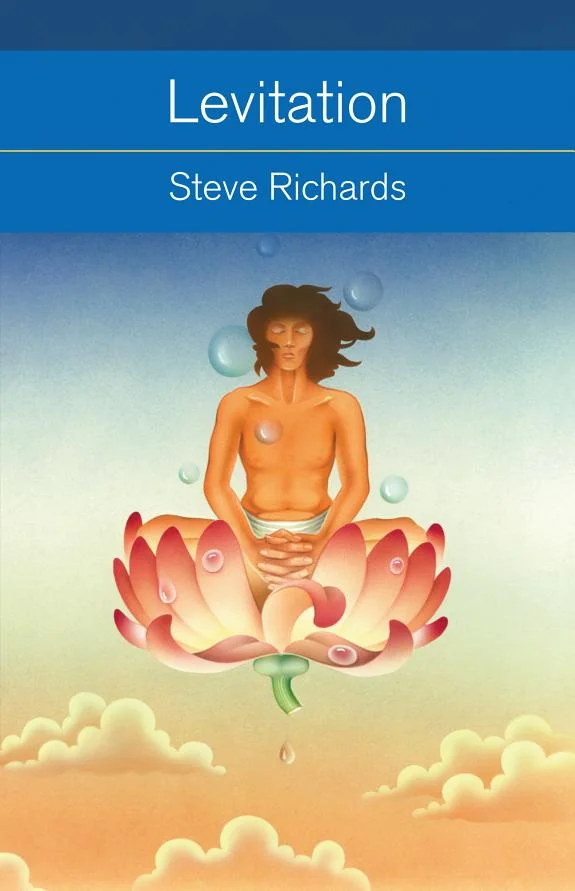
Steve Richards' "Levitation" (2008) details occult meditational techniques for defying gravity.
Steve Richards' "Levitation" examines the purported ability of the human body to defy gravity through mental force. The book moves beyond speculation to detail practical, occult meditational techniques claimed to induce this extraordinary state. Richards presents levitation not as fantasy, but as a demonstrable practice within certain esoteric traditions. The work details methods by which practitioners aim to achieve physical transcendence.
This volume is intended for serious students of esoteric disciplines, particularly those interested in psychophysical phenomena and advanced meditation. It will appeal to readers who approach occultism with a critical, research-oriented mindset, seeking historical accounts and practical instruction rather than sensationalism. Individuals interested in the intersection of consciousness, physics, and ancient yogic or Hermetic practices will find material here to engage their study.
The pursuit of levitation has historical roots stretching back centuries, appearing in accounts of saints, yogis, and mystics across various cultures. Early 20th-century spiritualist movements also featured claims of levitation. Richards' work situates these phenomena within a broader context of mind-over-matter philosophies that gained traction during periods of intense interest in psychic research, particularly after World War I and during the Theosophical Society's peak influence.
💡 Why Read This Book?
• You will learn specific occult meditational techniques for inducing altered states of consciousness, as detailed in the chapter discussing the "dissolution of egoic identification," offering a practical framework not found in general mindfulness texts. • You can explore the historical lineage of levitation claims, examining its place within yogic traditions and early 20th-century spiritualism, providing a concrete historical perspective beyond speculative accounts. • You will gain an understanding of the energetic and psychological prerequisites for psychophysical transcendence, as outlined in the "Key Concepts" section, allowing for a deeper appreciation of mind-over-matter theories.
⭐ Reader Reviews
Honest opinions from readers who have explored this book.
❓ Frequently Asked Questions
What are the primary occult meditational techniques discussed for achieving levitation?
The book outlines techniques involving intense mental focus, visualization, breath control (pranayama), and the use of specific mantras. The aim is to alter one's energetic resonance and detach from the physical form's limitations.
Does "Levitation" provide scientific explanations for the phenomenon?
While "Levitation" discusses theories related to consciousness and subtle energies, it primarily focuses on occult and meditative practices rather than providing conventional scientific explanations or empirical proof.
Who is Steve Richards and what is his background?
Steve Richards is an author specializing in esoteric subjects. His work on levitation suggests a deep engagement with occult literature and meditative practices, aiming to present these traditions to a wider audience.
What historical periods or traditions does the book reference regarding levitation?
The book references ancient yogic traditions, accounts of mystics and saints, and early 20th-century spiritualist movements, placing the practice within a broad historical and cross-cultural context.
Is "Levitation" suitable for beginners in esoteric studies?
It is best suited for serious students with a background in meditation or esoteric philosophy. Beginners may find the advanced techniques and dense subject matter challenging without prior grounding.
What are the main controversies surrounding levitation claims?
Controversies include skepticism from the scientific community, accusations of fraud by alleged levitators, and debates over whether phenomena are genuine psychophysical events or tricks of perception.
🔮 Key Themes & Symbolism
Psychophysical Control
The core theme revolves around the potential for the human mind to exert direct control over the physical body, specifically in overcoming gravitational forces. Richards details the rigorous mental discipline, visualization exercises, and energetic cultivation required. This control is presented not as a passive state but as an active, willful manipulation of consciousness and subtle energies, drawing parallels to advanced yogic siddhis and Hermetic principles of will and manifestation.
Subtle Energy Manipulation
Central to the book's thesis is the concept of manipulating 'subtle energies'—often referred to as prana, chi, or vital force. Richards posits that levitation is achieved by learning to direct and intensify these energies within the body and its immediate energetic field. This involves specific breathing techniques and meditative focus designed to create an energetic buoyancy or repulsion against terrestrial gravity, moving beyond the purely physical interpretation of the body.
Historical Esoteric Practices
Richards situates the practice of levitation within a long historical continuum of esoteric traditions. He references accounts from various spiritual paths, including yogic masters and medieval mystics, suggesting that the ability, while rare, has been recognized and pursued across different cultures and eras. The book aims to connect contemporary seekers with these ancient lineages and their methods for achieving extraordinary states.
Consciousness and Reality
The book explores the philosophical implications of levitation, challenging conventional understandings of reality and the limits of human potential. By proposing that the mind can alter physical laws for the individual, it prompts readers to reconsider the relationship between consciousness, matter, and the fundamental nature of the universe. The potential for levitation serves as a radical example of consciousness shaping perceived reality.
💬 Memorable Quotes
Direct passages from the work, attributed to the author.
“The mind can lift the body off the ground.”
— This concise statement captures the central premise of the book: that through focused mental effort and specific techniques, the physical body is not bound by conventional physics, but can be directly influenced by consciousness.
“Occult meditational techniques by which the mind can lift the body.”
— This highlights the book's practical, instructional approach, emphasizing that levitation is achievable through the application of disciplined, esoteric meditative practices rather than through passive belief or unexplained phenomena.
“An extraordinary defiance of gravitational force.”
— This phrase frames levitation as a remarkable feat that challenges our everyday understanding of natural laws, positioning it as a profound expression of the power of the mind and spirit over material constraints.
“The centuries-old secrets of levitation.”
— This suggests that the knowledge and methods for achieving levitation are not new but are part of an ancient, possibly guarded, body of esoteric wisdom that the book aims to reveal and make accessible.
“Can human beings really leave the ground through the power of the mind alone?”
— This question, posed in the original blurb, sets the stage for the book's investigation, inviting the reader to question perceived limitations and consider the potential for extraordinary human capabilities through mental discipline.
🌙 Esoteric Significance
Tradition
This work fits within the broad spectrum of Western Esotericism, drawing implicitly from Hermeticism's emphasis on the power of will and consciousness, and echoing practices found in yogic traditions like Raja Yoga and Siddha Yoga. It departs from purely philosophical explorations by focusing on the practical, physical manifestation of advanced meditative states. It aligns with traditions that posit the existence of subtle bodies and energetic manipulation as key to unlocking human potential beyond the mundane.
Symbolism
The primary symbol is the body itself, elevated and freed from material constraint, representing spiritual liberation and mastery over the material world. Another motif is the 'void' or 'emptiness' achieved in deep meditation, symbolizing the dissolution of ego and the state of pure consciousness from which such phenomena are believed to arise. The concept of 'lightness' or 'buoyancy' also functions symbolically, indicating a departure from earthly attachments and limitations.
Modern Relevance
Contemporary thinkers in consciousness studies and neo-shamanic or quantum mysticism circles might find resonance with Richards' exploration of mind-over-matter. Practices like advanced biofeedback, lucid dreaming, and certain forms of energy healing echo the underlying principles of subtle energy manipulation and conscious intent discussed. While direct claims of levitation remain rare, the book's focus on expanding human potential through disciplined consciousness remains relevant to modern self-improvement and spiritual development movements.
👥 Who Should Read This Book
• Advanced practitioners of meditation and yoga seeking to understand and potentially replicate historical accounts of psychophysical phenomena. • Students of comparative religion and esoteric history interested in the cross-cultural claims of levitation and its place within spiritual traditions. • Skeptics and researchers of consciousness willing to engage with detailed, albeit esoteric, methodologies for altering perceived physical reality.
📜 Historical Context
The pursuit of levitation has a long and varied history, appearing in hagiographies of saints, accounts of yogic masters, and the annals of early 20th-century spiritualism. Steve Richards' "Levitation" engages with this lineage, particularly during a period when psychic research and interest in phenomena like telekinesis and materialization were prominent. Following figures like Helena Blavatsky and the rise of the Theosophical Society, there was a widespread exploration of alternative spiritualities and claims of extraordinary human abilities. While competing schools of thought focused on theological interpretations or psychological explanations, Richards examines the practical, occult methods themselves. The era saw numerous mediums and occultists claiming such feats, often amidst public fascination and scientific skepticism. Censorship was not uncommon for works exploring such 'unorthodox' phenomena, though "Levitation" itself, published in 2015, reflects a more contemporary engagement with these historical claims.
📔 Journal Prompts
The dissolution of egoic identification: How does this concept relate to physical release?
Energetic resonance: What personal states correlate with feelings of lightness or heaviness?
Visualization techniques for levitation: Describe a mental landscape conducive to defying gravity.
Historical accounts of levitation: Compare and contrast two figures mentioned in the text.
The will to levitate: Explore the role of intention in achieving altered states of consciousness.
🗂️ Glossary
Prana
In yogic traditions, the vital life force or energy that permeates all living beings. The book suggests mastery over prana is key to levitation.
Subtle Energies
Non-physical energies believed to exist within and around the body, distinct from electromagnetic forces. Manipulation of these is central to occult practices like levitation.
Egoic Identification
The psychological state of being strongly identified with the personal self, its thoughts, emotions, and physical form. Detachment is seen as crucial for levitation.
The practice of creating vivid mental images or scenarios. In this context, it's used as a tool to prepare the mind and body for the levitational state.
Siddhis
In yogic and Hindu traditions, extraordinary powers or perfections attained through intense spiritual practice and meditation, including levitation.
Hermeticism
An ancient esoteric tradition based on the writings attributed to Hermes Trismegistus, emphasizing principles like 'As above, so below' and the power of will.
Chakra
Energy centers within the subtle body according to various Indian traditions. Balancing or activating specific chakras may be linked to levitational techniques.
This book appears in 1 collection
🔮 Readers Also Liked
Browse all →








From the “Levitation” Collection
View all →







More Free Occult Philosophy Books
View all →