Act Right
 76
76

Act Right
Erin Gray and Mara Purl's Act Right, originally published in 1998, offers a refreshingly direct approach to esoteric principles. Unlike many works that rely on dense allegory or historical narrative, this book grounds its concepts in actionable advice, a strength that immediately sets it apart. The authors' insistence on the energetic consequences of daily choices, particularly as explored in their discussions of intention and communication, feels particularly relevant. However, the book's primary limitation lies in its occasional lack of specific examples; while the principles are clear, a reader might yearn for more concrete case studies to illustrate the mechanics of 'acting right' in complex situations. A passage discussing the energetic residue of unspoken judgments, for instance, is insightful but could benefit from expanded illustration. Ultimately, Act Right serves as a concise, practical guide for those wishing to consciously direct their personal energetic output.
📝 Description
76
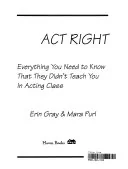
Published in 1998, Act Right by Erin Gray and Mara Purl addresses conscious action and energetic alignment.
Act Right, written by Erin Gray and Mara Purl, is not a guide to social graces. Instead, the book examines principles that govern human interaction, intention, and energetic alignment. It proposes that conscious action and awareness can influence both personal reality and how we relate to others. The authors present a system for recognizing the subtle forces active in daily life. This encourages readers to approach their surroundings and inner states with more careful consideration. The text is intended for those who seek a deeper grasp of personal agency and the connections between thought, speech, and action. It will appeal to people who question standard explanations for events and wish to investigate the metaphysical aspects of human existence. Readers familiar with concepts such as intention setting or energetic hygiene will find a thoughtful perspective, while newcomers will discover a structured way to think about the effects of their choices.
Published in 1998, Act Right emerged during a period of growing interest in New Age spirituality and self-help. The book distinguishes itself by drawing from a more grounded, possibly Hermetic, approach to practical application, unlike popular trends focusing on angel communication or spiritual adventure narratives. It tapped into the late 1990s' expanding focus on personal development informed by spiritual principles, specifically highlighting the energetic outcomes of everyday decisions.
💡 Why Read This Book?
• Learn to recognize the energetic implications of your daily choices, a concept detailed when discussing the 'energetic resonance' between actions and outcomes, allowing for more mindful living. • Understand the power of aligned intention and clear communication as active forces shaping reality, a core tenet discussed throughout the book's exploration of conscious action. • Develop a practical framework for ethical engagement with the world, moving beyond abstract ideals to tangible methods for influencing your personal energetic field, as presented in the book's actionable advice.
⭐ Reader Reviews
Honest opinions from readers who have explored this book.
❓ Frequently Asked Questions
What is the core philosophy of Erin Gray and Mara Purl's Act Right?
The core philosophy of Act Right centers on the idea that all actions, thoughts, and communications carry energetic weight. It posits that conscious, aligned intention coupled with ethical action is crucial for shaping one's reality and maintaining energetic integrity.
When was Act Right first published and by whom?
Act Right was first published in March 1998. The authors are Erin Gray and Mara Purl, who collaborated on this exploration of esoteric principles.
Does Act Right offer practical exercises or just theoretical concepts?
While theoretical in its underpinnings, Act Right emphasizes practical application. It aims to equip readers with a framework for conscious living, encouraging discernment in daily choices and interactions, rather than providing a rigid set of exercises.
How does Act Right relate to other self-help or esoteric literature from the late 1990s?
Published in 1998, Act Right emerged during a period of growing interest in New Age spirituality and personal development. It offered a more grounded perspective compared to some spiritual adventure narratives, focusing on the direct energetic consequences of everyday behavior.
What is 'energetic resonance' as discussed in Act Right?
Energetic resonance, as explored in Act Right, refers to the principle that individuals tend to attract circumstances and experiences that match their dominant energetic state. This highlights the importance of conscious action and intention in influencing one's life path.
Is Act Right considered a spiritual or a psychological text?
Act Right bridges spiritual and psychological concepts. It examines human behavior and interaction through an esoteric lens, focusing on the energetic and intentional aspects that influence personal reality, making it relevant to both spiritual seekers and those interested in practical self-awareness.
🔮 Key Themes & Symbolism
Conscious Action and Intention
The central theme of Act Right is the profound connection between conscious intention and subsequent action, and how this pairing dictates energetic outcomes. The authors suggest that deliberate thought, when paired with clear, ethical behavior, becomes a potent force for shaping personal reality. This isn't about mere positive thinking, but about the active process of aligning one's inner state with outer expression. The book posits that this alignment creates a specific energetic signature, influencing what individuals attract and how their environment responds to them. It encourages a disciplined approach to daily choices, viewing each decision as an energetic transaction with the universe.
Energetic Resonance
Act Right explores the concept of energetic resonance as a fundamental principle governing interaction and manifestation. It suggests that individuals emit a distinct energetic frequency based on their thoughts, emotions, and actions. This frequency, in turn, attracts experiences, people, and circumstances that resonate with it. The implication is that by consciously managing one's energetic output – through mindful intention and ethical behavior – one can actively influence the quality and nature of their life experiences. This theme encourages readers to become aware of their own energetic field and its role in co-creating their reality.
Discernment in Interaction
A significant aspect of Act Right involves cultivating discernment in interpersonal dynamics and environmental engagement. The book advocates for a heightened awareness of the subtle energetic exchanges that occur in communication and social contexts. It suggests that understanding these dynamics allows for more effective and harmonious interactions. By promoting conscious awareness of one's own energetic state and its impact on others, the text provides a framework for navigating relationships and situations with greater clarity and integrity, minimizing energetic friction and fostering positive resonance.
Personal Agency and Responsibility
Act Right places a strong emphasis on personal agency and the inherent responsibility that comes with it. The authors propose that individuals are not passive recipients of fate but active creators of their experience. By understanding the principles of energetic resonance and the power of intention, readers are empowered to take ownership of their lives. This theme encourages a proactive stance, urging individuals to critically examine their choices and their impact, thereby fostering a sense of control and self-efficacy in reading through the complexities of life.
💬 Memorable Quotes
Direct passages from the work, attributed to the author.
“Every interaction carries an energetic charge.”
— This statement underscores the book's central tenet that our dealings with others and the environment are not neutral events. It suggests that unspoken intentions and subtle attitudes contribute to a tangible energetic exchange, influencing relationships and outcomes.
“Align your intention with your action.”
— This is a directive for conscious creation. It implies that true effectiveness and energetic coherence arise when one's inner purpose (intention) is directly and ethically reflected in their outward behavior (action).
“Discernment is key to harmonious engagement.”
— This highlights the importance of conscious awareness in social and environmental interactions. It suggests that the ability to perceive subtle energetic dynamics allows for more effective, balanced, and positive engagement with the world.
“Act with integrity, and your reality will reflect it.”
— This expresses the book's ethical imperative. It connects moral uprightness and consistent action with the creation of a personal reality that mirrors these positive qualities, suggesting a direct causal link.
💡 Key Ideas
Editorial paraphrase of the work's core concepts — not direct quotes.
Your energetic state attracts your experiences.
This paraphrased concept highlights the principle of energetic resonance. It suggests that the energetic frequency an individual emits, based on their inner disposition, acts as a magnet for corresponding external circumstances and events.
🌙 Esoteric Significance
Tradition
Act Right aligns with principles found within Hermeticism and certain schools of Western Esotericism, particularly those emphasizing the power of will, intention, and the correspondence between the inner and outer worlds. It departs from purely intellectual or ritualistic traditions by focusing on the direct energetic implications of everyday behavior. While not explicitly Kabbalistic or Gnostic, it shares with them a belief in underlying universal laws that govern existence and human interaction, and that conscious awareness is key to navigating these laws effectively.
Symbolism
While Act Right is less symbolic than many esoteric texts, the concept of 'action' itself serves as a primary motif, representing the outward manifestation of inner states. 'Intention' functions as the unseen blueprint, the energetic seed from which action springs. The idea of 'resonance' acts as a metaphor for sympathetic vibration, suggesting that like attracts like on an energetic level, a concept found in various esoteric traditions to explain attraction and manifestation.
Modern Relevance
The work's emphasis on conscious action, energetic hygiene, and the impact of intention resonates strongly with contemporary fields like positive psychology, mindfulness practices, and the broader 'law of attraction' movement popularized in the early 2000s. Thinkers and practitioners focused on manifestation, personal branding, and energetic healing often echo the core ideas presented in Act Right, demonstrating its enduring relevance in discussions about personal power and reality creation.
👥 Who Should Read This Book
['• Individuals interested in practical metaphysics: Those seeking to understand how their daily choices and intentions create tangible energetic effects in their lives, moving beyond abstract spiritual concepts.', '• Personal development enthusiasts: Readers looking for actionable frameworks to enhance self-awareness, improve communication, and consciously shape their personal reality through mindful behavior.', '• Students of esoteric principles: Those exploring concepts like energetic resonance, intention, and personal agency who want a grounded perspective on their application in everyday life.']
📜 Historical Context
Emerging in 1998, Act Right arrived during a vibrant period for self-help and New Age literature, a time when personal transformation and spiritual exploration were increasingly mainstream. While authors like Marianne Williamson were popularizing spiritual principles for everyday life, and books like The Celestine Prophecy were combining spiritual adventure into narrative, Act Right carved its niche by focusing on the practical, energetic consequences of mundane actions. It predates the explosion of social media, where the concept of 'personal branding' and curated online personas would later amplify discussions of intention and presentation. The late 90s also saw a continued interest in practical applications of esoteric thought, influenced by figures like Stuart Wilde, who also emphasized energetic management. Act Right offered a straightforward, less allegorical approach, distinguishing itself by its directness in an era often characterized by more overtly mystical or narrative-driven spiritual content.
📔 Journal Prompts
The energetic charge of your daily interactions.
Reflecting on the alignment between your intentions and your actions.
Identifying patterns of energetic resonance in your life.
Cultivating discernment in your communication.
Taking responsibility for your energetic output.
🗂️ Glossary
Energetic Charge
The subtle, non-physical energy that accompanies thoughts, words, and actions. In Act Right, it signifies the qualitative aspect of interactions that influences outcomes and relationships.
Energetic Resonance
The principle that similar energies attract and amplify each other. According to Act Right, one's dominant energetic state influences the circumstances and experiences they attract into their life.
Conscious Action
Behavior undertaken with deliberate awareness of its intention and potential energetic consequences. It implies acting with purpose rather than purely by habit or reaction.
Intention
The underlying purpose or aim behind an action or thought. In Act Right, it is presented as a primary energetic force that shapes reality when aligned with outward behavior.
Discernment
The ability to perceive subtle energetic dynamics and make wise judgments about interactions and environmental influences. It involves awareness and careful consideration.
Personal Agency
The capacity of an individual to act independently and make their own free choices. Act Right emphasizes this by highlighting how conscious decisions influence one's reality.
Integrity
Adherence to moral and ethical principles; soundness of moral character. In the context of Act Right, it means acting in alignment with one's highest intentions and values.
This book appears in 1 collection
🔮 Readers Also Liked
Browse all →









From the “Sound Healing” Collection
View all →








More Free Occult Philosophy Books
View all →