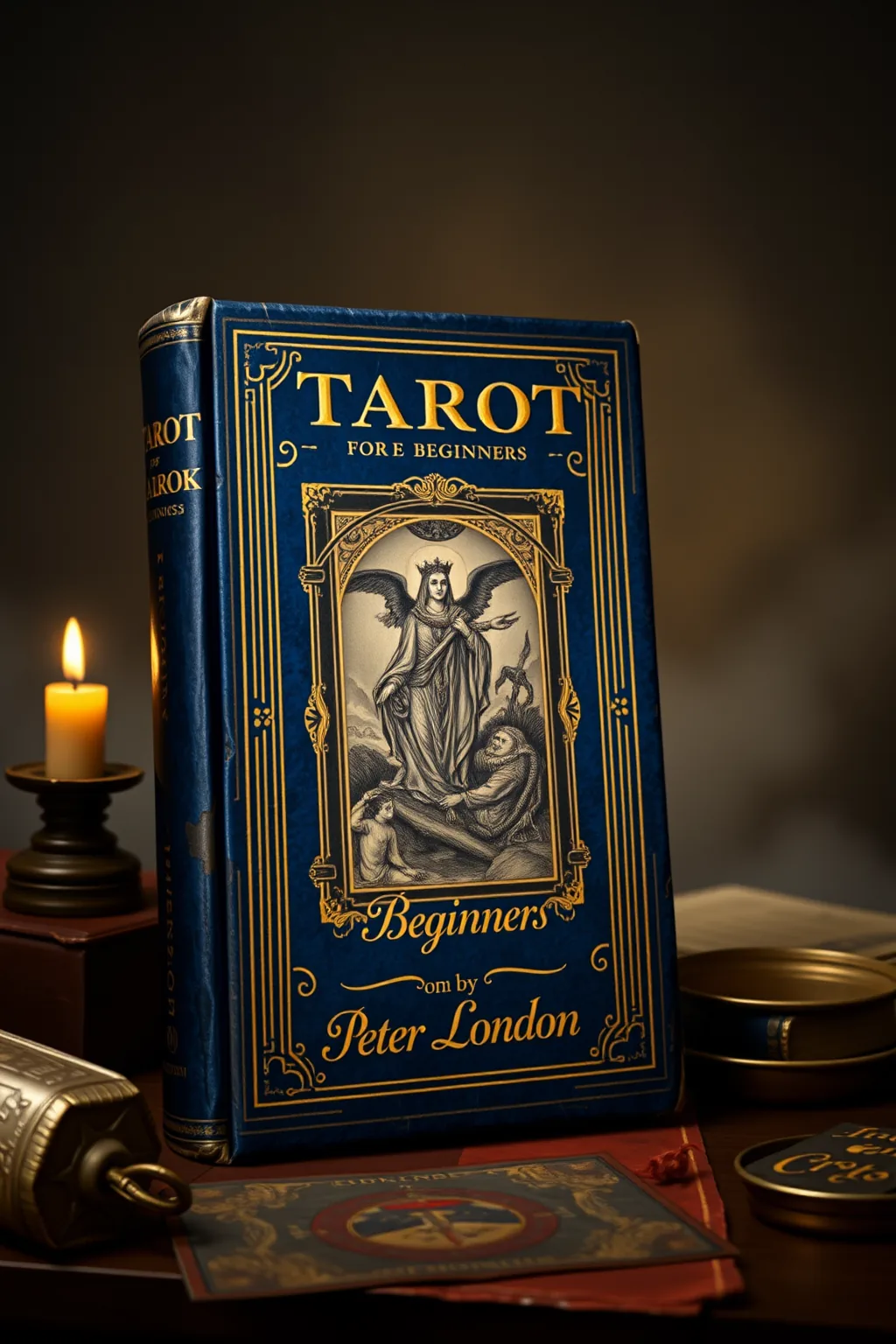
Handbook Tarot for Beginners
 62
62

Handbook Tarot for Beginners



Celeste Moreau, Divination & Symbolism Reviewer — Peter London's 'Handbook Tarot for Beginners' is a beacon for those venturing into the esoteric arts. It masterfully decodes the complex symbolism of the Tarot, offering clear, insightful interpretations rooted in a deep understanding of occult traditions. London's prose possesses an authentic, almost alchemical quality, transforming abstract concepts into tangible wisdom. This guide is particularly adept at demystifying the Rider-Waite-Smith system, making it an indispensable resource for nascent practitioners and seasoned readers seeking a refresher. It fosters an intuitive connection with the cards, encouraging a personal dialogue with the archetypal energies they represent. A truly illuminating and empowering introduction.
📝 Description
62
Peter London's 'Handbook Tarot for Beginners' demystifies Tarot symbolism for practical use.
Published in 1983, Peter London's handbook aims to make the Tarot accessible to new practitioners. It moves beyond simple fortune-telling, focusing instead on the cards as a system for understanding universal archetypes and personal psychology. London breaks down the meanings of both the Major and Minor Arcana, explaining how their imagery connects to broader philosophical ideas.
The book treats Tarot as a symbolic language for self-reflection. It guides readers to interpret the cards' messages for personal growth and intuition development. London emphasizes understanding the deep connections within the cards, rather than just memorizing isolated meanings. The aim is to foster a more intuitive and philosophical engagement with the Tarot.
This handbook enters the esoteric tradition of Tarot study, which views the cards not merely as a divinatory tool but as a symbolic map of consciousness. It aligns with approaches that connect Tarot imagery to Jungian psychology, Western occult traditions, and philosophical systems. The book aims to bridge the gap between complex esoteric concepts and practical application for the individual, positioning Tarot as a means of personal insight and spiritual development within a lineage of contemplative practices.
💡 Why Read This Book?
Unravel the ancient secrets of the Tarot with Peter London's expert guidance. This handbook is your essential companion for deciphering the profound symbolism and intuitive language of the cards. Ideal for spiritual seekers, budding diviners, and anyone yearning for deeper self-understanding and connection to universal wisdom. Discover a powerful tool for personal growth and illumination.
⭐ Reader Reviews
Honest opinions from readers who have explored this book.
❓ Frequently Asked Questions
Is this book suitable for absolute beginners?
Absolutely. Peter London's 'Handbook Tarot for Beginners' is specifically designed for those new to the Tarot, providing a clear and structured approach to understanding its core principles and symbolism without overwhelming the reader.
What makes this Tarot handbook unique?
Its strength lies in its deep dive into the esoteric and philosophical underpinnings of the Tarot, offering more than just surface-level interpretations. It emphasizes intuition and the symbolic language of the cards.
What Tarot deck is recommended for use with this book?
While the book often references the Rider-Waite-Smith deck due to its widespread popularity and rich symbolism, its principles are broadly applicable to most traditional Tarot decks.
Can I use this book for personal growth, not just divination?
Yes, the book strongly encourages using the Tarot as a tool for self-reflection, psychological insight, and spiritual development, making it highly valuable for personal growth.
Does the book cover both Major and Minor Arcana?
Indeed. It provides comprehensive coverage of both the Major and Minor Arcana, explaining their individual meanings and how they interact within a reading.
🔮 Key Themes & Symbolism
The Language of Archetypes
This theme explores the Tarot as a symbolic language, where each card represents universal archetypes that resonate with the human psyche. Peter London examines how these archetypes, stemming from ancient mythologies and psychological theories, offer useful insights into our inner world and external circumstances. The book guides readers to recognize these patterns and their manifestations in daily life, transforming the Tarot from a mere predictive tool into a profound mirror of the soul and a catalyst for personal transformation.
Unveiling Hidden Knowledge
The Tarot, in London's exposition, is a repository of ancient and esoteric knowledge, a mystical map designed to reveal truths that lie beyond the veil of ordinary perception. This theme focuses on how the cards act as keys to unlock subconscious wisdom, intuitive understanding, and spiritual insights. The handbook emphasizes that mastering the Tarot is akin to deciphering a sacred text, where each symbol and combination offers a glimpse into the deeper currents of existence and the interconnectedness of all things.
Intuitive Divination and Self-Mastery
Beyond rote memorization of meanings, this theme highlights the crucial role of intuition in Tarot readings. Peter London champions the development of a personal connection with the cards, fostering an intuitive dialogue that transcends rigid interpretations. The book guides readers to trust their inner voice and the subtle energetic messages conveyed by the cards, empowering them to achieve greater self-awareness, make informed decisions, and ultimately, attain a sense of mastery over their own life path.
💬 Memorable Quotes
Direct passages from the work, attributed to the author.
“Each symbol whispers a truth waiting to be heard.”
— This highlights the profound, subtle communication inherent in Tarot imagery. It encourages attentive observation and an open mind to receive the symbolic messages.
“The Fool's leap is the beginning of all wisdom.”
— This points to the courage required to embrace the unknown, a fundamental step in spiritual and personal growth, often symbolized by The Fool card.
“Understand the mirror, and you understand the reflection.”
— This emphasizes the self-reflective nature of Tarot. By understanding the cards (the mirror), one gains insight into their own life and circumstances (the reflection).
“The Tarot is a conversation between the cosmos and your consciousness.”
— This profound statement frames Tarot as a direct channel of communication, linking the universal energies with individual awareness and intuition.
💡 Key Ideas
Editorial paraphrase of the work's core concepts — not direct quotes.
The cards are not fate, but reflections of the soul's journey.
This quote suggests that Tarot readings reveal potential paths and inner states, rather than predetermined outcomes. The emphasis is on personal agency and the internal landscape influencing external events.
🌙 Esoteric Significance
Tradition
This handbook is deeply rooted in the Western Esoteric Tradition, drawing heavily from Hermeticism, Qabalah, and Renaissance occultism. It bridges the gap between ancient mystery schools and modern psychological interpretations of archetypes. The work implicitly aligns with traditions that view the Tarot as a symbolic representation of the cosmos, the human soul, and the path of spiritual evolution, often linking its structure to the Tree of Life.
Symbolism
The core of its esoteric significance lies in its meticulous exploration of Tarot symbolism. London elucidates how each card, from the Major Arcana's archetypal journey to the Minor Arcana's elemental narratives, is imbued with layers of meaning derived from astrology, numerology, and mythology. This allows readers to perceive the cards not as simple pictures, but as potent glyphs encoding universal principles and cosmic laws.
Modern Relevance
In an age often characterized by rapid change and existential questioning, 'Handbook Tarot for Beginners' offers a timeless anchor. Its emphasis on intuition, self-reflection, and the interconnectedness of all things resonates deeply with contemporary desires for meaning and purpose. The book provides a practical framework for navigating modern life's complexities through ancient wisdom, fostering resilience, clarity, and a more profound connection to one's inner self and the wider universe.
👥 Who Should Read This Book
This comprehensive guide is an essential read for the burgeoning Tarot enthusiast, the earnest spiritual seeker exploring ancient wisdom, and the academic curious about divination's role in human history. Beginners will find a clear, accessible entry point into the symbolic language of the cards, while those with some experience may rediscover useful insights and deepen their intuitive practice. It is for anyone yearning to understand themselves and the universe on a more profound, symbolic level, offering a pathway to self-discovery and intuitive empowerment.
📜 Historical Context
Published in an era where interest in occultism and esoteric philosophies was experiencing a resurgence, 'Handbook Tarot for Beginners' by Peter London emerged as a vital resource for a new generation of seekers. The mid-to-late 20th century saw a renewed fascination with ancient wisdom traditions, mysticism, and the potential of divination as a tool for personal and spiritual exploration. This period was marked by a growing desire to move beyond purely materialist worldviews, embracing more nuanced understandings of consciousness and the universe. London's work tapped into this zeitgeist, offering a structured yet spiritually-attuned approach to a practice steeped in centuries of lore, from its nebulous origins to its modern interpretations within Western esotericism.
📔 Journal Prompts
How does the symbolism of The Fool resonate with my current life path?
What lessons does the imagery of the Knight of Swords offer regarding my approach to challenges?
Reflect on a recent event and identify which Tarot archetype best represents its underlying energy.
Consider the relationship between the suit of Cups and my emotional landscape.
What message does The High Priestess hold for my intuition and inner knowing at this time?
🗂️ Glossary
Archetype
A universal, primordial image or pattern of thought or behavior that is in the collective unconscious, as proposed by Carl Jung. In Tarot, each card often represents a specific archetype.
Major Arcana
The 22 trump cards of a Tarot deck, representing significant life lessons, spiritual journeys, and archetypal forces.
Minor Arcana
The 56 cards of a Tarot deck divided into four suits (Wands, Cups, Swords, Pentacles), representing everyday events, challenges, and circumstances.
Esoteric
Intended for or likely to be understood by only a small number of people with a specialized knowledge or interest; relating to or concerned with the occult.
Divination
The practice of seeking knowledge of the future or the unknown by supernatural means, such as interpreting omens, dreams, or the patterns of Tarot cards.
This book appears in 3 collections
🔮 Readers Also Liked
Browse all →







More by Peter London
All books →


From the “Tarot” Collection
View all →







More Free Divination & Tarot Books
View all →